

Swap the G Pro X2's feet for PTFE and it glides again

Mouse skates, PTFE vs UHMWPE, explain why the G Pro X2 Superstrike feels scratchy on cloth. Logitech swapped the Superlight 2’s PTFE feet for tougher UHMWPE, and told reviewers it did so for durability. PTFE has a breakaway friction of about 0.05, so a set costing under ten dollars brings the glide back.
Key Takeaways
- The Superstrike ships UHMWPE feet, where the Superlight 2 used PTFE.
- Logitech says the swap buys durability, and reviewers say it costs glide.
- PTFE barely resists the first millimetre of movement, so nothing sticks.
- UHMWPE lasts several times longer, which is the whole reason to fit it.
- A replacement set costs under ten dollars and peels off again.
Why mouse feet decide how a mouse feels
The skates are the only part of a mouse touching the pad. Every flick and micro-correction passes through two small polymer pads, and nothing else on the device gets between your hand and the surface. A 60-gram shell and a 44,000 DPI sensor both sit downstream of them.
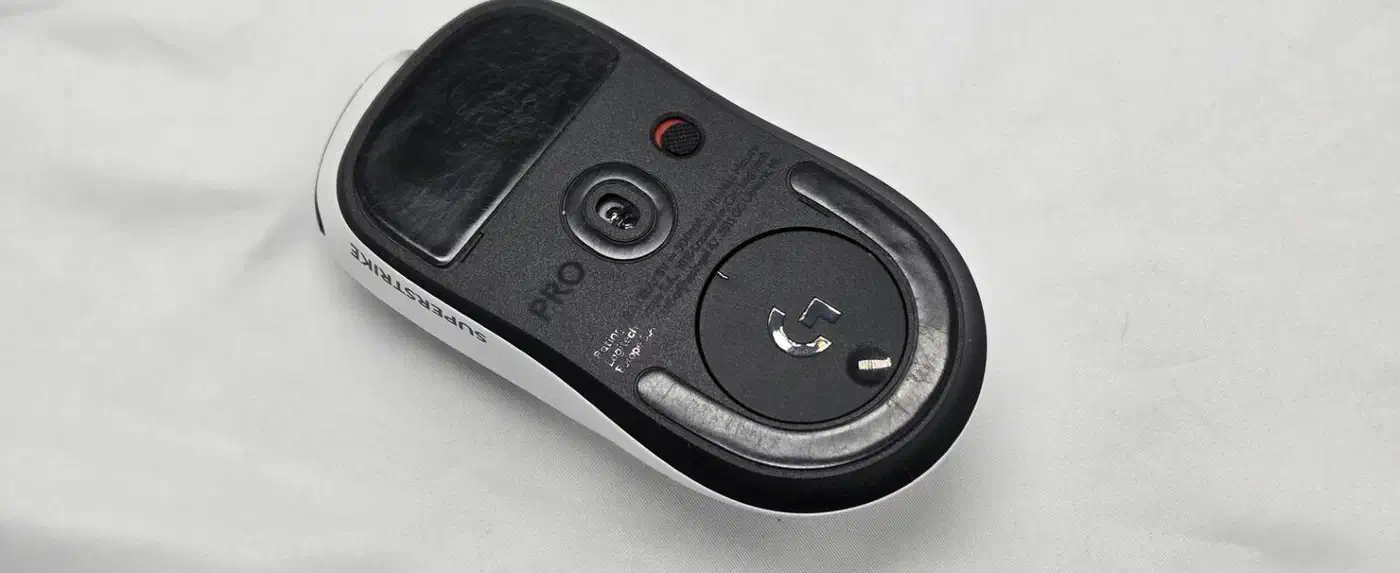
They’re also the part you’re meant to wear out. Sensors don’t degrade, and switches on the G Pro X2 Superstrike have no physical contact at all, so they need power to click. Feet thin out, round off at the edges and start dragging.
What you register as “smooth” is mostly the first millisecond of a movement. Static friction, the resistance to breaking away from a standstill, is what your hand reads as scratchiness. Top speed barely registers next to it. A material that resists starting feels wrong however fast it runs once moving.
Mouse skates, PTFE vs UHMWPE material by material
PTFE is the classic mouse-foot polymer. Its useful trick is consistent friction as much as low friction: a materials reference on PTFE friction puts its static coefficient at roughly 0.05 to 0.10 and its dynamic coefficient at 0.04 to 0.08. Those two numbers sit almost on top of each other, which is what kills stick-slip.
UHMWPE trades that for toughness. Engineering data puts its sliding-wear resistance at roughly five to ten times PTFE’s, with a higher friction coefficient to match. That’s a straight win in a bearing, but under a mouse the higher breakaway resistance is the one property your fingertips notice.
| Property | PTFE | UHMWPE |
|---|---|---|
| Static friction | ~0.05 to 0.10, very close to dynamic | Higher, with a noticeable breakaway |
| Dynamic friction | ~0.04 to 0.08 | Higher again |
| Wear resistance | Baseline | About 5 to 10 times better |
| Break-in | Fast, mostly settled in days | Slower, smooths over weeks |
| Best surface | Cloth and soft pads | Hard, plastic and glass pads |
| Set cost | About $9 to $10 | Usually factory-fitted only |
| Life under heavy use | Several months | Most of a year or more |
Both materials change under use, so first impressions overstate the gap. PTFE polishes quickly and then holds a steady feel until the edges round off. UHMWPE starts rougher and settles down over a few weeks, which is why some owners say the complaint fades over the first month without ever going away.
Pad surface flips the ranking, too. On hard plastic or glass, UHMWPE’s edge retention is an advantage and the friction penalty shrinks. On cloth, where the pad’s own weave already adds resistance, PTFE wins clearly. The Superstrike complaint is a cloth-pad complaint, and cloth is what most players use.
Why the Superstrike shipped UHMWPE
Logitech changed material between generations. The Superlight 2 shipped PTFE feet; the Superstrike ships UHMWPE, a swap documented in the Superstrike buyer guide alongside the other spec changes. The company’s stated reason:
greater durability and a lighter weight, allowing for longer-lasting performance over time
Longer-lived feet mean fewer warranty conversations and a lower running cost for the owner, and UHMWPE delivers on both counts, with glide left out of the bargain.
In terms of glide, they’re quite slow. For me, that’s okay because I like a more controlling setup, but if you’re someone who likes slick and/or faster skates, you will absolutely want to look at aftermarket options.
Gaming Nexus noticed the underside enough to describe the two skates by shape, and threads on r/MouseReview and r/LogitechG raise the same complaint often enough to look like the design rather than a bad batch.
One thing nobody has produced is a measured friction test on these specific feet against a named pad. Every report is subjective, including the reviewers’. Treat the material properties as solid and the size of the feel difference as an open question.
The fix, and what it costs
A PTFE replacement set restores the older feel and takes about two minutes. Corepad’s Skatez PRO 280 lists the Superstrike shell explicitly and uses 0.80 mm pure PTFE on a 3M backing, at €9.49. X-raypad’s Jade set covers the same shell for $9.99, and warns off glass pads.
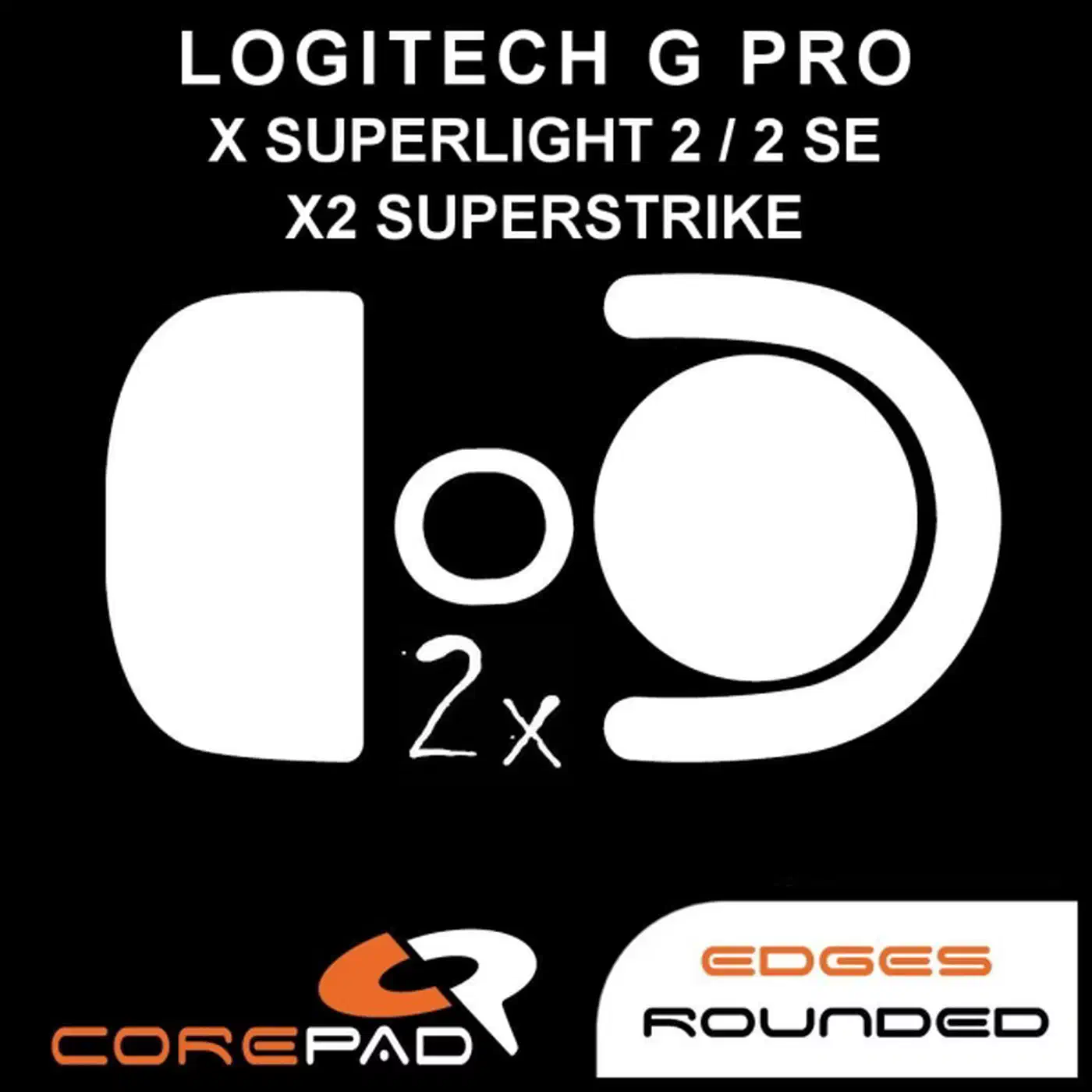
Fitting means peeling the old feet off, wiping the residue away with isopropyl alcohol, then aligning the new ones and pressing them down. You open nothing, and no warranty term covers the feet, so the change is fully reversible if you decide you preferred the control.
You get lower breakaway resistance, a quieter slide and a slightly faster glide, and you pay for it in replacement interval. Heavy daily play wears a PTFE set out in months rather than most of a year:
| Material | Set cost | Expected life | Cost per month |
|---|---|---|---|
| Stock UHMWPE | Included | 12 months plus | Effectively zero |
| Replacement PTFE | About $10 | 4 to 6 months | Roughly $2 |
If the stock feet already suit your grip, leave them alone and let the extra weeks of break-in do their work.