

Portal axles lift the FCX24 and add torque at each wheel

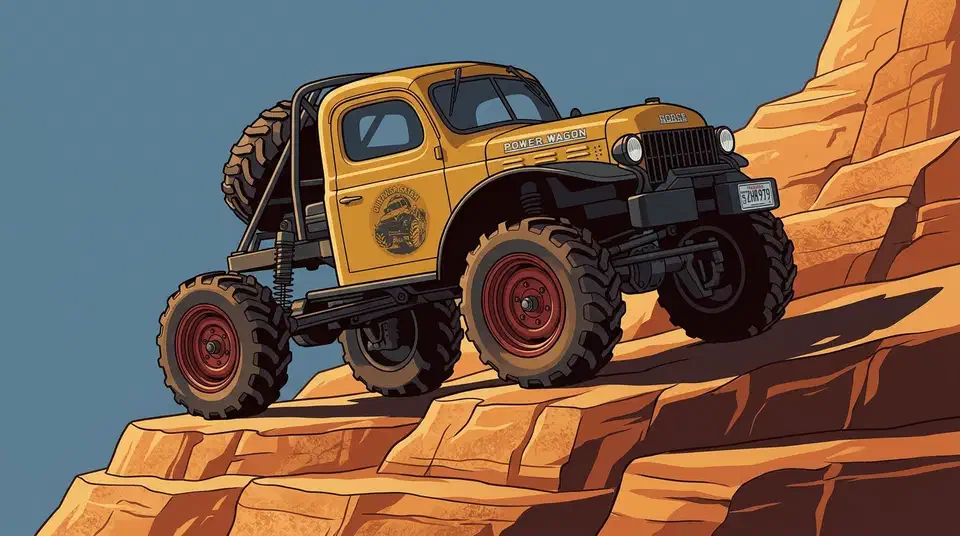
A gear pair inside each wheel hub on the FMS FCX24 lifts the axle and differential clear of the rocks, multiplies torque right at the tire, and moves that reduction out of the driveline. FMS calls them wheel side reducers.
Key Takeaways
- Gears at the wheel hub lift the axle and diff away from the rocks.
- The same gears multiply torque, so small portal trucks crawl harder.
- Moving the reduction out to the wheel means the driveline twists less.
- The FCX24 and Redcat Ascent-18 ship with portals; the SCX24 does not.
- A bolt-on portal kit re-gears the truck and adds weight at the wheels.
What is a portal axle on a micro crawler?
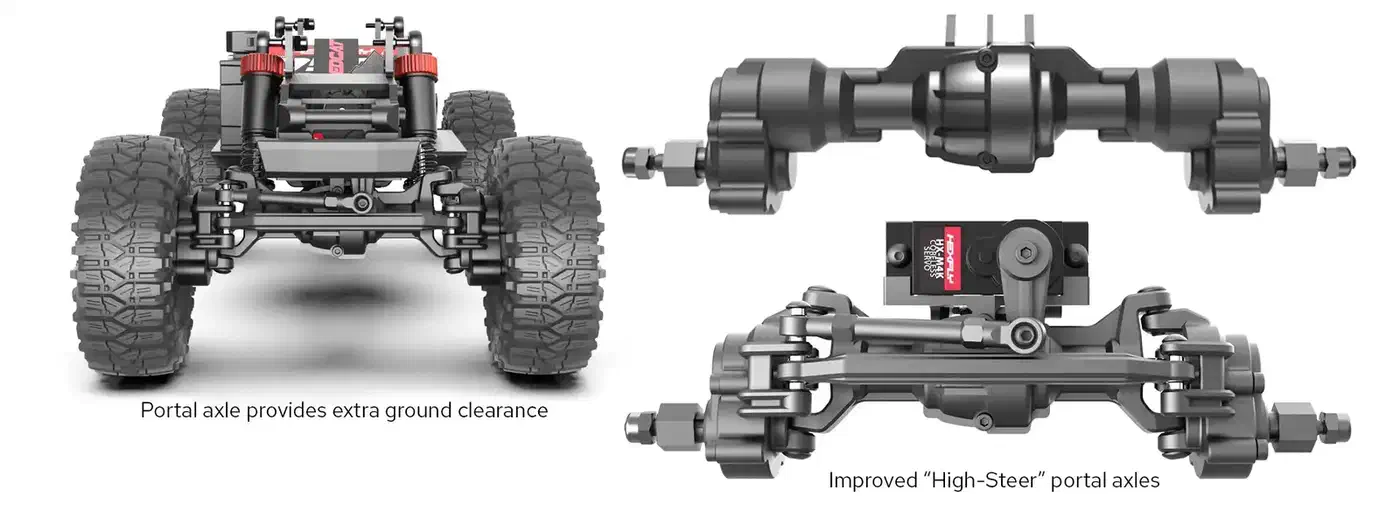
A portal axle carries a small gear set inside each wheel hub. The axle shaft turns an upper gear, and a lower gear turns the wheel. Because the wheel center sits below the axle center, the axle tube and the differential ride higher off the ground than a straight axle spinning the same tire.
FMS describes the FCX24’s axles as wheel side reducers, the plain name for portal axles . They are fitted to raise the differential and improve how the truck gets over things.
How do portal axles add ground clearance?
The gear drop is a fixed offset built into the axle housing. It doesn’t compress under load the way ride height from taller springs does. The diff stays high even when the chassis squats mid-climb, the moment a ledge is most likely to hang the truck up.
On a crawler, the lowest hard point is usually the middle of the axle tube and the diff housing. Raising that point clears bigger rocks and deeper ruts without moving to bigger tires. At 1/24 and 1/18 scale that trade is important, because the body is too small to hide large-diameter tires under it.
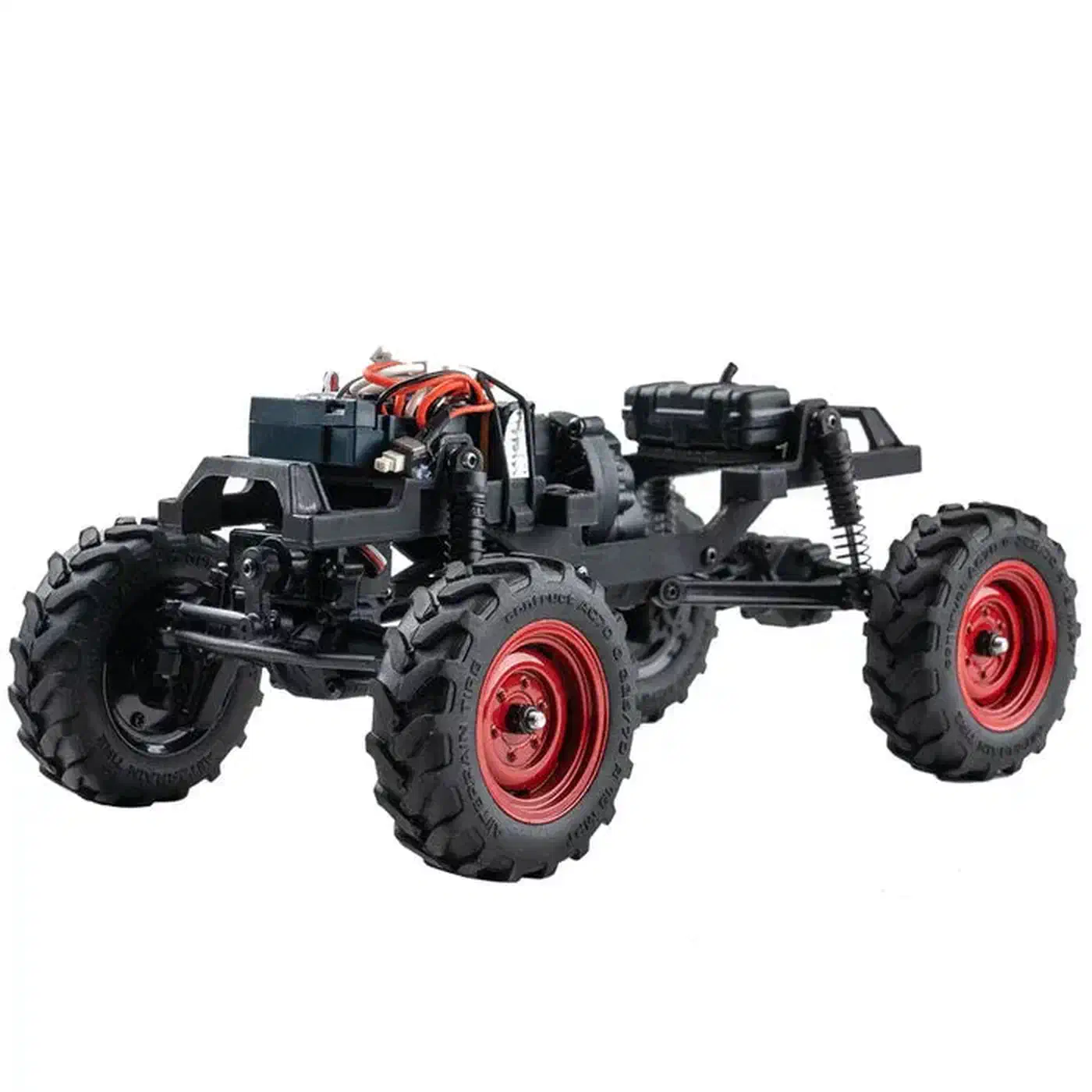
The FMS FCX24 Power Wagon pairs portals with a two-speed gearbox, so the clearance comes on top of a proper low crawl gear.
How do the hub gears multiply torque and cut torque twist?
The hub gearing is a reduction. It trades wheel speed for wheel torque at the very end of the driveline, so a portal micro puts down more grunt than its motor size suggests. FMS says the portals on the FCX24 reduce the gear ratio for exactly this reason.
Because that final reduction happens out at the hub, the driveshaft and the center gears spin faster and carry less load. Less load through the chassis means less torque twist, the chassis lift you see on hard throttle. Redcat lists greater ground clearance and reduced torque twist together as the point of the metal portals on its Ascent-18 Brushless .
The portal reduction and a gear swap are separate tuning knobs. A front overdrive or a rear underdrive changes how fast one axle turns relative to the other, on top of whatever the hubs do. Owners balancing the two can work through the ratios in the SCX24 overdrive and underdrive gear guide .
Why do factory-portal trucks crawl differently than a straight-axle SCX24?
| Platform | Scale | Factory axles | Notable driveline |
|---|---|---|---|
| FMS FCX24 Power Wagon | 1/24 | Portal | Two-speed gearbox |
| FMS FCX18 | 1/18 | Portal | Single speed |
| Redcat Ascent-18 Brushless | 1/18 | Metal portal | Brushless, aluminum spools |
| Axial SCX24 | 1/24 | Straight | Single speed |
A factory-portal truck starts higher and with more torque at the tire, so it feels planted on a ledge out of the box. A straight-axle micro like the SCX24 crawls well too, but it starts lower. That is a large part of why its aftermarket is stuffed with clearance and gearing parts.
So the buyer picks between a portal truck and a straight-axle one they will upgrade later. The FCX18 sits opposite the straight-axle Traxxas TRX-4M in the same way, and the FCX18 versus TRX-4M comparison covers that choice.
What does a bolt-on portal kit change besides ride height?
Straight-axle owners can convert with complete front-and-rear sets built for the micro class. The FEDCO FCX24 portal axle set runs $119.99. It ships with a differential, brass steering cups and brass portal covers, plus a straight-axle converter you can switch back to.
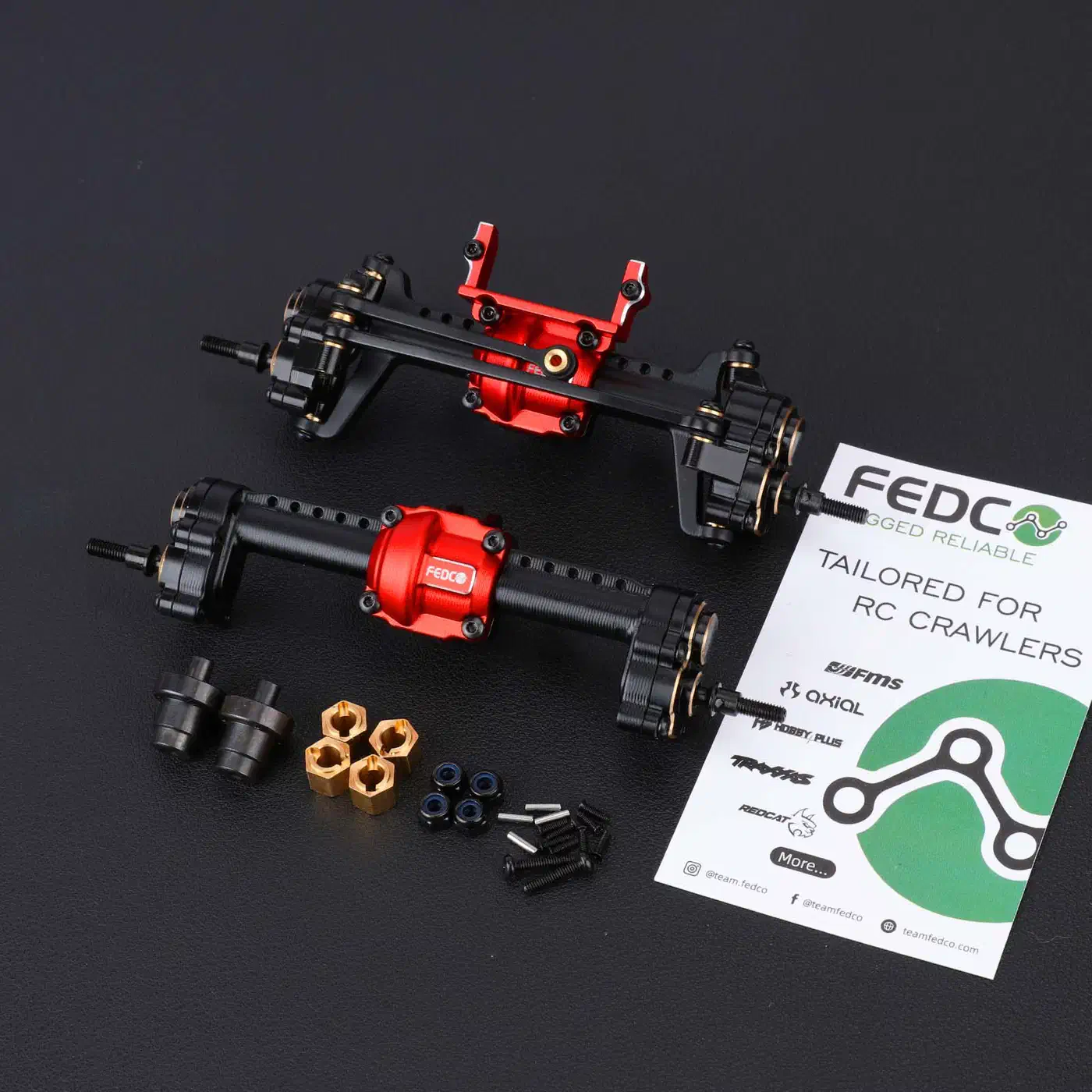
A kit re-gears the truck, and the direction is not always down. FEDCO’s set uses 20T and 15T stainless gears and is sold as a 10% speed increase over stock, so the hub ratio can raise wheel speed rather than lower it. Read the tooth counts before you assume a portal swap makes the truck slower and torquier.
The other cost is unsprung weight. Portal hubs hang off the ends of the suspension, where extra mass fights the shocks. On a truck this light that blunts compliance over small rocks. Brass covers and brass knuckles are a common companion buy because weight carried low helps plant the tires, but they add to the same unsprung total.