

Overdrive gears let the SCX24 climb without flipping back

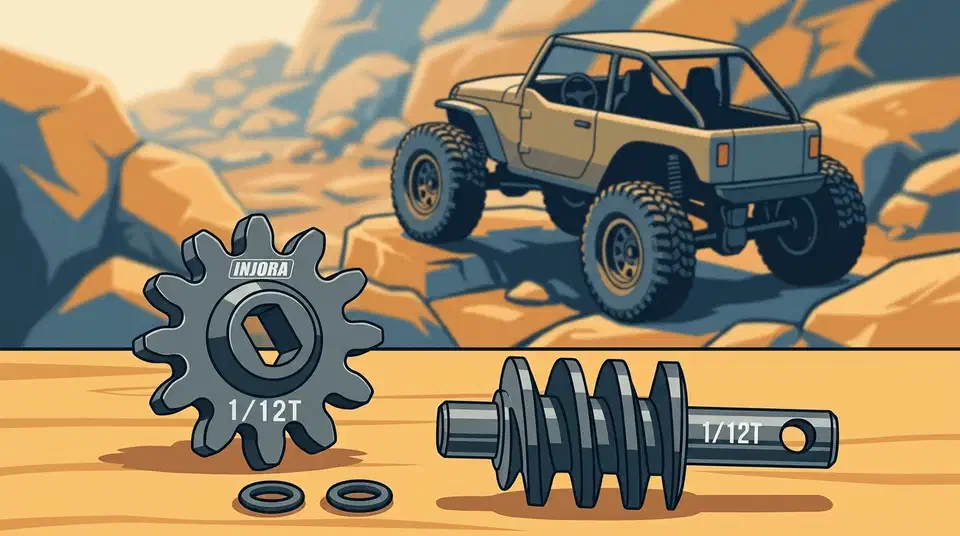
SCX24 overdrive gears speed up one axle on purpose, and INJORA prints the exact numbers right on each set. A 2/12T pair turns the front axle about 33 percent faster, 2/13T about 23, and 2/14T about 14. Speed up the front, or slow the rear, and the truck climbs instead of looping over backwards.
Key Takeaways
- Overdrive gears make one axle turn faster than the other on purpose.
- INJORA’s ladder runs 33, 23 and 14 percent faster than stock.
- A faster front axle pulls the truck up a climb and cuts backflips.
- It is a bolt-in gear swap for any SCX24 or AX24.
- Full 33 percent is a lot, so most drivers pick a milder set.
What do overdrive and underdrive gears do on an SCX24?
The SCX24’s front and rear differentials each hold a worm screw and a worm gear. That pairing feeds power to the axle and gives the truck its ground clearance. INJORA’s overdrive and underdrive gear sets for the SCX24 and AX24 swap that pairing for one with a different tooth count.
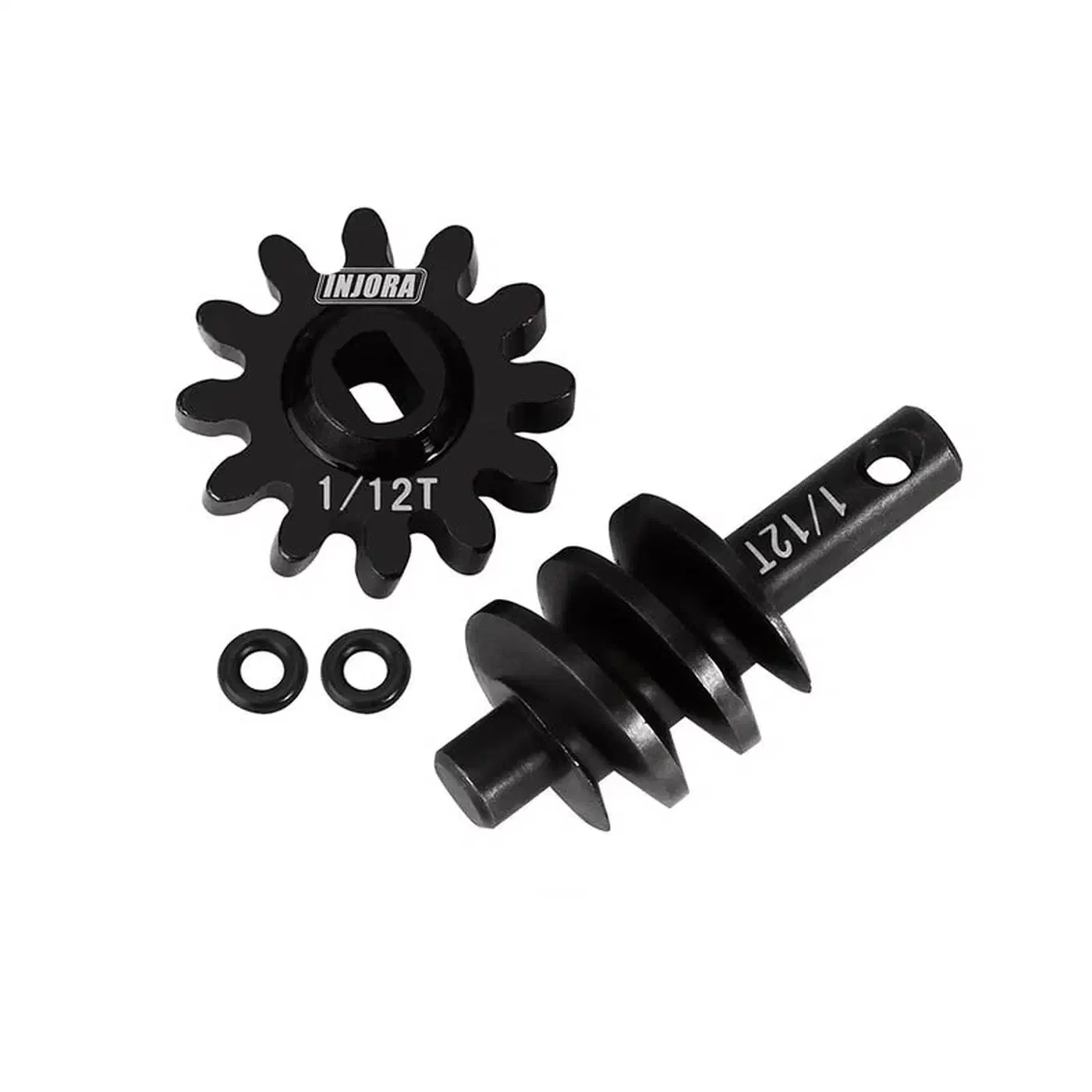
Change the tooth count on one axle and you change how fast that axle spins for the same motor speed. Overdrive means faster than stock. Underdrive means slower.
Both axles still drive the truck, and nothing gets disconnected. The gears simply make the front and rear disagree a little on speed, and that small disagreement is the tuning lever.
Each set is hardened steel and weighs 4 grams, and it fits the front axle or the rear axle equally. INJORA lists the fitment as all 1/24 SCX24 series trucks plus the 1/24 AX24. So one part covers the whole small-scale Axial crawler line.
INJORA’s overdrive percentage ladder, from 33 percent down to stock
INJORA sells six gear pairings, each moving a single axle by a set amount.
| Gear pairing | Effect | Speed change |
|---|---|---|
| 2/12T | Overdrive | about +33% |
| 2/13T | Overdrive | about +23% |
| 2/14T | Overdrive | about +14% |
| 2/16T | Stock | no change |
| 2/18T | Underdrive | about -11% |
| 1/12T | Underdrive | about -33% |
The naming makes sense once you know the trick. The first number is the worm screw start count, and the second is the worm gear tooth count. That is why 2/12T and 1/12T land on opposite ends of the ladder even though both use a 12-tooth gear.
The 2/16T set is the odd one out. It changes nothing about speed, so it works purely as a steel stand-in for a worn diff. If your only goal is a tougher part, that is the set to grab.
Why a faster front axle climbs better and resists backflips
INJORA states the rule in one line on the part. Overdrive the front, or underdrive the rear, and the truck pulls faster at the front, which helps it climb and cuts down on rollover. A faster front axle drags the chassis up the rock face.
When the rear axle pushes instead, that pushed chassis is what levers the nose skyward on a steep face and gives you the classic backflip. Pulling from the front keeps the nose down.
A slight front bias helps steering too. It keeps the front tires loaded and tracking on an off-camber line rather than scrubbing wide. Meanwhile the rear axle still drives the truck, so you give up a little speed there and lose nothing in grip.
The trade shows up on high-grip flat ground, where the two axles scrub against each other, so the driveline works harder and runs warmer. This upgrade earns its keep on rock and ledges, not on a sticky parking lot.
Pairing a front overdrive with a rear underdrive on an SCX24
You can reach the same front bias two ways. Fit an overdrive set to the front only, or fit an underdrive set to the rear only. Either one makes the front pull ahead of the rear.
Stacking them is the third option, and often the smartest. Pair a mild 2/14T front overdrive with a 2/18T rear underdrive. You build a real front bias without spinning either axle far from stock speed. That keeps your crawl speed close to where you already have it dialed. On a truck this small, where throttle control is coarse, that helps.
Because each set sells on its own, you can start with one axle and add the other later. Buy a single set, try it, then decide.
One owner review on HeliDirect’s 12T gear listing backs up the go-mild approach. The buyer ran the 33 percent underdrive set and found it too much in most situations. They then planned to buy the milder sets to dial in the right ratio. The same review notes the sets ship with no instructions. So photograph the diff before you take it apart, and you will thank yourself on reassembly.
Which SCX24 overdrive set should you buy first?
Your terrain picks the set.
- Steep, technical rock and ledges: start with a front overdrive in the 14 to 23 percent range, so a 2/14T or 2/13T set, before you reach for the full 33 percent.
- Loose dirt, gravel and mild trails: a rear underdrive at 11 percent, the 2/18T set, is the gentlest way to feel the effect.
- Already fighting backflips on climbs: front overdrive gives you the biggest single gain, because it changes where the pull comes from instead of adding power.
Skip the upgrade if your truck mostly runs flat, high-grip ground. There the axle disagreement just adds drag and wear for no climbing payoff.
Whichever set goes in, remember it is steel replacing the diff gears you already run. So even a mild change buys you a tougher driveline along with the tuning. For a part this cheap, that makes the front-overdrive trick one of the easiest wins on a small-scale crawler.