

The $180 FCX18 out-crawls the TRX-4M straight from the box


In an FMS FCX18 vs Traxxas TRX-4M head-to-head, the $180 FCX18 is the better mini crawler with nothing changed. Portal axles and a two-speed gearbox get it over rocks that stop the TRX-4M. Traxxas answers with grippier stock tires and softer shocks, but it needs a gear swap to keep up.
Key Takeaways
- The FCX18 costs a little more and crawls better before any upgrades.
- Portal axles and a two-speed gearbox are the difference on rocks.
- The TRX-4M has better stock tires and softer suspension.
- Stock TRX-4M slow-speed control is poor, so low-range gears are near essential.
- Both rigs are top-heavy and both snag their front bumpers on steep approaches.
How the FMS FCX18 and Traxxas TRX-4M compare
The FMS FCX18 LC80 lists at about $180. The Traxxas TRX-4M Defender carries the same $179.95 list, though hobby shops routinely sell it nearer $150. So the real gap is somewhere between zero and thirty dollars, depending on the day you buy.
| Spec | FMS FCX18 | Traxxas TRX-4M |
|---|---|---|
| Price | about $180 | about $150 to $180 |
| Scale | 1/18 | 1/18 |
| Body | hard body, molded bumper, wipers, mirrors, roof rack, ladder, snorkel | hard body, lit grill, snorkel, sticker mirrors, roof rack, jack, fuel cans |
| Chassis | metal, metal lower links, plastic upper links | metal, metal upper and lower links |
| Drive shafts | plastic | plastic |
| Axles | portal axles front and rear | straight axles |
| Gearbox | two-speed | single speed |
| Motor | 180 size | 180 size |
| Battery | 900mAh 2S LiPo | 750mAh 2S LiPo |
| Radio | 4-channel FMS, gear and lights on channels 3 and 4 | Traxxas TQ, 2-channel |
| Lights | headlights, spotlights, indicators, brake and reverse | bumper LEDs only |
| Shocks | oil filled, firm | oil filled, soft |
| Body access | screwed on, battery under the bonnet | body clips, battery mid-chassis |
The rows that decide a rock climb, axles and gearbox above all, go to the FCX18.
Body and scale detail
Both trucks wear licensed hard bodies, but the FCX18 carries far more molded detail. It has a molded front bumper, windscreen wipers, real mirrors, a roof rack with an LED light bar, a rear scale ladder, a spare wheel, a snorkel, and metallic paint.
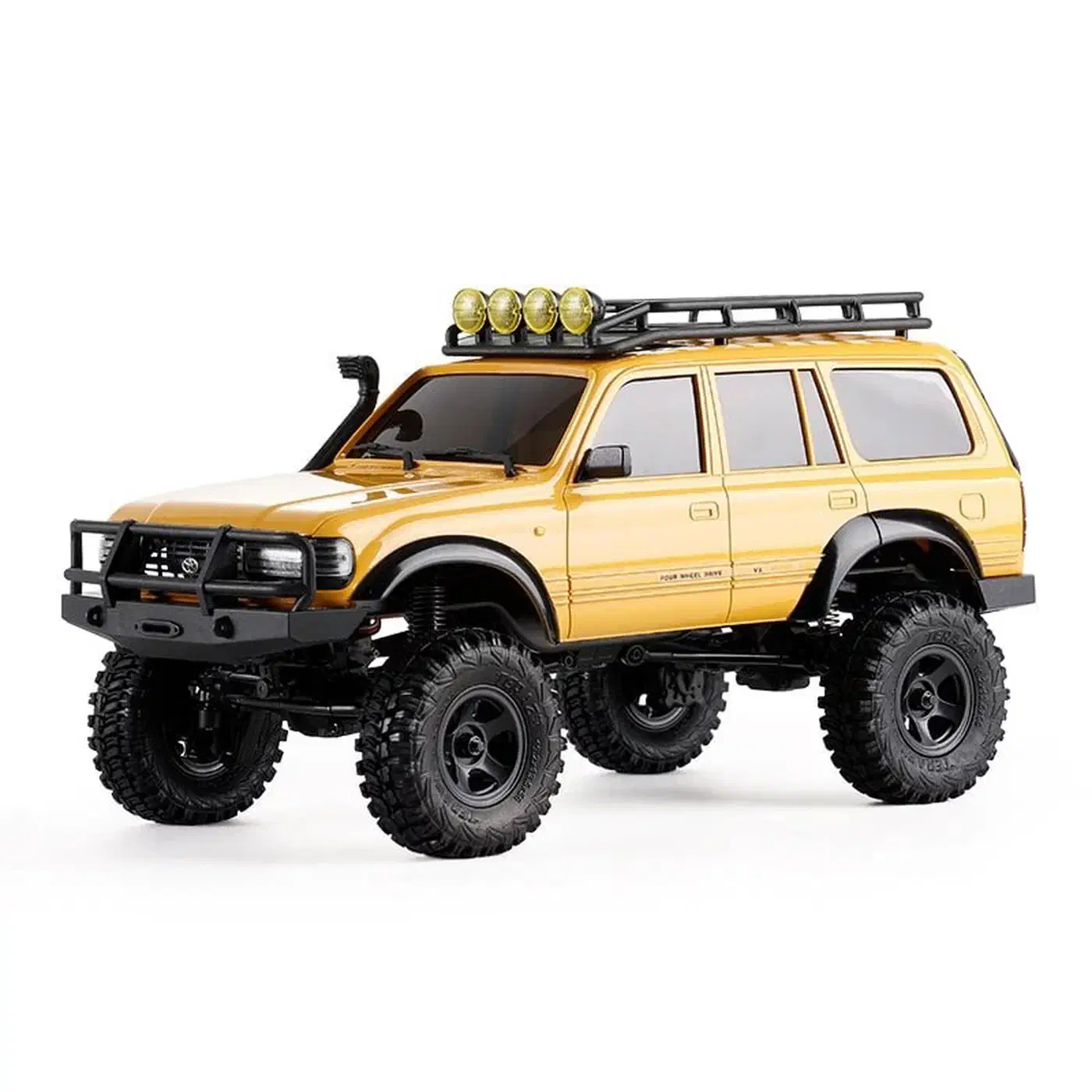
The TRX-4M Defender covers most of the same ground with a lit grill, a snorkel, a roof rack, a spare wheel cover, a jack stand and fuel cans. However, its mirrors are stickers rather than parts, and the Defender body plastic is thin enough to look slightly see-through in strong light.
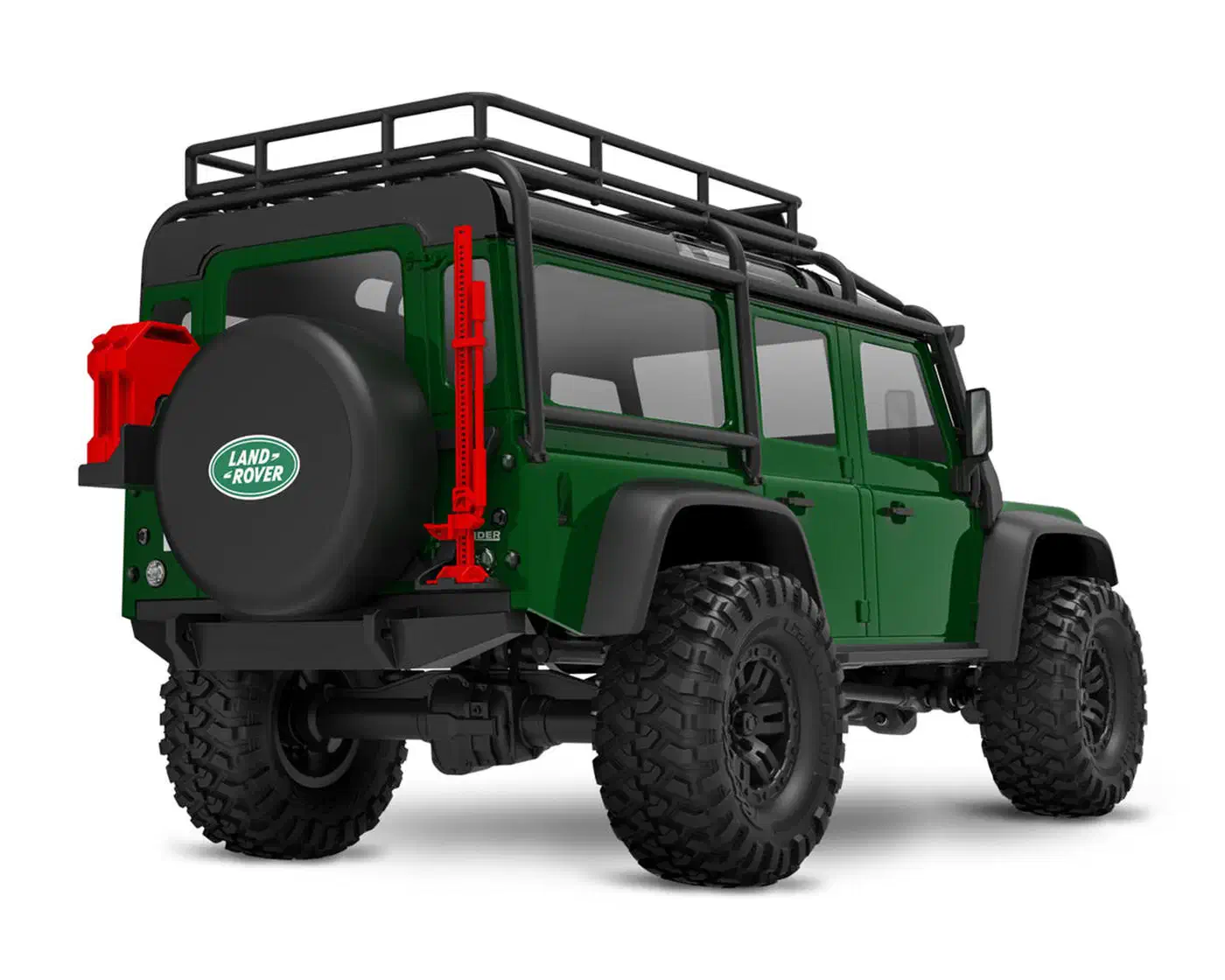
Out of the box, the FCX18 is the more convincing scale truck. None of that changes how either one drives, so weigh it as a taste call.
Chassis, axles and ground clearance
Both rigs run a metal chassis and plastic drive shafts. The TRX-4M uses metal upper and lower links in a four-link layout, which is the tidier design on paper. The FCX18 mixes metal lower links with plastic upper links.
The FCX18 has portal axles front and rear, and the TRX-4M has straight axles. Portals lift the diff housings up out of the way, so the FCX18 rides over ruts and rock edges that catch the Traxxas underneath.
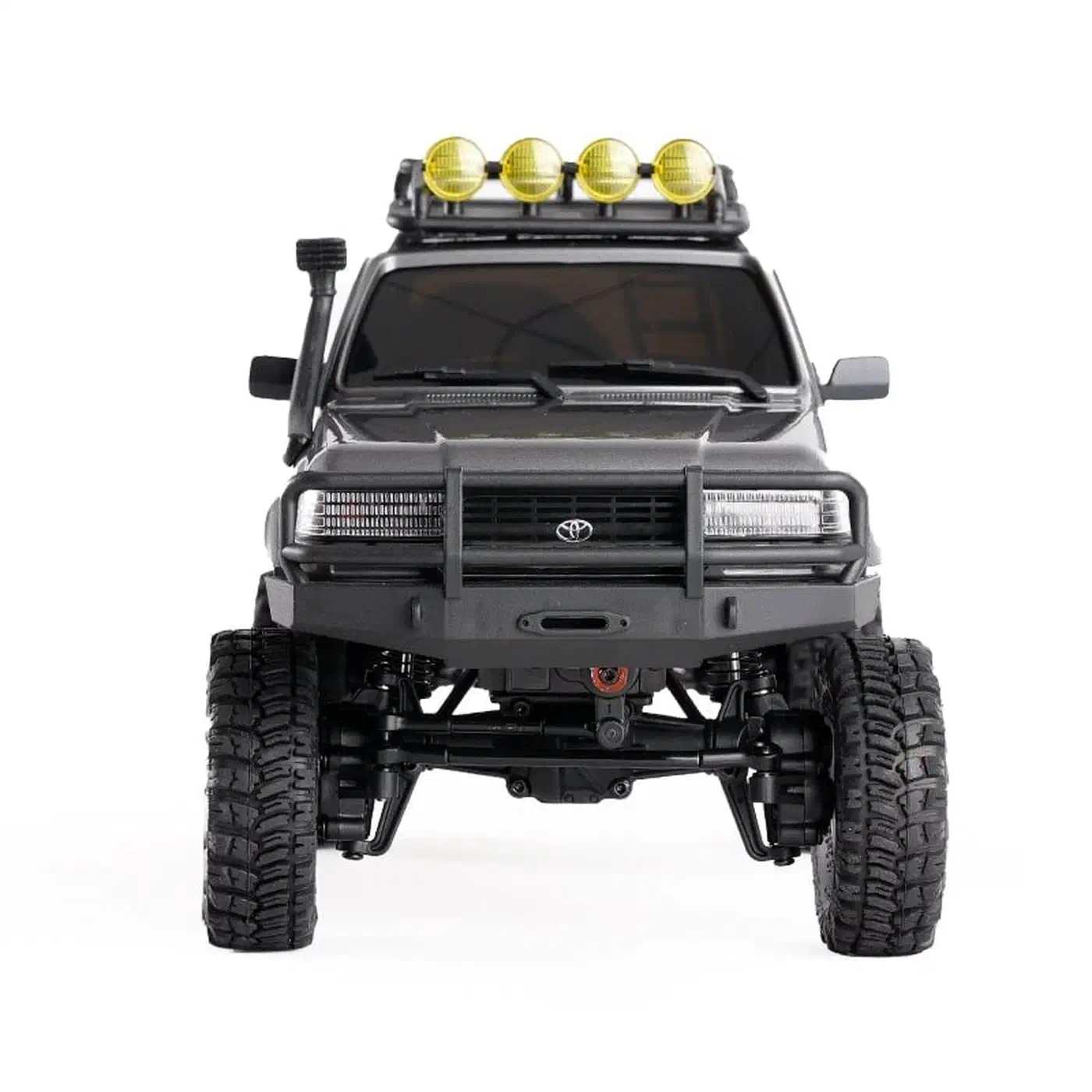
On matched rut sections, the TRX-4M grounded its centre section again and again. On the largest rut it never got through at all, while the FCX18 cleared it on a second line. The Defender’s side rails sit low too.
Both trucks have big front bumpers that hang up on steep approach angles, and both are top-heavy enough to tip on off-camber climbs.
Two-speed gearbox versus a single-speed problem
The FCX18 ships with a two-speed gearbox, shifted from channel 3 on the transmitter. First gear gives fine slow-speed control. Second gear turns the same 180-size motor into a trail runner with plenty of wheel speed.
The TRX-4M ships with one gear, geared too tall for crawling. Stock slow-speed control is poor enough that fitting the low-range transmission gear set , part TRA9776R, is close to a required purchase. It costs about $5 and drops the truck to a 40.3:1 reduction.
Those gears fix the crawling and cost most of the trail speed, so the truck ends up slow everywhere. Even with the swap done, the TRX-4M is slower than the FCX18 in first gear and far slower in second. The missing second gear is its biggest design miss.
Electronics, radio and lights
The FCX18 hides its all-in-one ESC and receiver under the bonnet, along with a proper power switch. Its battery tray sits right at the nose, which adds useful weight up front. The body is screwed on, so you lift the bonnet instead of pulling the shell.
The TRX-4M puts its all-in-one unit at the rear and its battery tray mid-chassis. Two body clips release the shell, which you have to lift every run. There is no power switch, so plugging the battery in is what turns it on.
Batteries follow the same pattern: 900mAh 2S with the FCX18, 750mAh 2S with the TRX-4M. Both run about an hour, so the extra capacity buys only a few more minutes.
The FMS 4-channel radio handles gear changes and light modes from dedicated channels, while the Traxxas TQ is a 2-channel that uses its SET button for mode changes. The TQ is the bigger unit in hand; the FMS one is smaller but has no foam grip.
The FCX18 cycles headlights, spotlights, main beam, indicators, hazards, brake and reverse. The TRX-4M gives you bumper LEDs and nothing else.
Tires and suspension, where the TRX-4M wins
The TRX-4M’s vented, chunky stock tires grip well straight away, close in feel to the Canyon Trail tires on the 1/10 TRX-4. They carry no foams and still bite.
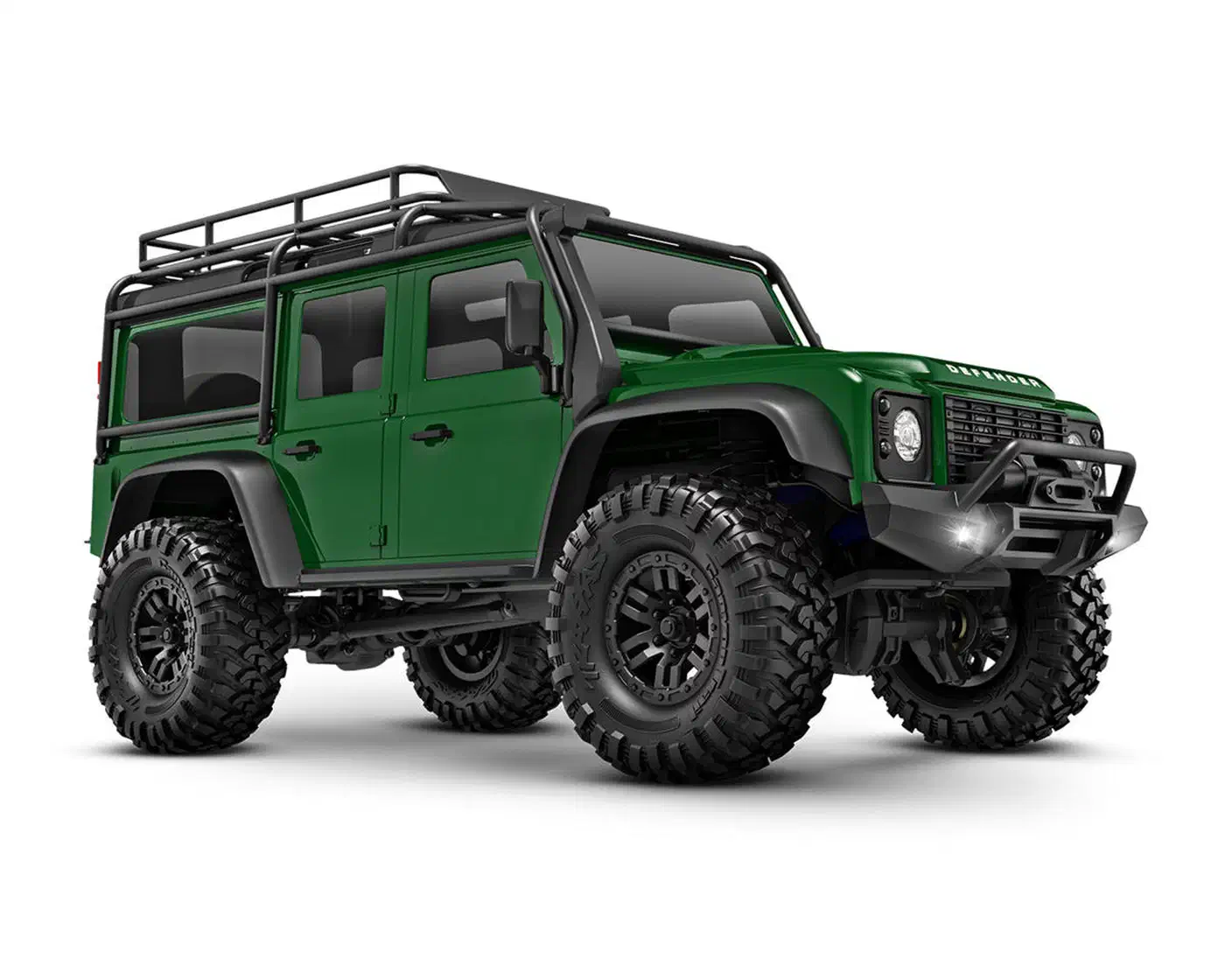
The FCX18 includes beadlock wheels and foams, a better spec sheet that gives up traction on wet or loose surfaces.
Suspension goes the same way. The TRX-4M’s shocks are soft and articulate nicely over uneven rock. The FCX18 sits higher and rides firm, so it skips where the Traxxas conforms.
On a wet, loose dirt bank climb the FCX18 spun up immediately and struggled for grip, while the TRX-4M walked up steadily. Wheels and tires are therefore the FCX18’s obvious first upgrade, and doing it would only widen the overall gap.
How they crawl on rocks and trail
In fairness to the Traxxas, it had the low-range gears fitted throughout these runs. Stock gearing crawls worse than what is described here, so treat the results below as the TRX-4M at its best.
- Hill climb. Both trucks are top-heavy and both tipped. The FCX18 needed fewer attempts and recovered more often.
- Rock steps. The FCX18 cleared lines in stock form that the TRX-4M only managed with the gear swap done.
- Rutted trail. The TRX-4M grounded its centre section repeatedly and failed the largest rut outright. The FCX18 got through on a second line.
- Descents. Both handled controlled descents cleanly.
- Loose bank climb. The TRX-4M’s tires won this one, and won it easily.
The FCX18 was ahead on nearly every obstacle. Its margin came from the portals and the low gear, and the Traxxas has neither.
Price, upgrades and which one to buy
Neither rig is short of parts. The FCX18 shares axle components with the FCX24, so a deep aftermarket already exists for it. The TRX-4M’s catalogue is larger still, though a chunk of that catalogue covers parts the truck should have shipped with.
Buy the FCX18 if you want the best ready-to-run mini crawler with no immediate spending. You get portals, two gears, better lights and a nicer body on day one.
Buy the TRX-4M if you value the softer suspension and the better stock tires. You also need to like the Traxxas parts network and accept fitting low-range gears straight away. For a wider field of options in the same price bracket, our RC crawlers under $200 roundup covers ten rigs including both of these.
Portal axles, a second gear and a nicer body cost you about thirty dollars here, and on some days nothing at all.