

Samsung is testing an 18,000mAh three-cell phone battery

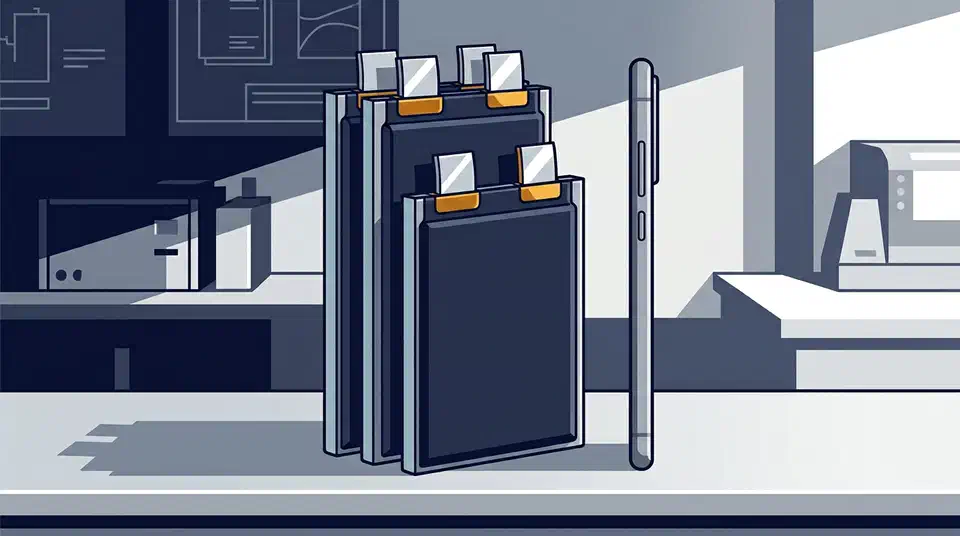
Samsung’s 18,000mAh battery is real, but it’s three separate silicon-carbon cells stacked 12.8mm deep, according to leaked test reports. A 20,000mAh sibling failed after 960 charge cycles. The pack with a shot at shipping is the two-cell 12,000mAh version at 9.3mm, rated for 1,500 cycles.
Key Takeaways
- The 18,000mAh pack is three separate cells stacked on top of each other.
- At 12.8mm it is thicker than almost every phone on sale.
- A 20,000mAh test unit broke after only 960 charge cycles.
- The 12,000mAh two-cell version at 9.3mm is the one that could ship.
- Silicon-carbon cells go into mass production around 2028.
Everything below comes from leaked internal documents attributed to Samsung SDI, posted by the leaker @phonefuturist. None of it is a confirmed product plan, and Samsung has said nothing on the record about any of it.
What is inside the 18,000mAh pack?
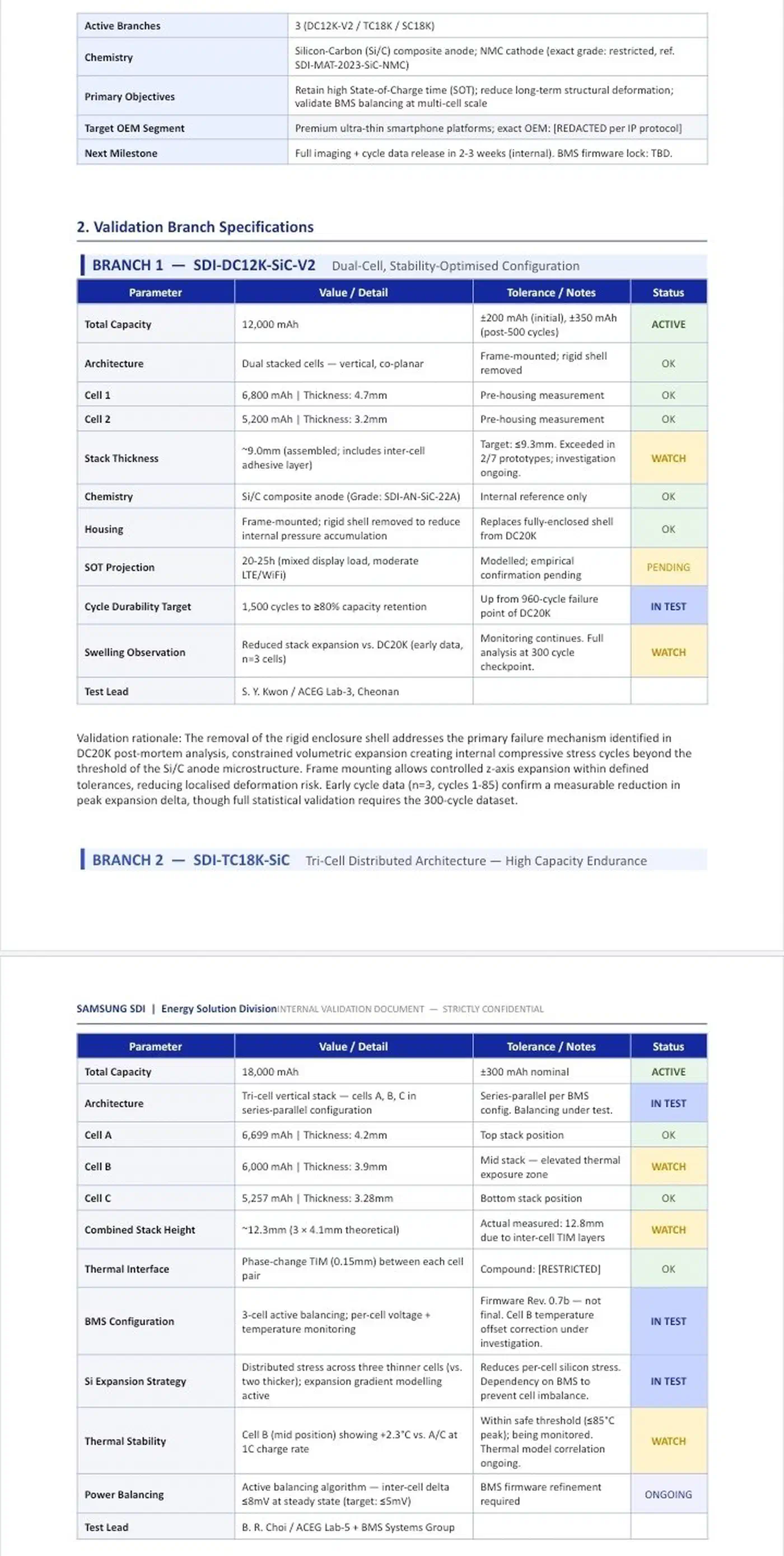
The pack carries the part code SDI-TC18K-SiC and holds three cells of different sizes, laid one on top of another:
- A 6,699mAh cell, 4.2mm thick
- A 6,000mAh cell, 3.9mm thick
- A 5,257mAh cell, 3.28mm thick
Add the cells alone and you get 11.38mm. GSMArena’s read of the leaked test reports says Samsung aimed for a 12.3mm stack. Thermal interface layers between the cells pushed the actual samples to 12.8mm, so the padding that keeps three cells from cooking each other costs more than a millimetre.
Reports disagree on the third cell. Notebookcheck lists it as 5,527mAh , which would push the pack to 18,226mAh. The 5,257mAh figure is the one that adds up to the 18,000mAh name, so treat it as the safer number.
All three cells use silicon-carbon chemistry. Silicon holds far more lithium per gram than the graphite in a conventional anode. That’s how you get this much capacity into cells this thin.
Why the Samsung 18,000mAh battery is too thick for a phone
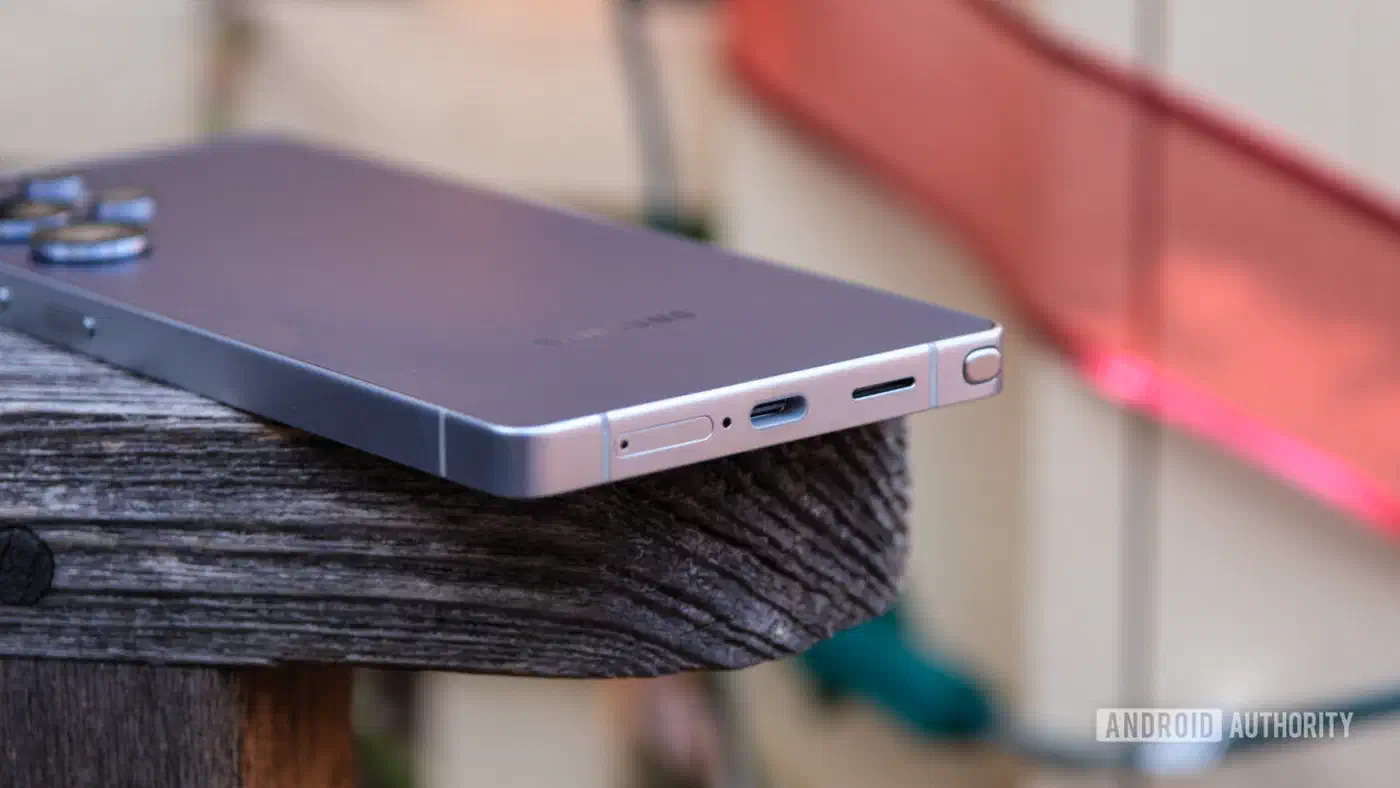
Capacity is the easy part when you can spend thickness on it, and a phone has almost none to spend. The Galaxy S26 Ultra is 7.9mm thick in total . That 7.9mm holds the screen, the mainboard, the camera stack, the chassis and the battery.
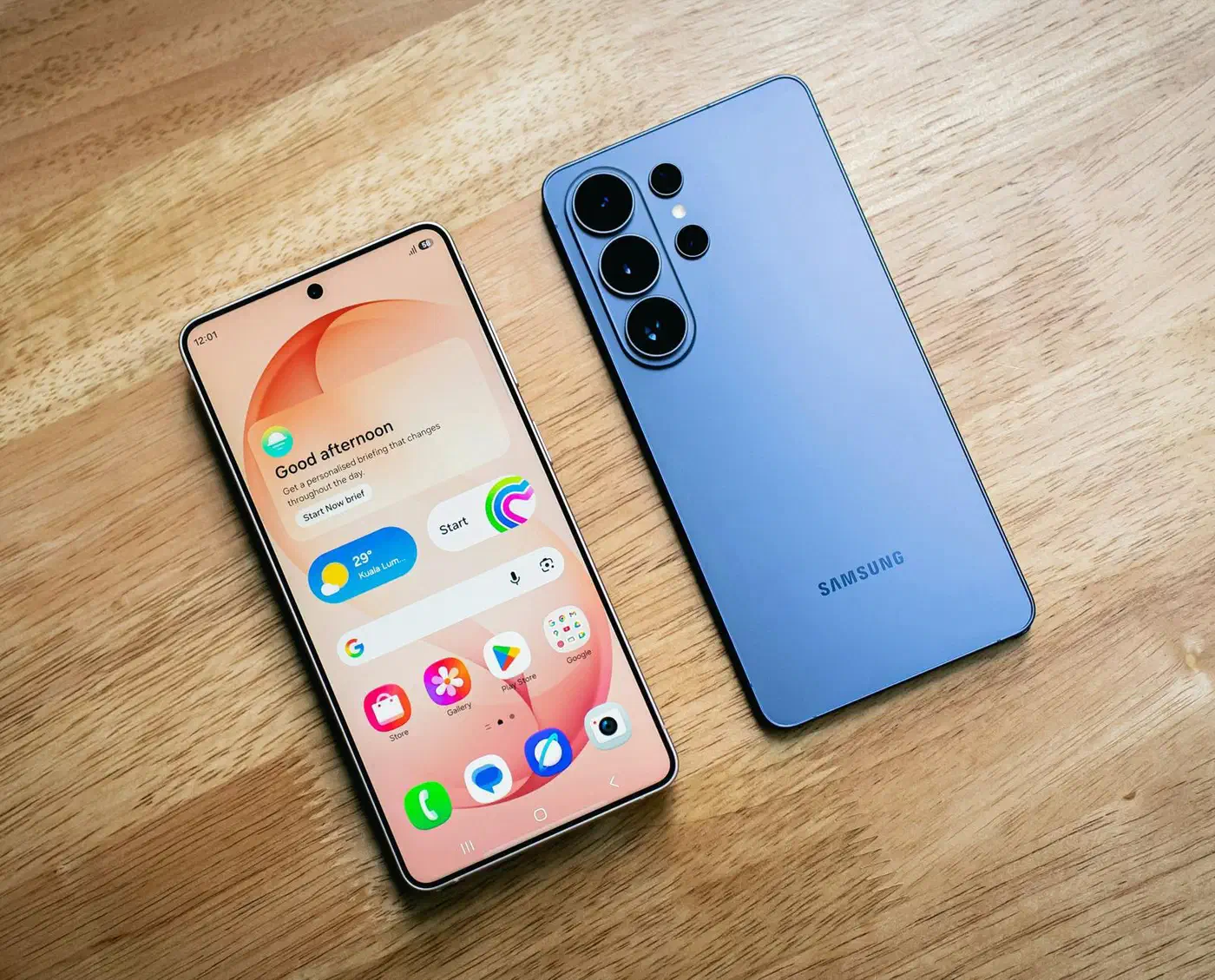
A 12.8mm battery can’t go into a body that is 3mm thinner than the battery alone.
| Pack | Cells | Stack | Cycle result | Realistic home |
|---|---|---|---|---|
| 20,000mAh | 2 | not stated | defect at 960 cycles | nothing |
| 18,000mAh (SDI-TC18K-SiC) | 3 | 12.8mm | 1,500 target, untested | rugged outdoor phone |
| 12,000mAh (SDI-DC12K-SiC-V2) | 2 | 9.3mm | 1,500 target, untested | a thick, battery-first phone |
| Galaxy S26 Ultra, shipping | 1 | fits a 7.9mm body | proven | ordinary flagship |
Stacking also costs more than millimetres. Each extra cell needs its own interconnects and thermal path, and adds another way for the pack to fail. The leaked notes say Samsung SDI is redesigning both the interlayers and the battery management firmware.
Meanwhile, single silicon-carbon cells are already doing respectable work in ordinary bodies. The OnePlus 15 carries a 7,300mAh silicon-carbon cell in an 8.1mm frame, barely thicker than the Galaxy it outlasts. For anything that goes in a pocket, one good cell does better than three stacked ones.
The 960-cycle failure in the leaked reports
The 20,000mAh test unit developed a defect after 960 charge cycles. Charge a phone once a day and you reach 960 cycles in under three years. That’s a failure inside the ordinary life of the device.
Android Authority’s earlier report on the 20,000mAh pack blames swelling. One tipster claimed the 8,000mAh cell in that pack grew from 4mm to 7.2mm thick. You cannot seal a cell that nearly doubles in thickness inside a phone.
Silicon soaks up lithium and physically expands as it charges, then shrinks as it drains. Do that a few hundred times and the anode cracks itself apart. Commercial cells keep the silicon share low, around 15 percent in shipping phones, to keep the swelling manageable. Raising the share for more capacity brings the swelling straight back.
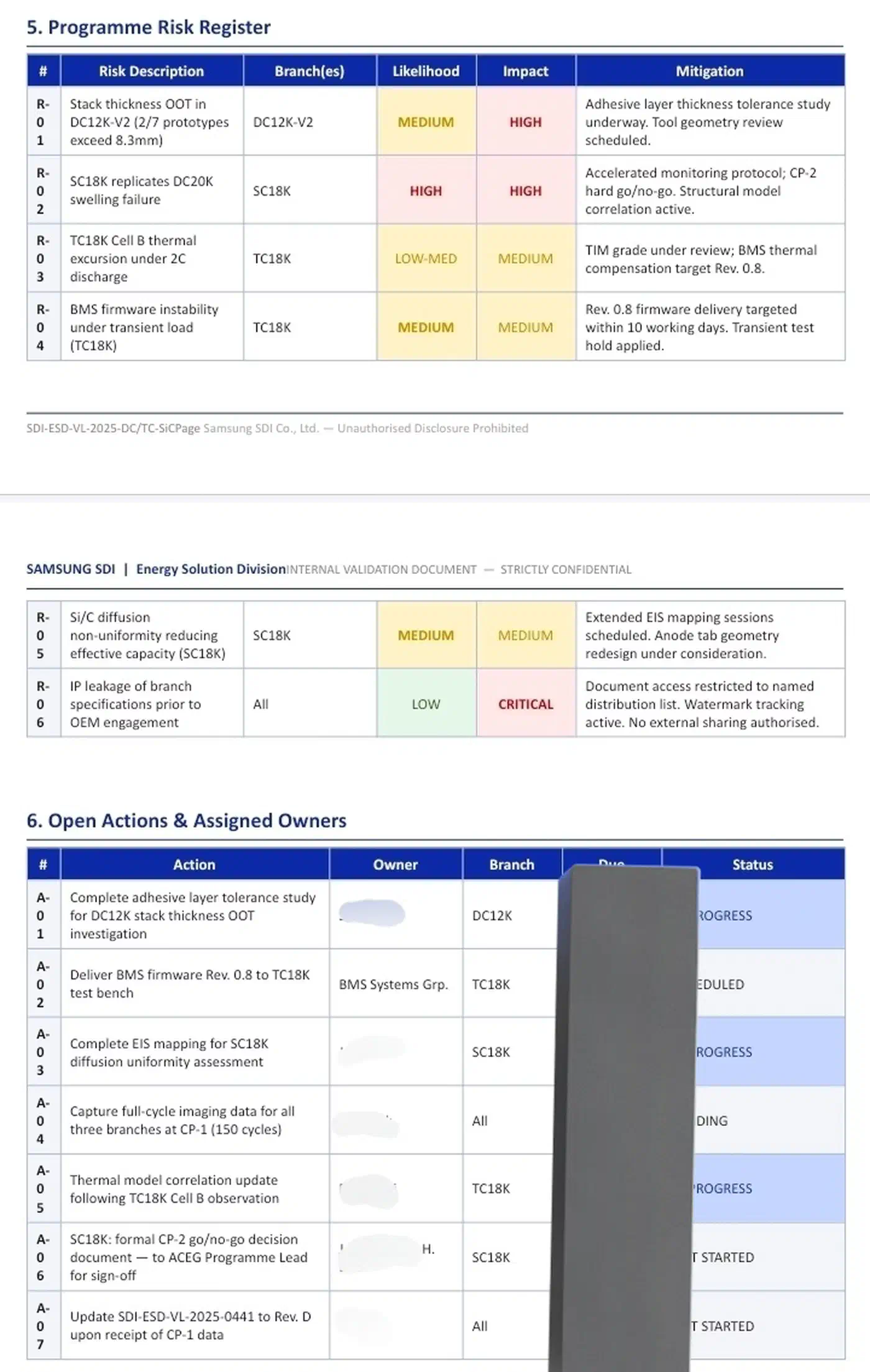
The two smaller packs aim at the normal industry standard of 80 percent of original capacity after 1,500 cycles. Both are still under test, so nobody has hit that number yet. The 12,000mAh version is predicted to give 20 to 25 hours of screen-on time over 4G and Wi-Fi. That would roughly double what a flagship manages today.
When silicon-carbon batteries reach shipping phones
A leaked test cell is years from a shop shelf. Counterpoint Research expects the pace of silicon-carbon adoption to slow in the near term before it accelerates again.
Battery capacity will continue to increase, but at a slower pace, and SiC adoption is also likely to moderate in the near term, with the industry targeting key technical milestones in 2027, followed by mass-scale production in 2028.
In Counterpoint’s sales tracker, six of the ten best-selling phones with 6,000mAh or larger batteries used silicon-carbon cells. All ten came from Chinese brands, which now sit over 1,000mAh ahead of the rest of the world on average, and the biggest of them, the Honor X70 5G, reached 8,300mAh. Average global battery capacity climbed about 400mAh year on year, to 5,291mAh.
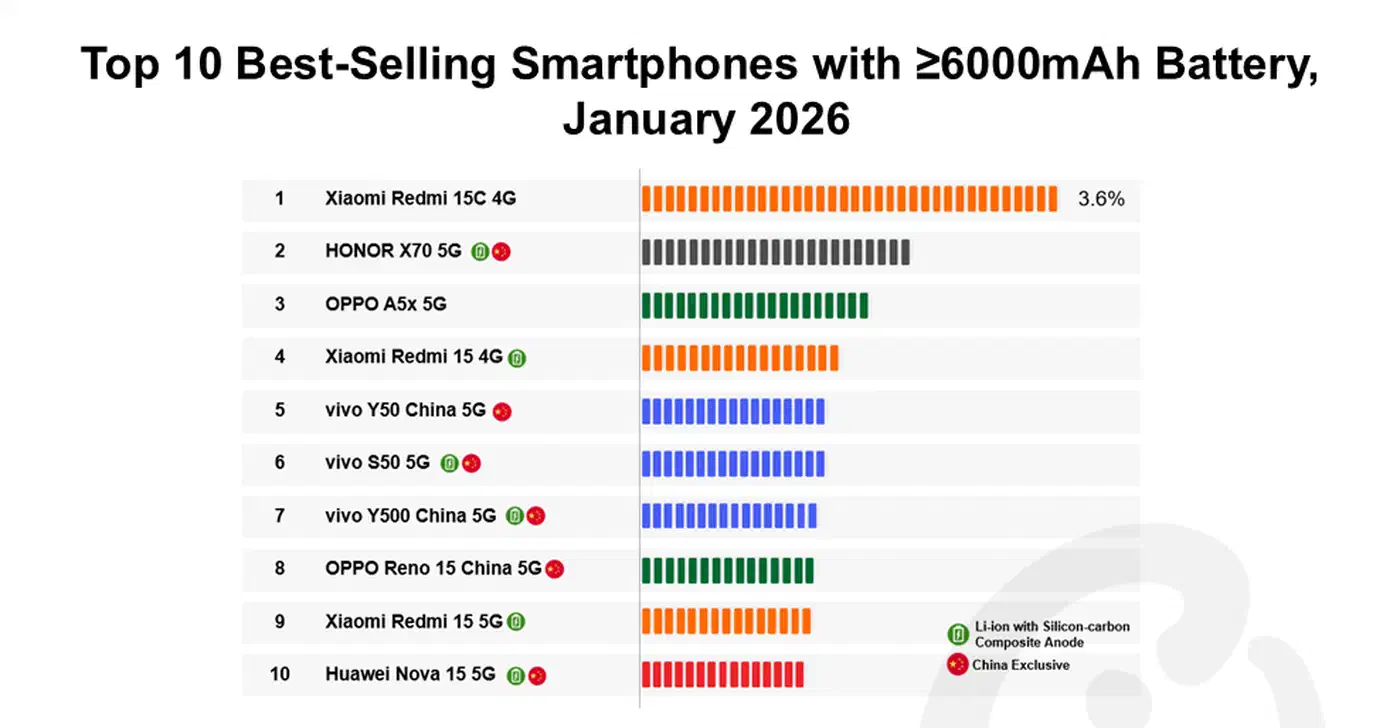
For a buyer, that means silicon-carbon is a real, shipping technology at 6,000 to 8,000mAh, and everything above 12,000mAh is lab work. A 2027 or 2028 flagship carrying a single 7,000mAh silicon-carbon cell is a reasonable expectation. An 18,000mAh phone isn’t on that list. Early rumours of a silicon-carbon Galaxy S26 Ultra came to nothing, so it stays on a 5,000mAh cell , and the S27 Ultra is the first plausible target.