

Aluminium plates ring bright where FR4 stays neutral

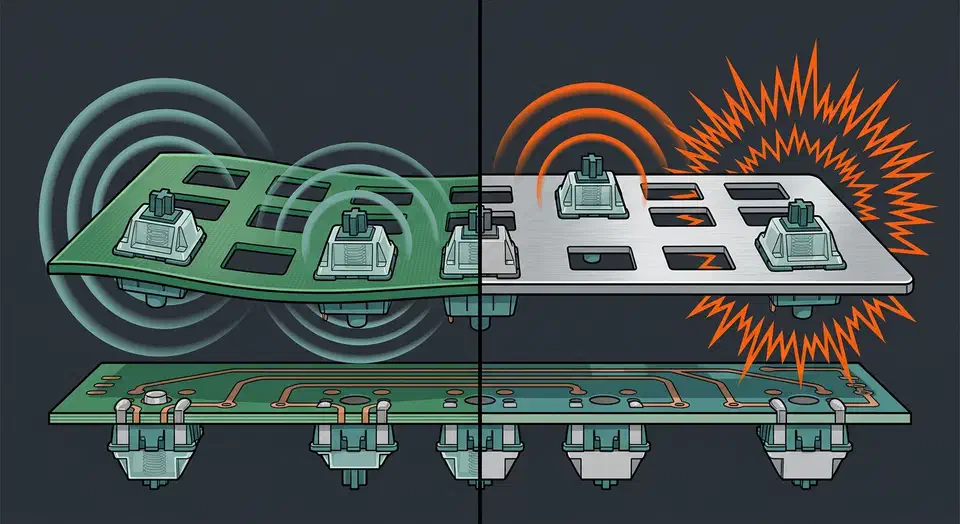
FR4 vs aluminium keyboard plate is the choice most 2026 builds come down to, and the two feel and sound different. FR4 flexes and stays tonally neutral because it is the same material as the circuit board. Aluminium feels firmer, sounds brighter, and rings unless you add plate foam, the way the aluminium-plate Keychron K2 HE ships.
Key Takeaways
- Plate material changes both how a keyboard feels and how it sounds.
- FR4 flexes and sounds neutral because it is the same stuff as the circuit board.
- Aluminium feels firmer and brighter, and it rings until you add foam.
- Add foam and the feel gap between plates mostly disappears.
- The Keychron K2 HE ships an aluminium plate, so it is firm and bright by default.
What does a keyboard plate change?
The plate is the layer that holds your switches and gives the board its structure, and it sits right on top of the PCB. Because every keypress travels through it, the plate shapes both how the board feels and how it sounds. The Lume Keebs plate guide treats plate material as more than structure; it colors the whole build.
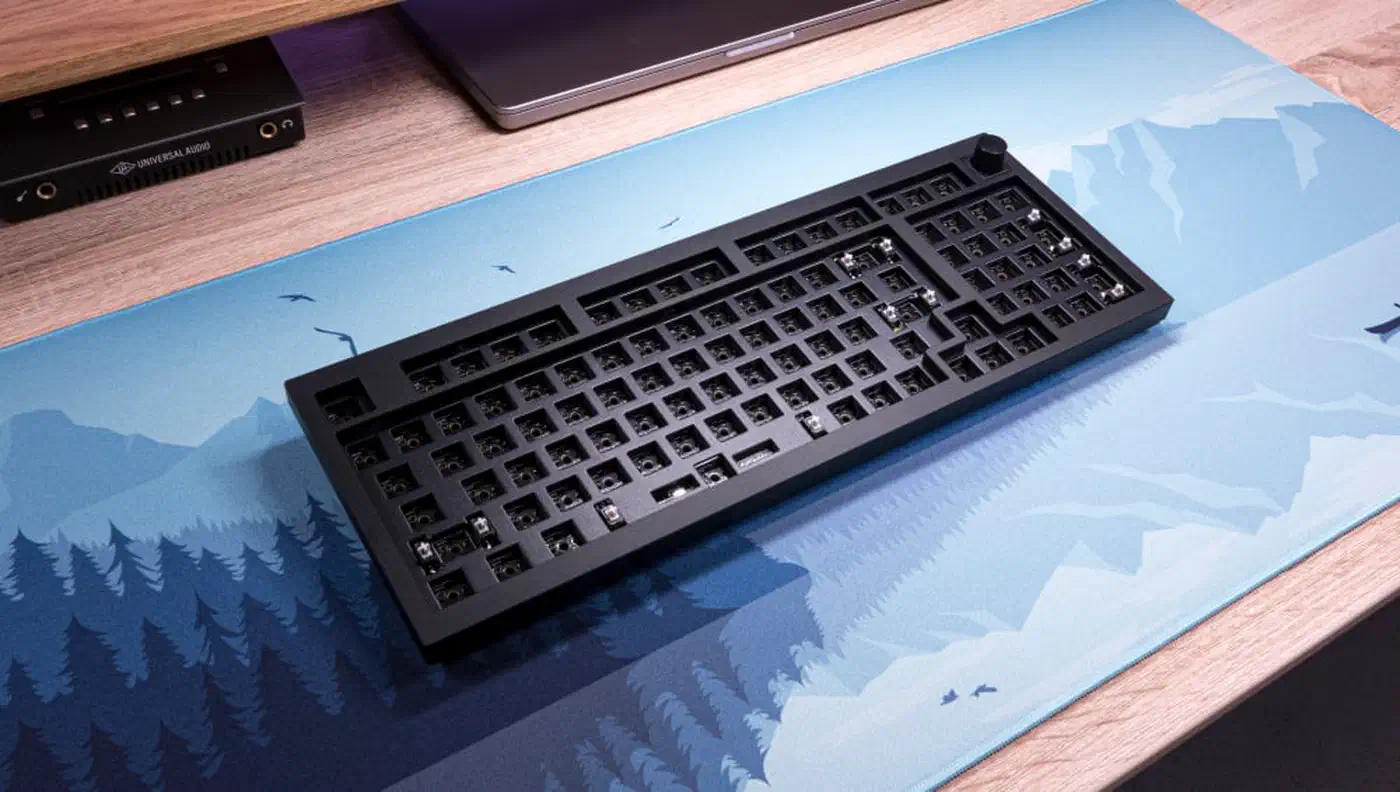
Plates split into two camps. Kinetic Labs groups them as dense, stiff metals like steel, brass, and copper, and less dense, flexible materials like PP, PC, POM, FR4, and carbon fiber. Stiff plates give almost no flex, a harsher bottom-out, and a higher-pitched sound with more ring. Flexible plates give a softer bottom-out and a deeper signature.
Nine materials is a lot to weigh, but a 2026 gasket or tray build usually comes down to two: FR4 or aluminium.
FR4 plates flex because they are PCB material
FR4 is flame-retardant fiberglass laminate, the exact material your PCB is made from. That shared makeup keeps it tonally neutral, so it never colors the switch. It is the safe default when you want the switches to define the sound and the plate to stay quiet.
The feel lands in the middle. FR4 is stiffer than POM and polycarbonate, yet it still has real flex, so Lume Keebs calls it the most well-rounded and balanced option. You get some give on bottom-out without the board feeling soft or mushy.
The sound sits in the middle too. FR4 gives a mid-toned profile between the soft plastics and the metals, so it reads as neutral, sitting between thocky and clacky. FR4 is the best pick for a soft-to-medium build where you want a plate that stays out of the way. It also costs little and ships on many budget-to-mid kits, which is why so many builders meet it first.
Aluminium plates feel firmer and ring brighter
Aluminium is the metal most people try first, and it has a clear signature. It feels firmer than FR4 but softer than copper or brass, so you get a rigid, responsive typing feel with little flex. The board pushes back more under your fingers.
The sound is louder and brighter. Aluminium produces a crisp, higher-pitched tone that sits above any plastic plate and just below copper. That brightness is the draw for a lot of gaming-leaning builds.
There is one trade with bare aluminium: it rings. Metal plates resonate, and that ping sits on top of every keypress. The fix is plate foam placed under the metal plate, which Lume Keebs flags as especially useful for aluminium that can ring. Add it and the resonance drops fast.
Both Keychron K2 HE Special Edition boards , the Concrete and Resin , use an aluminium switch plate with a tray-mount design and sell for $199.99. Aluminium is the pick for a firm, crisp, bright build, as long as you are willing to foam the ring out.
FR4 vs aluminium at a glance
| Material | Stiffness | Sound pitch | Bottom-out feel | Best use |
|---|---|---|---|---|
| FR4 | Medium, some flex | Neutral, mid | Soft, cushioned | Neutral all-round builds |
| Aluminium | Firm, little flex | Bright, high | Harder, crisp | Firm gaming or crisp typing builds |
Pick FR4 to stay neutral and soft, aluminium to go firm and bright, and foam the aluminium either way.
Where the other plate materials fit
If neither suits you, the wider lineup runs by flex. Lume Keebs orders plates from most flexible to stiffest: PP, PC, POM, FR4, aluminium, brass, carbon fiber, copper, steel. Sound follows the same order, from thocky at the bottom to clacky at the top.
Softer than FR4 sit PP, PC, and POM. These plastics give a soft, bouncy feel and a deeper, more muted sound, which suits quiet office typing. Reach for them when comfort and a low tone beat rigidity.
Harder than aluminium sit the heavy metals. Brass is deep and resonant, copper leans on the upper tones, and steel is the firmest and brightest with almost no flex. Carbon fiber sits stiff with a clean, bright sound; Kinetic Labs rates it a worse-sounding FR4, though sound tests vary.
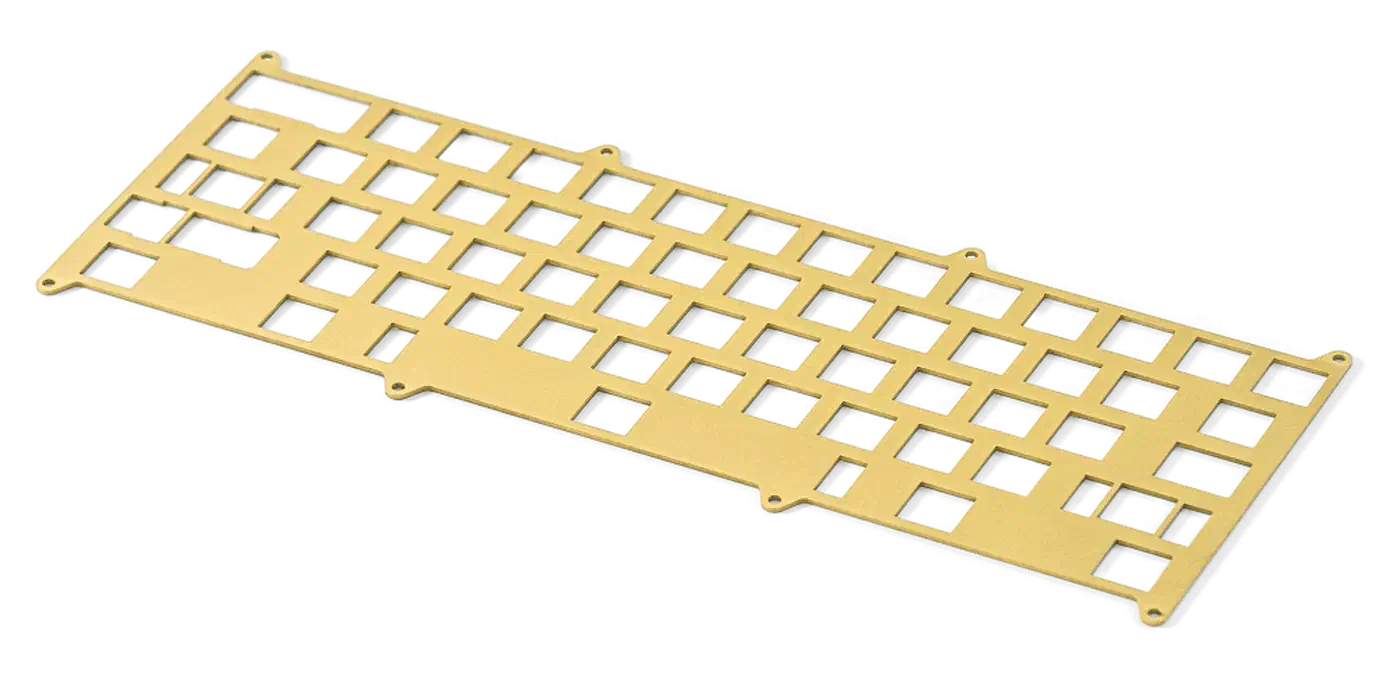
Steel plates are my least favorite as they are usually found in a lot of budget keyboards, but have a lot of ping to them, and can be quite difficult to work with in terms of removing the ping.
Does foam erase the difference?
Mostly, for feel. Once you add plate and case foam, the feel gap between plate materials shrinks a lot, so plate choice becomes more about sound than about flex. Lume Keebs makes this point directly.
Flex-cuts follow the same logic. A 1.2mm flex-cut plate and a 1.6mm solid plate feel nearly the same once foam fills the gaps. The foam does what the cuts were meant to do. Flex-cuts mainly change sound and count most in foamless builds.
Mounting style pulls its own weight, too. The same aluminium plate feels different on a gasket mount than on a top mount, because the mount adds or removes stiffness of its own. So the plate is only one input among several.
If you always foam and gasket-mount, pick the plate for the pitch you want, not the flex. If you build foamless, the plate carries more of the feel, and FR4’s give versus aluminium’s rigidity becomes the deciding factor.