

The HMX Yogurt S tops 2026 linear switches on sound and feel


The HMX Yogurt S linear switch is ranked the best linear of 2026, and it beats switches costing four times as much at roughly $0.25 to $0.50 each. A revised top housing holds wobble down, and a flat long-pole stem tip shapes its bright, poppy sound.
Key Takeaways
- Yogurt S tops the 2026 linear rankings, beating switches that cost four times more.
- HMX switches run about 25 to 50 cents each.
- The stem tip’s shape is what sets a switch’s pitch.
- A flat long-pole tip sounds poppy; a waffle tip sounds deeper.
- A revised top housing keeps the wobble down.
Why the HMX Yogurt S linear switch took the top spot
HMX barely existed a few years ago. Now it tops the 2026 linear rankings, above brands that charge twice as much. The UniKeys 2026 HMX ranking names the house number one for very minimal stem wobble, consistent factory lube and a wide material range, all at roughly 25 to 50 cents a switch.
Within that line, the ranking puts the Yogurt S first and names it the top linear switch overall.

HMX got there on price. The Keybumps HMX overview describes factory-lubed linears with smooth, consistent keystrokes at an affordable price.
Factory lube helps a switch only when every unit on the board gets the same treatment. A single dry or over-lubed switch stands out under your fingers, so even coverage across a full set counts for more than how much lube each one holds. HMX gets praise for keeping it even, and it is the same consistency builders chase in a Krytox 205g0 hand-lube job.
These rankings come from enthusiast retailers and reviewers, not blind lab tests, so treat them as informed opinion. One reviewer at LumeKeebs put the value case plainly:
their build quality and sound quality punch way above their price point
What is inside the Yogurt S
The Yogurt S pairs a POM stem with a PA12 nylon top housing and a PA66 bottom housing filled with 50% fibreglass. UniKeys says the revised top housing is there to cut stem wobble, which comes from loose tolerance between the stem and the housing walls. Fibreglass stiffens the nylon in the bottom half.
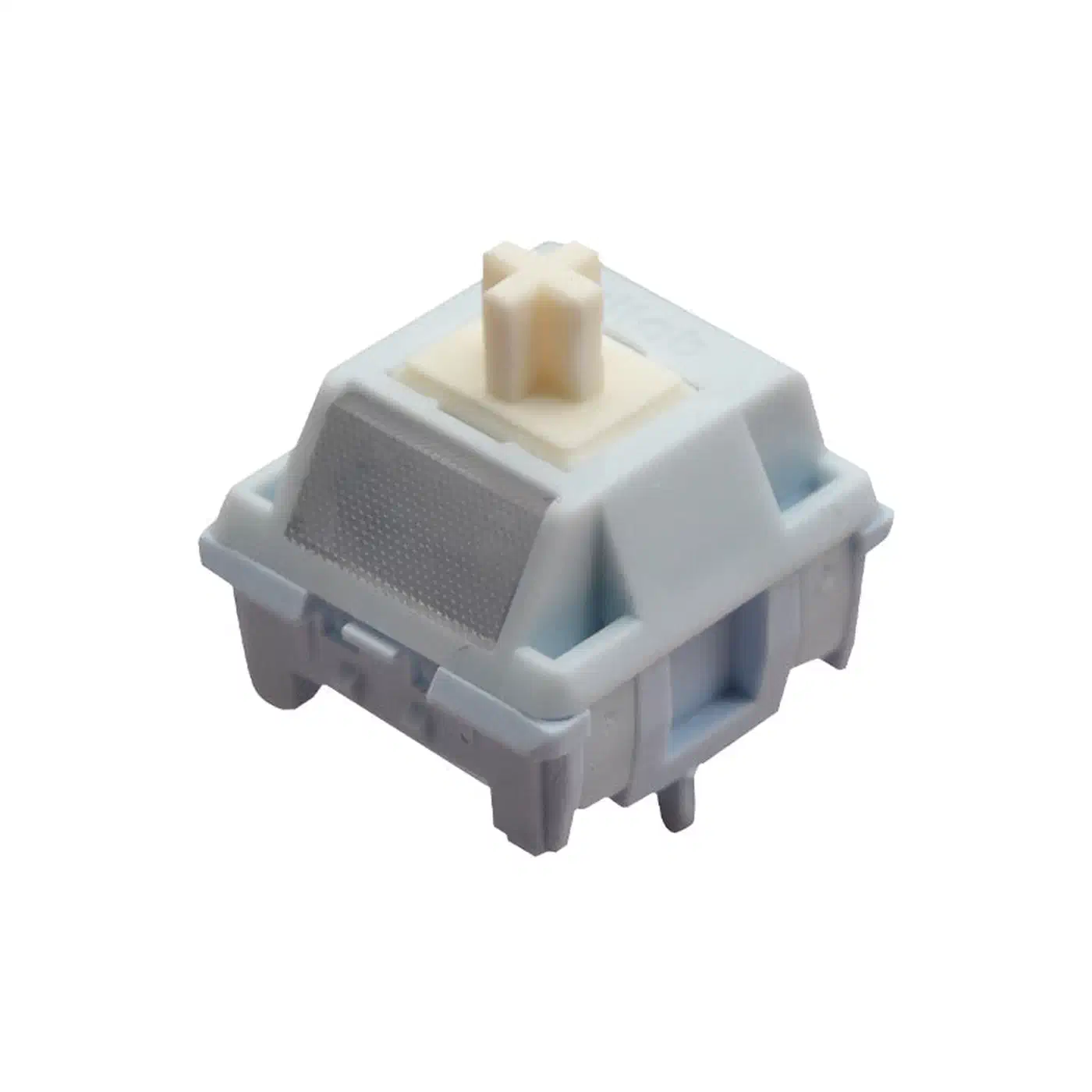
None of the sources gives a wobble figure in millimetres, so “minimal wobble” is a hand-feel claim here. Some other reviews do publish the number, like the WS Flux’s measured wobble at the stem.
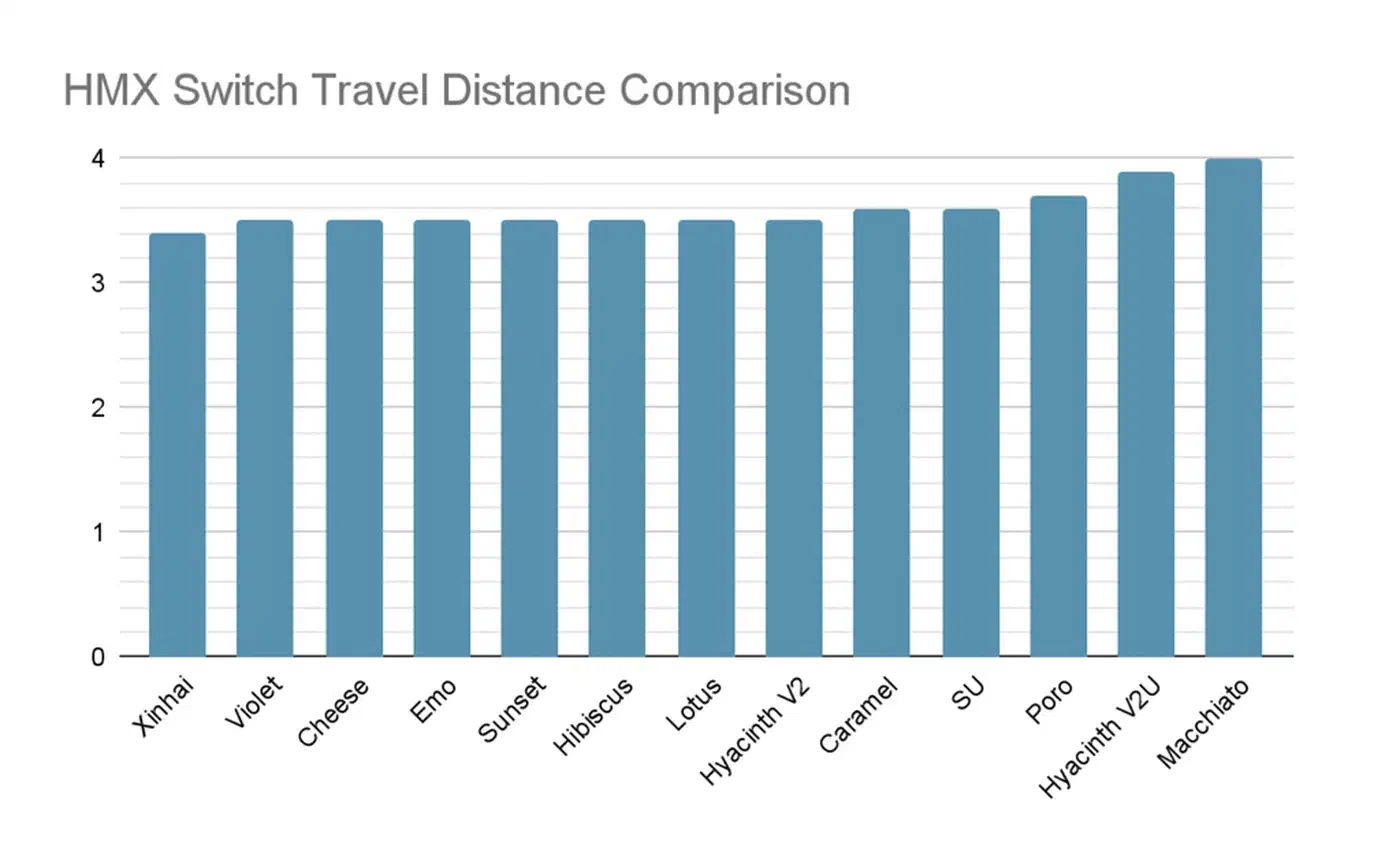
The Yogurt S uses a long-pole stem with a flat tip. A long pole meets the housing sooner, so total travel is shorter than the usual 4 mm: 3.5 mm on the Yogurt S. Shorter travel and a firm stop raise the pitch, which is why the switch reads as sharp and bright. The LumeKeebs review agrees that HMX switches with longer poles and shorter travel fall at the louder end of the range.
The flat tip adds to that. A flat face puts a large patch of plastic against the housing at the bottom of each press. More contact gives a brighter, poppier note, and together with the long pole it produces the classic modern HMX clack.
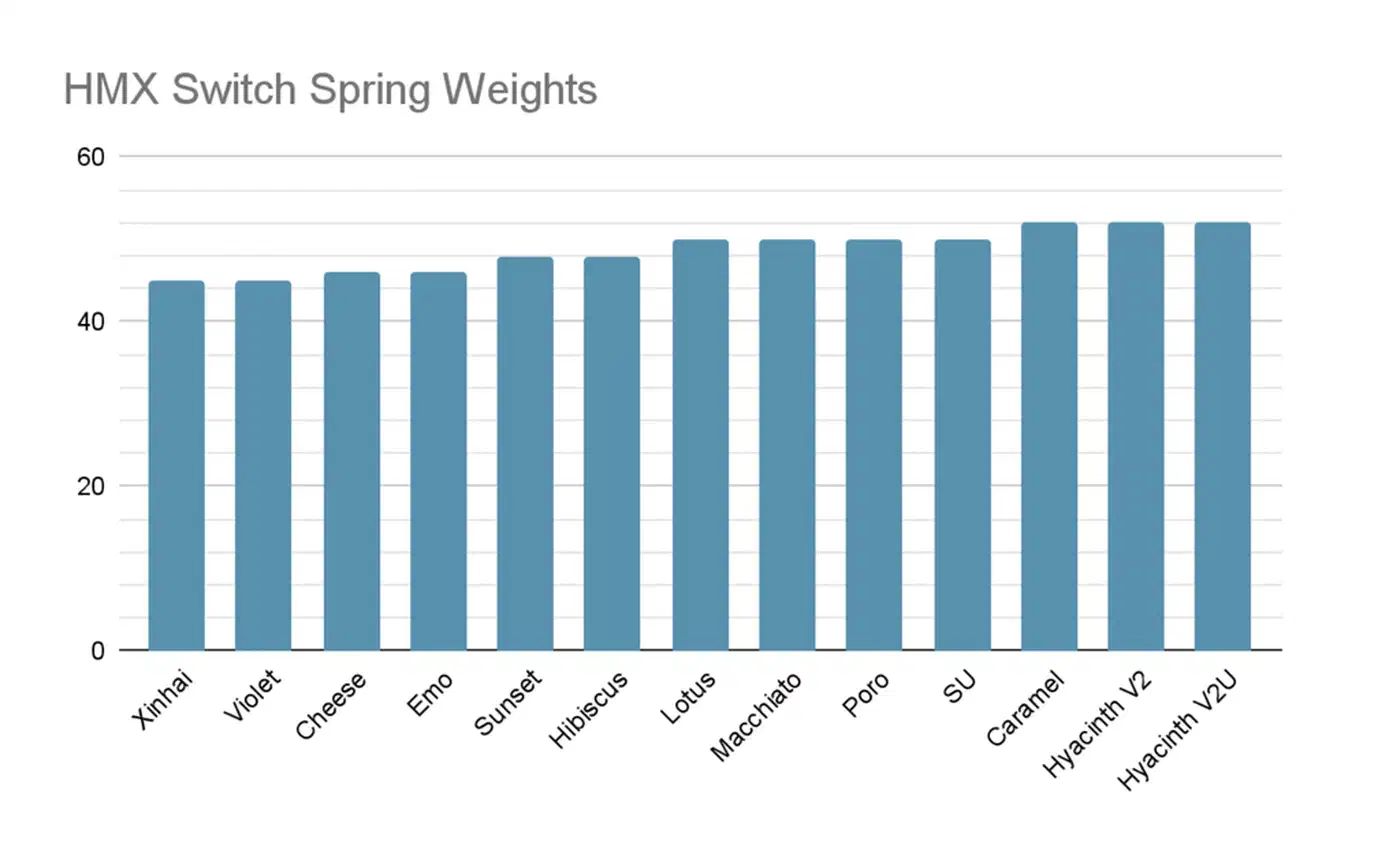
Check the spring weight before you buy. HMX linears tend to run light. The Yogurt S comes with a 43g or a 53g bottom-out spring, both lighter than a heavy Cherry or Gateron. That suits fast typing and gaming. It can feel too light if you press hard, so heavy-handed typists should try before committing. Force-curve tuning with staged springs also changes how that force builds through the press.
How does stem tip shape change the sound?
At the bottom of every keypress, the stem tip slams into the housing. How much plastic touches at that moment decides how the impact sounds. Change the shape of that tip and you change the pitch, even with identical materials.
A flat long-pole tip gives a large contact patch. Lots of plastic meets the housing at once, which produces the bright, poppy note the Yogurt S is known for.
A waffle-shaped tip shrinks the contact patch, so less plastic meets the housing at bottom-out. That lowers the pitch, softens the impact and cushions the feel. HMX uses this tip on the Caramel Pudding V2 for its softest, most padded bottom-out.
So one factory gets two very different sounds out of the same plastics by reshaping a few square millimetres of the stem. Most buying advice tells you to pick by housing material, but material mostly sets the character, while the tip shape sets the pitch.
You can often guess a switch’s sound from a photo of its stem. A flat pole hints at a bright clack. A waffle or grid tip hints at something deeper and quieter.
Which HMX switch matches the sound you want
HMX splits its line cleanly by sound, so you can buy by the noise you want.
| Switch | Stem tip | Sound | Best for |
|---|---|---|---|
| HMX Yogurt S | Flat long-pole | Defined, poppy bottom-out | A bright, modern clack |
| HMX Cthulhu | Flat long-pole | Crisp, lively bottom-out | An energetic clacky build |
| HMX Toast | Deeper materials | Low-pitched, creamy | Quiet, office-friendly typing |
| HMX Dirty Pink | Thock-tuned materials | Deep, full thock | The strongest HMX thock |
| HMX Caramel Pudding V2 | Waffle | Lower pitch, cushioned | The softest bottom-out |
Pick by the room as much as the sound. Yogurt S and Cthulhu are bright and a touch loud, so they suit a solo desk more than a shared office. Toast and Caramel Pudding V2 are quieter and calmer, and the ranking names Toast its office pick. If even those carry too far, a switch built to pad the bump with rubber, like Gazzew’s damped tactile, goes further still.
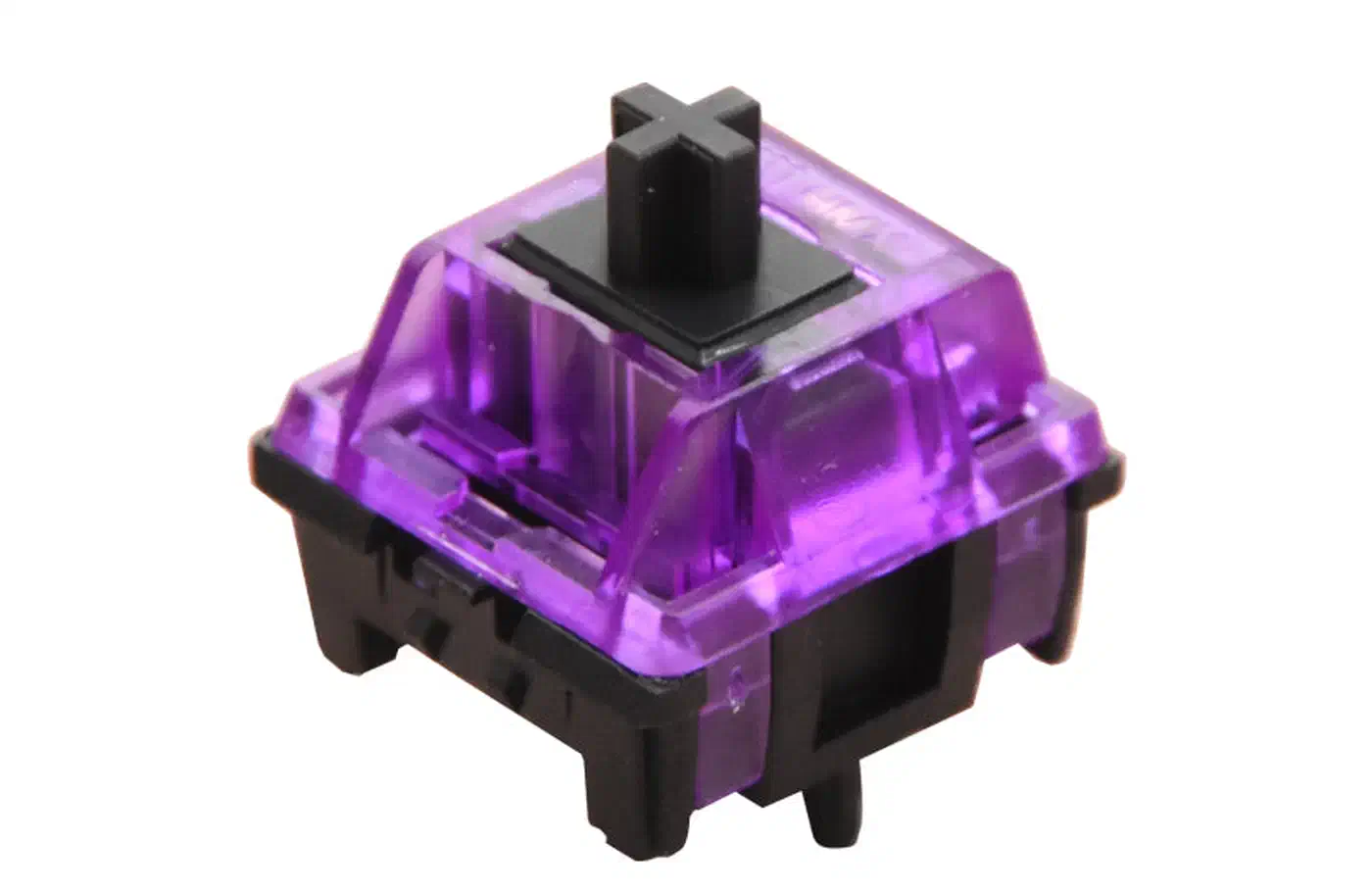
The case, plate and foam around a switch shape the final note as much as the stem does, so any switch here can end up brighter or deeper depending on the build. Treat the table as a starting point.
Western enthusiast shops like UniKeys and LumeKeebs stock these switches outside group buys, so trying one is easy and cheap. At about 43 cents each, the Yogurt S is a low-risk way to hear what the ranking is talking about.