

Tungsten carbide outlasts hardened steel by half on the X2D

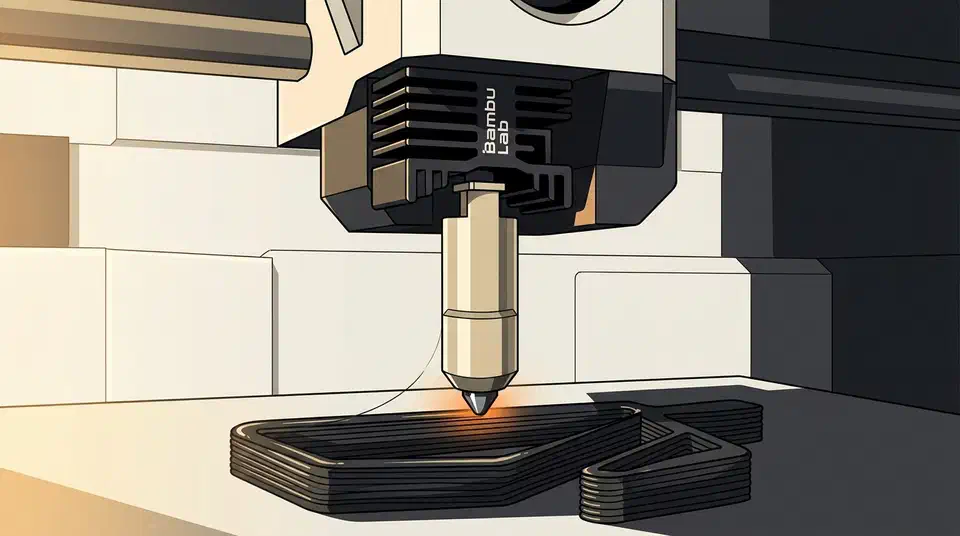
Tungsten carbide nozzle vs hardened steel comes down to one number: HRA 90 against HRA 74 on the Rockwell A hardness scale. That gap buys roughly 50% more life on carbon and glass fiber filament. Bambu sells the carbide version for the H2D, H2S, H2C, P2S and X2D hotends, and for nothing older.
Key Takeaways
- Tungsten carbide is Bambu’s hardest nozzle at HRA 90, against HRA 74 for hardened steel.
- It lasts about 50% longer on carbon and glass fiber filament.
- It fits only the H2 family, P2S and X2D. Older X1, P1 and A-series machines miss out.
- What wears a nozzle out is the abrasive filament you push through it.
- It conducts heat well, so you barely need to retune temperature after the swap.
Tungsten carbide nozzle vs hardened steel on the hardness scale
Bambu’s nozzle wiki rates the tungsten carbide nozzle at HRA 90. Its hardened steel nozzles sit at HRA 74 on the same Rockwell A scale. Carbide is a sintered ceramic-metal blend, closer to a cutting tool than to a machined steel tip.
Abrasive filaments carry hard particles that behave like sandpaper inside the orifice, and on a softer face they grind the hole wider and rounder, which ruins extrusion width and part accuracy. A harder face resists that grinding for longer.
Bambu says the carbide nozzle holds its circular shape after extended use and shows far less wear even after many kilograms of filament. The headline figure is roughly 50% more lifespan on fiber-reinforced filament than hardened steel, a number FilamentPicks repeats from the manufacturer’s own claims.
Treat that 50% as directional. No one has run a controlled wear test on the same Bambu machine with the same spool. The figure comes from the vendor, with no bench data behind it.
Which Bambu printers take the tungsten carbide nozzle?
Carbide fits the H2D (both hotends), the H2S, the left hotend of the H2C, the P2S and the X2D. Both Standard Flow and High Flow variants exist, in 0.4mm, 0.6mm and 0.8mm. There’s no 0.2mm carbide option. Max print temperature is 350°C, the same ceiling as the steel hotends it replaces.
Owners of the X1C, P1P, P1S, A1, A1 mini or A2L can’t buy this part at all. Those machines list stainless and hardened steel only, so hardened steel is their ceiling for abrasives.
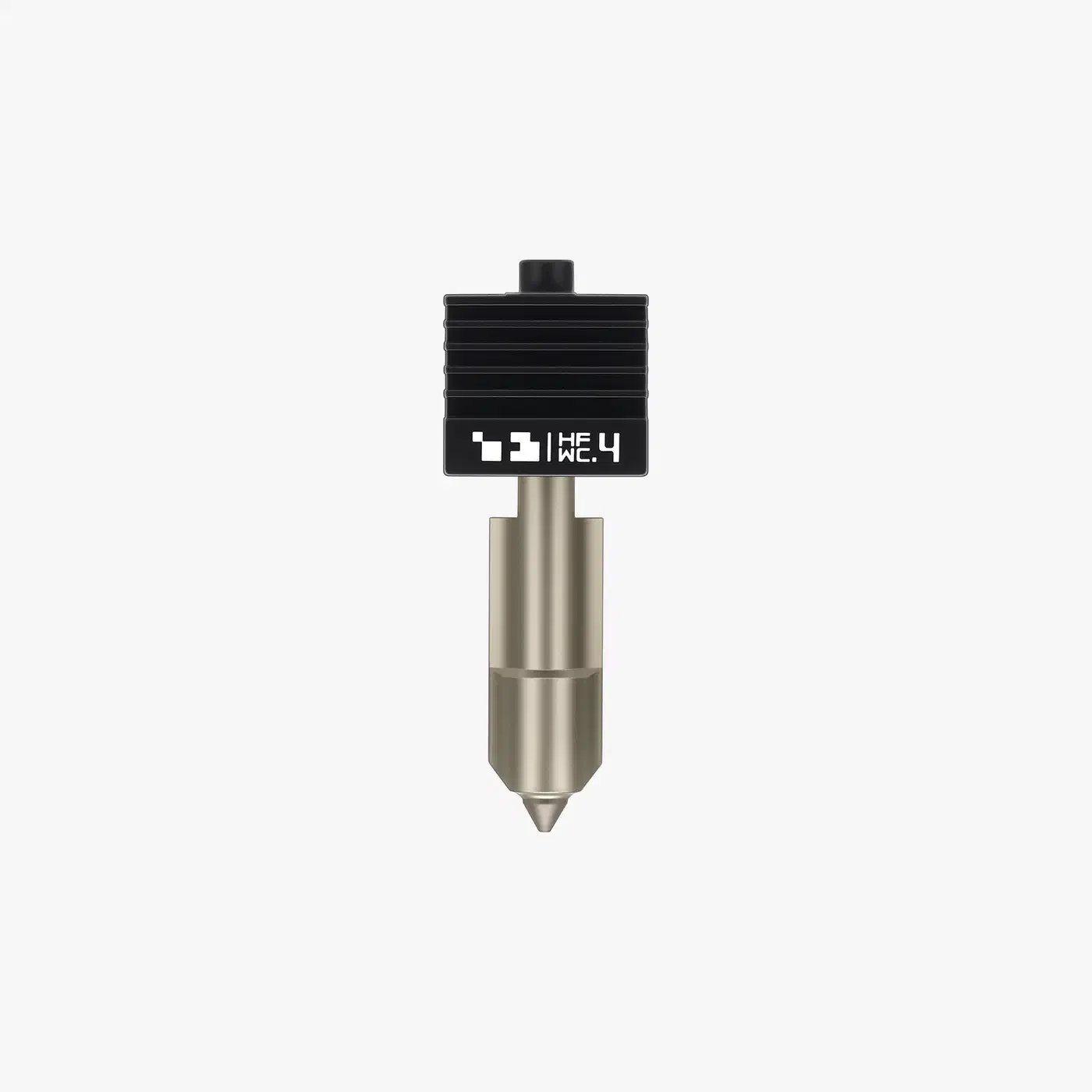
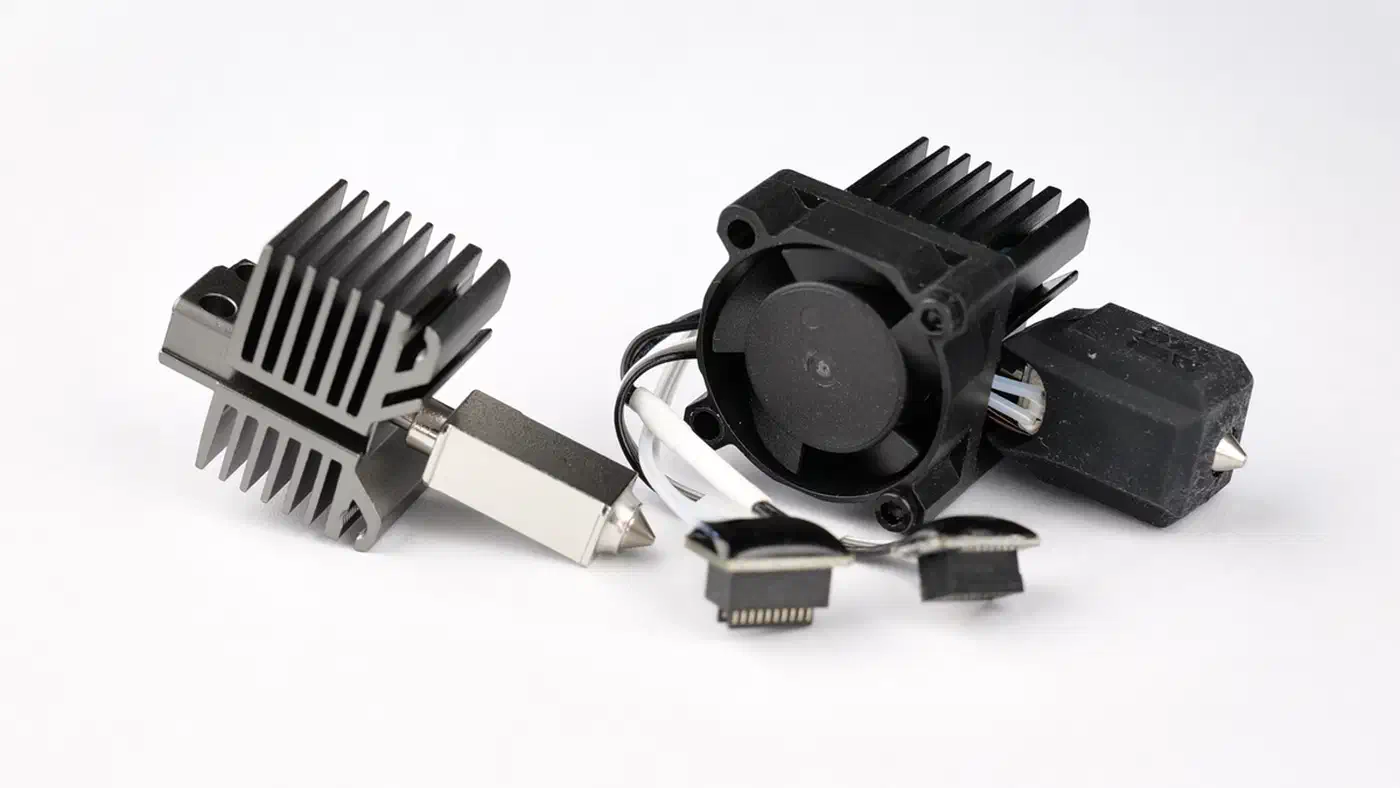
Bambu sells a complete hotend assembly rather than a bare screw-in tip. In 2026 the tungsten carbide nozzle for H2 and P2S lists at €59.99 for Standard Flow and €89.99 for High Flow. You pay for the electronics and the quick-swap latch as well as the tip.
How long does each Bambu nozzle material last?
Bambu doesn’t sell brass nozzles at all. The usual brass-versus-hardened advice from the wider hobby doesn’t map onto these machines. Your ladder runs stainless, hardened, carbide.
| Filament type | Recommended nozzle | Typical lifespan |
|---|---|---|
| PLA, PETG, ABS, ASA, TPU | Stainless or hardened steel | 500 to 1,000+ hours |
| Carbon or glass fiber | Hardened steel | 200 to 500 hours |
| Wood, metal-fill, glow-in-the-dark | Hardened steel | 50 to 200 hours |
| Fiber-reinforced, high volume | Tungsten carbide | About 50% longer than hardened |
UAVMODEL Insights gives tungsten carbide 5+ years on carbon and glass fiber filament, against 6 to 12 months for hardened steel on the same material.
Why abrasive filament decides nozzle wear
The damage comes from what you push through the tip, so hours on the clock tell you little about nozzle wear. Bambu’s own documentation shows a stainless nozzle visibly enlarged after just 10 hours of PETG-CF. With the harshest materials, a single print can leave a mark.
Carbon fiber, glass fiber, wood-fill, metal-fill and glow-in-the-dark all carry particles harder than steel. A 20% glass load like Polymaker’s PPS-GF20 sits at the harsh end of that list. Glow filament catches people out most often, because the strontium aluminate pigment behind the glow is abrasive despite the harmless look. Wood is similar: some owners report visible orifice deformation under 1kg even through a hardened nozzle.
I killed a brass nozzle in a single 8-hour CF-PETG print. The exit hole was visibly oval.
Brass is not on Bambu’s menu, but the mechanism is identical on stainless. A year of PLA leaves a nozzle fine while one weekend of glass-filled nylon ruins the orifice.
Do you need to retune anything after switching?
Tungsten carbide conducts heat at 80 to 110 W/m-K, close to brass and far above steel. The melt zone reaches the temperature the thermistor claims. Against a brass baseline it needs only a +0 to +5°C bump.
Hardened steel needs +5 to +10°C over that same baseline, and stainless +7 to +12°C, because both conduct heat poorly. So moving from hardened steel to carbide usually means dropping your temperature a little. Print a temperature tower and let the results decide.
A nozzle material change shifts the thermal mass of the assembly, so old PID values can start to oscillate. Re-run the autotune and save it:
M303 E0 S220 C8
M500
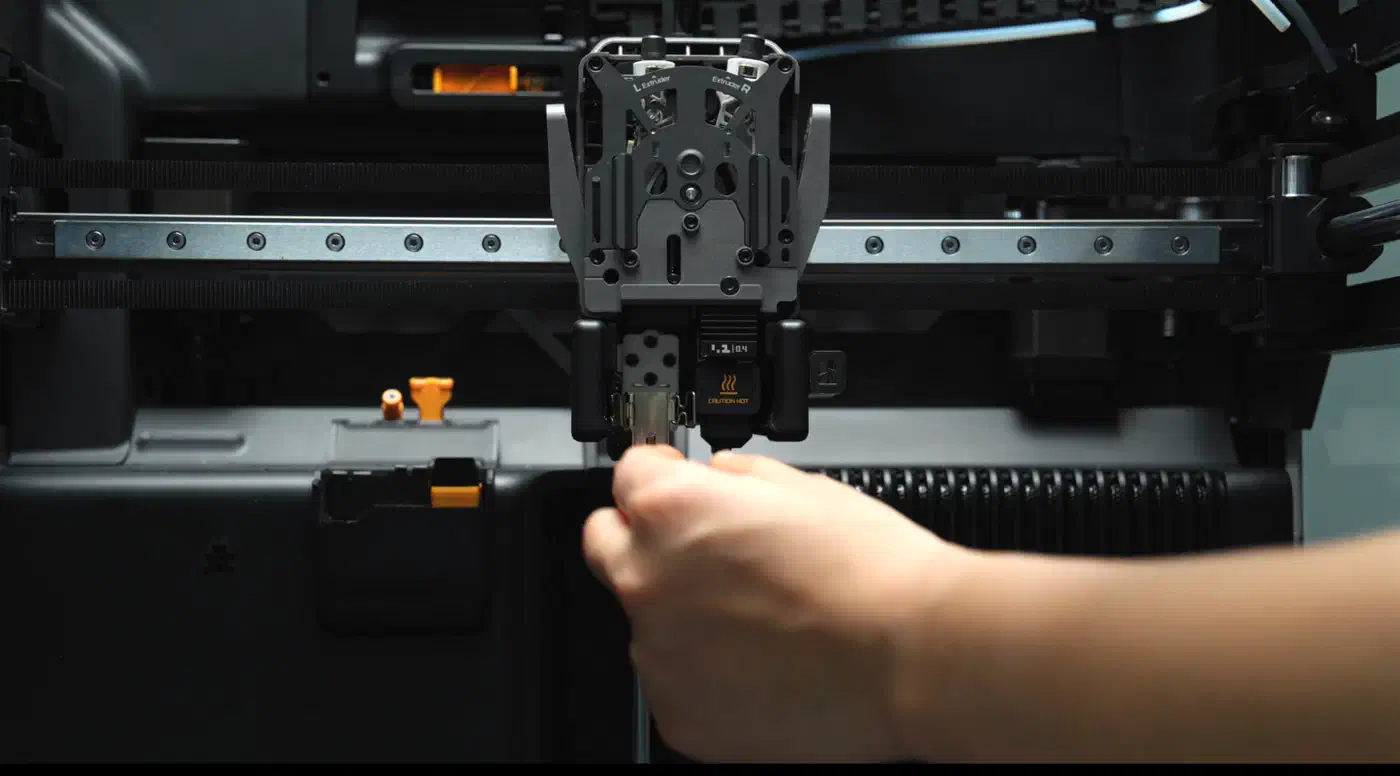
Bambu’s quick-swap design keeps the rest of the job plug-and-play, with no threads to worry about. On other machines you hand-fit a steel nozzle into an aluminium block. Use anti-seize there, because steel and aluminium cold-weld together and gall.
Should you upgrade to a tungsten carbide nozzle?
Buy it if fiber-reinforced filament is your normal working material on an H2, P2S or X2D. Running kilograms of PA-CF or PET-GF through hardened steel means replacing hotends on a schedule. Over enough spools, the carbide assembly pays that cost back.
Skip it if your queue is mostly PLA, PETG, ABS and TPU. Stainless already gives 500 to 1,000+ hours on those materials. Even a stiff flexible like Bambu’s Shore 68D TPU for AMS only asks for hardened or stainless steel. Hardened steel remains the sensible middle for anyone who prints abrasives now and then.
Heavy abrasive printers should still take the upgrade. Even a cautious reading of the lifespan estimate beats replacing hardened steel two or three times over. Everyone else can keep the hotend they have and spend the money on filament.