

Polymaker Fiberon PPS-GF20 survives 236°C on a desktop
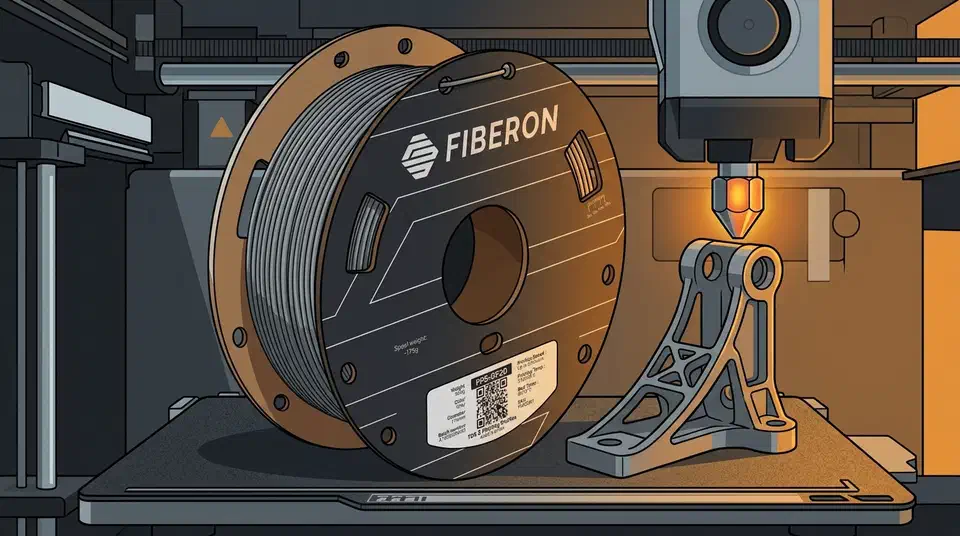
Polymaker PPS-GF20 is the most heat-resistant filament you can print at home, holding its shape to a 236.3°C heat deflection temperature once annealed. Getting there takes a 350°C hotend, a hardened steel nozzle, the part fan switched off, and a 10-hour bake after the print finishes.
Key Takeaways
- Annealed PPS-GF20 holds its shape up to 236°C, higher than any common desktop filament.
- Glass fiber replaces carbon fiber, so the printed part does not conduct electricity.
- You need a 350°C hotend, a hardened nozzle, and the cooling fan off.
- Skip the 10-hour anneal and you give up most of the heat resistance.
- One buyer swapped machined brass parts for printed ones and saved over 2,000 USD a month.
What is Polymaker Fiberon PPS-GF20?
PPS stands for polyphenylene sulfide, an engineering plastic that factories have used for decades and desktop printers could not touch. GF20 means the filament carries 20% short glass fiber. The fiber adds stiffness and heat resistance, and because glass does not conduct, the finished part stays an insulator.
Fiberon PPS-GF20 is rated at 6.05 kV/mm dielectric strength with a low dielectric constant of 2.71 at 1 MHz, which puts it in range for electrical housings, ADAS sensor enclosures, and structural parts inside 5G base stations. It is also UL94 V0 flame-retardant at 1.5 mm thickness and shrugs off acids, bases, oils, and solvents.
It arrived in Polymaker’s 2026 filament wave next to PET-GF, HT-PLA-GF, and ASA-CF, at 59.99 USD for a 500 g roll or 279.99 USD for 3 kg. The Next Layer describes it as a glass-fiber version of Polymaker’s legendary PPS, with low conductivity and flame-retardant properties added.
Why is PPS-GF20 so hard to print at home?
Nozzle temperature runs 310°C to 350°C, so an all-metal hotend rated 310°C or higher is mandatory. Most printers on a hobbyist’s bench top out well below that.
The cooling fan must be off for the whole print, which feels wrong to anyone trained to cool every layer. The nozzle has to be hardened steel, because 20% glass fiber grinds through brass. The bed runs 80°C to 90°C. Polymaker also asks for direct drive, a short 1 mm to 3 mm retraction, and speeds up to 250 mm/s.
Polymaker names exactly two desktop printers it prints reliably on: the QIDI Plus4 and the Bambu Lab H2D . Both have a hotend that goes past 350°C and an actively heated chamber holding 65°C.
Polymaker never publishes a chamber requirement, so you need the heated chamber in practice without finding it on any datasheet.
How do you print and anneal PPS-GF20?
The filament ships vacuum-sealed and barely drinks water, with an equilibrium absorption of 0.11% at 70% humidity and 23°C. Moisture sitting on the surface still blisters a part at these temperatures.
Confirm your printer can reach the temperatures
Check for an all-metal hotend rated 310°C or higher and fit a hardened steel nozzle.
Keep the filament dry
Print straight from the sealed spool where you can. If the roll has absorbed moisture, run it at 100°C for 10 hours in a dryer first. Otherwise you get surface defects no slicer setting can fix.
Load the print settings
Set the nozzle between 310°C and 350°C, the bed between 80°C and 90°C, and turn the cooling fan off. Use direct drive with 1 mm to 3 mm retraction and a retraction speed of 20 mm/s to 40 mm/s. Speed can go to 250 mm/s, though slowing down buys surface quality.
Print the part
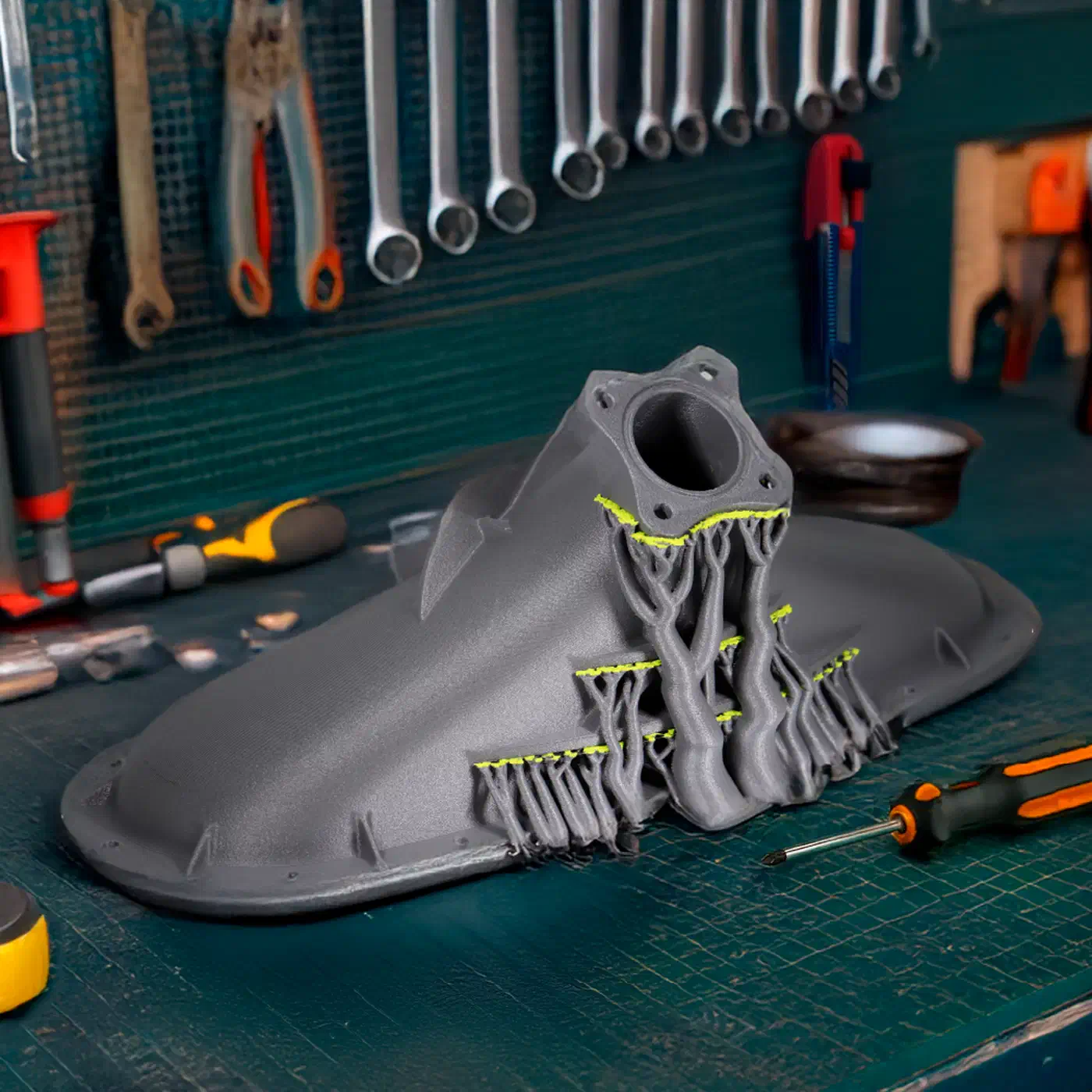
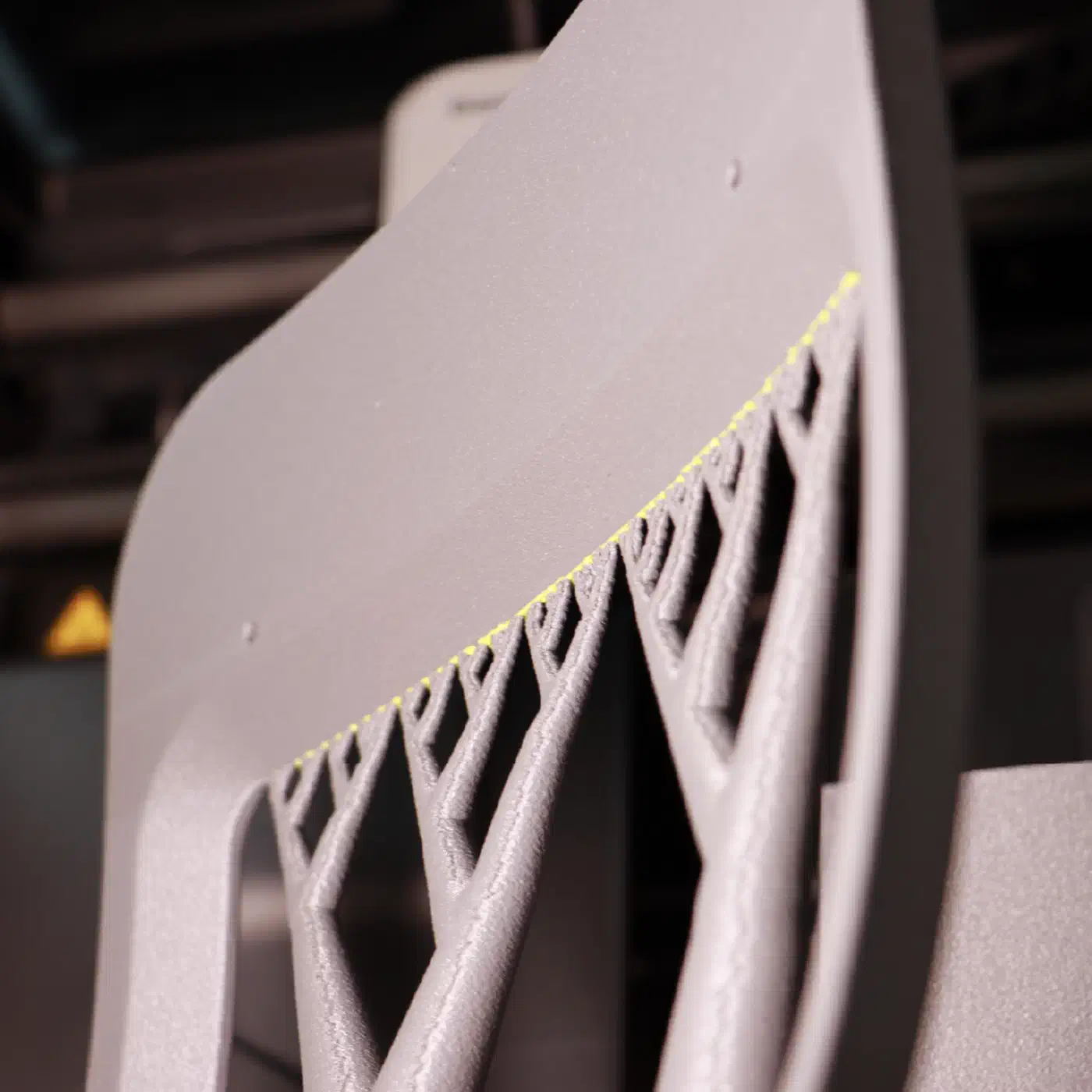
Polymaker suggests PolySupport for PA12 wherever the model needs supports. For load-bearing parts, start at 100% infill.
Anneal the finished part
Bake the part for 10 hours at 130°C for most uses. A 230°C anneal gives the highest heat resistance and is worth the extra effort only for hot service. Expect some dimensional change on a glass-filled part, since a bake at this temperature relieves stress and moves geometry. Polymaker does not publish a shrinkage figure, so measure a test coupon before you commit a fitted part.
Verify heat performance
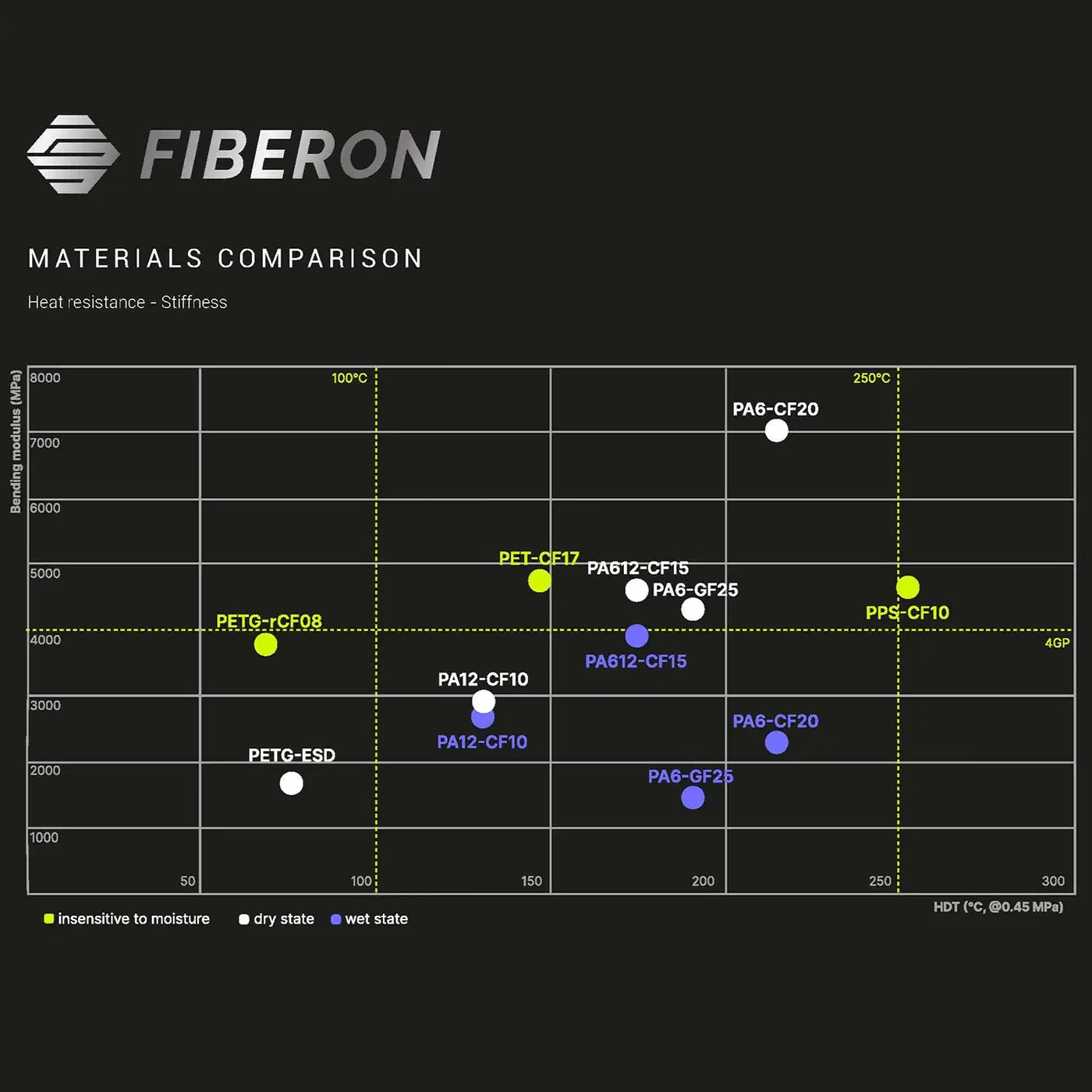
Put the annealed part under its real working temperature before you trust it. Annealing brings the heat deflection temperature to 236.3°C at 0.45 MPa, and the 230°C recipe holds 219.6°C under the much heavier 1.8 MPa load.
How strong and heat-resistant is PPS-GF20?
The mechanical numbers favour stiffness over toughness. Polymaker lists up to 4552 MPa Young’s modulus, 102 MPa bending strength, and 64 MPa tensile strength in the XY plane. Those figures suit brackets, antenna mounts, and fixtures that must not flex.
A verified buyer printed at a 340°C nozzle, a 110°C bed, and a 65°C chamber. He then salt-annealed the parts with a gradual rise and a 2.5-hour hold at 230°C. Those parts held 650 lbs for 15 seconds with under 0.2 mm of deflection, and beat PPS-CF10 by 18% in compression on a lock-stand fixture.
When we tested the parts under heat at 130c we felt so comfortable with the results that we’re now saving over $2000/month by switching to 3d printed PPS-GF20 parts over the brass machined versions.
That figure comes from Polymaker’s own review page rather than an independent lab. Nobody has published a nozzle-wear lifetime for 20% glass fiber either, so how long a hardened nozzle lasts is still guesswork.
PPS-GF20 vs PPS-CF10: which should you buy?
PPS-CF10 uses carbon fiber and conducts electricity, which rules it out for anything meant to insulate. PPS-GF20 uses glass and insulates, so it is the only one of the pair you can put around a live circuit.
| Spec | PPS-GF20 | PPS-CF10 |
|---|---|---|
| Reinforcement | 20% glass fiber | 10% carbon fiber |
| Electrical behaviour | Insulating, 6.05 kV/mm | Conductive |
| Tensile strength, XY | 64 MPa | 59.4 MPa |
| Bending strength, XY | 102 MPa | 94.3 MPa |
| Young’s modulus, XY | 4552 MPa | 5446.7 MPa |
| Anneal recipe | 10 h at 130°C, or 230°C for maximum | 16 h at 125°C |
| Price per 500 g | 59.99 USD | 69.99 USD |
Reviewer Chris C. reckons the glass grade prints better than the carbon one.
So pick PPS-CF10 when you want maximum stiffness for the weight and conductivity is no problem, and PPS-GF20 for anything electrical, flame-rated, or chemically exposed. Either way, budget for a hardened nozzle, a printer that reaches 350°C, and an oven you can tie up for ten hours.