

At Shore 68D the TPU for AMS keeps prints fast and clean

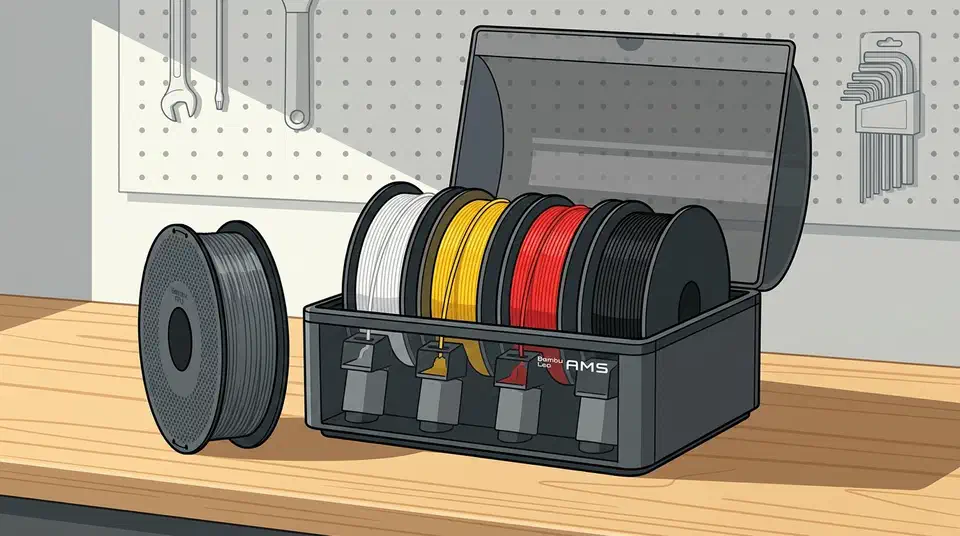
Soft flexible filament buckles inside an automatic material system, so Bambu made its TPU for AMS harder instead. At Shore 68D it feeds like a semi-rigid one, and the datasheet claims up to 60% faster prints, 238 mm/s against 147 mm/s.
Key Takeaways
- It is a Shore 68D filament, far harder than the usual 95A TPU.
- It feeds through the AMS, where soft flexibles buckle and jam.
- Bambu’s own bench claims 238 mm/s against 147 for its 95A.
- At 68D it barely stretches, so it suits tough parts rather than squishy ones.
- You still have to dry it and fit a hardened nozzle.
Why soft TPU jams an AMS, and how 68D fixes it
An automatic material system pushes filament along a long, curved path with tight bends and buffer springs. Rigid filament handles that fine. Soft filament compresses under feed pressure, then kinks and coils inside the tube instead of advancing, which is why flexibles were kept out. Bambu’s own TPU printing guide says the AMS, AMS Lite and AMS 2 Pro are all incompatible with TPU filament. Only the AMS HT handles it, and even then it works as a sealed box while you feed the filament by hand through a separate outlet on the back.
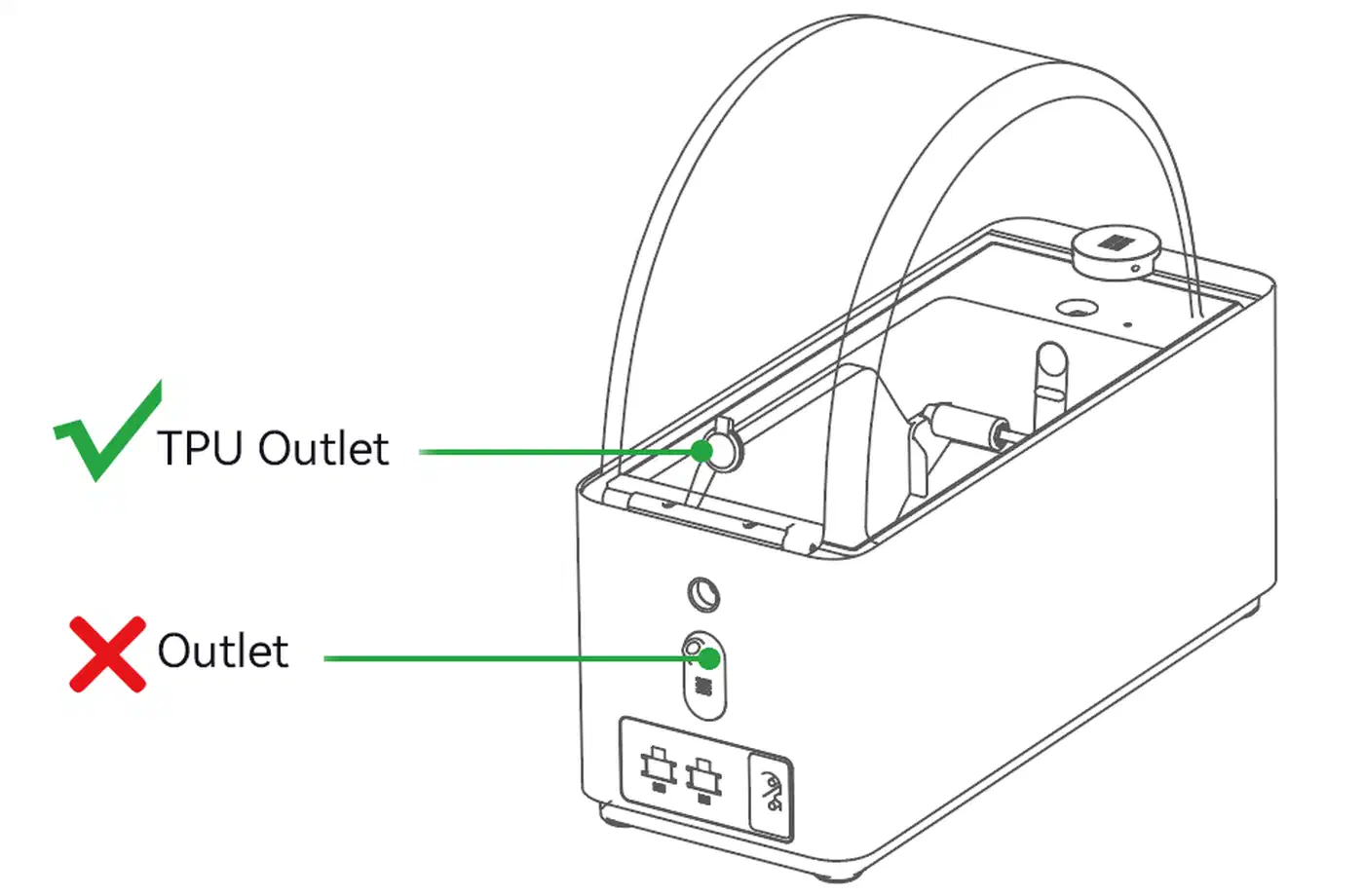
TPU for AMS is the single exception, because the extra hardness stops it buckling in the tube. The same wiki confirms it runs through the standard feeding path of every AMS-series unit, loading and printing like any ordinary spool. Bambu also lists it as compatible with every current printer family, including the A1, which cannot print 85A TPU at all.
What Shore 68D means for your parts
Most hobby TPU sits at 95A, near the top of the softer A scale. TPU for AMS sits at 68D, on the harder D scale used for rigid plastics, so it is a long way from the squishy filament most people picture.
A 68D part bends and absorbs a hit, then springs back stiffly. It will not stretch like a phone-case gasket or a soft RC tire, so Bambu aims it at protective cases, door stoppers, sports gear and automotive parts.
If you want stretch, this is the wrong spool. Buy a 95A or softer filament instead and accept the slower, fussier print. You do get some control over the flex you have: Bambu notes that wall loops and sparse infill density trade directly against elasticity, so fewer walls and lower infill leave a part springier.
How fast TPU for AMS prints
Bambu claims up to 60% faster printing than its own TPU 95A HF, quoting up to 238 mm/s against 147 mm/s. The bench ran on a 50 mm diameter, 100 mm tall specimen at 40% infill.
| Spec | TPU for AMS | TPU 95A HF |
|---|---|---|
| Shore hardness | 68D | 95A |
| Max volumetric speed | 18 mm³/s | 12 mm³/s |
| Top print speed | Up to 238 mm/s | Up to 147 mm/s |
| Nozzle temperature | 230 °C | 230 °C |
Treat 238 mm/s as a ceiling. It is a vendor bench number on a simple cylinder, and real geometry, wall count, cooling and part size will all pull it down. The retailer Filament2Print’s technical listing recommends staying under 250 mm/s, which brackets the claim as a near-limit figure.
The datasheet numbers behind the claims
Bambu’s technical data sheet lists 22.4 MPa tensile strength and over 650% elongation at break in the X-Y plane. Turn the same test to the Z axis and tensile strength halves to 11.2 MPa, while elongation collapses to 31%.
Impact strength splits even wider: 124.3 kJ/m² in-plane against 9.6 kJ/m² across layers. Print orientation therefore decides whether an impact part survives.
A 1190 MPa tensile modulus confirms the stiffness the durometer implies. Density is 1.26 g/cm³ and the melting point is 183 °C. Bambu leaves flexural strength, softening temperature and heat deflection blank.
Handling, nozzles, and drying
Bambu specifies 70 °C for eight hours in a blast drying oven, or 80 to 90 °C for twelve hours on an X1-series heatbed, and asks for under 20% relative humidity during printing and storage. The material absorbs about 1.2% of its weight in water at ordinary room conditions, and the low-string formulation does not rescue wet filament.
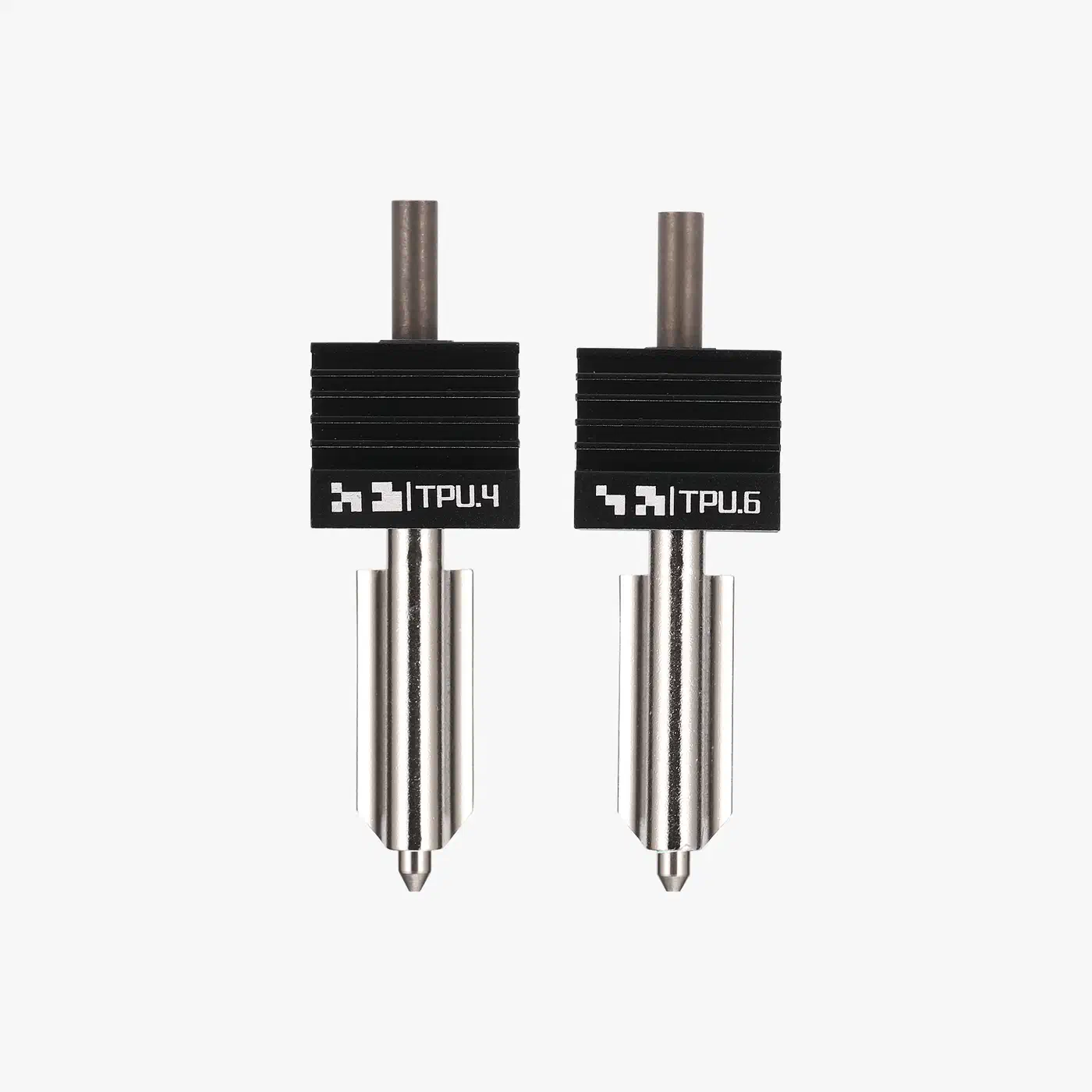
Use a 0.4, 0.6 or 0.8 mm nozzle in hardened or stainless steel; the 0.2 mm nozzle is explicitly unsupported. Bambu advises a new nozzle or a cold pull first, because carbon or glass fibre left in a used one raises feed resistance enough to cause trouble.
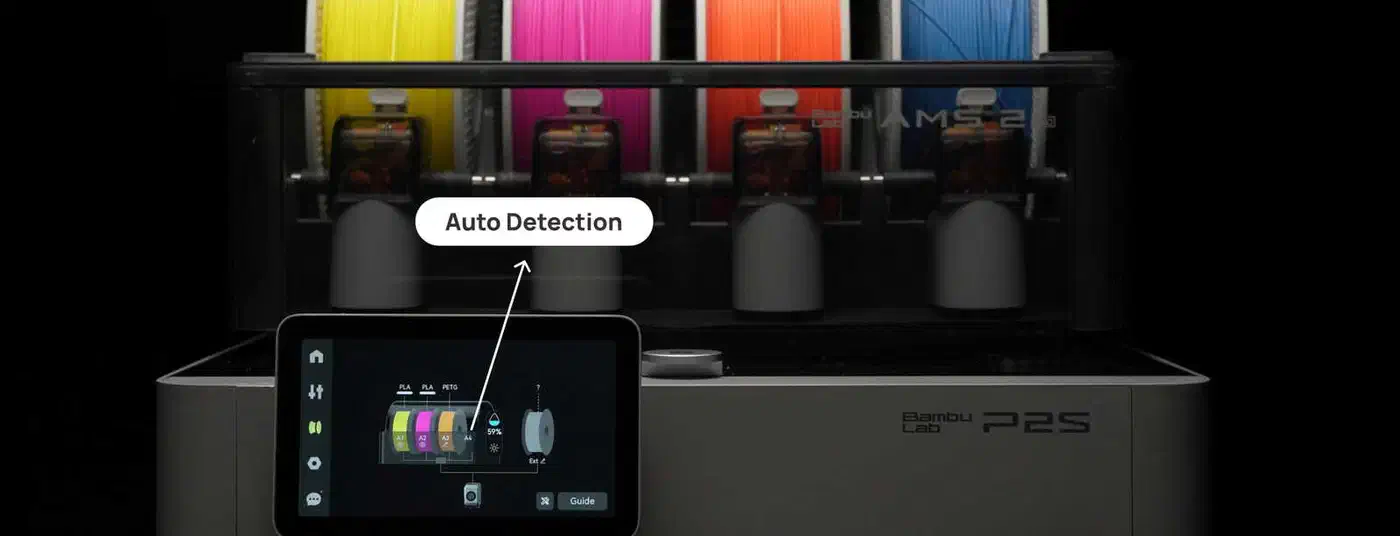
The spool’s RFID tag carries every print parameter, so the AMS loads the profile without you typing anything. Every build plate except the Cool Plate SuperTack works, and the Bambu store listing sells it in eight colours as a spool or a spool-less refill.
How to print Bambu TPU for AMS cleanly
Fit a hardened or steel nozzle
Install a hardened or stainless steel nozzle in 0.4, 0.6 or 0.8 mm. Cold-pull an older one first if it has ever seen a filled filament.
Dry the filament first
Dry the spool at 70 °C for eight hours before printing.
Load the spool into the AMS
Insert the spool into any AMS-series unit or an AMS Lite. The RFID tag is read automatically, so the profile loads with no manual entry.
Confirm the profile settings
Before slicing, check the profile shows a 220 to 240 °C nozzle, a 30 to 35 °C bed, the cooling fan on, and print speed under 250 mm/s. Retraction wants 0.8 to 1.4 mm at 20 to 40 mm/s.
Tune walls and infill for the part
Set wall loops and sparse infill density to suit the job. More of both makes a stiffer part; less of both leaves it more elastic.
Print and verify the feed
Start the print and watch the first layers and the first few AMS retractions. A clean, string-free opening section confirms the filament is advancing through the feed path without buckling.
Priced from about €36 a kilogram, TPU for AMS costs more than a spool of PLA and asks for a dryer and a decent nozzle on top. In exchange you get a flexible material that survives multi-colour work in an AMS, which no other TPU on Bambu’s list can claim. Go in knowing that 68D bends far more than it stretches, and orient the part so its layers run across the load.