

At 45°C the Cool Plate SuperTack still grips PLA hard

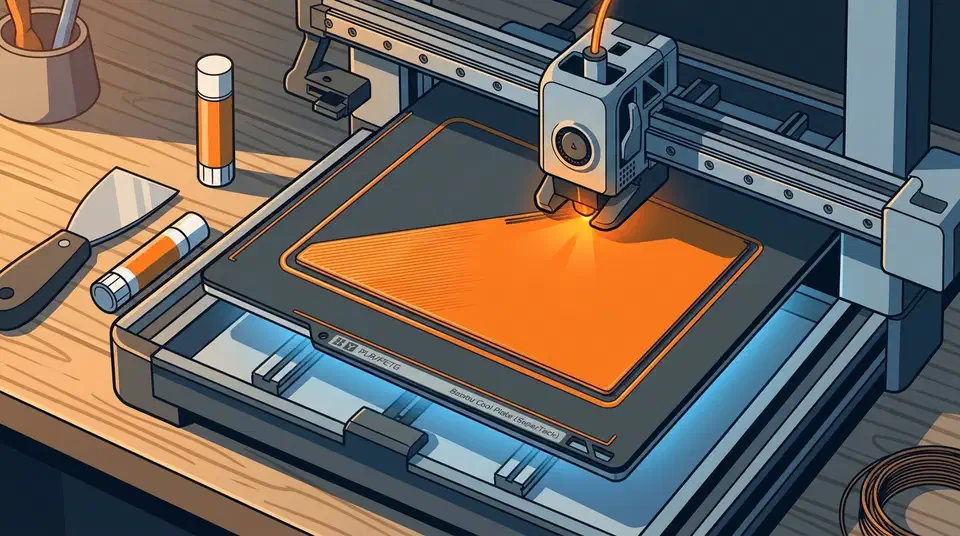
Bambu’s Cool Plate SuperTack grips PLA firmly on a 45°C bed, about 20°C cooler than the Textured PEI plate needs. Bambu also claims the coating loses under 20% of that grip after 300 prints. But brims, skirts and PETG parts can bond so hard that removal takes a scraper and a reheat.
Key Takeaways
- The SuperTack holds PLA on a 45°C bed, 20°C cooler than Textured PEI.
- No outside lab has repeated Bambu’s 300-print durability test.
- Thin brims and skirts can stick so hard they need a scraper.
- Bambu sells it as glue-free, so glue stick is only a release trick.
- It suits PLA and PETG, but TPU damages the coating.
What is the Cool Plate SuperTack?
The Bambu Cool Plate SuperTack is a spring steel sheet with a soft, low-temperature coating made for PLA and PETG. It grew out of Bambu’s older Cool Plate. Of the five plate types Bambu sells, it is the one tuned for the most first-layer grip on a cool bed.
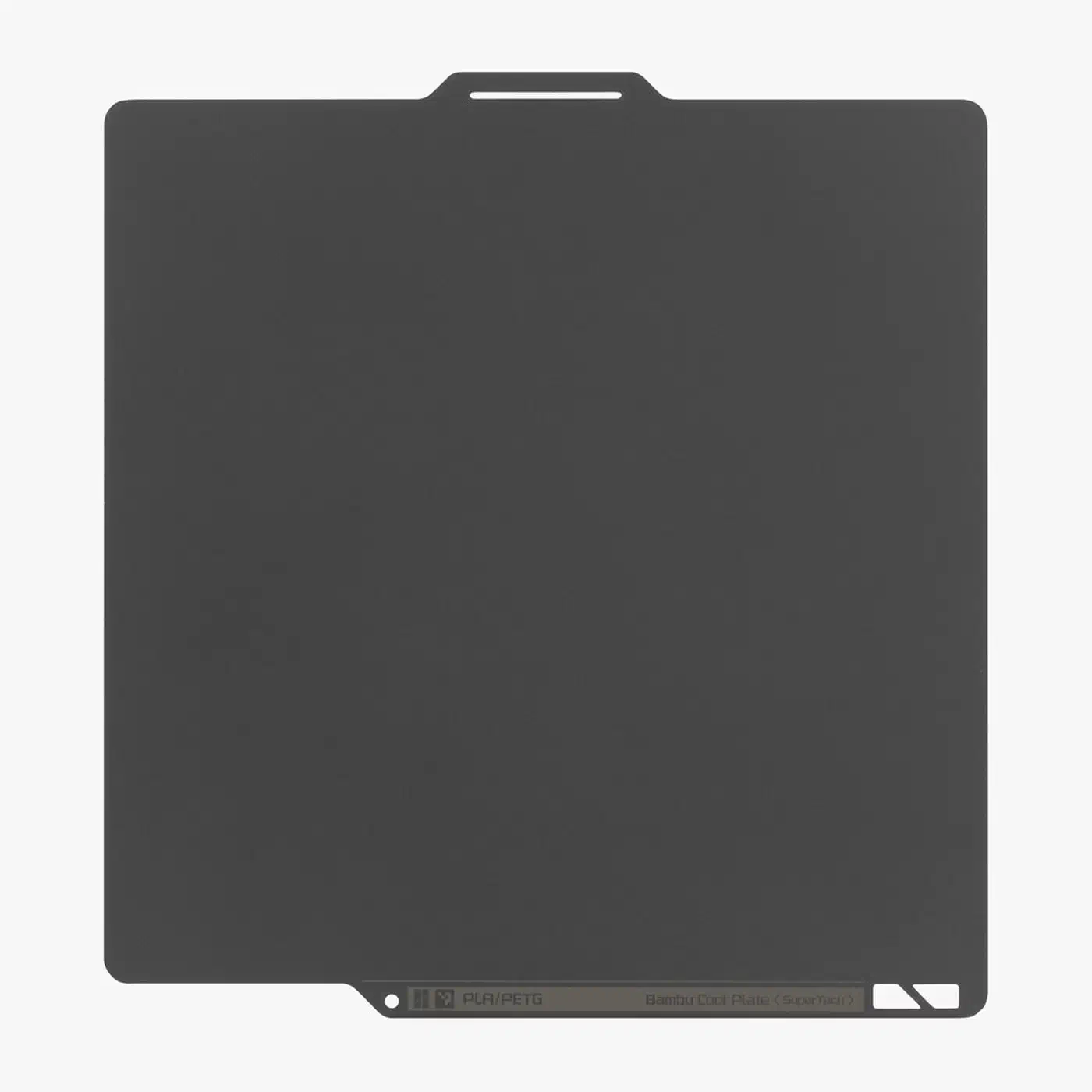
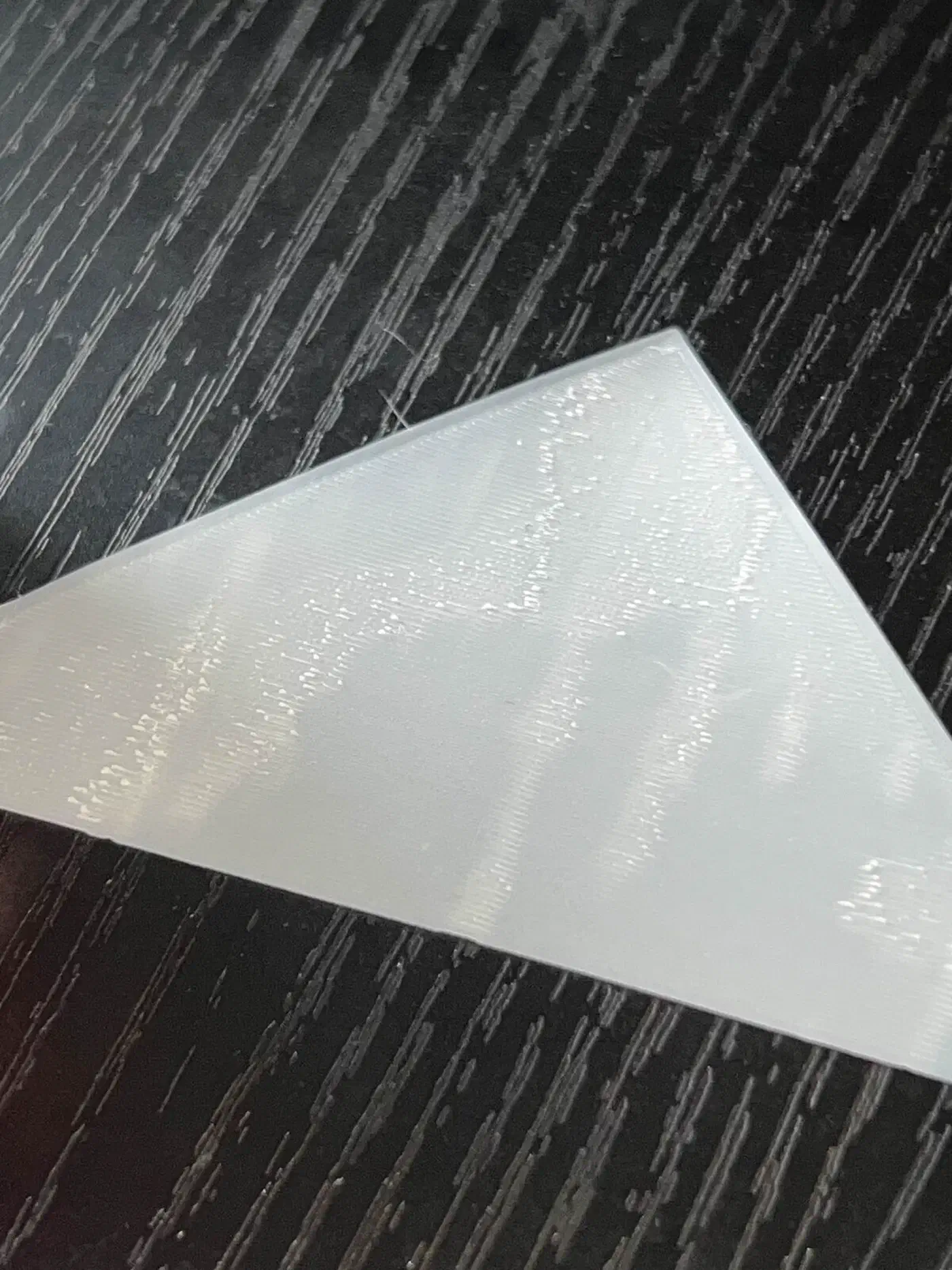
It leaves a smooth, matte finish on the underside of a print. Dreaming3D’s build-plate roundup calls it close to beginner-proof for anyone who fights PLA first layers on other surfaces. The roundup also names it Bambu’s most aggressive plate.
The 256mm version fits the X2D, P2S, P1 series, X1 series and A1. Larger versions exist for the H2D, H2S, H2C and A2L. Dreaming3D lists it at about $18 to $22, while Bambu’s EU store asks €34.99 for the plate alone.
Bambu rates it for PLA and PETG only and warns that TPU will damage it. Bambu also advises against its own PLA Silk on this plate, because the silk grips hard enough to damage the printed model.
Why the Cool Plate SuperTack grips PLA at 45°C
According to Bambu’s build plate guide , the SuperTack coating is a little softer than the Textured PEI plate’s. That softness lets it hold plastic without glue at low bed temperatures.
Bambu says PLA sticks firmly even at 40°C. The Textured PEI plate wants 55°C to 65°C for the same filament, per Dreaming3D. That 20°C gap means a faster heat-up before every first layer, and less power spent keeping the bed warm through a long print.
Print farms running PLA all day gain the most. Large flat PLA parts that would lift at the corners on a hotter, less grippy plate also stay put.
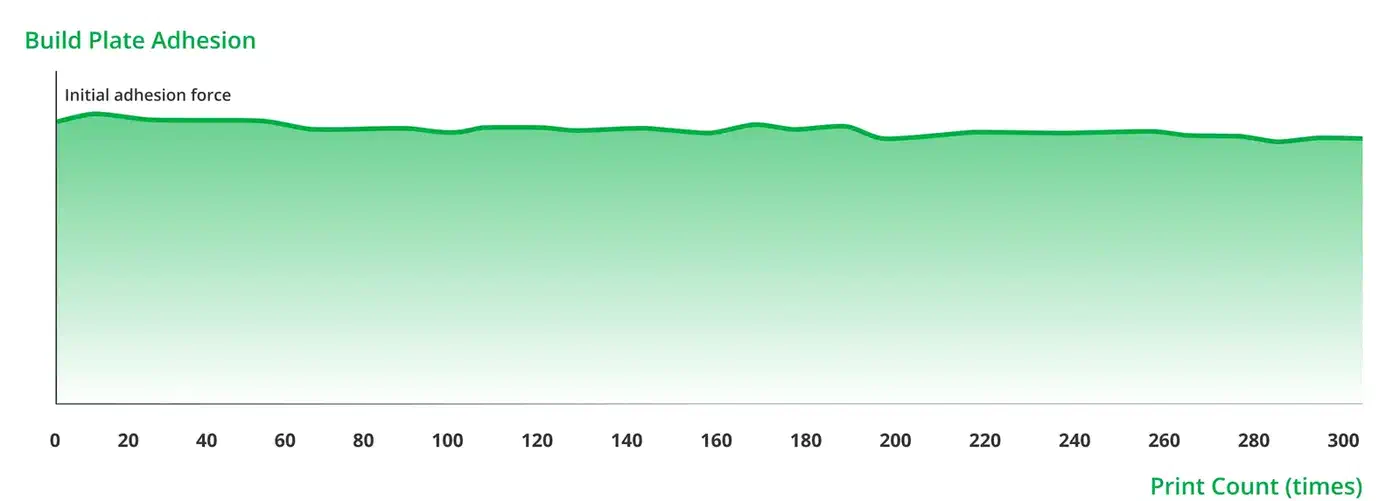
On durability, the SuperTack wiki page claims under 20% adhesion loss after 300 prints. That figure comes from Bambu’s own test, run with PLA Basic on an A1. No one has published an independent 300-print wear test.
Grip strong enough to become a liability
Dreaming3D cites a Slickdeals member whose parts came off fine while the support brims stayed almost welded to the surface. That owner stopped using the plate because of the cleanup.
Bambu forum user WAS-TMB had the same trouble with thin skirts. The fix was to print a 3mm-thick square the size of the plate, then peel it off. The square lifts the stuck leftovers with it, at the cost of some filament.
Bambu Studio refuses to print when Bambu’s Support for PLA/PETG filament touches the first layer on a SuperTack, because that material damages the coating. The support printing guide offers two fixes: use the support filament only at the interface, or add a raft of at least two layers.
Removing parts without damage
On a PEI plate you let it cool, flex it, and the part pops. Bambu’s FAQ says big flat parts, lithophanes and prints with tree supports and brims don’t release by flexing on the SuperTack. Bambu suggests this order instead:
- Lift the part gently with the scraper and pry it off slowly.
- If it won’t budge, put the plate back and warm it to about 50°C.
- Wet the edge where the part meets the plate with alcohol, then scrape.
- Next time, drop the bed temperature a little, since a hotter bed grips harder.
Go slowly with the scraper, because the soft coating scratches easily. Bambu says minor scratches don’t hurt adhesion.
Glue, PETG and first layers
Dreaming3D says Bambu advertises glue stick before every print as a release agent. Bambu’s own wiki disagrees, calling the plate glue-free for PLA and PETG, and none of its removal fixes mention glue. A thin glue layer can still work as a release film, though it’s an owner’s trick that Bambu doesn’t require.
PETG adhesion on the SuperTack can be overpowering at times, according to Dreaming3D. Bambu supports PETG on the plate, but a PETG-heavy queue is better off on textured PEI.
In a long Bambu forum thread , owners of new plates reported rough, ridged first layers. JansenHessels blamed the grip itself: the plastic sticks so fast that it can’t spread, so pressure builds in the nozzle. Bradley_Chuter fixed his by lowering the first-layer flow ratio, and several owners say a new plate only worked after a dish-soap wash.
Controlled adhesion: when more grip is worse
Dreaming3D frames the goal as controlled adhesion. The plate should hold through heat cycles and fast toolhead moves, then let the part go cleanly once cool.
FilamentPicks’ textured vs smooth PEI comparison reports PETG gripping bare smooth PEI so hard that owners tore the sheet off the steel. The fix is a thin layer of glue stick, used as a release agent.
The Textured PEI plate sits near the middle of the scale. It needs no glue for PLA, PETG or TPU on a clean plate. Bambu recommends waiting until the bed drops to 35°C or lower, when prints release on their own.
A single fingerprint can leave a no-stick patch on the first layer, whichever surface you run. Among Bambu’s plates, the SuperTack sits at the high-grip end, which keeps parts from warping and makes them harder to remove.
How does the SuperTack compare to Bambu’s other plates?
FilamentPicks calls the Textured PEI the default workhorse, and a tired one can be revived with 600-grit sandpaper. The Smooth PEI trades some grip for a flat, matte bottom and tighter Z precision.
The Dual-Texture PEI puts both surfaces on one sheet, but FilamentPicks notes it is listed for the X1, P1 and A1 series. P2S and X2D owners should check the plate generation before ordering.
Outside Bambu’s range, the BIQU CryoGrip Pro Frostbite chases the same PLA buyers with even less heat, though BIQU warns against ABS and TPU on it.
| Plate | PLA bed temp | Glue for PLA | Best materials | Release |
|---|---|---|---|---|
| Cool Plate SuperTack | 40-45°C | No | PLA, PETG | Scraper; rewarm to 50°C if stuck |
| Textured PEI | 55-65°C | No | PLA, PETG, TPU | Self-releases at 35°C or below |
| Smooth PEI | 60-70°C | No | PLA; other filaments with glue | Cool, then flex |
| Dual-Texture PEI | Same as each side | No | PLA, PETG, ABS, TPU | Same as the side used |
| Engineering | Built for 90-110°C beds | Yes, every print | ABS, ASA, PA, PC | Glue layer lets parts go |
| BIQU CryoGrip Pro Frostbite | No heat needed | No | PLA, PETG, PCTG | Flex-and-pop when cool |
Gen 1 vs gen 2 plates, and making the surface last
The 256mm SuperTack comes in two generations, like the Textured and Smooth PEI plates. The second, sold as the SuperTack Pro, carries an updated QR code so the P2S and X2D can recognize the plate on their own. Bambu says the QR code is the main difference, so the coating itself is no reason to upgrade.
A first-generation plate prints normally on a P2S or X2D, but the printer can’t identify it. When a “Build plate not recognized” warning appears, pick “Resolved” on screen or turn plate detection off. The X1 series has the same issue in reverse with the Pro. Either way, match the slicer’s plate type to the plate on the bed. A mismatch is an easy way to ruin a first layer.
For PETG, Bambu says the gen 2 SuperTack needs only 55°C to 60°C. However, some X and P series machines share settings across both generations and default to about 65°C.
To keep the grip, wash the plate with dish soap and warm water, even when it’s brand new, and hold it by the edges. Bambu warns that acetone damages the coating. Dry it with paper towels free of fabric softener, whose film kills adhesion like skin oil. Forum user Dan203 skips towels and lets the plate air-dry.
Who should buy the SuperTack
If most of what you print is plain PLA, especially big flat parts that like to warp, the SuperTack makes a strong second plate. If your queue mixes PETG, TPU and support-heavy models, keep the Textured PEI as your daily plate. Then swap the SuperTack in for the PLA jobs it suits, and keep the scraper close.