

A carbon chassis stiffens the FCX24 and drops it lower

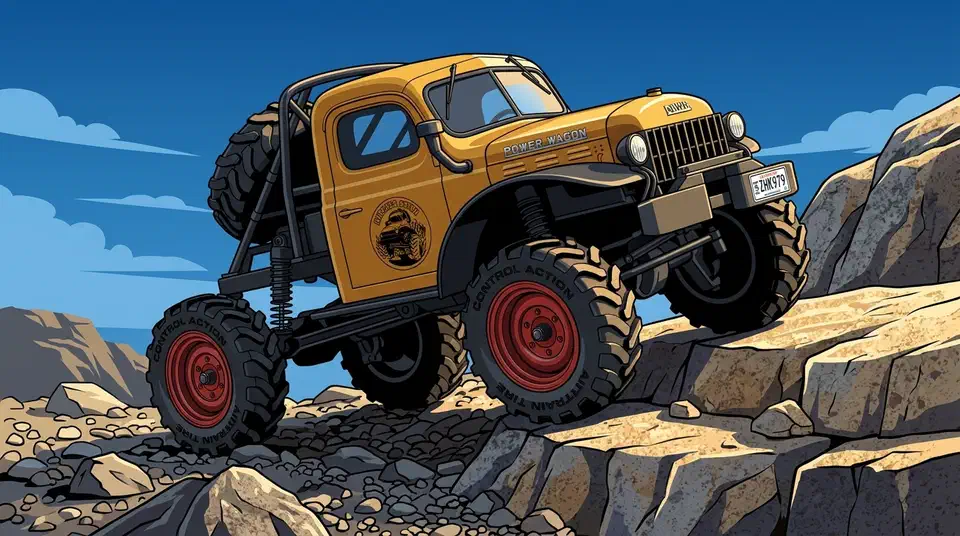
FCX24 chassis flex comes from the molded plastic frame, and owners fix it two ways. A Furitek Grasshopper carbon frame kit swaps the soft tub for a rigid plate, while INJORA’s brass links add 39 grams low in the chassis. Together they cut twist and drop the center of gravity, at a weight cost.
Key Takeaways
- The stock FCX24 frame is plastic, and it twists more than owners expect.
- A Furitek Grasshopper carbon frame is the headline stiffness fix.
- The stock body won’t bolt onto that frame without some modification.
- Brass links add about 39 grams low down and steady the truck.
- Aluminum links stiffen the frame for less than a full frame swap.
What causes chassis flex on the FMS FCX24?
The FMS FCX24 Power Wagon and K5 Blazer ship as 1/24 scale ready-to-run trucks on a molded plastic frame. That frame is the first part serious owners replace once they push the truck onto real rocks. It twists under load in a way the suspension should be doing on its own.
Flex shows up as unpredictable articulation. The frame bends before the shocks compress, so the truck picks a line the driver never asked for and drops a tire. On a tight rock section, that costs you the climb.
The give is not in one spot, either. The plastic chassis links flex, and so do the plastic portal and diff housings at the axle ends. The softness runs the whole truck, from the frame rails out to the wheels.
The aftermarket answer splits into two levers that work together. More rigidity comes from a carbon or aluminum frame, and a lower center of gravity comes from brass placed down low. The Small-Scale RC FCX24 upgrade guide lays out the full parts shelf. Because a 1/24 truck weighs so little, a few grams of ballast or a bit of frame stiffness changes how it drives right away.
The Furitek Grasshopper carbon fiber frame kit
The Furitek Grasshopper carbon fiber frame kit for the FCX24 (SKU FUR-2184) reframes the truck on a rigid carbon plate instead of the molded tub, the single biggest stiffness change you can make to the chassis.
The frame is adjustable where the tub was fixed. It offers many link mounting positions and many shock mounting positions, so wheelbase, link angle, and shock stance become tuning choices.
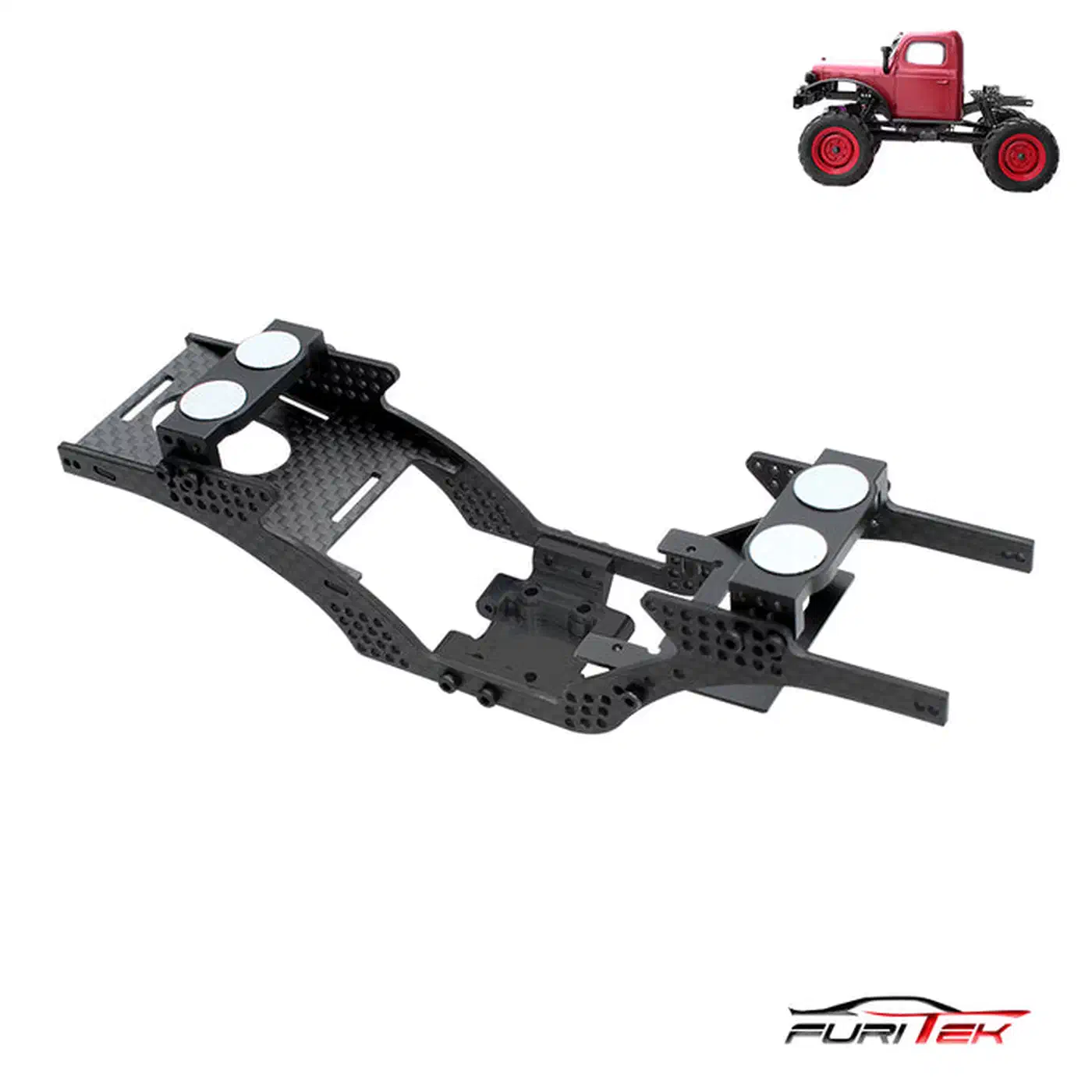
The kit also carries an ESC mount plus front and rear magnetic body mounts that use N50 magnets. The body then stays put through a rollover instead of leaning on plastic posts and clips. The one fitment limit is real: Furitek says the stock FCX24 body is not a direct fit and needs modification to mount on the Grasshopper frame. Budget some body work, not just a frame swap.
Availability moves around. The kit lists at $59.99 and often sells out on Furitek’s own store, though the same part number shows up at RC Planet, HobbyTown, and AMain Hobbies. Furitek also sells a Titan Rainbow 2FM version of the Grasshopper frame, so make sure you are buying the carbon one before you order.
Aluminum links and housings for a cheaper stiffness gain
A partial upgrade buys most of the rigidity for a fraction of the work and money. The cheapest firm-up is a link set that replaces the flexing plastic rods.
RCAWD sells an aluminum chassis link set at $18.99 and a combined chassis and steering link set at $23.99. Treal covers the same ground in both metals, with aluminum upper links ($16.98), aluminum lower links ($16.98), high clearance suspension links ($19.98), and steering links ($11.98). That range lets a builder mix stiffness and weight axle by axle.
Stiffen the axle ends next. NEXX Racing sells aluminum C-hub carriers ($19.99), aluminum front and rear diff housings ($29.98), and aluminum rear portal housings ($45.98). These stop the housings twisting under portal torque, which is where a lot of hidden flex lives.
INJORA fills the same slot with a stainless steel option. Its high clearance chassis and steering links set for the FCX24 is made from 304 stainless, so it adds rigidity without piling on much mass. That suits a builder who wants a stiff frame but is not chasing ballast yet.
Sequence the spend to keep it reversible. Links go first because they are cheap and easy to undo. Housings come second, and a full frame swap comes last.
Where brass belongs on an FCX24
Rigidity and weight are two separate jobs, and brass is the weight job. The placement rule comes first: brass helps when it sits low and outboard, in links, portal housings, hex extenders, and wheels. Brass mounted high in the chassis raises the center of gravity and makes tipping worse.
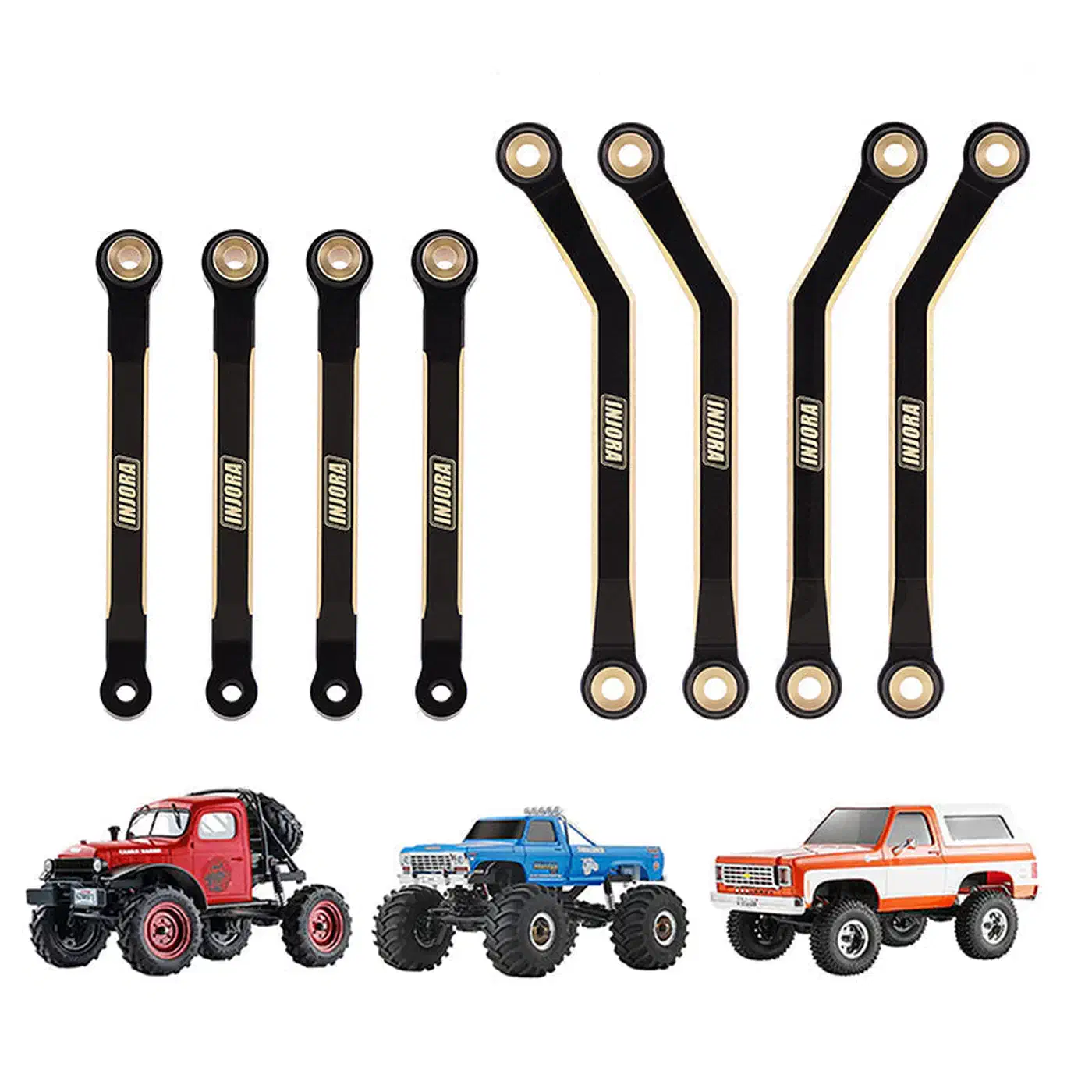
INJORA’s 8-piece 39g heavy brass high clearance chassis links set (FCX24-04, $19.99) is CNC machined brass that replaces the stock plastic links, so one part adds stiffness and ballast together. Steering gets the same treatment from INJORA’s brass steering links (FCX24-03, $10.99).
Axle-end mass sits lowest of all, which is the best place for it. INJORA sells brass rear portal inner housings (FCX24-08, $13.99) and 7mm brass wheel hex extenders (FCX24-07, $4.99) in 4, 5, and 6mm thicknesses. The wider aftermarket goes heavier still, with RCAWD front and rear brass portal housings near $36 each, Samix brass hex adapters, and RCAWD brass wheel weight rings that add 106 grams right at the wheels.
| Part | Where it sits | Added mass | Also stiffens? |
|---|---|---|---|
| INJORA 39g heavy brass links | Chassis links | 39g for the set | Yes |
| INJORA brass steering links | Steering, low | Light | Yes |
| INJORA brass rear portal housings | Axle ends, lowest | Low, drops CG | Yes |
| INJORA 7mm brass hex extenders | Wheel hex, outboard | Small | No |
| RCAWD brass portal housings | Axle ends | Heavy | Yes |
| RCAWD brass wheel weight rings | Wheels | 106g | No |
The parts that also stiffen the truck earn their weight twice, while pure wheel weights only buy stability.
Rigidity versus weight, and where a beginner should stop
A fully rigid frame with every brass part bolted on is not automatically the best truck. Carbon and aluminum buy predictable articulation while brass buys stability, and both add weight that the stock brushed motor and stock shocks have to carry.
Load a stock-motor FCX24 with 106 grams of wheel weights plus brass links and housings, and you ask a lot of the drivetrain. So a motor or shock upgrade usually follows the ballast rather than coming before it. Add the weight, then feed the truck the power to move it.
A fully rigid frame removes chassis twist that some drivers rely on to keep four tires down on rough ground. More stiffness is not linearly better on uneven terrain, and the right amount depends on how you drive. Gearing is a separate lever on small crawlers: on an Axial rig, front-axle overdrive gearing trades a little axle speed for a cleaner climb.
Aluminum or brass chassis links make a fine first upgrade. A trail driver adds brass portal housings and hex extenders for a lower stance, while a builder chasing a comp-style rig goes all the way to the Grasshopper frame and accepts the body work that comes with it.
The money follows the same order. A link set is the cheapest measurable change you can make, and it is reversible if you don’t like it. The carbon frame is the largest single line item, plus the labor to fit the body. Start small, drive it, and let the truck tell you where the next flex is before you spend again.