

Oppo Find X9 Ultra stacks two 200MP sensors and a 10x lens

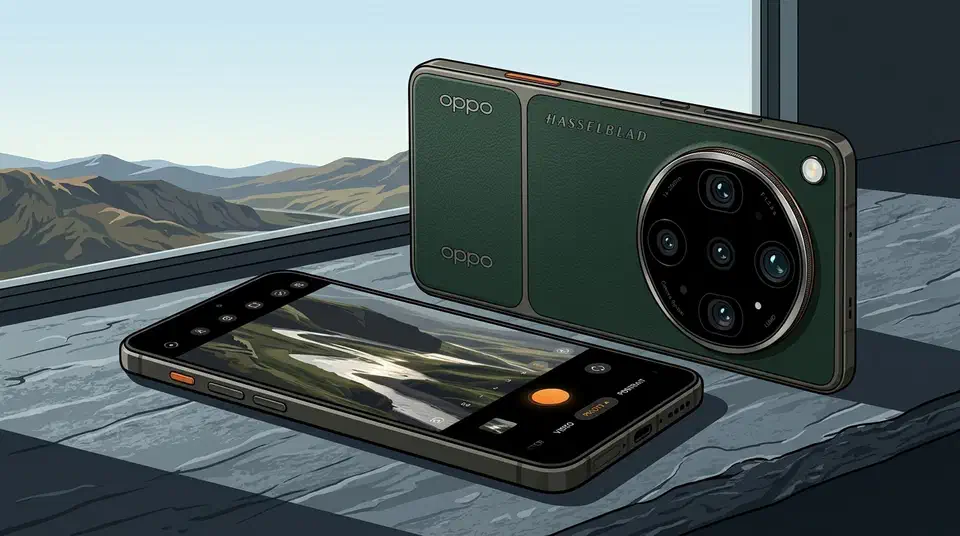
The Oppo Find X9 Ultra dual 200MP zoom system gives you three optical focal lengths from four cameras. A 200MP main sits at 23mm, a 200MP periscope at 70mm, and a 50MP telephoto at 230mm. Everything between and beyond those three points is cropped out of a sensor.
Key Takeaways
- Four rear cameras cover only three real focal lengths.
- The 3x periscope carries a 200MP sensor, same count as the main camera.
- Between 3x and 10x the phone crops instead of moving glass.
- At 6x those crops still come off 50MP of sensor data.
- Oppo reaches 230mm on glass; Xiaomi’s continuous zoom stops at 100mm.
Inside the Find X9 Ultra dual 200MP zoom stack
Four cameras sit on the back, and GSMArena’s camera review lists the exact equivalent focal length of each one.
| Camera | Sensor | Equivalent focal length | Aperture | Stabilised |
|---|---|---|---|---|
| Ultrawide (0.6x) | 50MP Sony Lytia 600, 1/1.95" | 14mm | f/2.0 | No |
| Main (1x) | 200MP Sony Lytia 901, 1/1.12" | 23mm | f/1.5 | Yes |
| Periscope (3x) | 200MP OmniVision OV52A, 1/1.28" | 70mm | f/2.2 | Yes |
| Telephoto (10x) | 50MP Samsung ISOCELL JNL, 1/2.75" | 230mm | f/3.5 | Yes |
The third row is the odd one, because most phones do not spend a full 200MP sensor on a 3x periscope. Its 1/1.28-inch optical format is also bigger than the 200MP unit inside the Find X9 Pro. Both telephotos and the main camera carry optical stabilisation, so the 230mm lens works handheld. The 10x module will not focus closer than about a metre, though, so near subjects fall to the periscope.
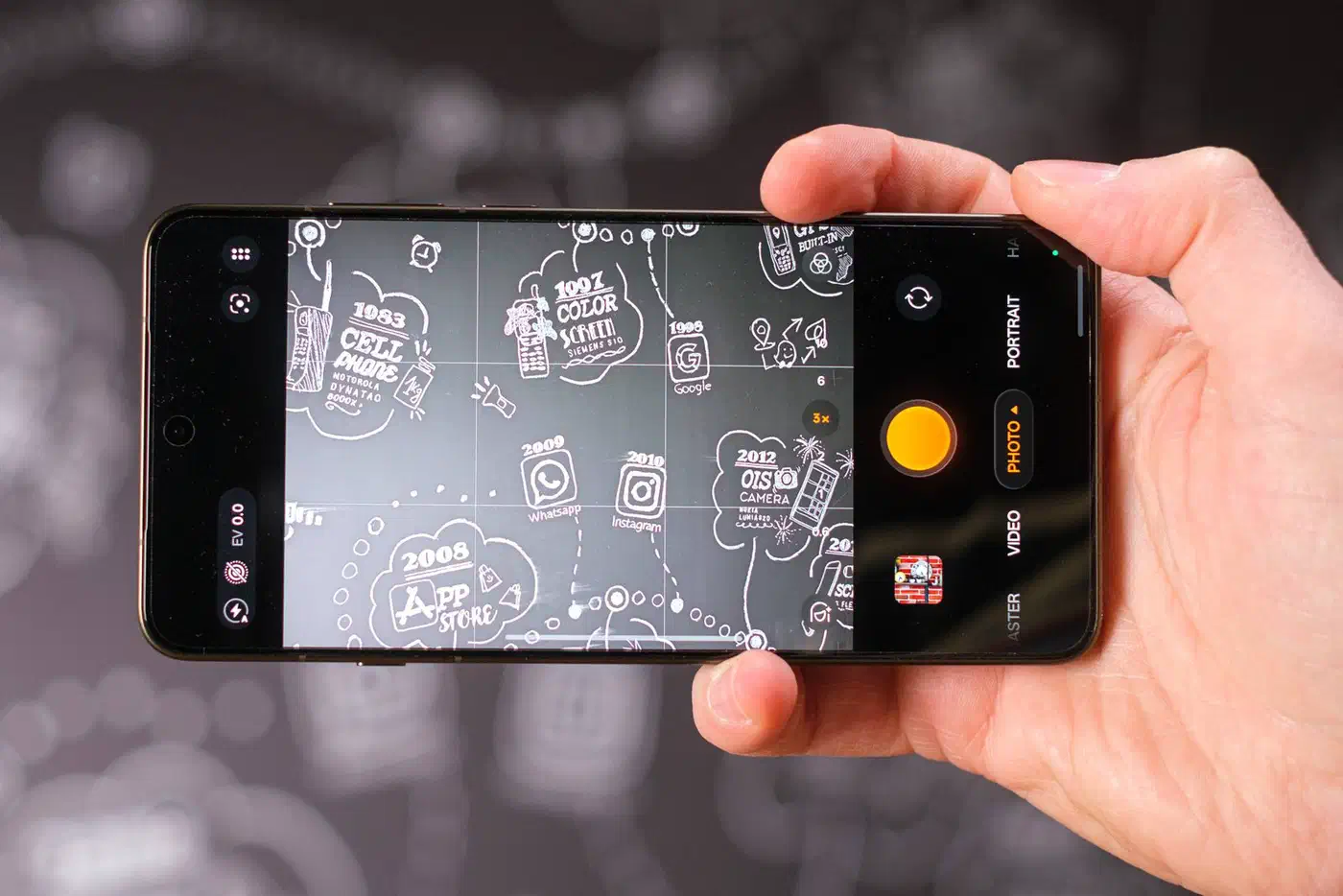
Oppo also shrank the main sensor this generation, from a 1.0-inch imager down to 1/1.12 inch. In exchange the pixel count rose from 50MP to 200MP and the lens opened from f/1.8 to f/1.5. A wider aperture is the same lever Samsung pulled with the S26 Ultra’s f/1.4 lens .

Which sensor is feeding each zoom step?
Every sample image GSMArena published carries its focal length and aperture in the caption, which is enough to trace each zoom step back to a lens.
| Zoom step | Focal length | Module feeding it | What you get |
|---|---|---|---|
| 0.6x | 14mm, f/2.0 | Ultrawide | Optical |
| 1x | 23mm, f/1.5 | Main | Optical |
| 2x | 47mm, f/1.5 | Main | In-sensor crop |
| 3x | 70mm, f/2.2 | Periscope | Optical |
| 6x | 139mm, f/2.2 | Periscope | In-sensor crop |
| 6x to 10x | Not published | Unknown | Handover point unknown |
| 10x | 230mm, f/3.5 | Long telephoto | Optical |
| 20x | 460mm, f/3.5 | Long telephoto | In-sensor crop |
| 30x | 690mm, f/3.5 | Long telephoto | Crop plus upscaling |
The two 200MP sensors are what make the crop rows worth having. Doubling the magnification by cropping keeps a quarter of the pixels. So 6x off the 200MP periscope still draws on roughly 50MP of data, and the phone writes a 26MP file from it. Oppo evidently agrees, since the camera app offers a dedicated 50MP mode at both 2x and 6x.

Past 10x the arithmetic turns against you. The long telephoto starts from 50MP, so 20x leaves about 12.5MP of captured detail, exactly the size of the file the phone saves. By 30x the sensor has roughly 5.5MP of real detail left and the output is still 12.5MP, so the rest is invented. GSMArena’s own verdict on the 30x setting is that it stretches things beyond the camera’s comfort level while staying usable.

Nobody publishes the focal length where the phone stops cropping the periscope and hands over to the 10x module, so it stays unknown, somewhere above 139mm. In video the split is blunter: the 10x setting records 8K30 and 4K120 off the 3x camera, so native high-frame-rate footage comes only from 1x and 3x.
Two fixed telephotos against one continuous zoom
The Xiaomi 17 Ultra answers the same question in the opposite way. Its 200MP Samsung ISOCELL HPE periscope moves, covering 75mm to 100mm optically at f/2.39 to f/2.96, which works out to a continuous 3.2x through 4.3x. Months before either phone shipped, Notebookcheck framed the contest as Leica’s optical zoom against Hasselblad’s dual periscope . That piece worked from leaks rather than a lab bench, and the retail hardware still landed close to its sketch.
Between 75mm and 100mm the Xiaomi never crops at all, and Oppo has nothing but a crop off the periscope to offer there. Above 100mm the position flips permanently: Xiaomi is cropping for the rest of its range while Oppo still has a 230mm lens in reserve.

| Phone | Optical telephoto coverage | Longest optical reach | Sensor behind it |
|---|---|---|---|
| Oppo Find X9 Ultra | 70mm and 230mm, two fixed points | 230mm (10x) | 200MP, then 50MP |
| Xiaomi 17 Ultra | 75mm to 100mm, continuous | 100mm (4.3x) | 200MP |
So the answer depends on what you point the phone at. Portraits and street work sit in that 70mm to 100mm band, and the Xiaomi holds real glass across all of it. Wildlife, stages, architecture and sports need reach past 200mm, where no continuous mechanism that fits in a phone body can go.
What it costs against its rival
The price gap runs the other way from what the extra lens suggests. In China the Find X9 Ultra opened at CNY 7,499, about $1,099, for 12GB of RAM and 256GB of storage, according to GSMArena’s launch report . The Xiaomi 17 Ultra started at CNY 6,999, about $995 , and that cheaper price already includes 512GB. Matching the Oppo on storage costs CNY 7,999, and Xiaomi’s Leica Edition sits at the same figure.
Availability no longer separates the two. Oppo’s previous Ultra models stayed inside China, but the Find X9 Ultra was confirmed for a global release and reached the UK, Europe and India. There is still no US launch, so American buyers are looking at imports either way.
Pick the Oppo if your zoom habit lives past 200mm and you want a stabilised 230mm lens behind it. Pick the Xiaomi if you shoot people and streets between 70mm and 100mm. Its moving lens keeps every frame there optical, and its 1-inch main sensor gathers more light.