

Dim indoor shots brighten on the Galaxy S26 Ultra at f/1.4

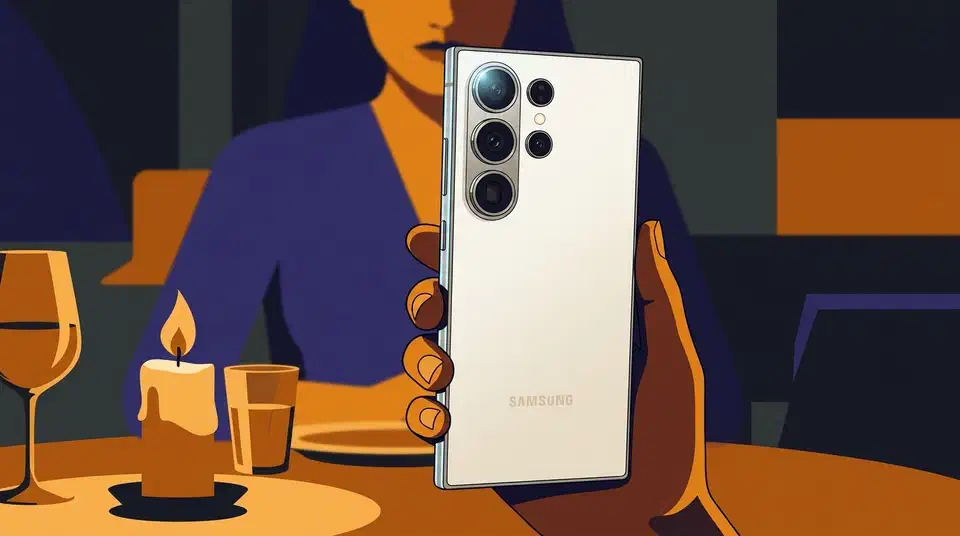
The Galaxy S26 Ultra f/1.4 lens gathers 47 percent more light than the f/1.7 lens on the S25 Ultra. That works out to 0.56 of a stop. Indoors it buys either a shutter 47 percent faster or an ISO about 32 percent lower, on the same 200MP sensor Samsung has shipped since 2023.
Key Takeaways
- The main lens opens from f/1.7 to f/1.4, letting in 47 percent more light.
- Indoors that means a faster shutter or a cleaner, lower ISO.
- The 200MP sensor behind the lens has not changed since 2023.
- In matched night shots the S26 Ultra picks half the ISO the S25 Ultra picks.
- Daylight photos get almost nothing out of the change.
What the Galaxy S26 Ultra f/1.4 lens changes
The sensor is still the 200MP ISOCELL HP2, a 1/1.3-inch chip with 0.6 micron pixels, and the focal length is still 23mm equivalent. Only the aperture opened up, from f/1.7 to f/1.4, according to GSMArena’s camera testing of the S26 Ultra .
The rest of the camera set moved in smaller ways. The 5x telephoto went from f/3.4 to f/2.9 and swapped its periscope for Samsung’s ALoP lens design, which pushed its minimum focus distance out from 26cm to 52cm. The 3x telephoto lost ground: it now uses a smaller 10MP sensor of the kind the cheaper Galaxy phones have carried for years. The ultrawide is untouched.
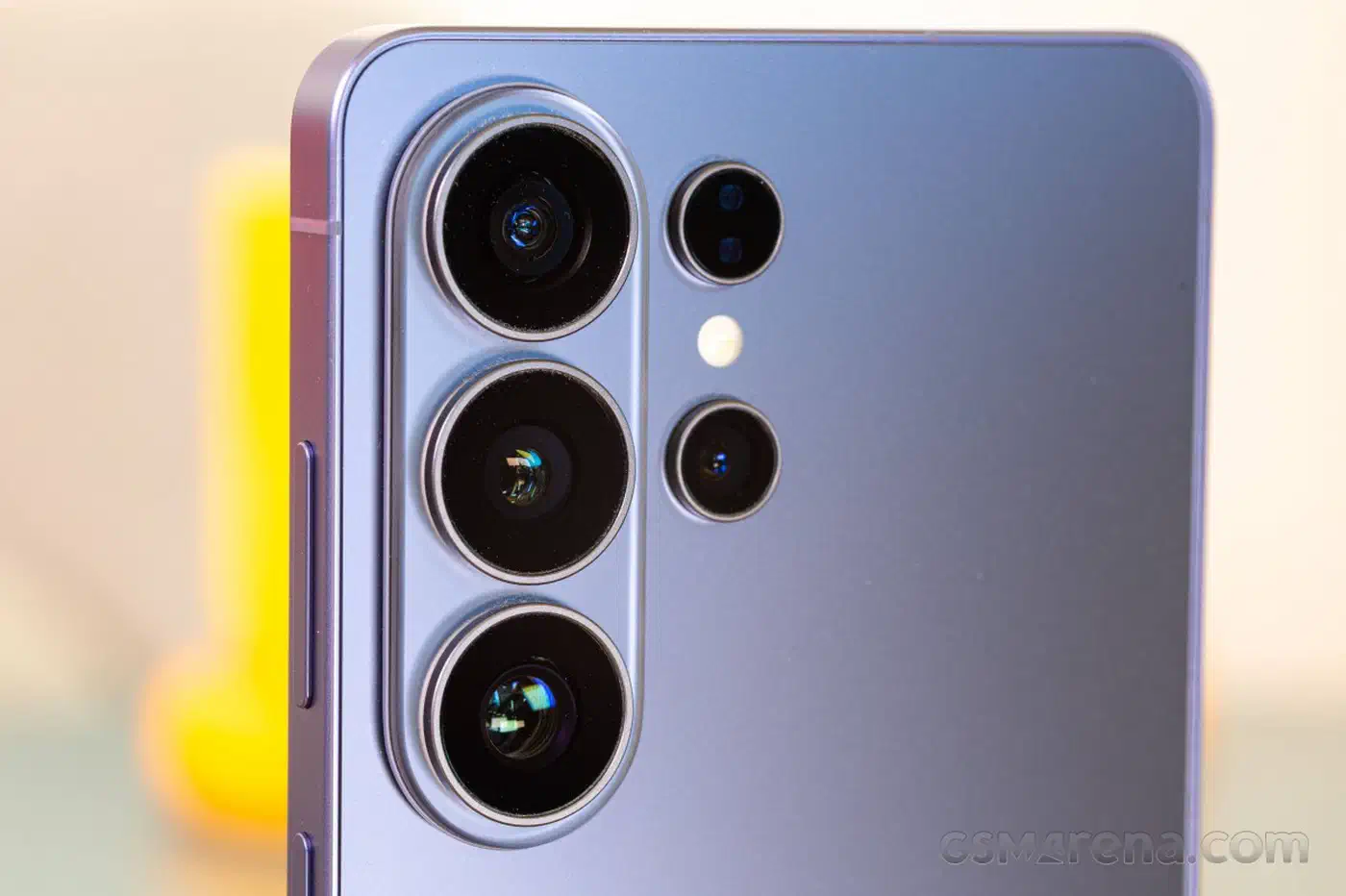
Samsung never says whether the new aperture is fixed or adjustable. Every sample GSMArena published reads f/1.4 in its metadata, including bright daylight frames shot at 1/7939 of a second. A lens that could stop down would have stopped down there, so it behaves as a fixed f/1.4.
How much light does f/1.4 give you over f/1.7?
Light collected scales with the square of the f-number ratio:
(1.7 / 1.4)^2 = 1.4745
log2(1.4745) = 0.56 stops
That is a little over half a stop, and less than the two thirds a jump from f/1.7 to f/1.4 sounds like it should be. At a fixed exposure the extra light goes into the shutter or into the ISO, and you choose which.
| Setting on an f/1.7 phone | Same scene at f/1.4 | Change |
|---|---|---|
| 1/30s, ISO 1600 | 1/44s, ISO 1600 | Shutter 47% faster |
| 1/30s, ISO 1600 | 1/30s, ISO 1085 | ISO 32% lower |
| 1/60s, ISO 800 | 1/88s, ISO 800 | Shutter 47% faster |
The shutter column is the one to care about on a phone. Hand shake and moving subjects ruin far more indoor photos than noise does, and no amount of processing rebuilds a face that smeared during the exposure. Noise, by contrast, is the problem phones are already best at hiding.

Night mode is where the change does least. Multi-frame stacking already recovers well over half a stop, so a night-mode shot barely notices the wider lens. The gain lands hardest on ordinary single-frame captures, the ones you take without thinking.
A wider lens costs something too. Depth of field gets shallower, which is pleasant for portraits and awkward when you want a whole dinner table sharp, and the optics have more work to do at the frame edges.
What the matched samples show
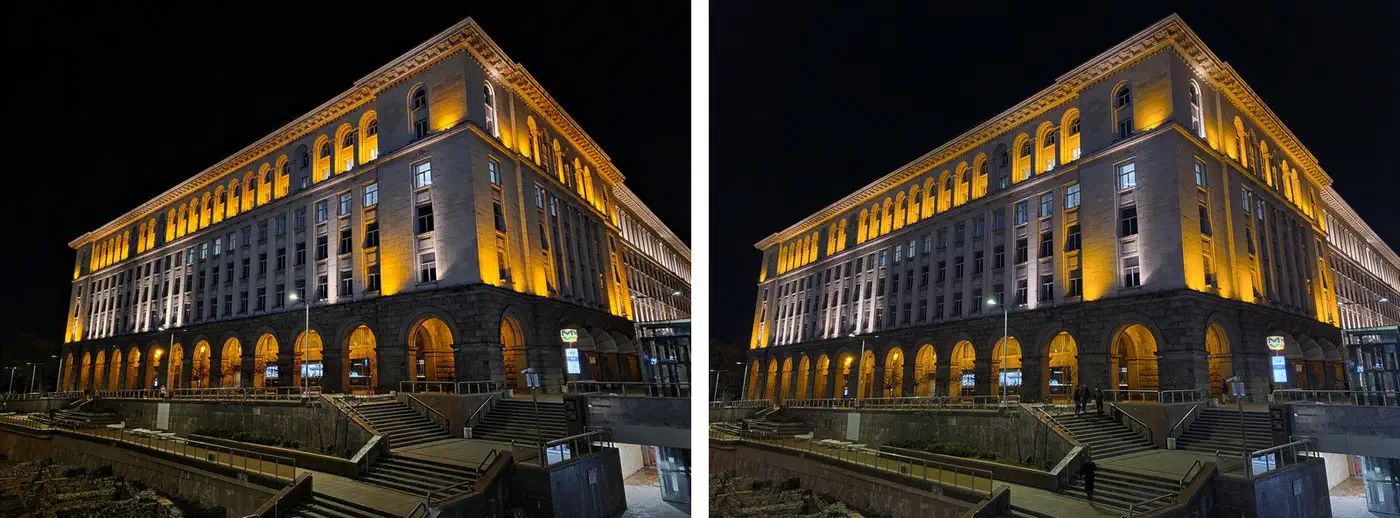
GSMArena shot the same low-light scenes on both phones, and the metadata is public.
| Scene | Galaxy S25 Ultra | Galaxy S26 Ultra |
|---|---|---|
| Night street 1 | f/1.7, ISO 2000, 1/100s | f/1.4, ISO 1000, 1/100s |
| Night street 2 | f/1.7, ISO 1600, 1/100s | f/1.4, ISO 800, 1/100s |
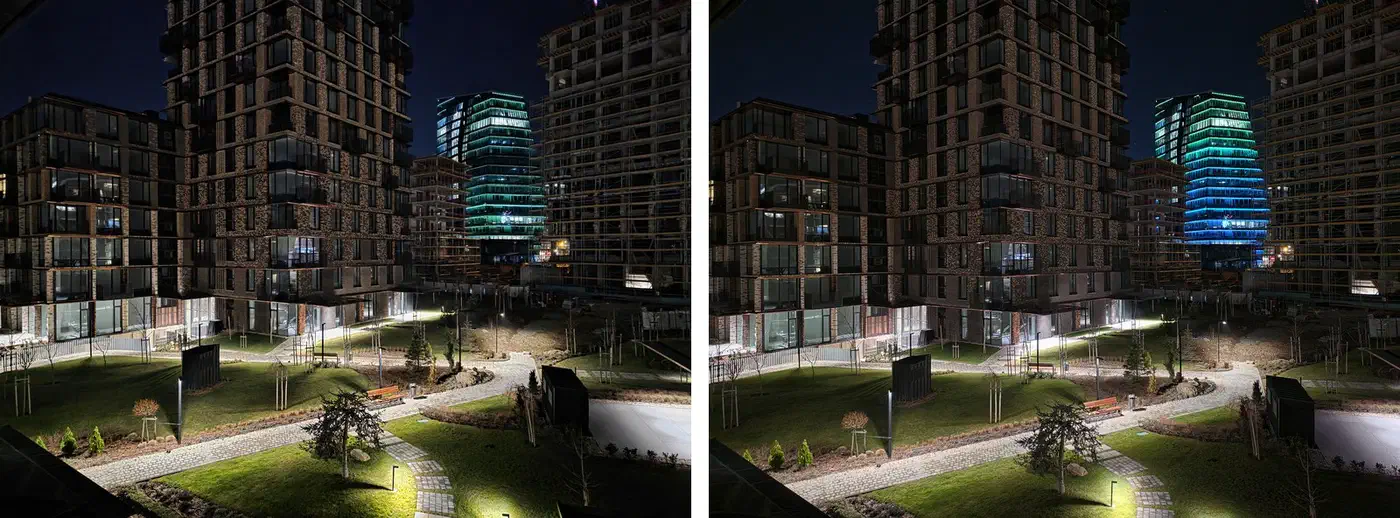
| Night courtyard | f/1.7, ISO 2500, 1/17s | f/1.4, ISO 800, 1/9s |
| Night mode | f/1.7, ISO 320, 1/20s | f/1.4, ISO 125, 1/13s |
Halving the ISO is a full stop and the lens alone accounts for 0.56 of one, so Samsung’s metering and noise handling changed alongside the glass.
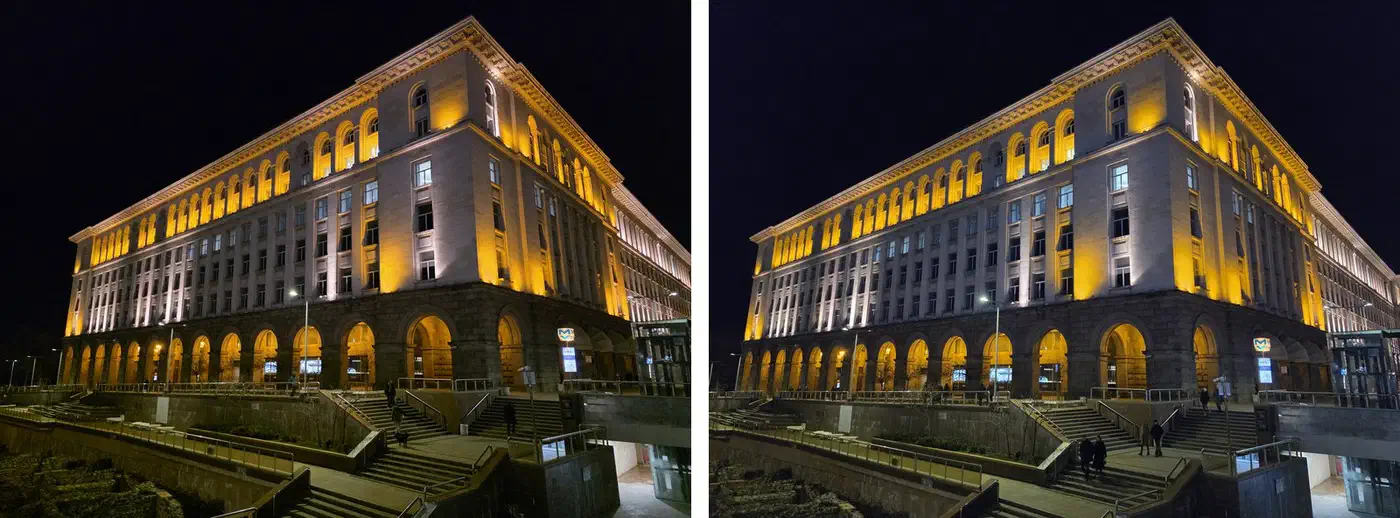
DXOMARK’s camera test of the S26 Ultra reaches the same conclusion from its own lab and credits the wider aperture plus refined processing for a clear step up in low light. Its exposure score, though, stayed flat.
The exposure score remains unchanged, due to instabilities between consecutive shots that make results somewhat unpredictable in challenging scenes.
Four generations on the same sensor
The HP2 has now shipped in four Ultra phones. Samsung has reworked the parts around it instead. Earlier years brought a new image processor, better noise reduction and a new night mode; this year it was the lens.
At 1/1.3 inch the sensor is already close to what fits behind a phone-thickness lens, and Samsung’s rivals sit in the same neighbourhood.
| Phone | Main sensor | Aperture | Light vs f/1.7 |
|---|---|---|---|
| Galaxy S26 Ultra | 200MP, 1/1.3in | f/1.4 | +47% |
| Galaxy S25 Ultra | 200MP, 1/1.3in | f/1.7 | baseline |
| iPhone 17 Pro Max | 48MP, 1/1.28in | f/1.78 | -9% |
Apple’s chip is a hair larger and its lens is over two thirds of a stop slower. The aperture was the one place Samsung still had room to move.
Chris Niccolls shot the phone for weeks and came away impressed, though his PetaPixel review argues the lines between generations are now blurrier than ever.
The ability to shoot 8K footage with a noticeable increase in detail over 4K, full manual controls, and log recording without needing to rely on external apps makes this a very compelling option, and the low-light performance of the main camera is the best I’ve yet seen in a smartphone.
The scoreboard is cooler about it. DXOMARK gave the S26 Ultra 157 points and 20th place in its global camera ranking, with 160 for photo and 153 for video, and judged that the phone closes some of the gap to the leaders without reaching them.
Where the extra light shows up
The gain is real but narrow.
- Indoor portraits in ordinary room light. Shutter speed is the limit here, and half a stop is the difference between a sharp face and a soft one.
- Restaurants and bars. People move, stacking smears them, and a single faster frame beats four blended ones.
- Streets after sunset. These are the shots the phone takes without engaging night mode, so the lens does the work alone.
- Daylight and landscapes get almost no benefit. The phone already sits at base ISO with shutter speed to spare.
You can test whether any of this applies to you before spending money. Open your current phone’s camera in the dimmest room you use it in, note the shutter speed and ISO it picks, then divide the ISO by 1.47 or multiply the shutter speed by the same figure. If the answer still looks like a photo you would delete, a wider lens will not rescue it. If it looks like the shot you wanted, the S26 Ultra is selling exactly that.