

DeathAdder V3 HyperSpeed hits 55g by shrinking the shell

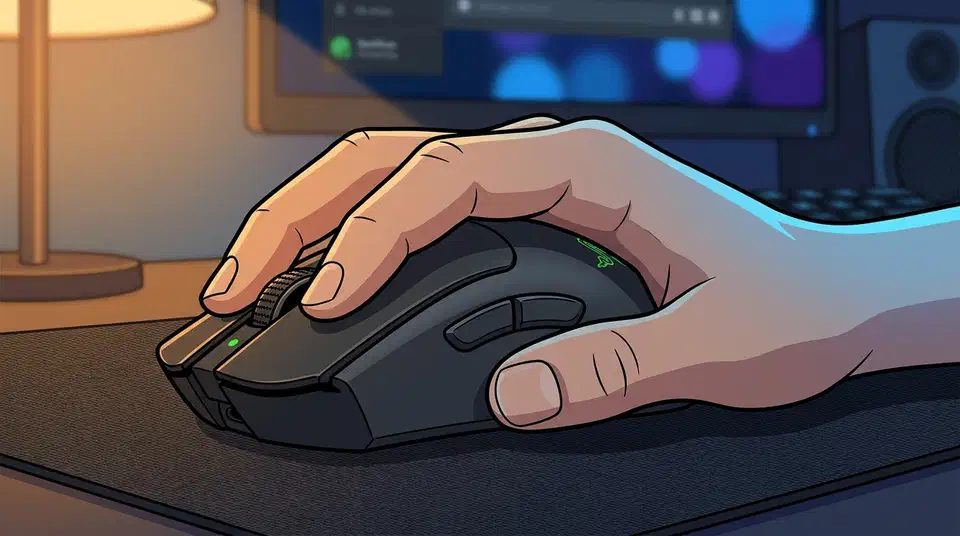
The Razer DeathAdder V3 HyperSpeed weighs 55 grams, and the shrink explains all of it. Against the DeathAdder V3 Pro it sheds 13 percent of the weight and 17 percent of the shell volume. Per cubic centimetre it is the denser mouse of the two. Palm grippers pay for the saving in hand room.
Key Takeaways
- The DeathAdder V3 HyperSpeed weighs 55 grams, down from 63 on the Pro.
- It also lost 7mm of length, so large hands get less to hold.
- Across the 2026 field, the lightest mice are usually the smallest ones.
- The DeathAdder V4 Pro is the exception, staying big at 56 grams.
- Pick the shape that fits your hand, then pick the lightest one in it.
What the Razer DeathAdder V3 HyperSpeed is
The DeathAdder V3 HyperSpeed is a wireless ergonomic mouse with the Focus X 26K optical sensor and third-generation optical switches. Razer quotes 55 grams and up to 100 hours of battery. It sells below the flagship tier, and that price is the main reason to look at it.
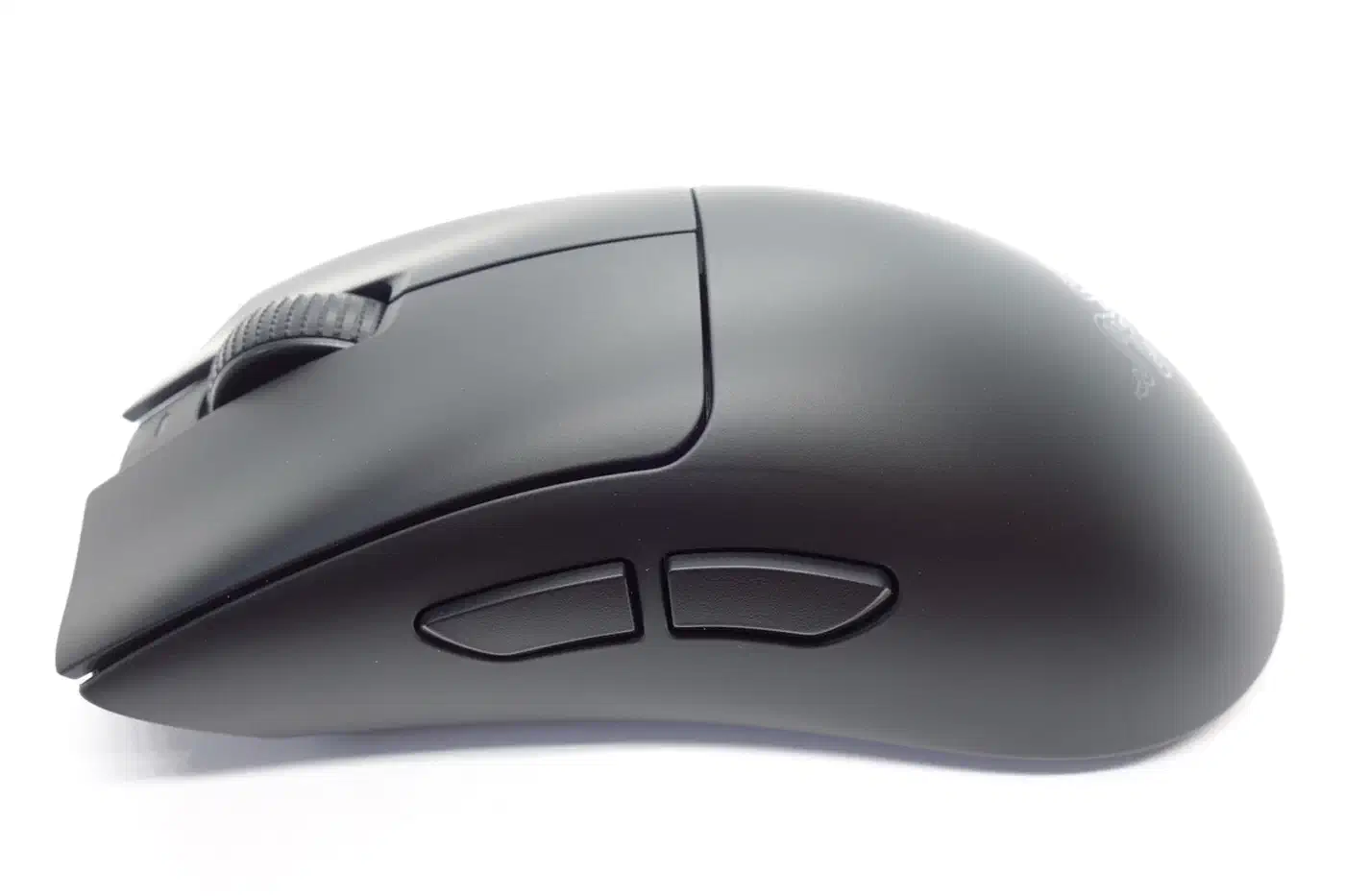
Wireless polling runs at 1,000Hz out of the box, and the 8,000Hz number arrives only with the HyperPolling dongle, which is a separate purchase. Battery life falls hard once you switch it on, so the 100-hour figure belongs to the slower mode.
KeebFinder’s 8K polling list shows how common the feature has become across every price tier, so skipping it costs little. High polling also does nothing below a 240Hz display, so most buyers never see it work.
The sensor is a trimmed version of the Focus Pro 30K in the Pro models. In play the gap is close to nothing. As BottleneckPC’s 2026 mouse guide argues, sensor quality is a floor that every current sensor clears, and most professionals sit at 800 or 1600 DPI anyway. The sensor downgrade costs you nothing you can feel.
Where the grams came from
Mouse makers have five ways to cut weight, and only one of them is free:
- Thin the shell. Cheap, and it risks creak under a palm grip.
- Cut holes in it. Honeycomb saves real grams and collects sweat.
- Fit a smaller battery. Fewer hours, especially at high polling.
- Use lighter switches and internals. Small gains, high cost. The choice of skate material shaves fractions of a gram and changes the glide far more.
- Shrink the whole shell. The biggest single win, and the one that changes who the mouse fits.
Razer pulled the last lever. The shrink shows up in every axis of the published V3 HyperSpeed and V3 Pro spec sheets.
| Measure | V3 Pro | V3 HyperSpeed | Change |
|---|---|---|---|
| Weight | 63 g | 55 g | -13% |
| Length | 128 mm | 121 mm | -7 mm |
| Width | 68 mm | 64 mm | -4 mm |
| Height | 44 mm | 41 mm | -3 mm |
| Bounding volume | 383 cm³ | 318 cm³ | -17% |
The shell fell faster than the weight did, so the lighter mouse is the denser one. Razer built a smaller DeathAdder and let the arithmetic take the grams off.
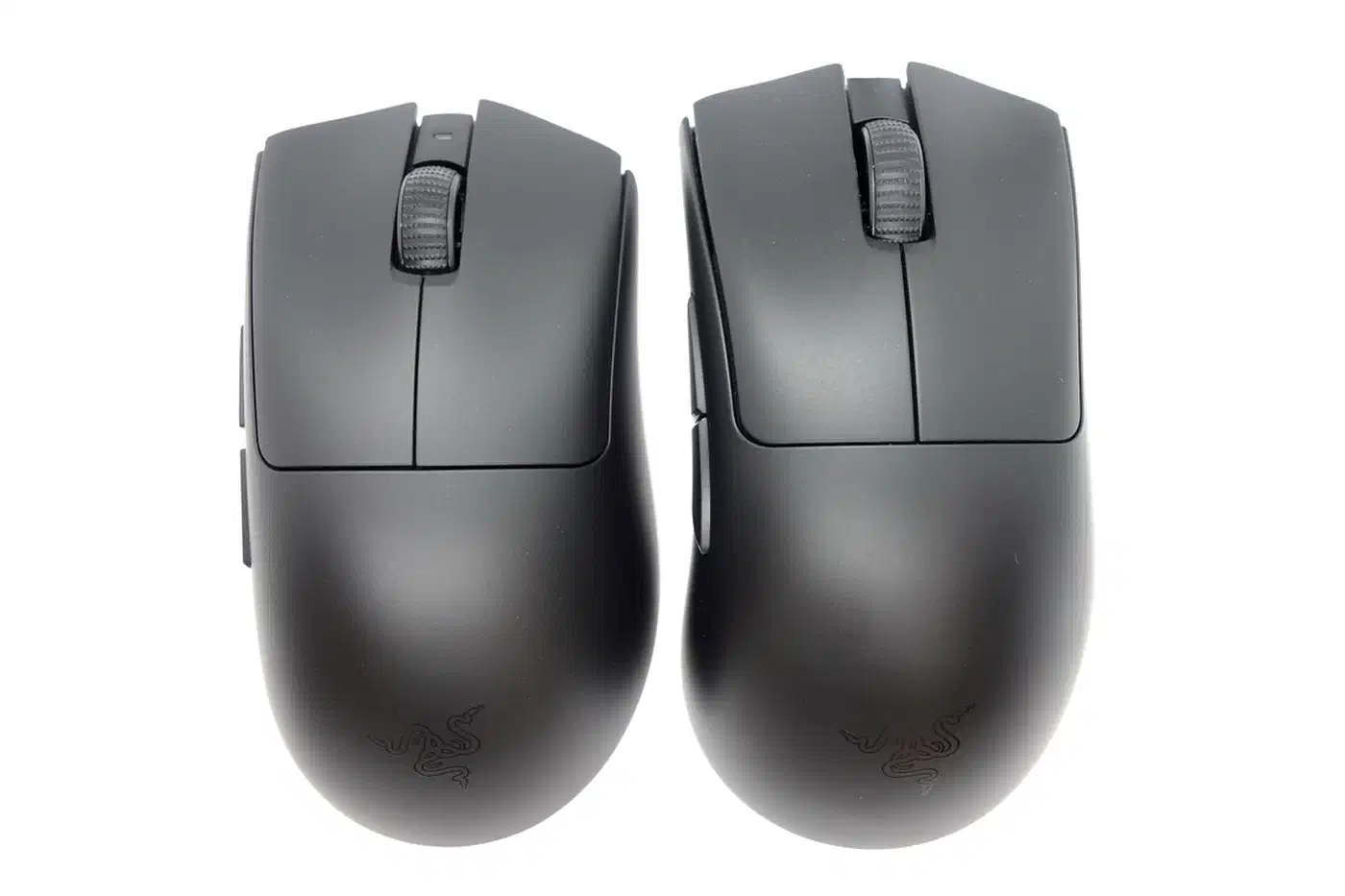
ProSettings’ review reached the same verdict by holding one:
essentially a DeathAdder mini
The build itself holds up. TechPowerUp’s teardown and shape review found a solid, unperforated shell that measured 53.5 grams on the scale, slightly under the quoted figure. Nothing was thinned out to hit the number, so the only thing you give up is hand room.
Does a lighter mouse mean a smaller mouse?
For the most part it does. Plot published weight against published shell size across the 2026 field and the light mice cluster at the small end.
| Mouse | Weight | L x W x H (mm) | Volume | g per cm³ |
|---|---|---|---|---|
| Razer Viper V3 Pro | 54.5 g | 127 x 64 x 40 | 324 cm³ | 0.168 |
| Razer DeathAdder V3 HyperSpeed | 55 g | 121 x 64 x 41 | 318 cm³ | 0.173 |
| Razer DeathAdder V4 Pro | 56 g | 127 x 67 x 43 | 366 cm³ | 0.153 |
| Logitech G Pro X Superlight 2 | 60 g | 125 x 64 x 40 | 318 cm³ | 0.189 |
| Razer DeathAdder V3 Pro | 63 g | 128 x 68 x 44 | 383 cm³ | 0.165 |
| Razer Viper V3 HyperSpeed | 82 g | 127 x 64 x 40 | 324 cm³ | 0.253 |
| Logitech G305 Lightspeed | 99 g | 117 x 62 x 38 | 277 cm³ | 0.358 |
| Logitech G502 X Plus | 106 g | 131 x 79 x 41 | 428 cm³ | 0.248 |
Five of the six sub-65-gram mice sit under 330 cm³, and every shell above 360 cm³ except one is either heavy or expensive.
The DeathAdder V4 Pro holds a 366 cm³ shell at 56 grams. That is 96 percent of the V3 Pro’s size at 89 percent of its weight. It is the only mouse here that got lighter without getting smaller, and it costs flagship money to do it.
The G305 has the smallest shell in the table and the second-highest weight, because a single AA cell sits inside it. A small shell makes a light mouse easier to build, and the G305 shows it guarantees nothing.
Every row uses manufacturer-published dimensions, and any mouse without published figures was left out rather than estimated. Bounding volume is length times width times height, which ignores the hollow inside a shell, so treat that column as a size ranking and nothing finer.
A grip-based buying rule
Weight is the spec on the box, and for most hands it’s the wrong one to sort on. Shape decides whether the mouse supports your hand or asks your hand to hold it up.
Measure your hand once and write both numbers down. Length runs from the base of your palm to the tip of your middle finger; width runs across the knuckles. Anything over about 19 cm long is a large hand, and most of the sub-60-gram field will feel undersized in it.
Then sort by grip:
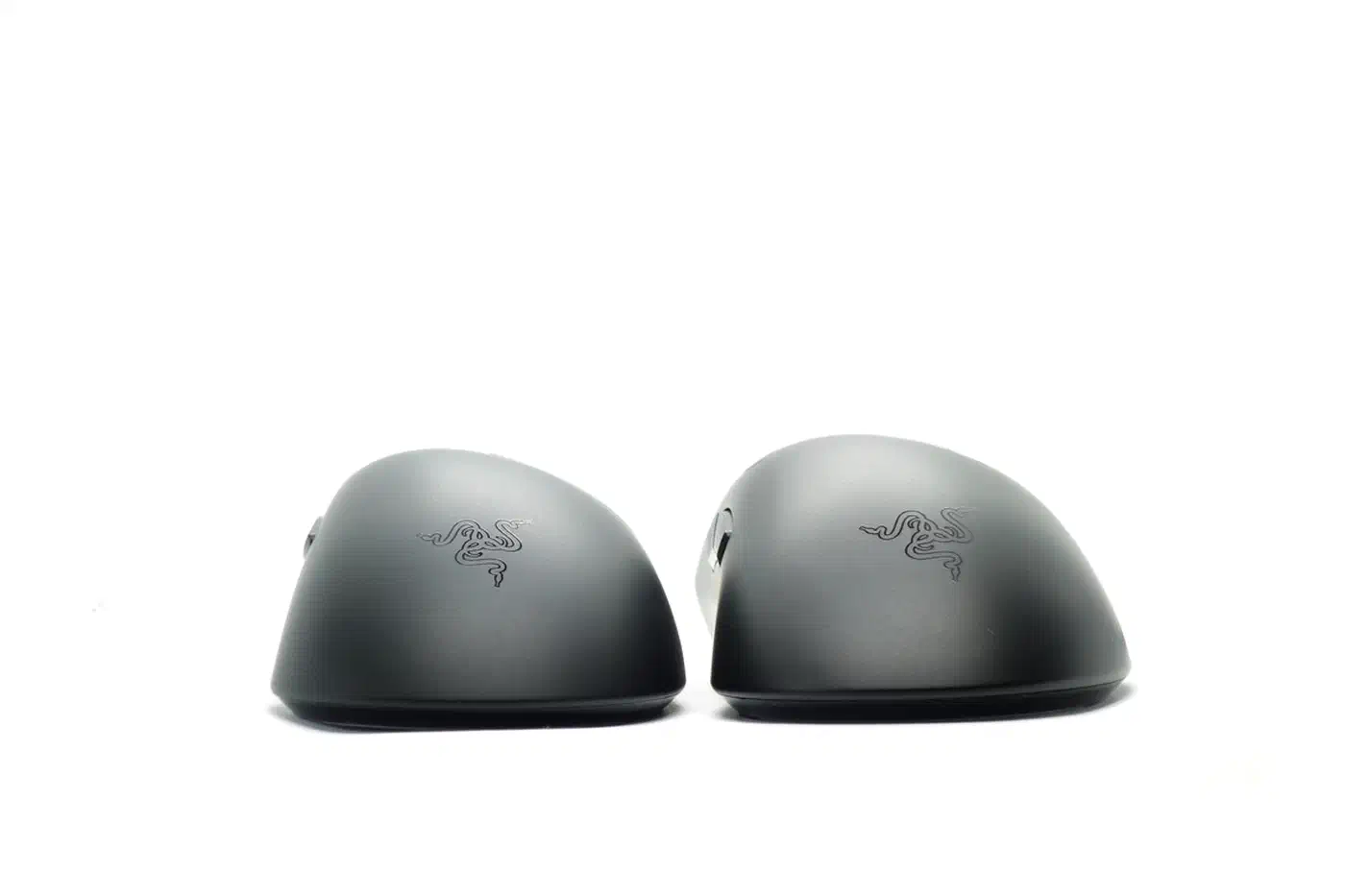
- Palm grip: shell length and rear hump height come first. The hump belongs under the middle of your palm. A 121 mm shell in a 19 cm hand leaves the heel of that palm hanging off the back.
- Claw grip: length still leads, though where the hump peaks counts for more than how tall it is. The DeathAdder V3 HyperSpeed suits medium hands here, and TechPowerUp’s shape review points it at the same group.
- Fingertip grip: weight comes first, because your palm never touches the shell. A small, light mouse is a straight advantage.
Pick the shape that fits your hand, then buy the lightest mouse available in that shape. Anyone who reverses those two steps ends up with a fast mouse they fight for years.