

OLED monitors reach 1,500 nits while TVs claim 4,500


The best OLED monitor panels for 2026 are rated at 1,300 to 1,500 nits peak. OLED TV panels from the same two suppliers claim 4,500. Both figures are peaks measured on a small bright window. On a desk, the number that changes your day is everyday SDR brightness, and it sits near 300 to 380 nits.
Key Takeaways
- The 4,500-nit number comes from TV panel specs, and monitor panels are rated separately.
- Peak brightness is measured on a small bright patch of an otherwise black screen.
- The best 2026 OLED monitor panels are rated 1,300 to 1,500 nits.
- Everyday desktop brightness rises from 250 nits to roughly 300 to 380 nits.
- LG is bringing its brightest TV panel stack down to gaming monitors.
What does a peak brightness number on an OLED measure?
A peak figure comes from a small bright square on an otherwise black screen. The test lights up a tiny fraction of the panel and reads the brightest value it can hold there. That’s why the same panel can be sold as a 4,500-nit display and still show you a dim white document.
An OLED can’t hold that peak everywhere at once, because every pixel makes its own light. Light more of the screen and the panel draws more power and makes more heat. The driver then pulls brightness down to stay inside its budget. The bigger the bright area, the lower the number.
An LCD works the other way round, because its lamp sits behind the panel and runs at one level regardless of the image. A full white page is therefore about as bright as a small white square. Self-emissive panels give up that consistency in exchange for perfect black.
The sibling article on OLED ABL and the APL curve walks through the limiter that does the dimming. An LG 42C2 holds 717 nits on a small window but only 152 nits on a full white screen, so one measurement of the same panel comes out five times the other.
The 4,500-nit claim from Samsung Display and LG Display
Both panel suppliers landed on the same headline for their 2026 flagship TV panels, and they got there by different routes. Samsung Display reaches 4,500 nits by combining the maximum brightness of each red, green and blue component. Its new QD-OLED stack also uses newly optimised organic materials. TFTCentral’s write-up of the 2026 panel specs carries the press-release wording for both companies.
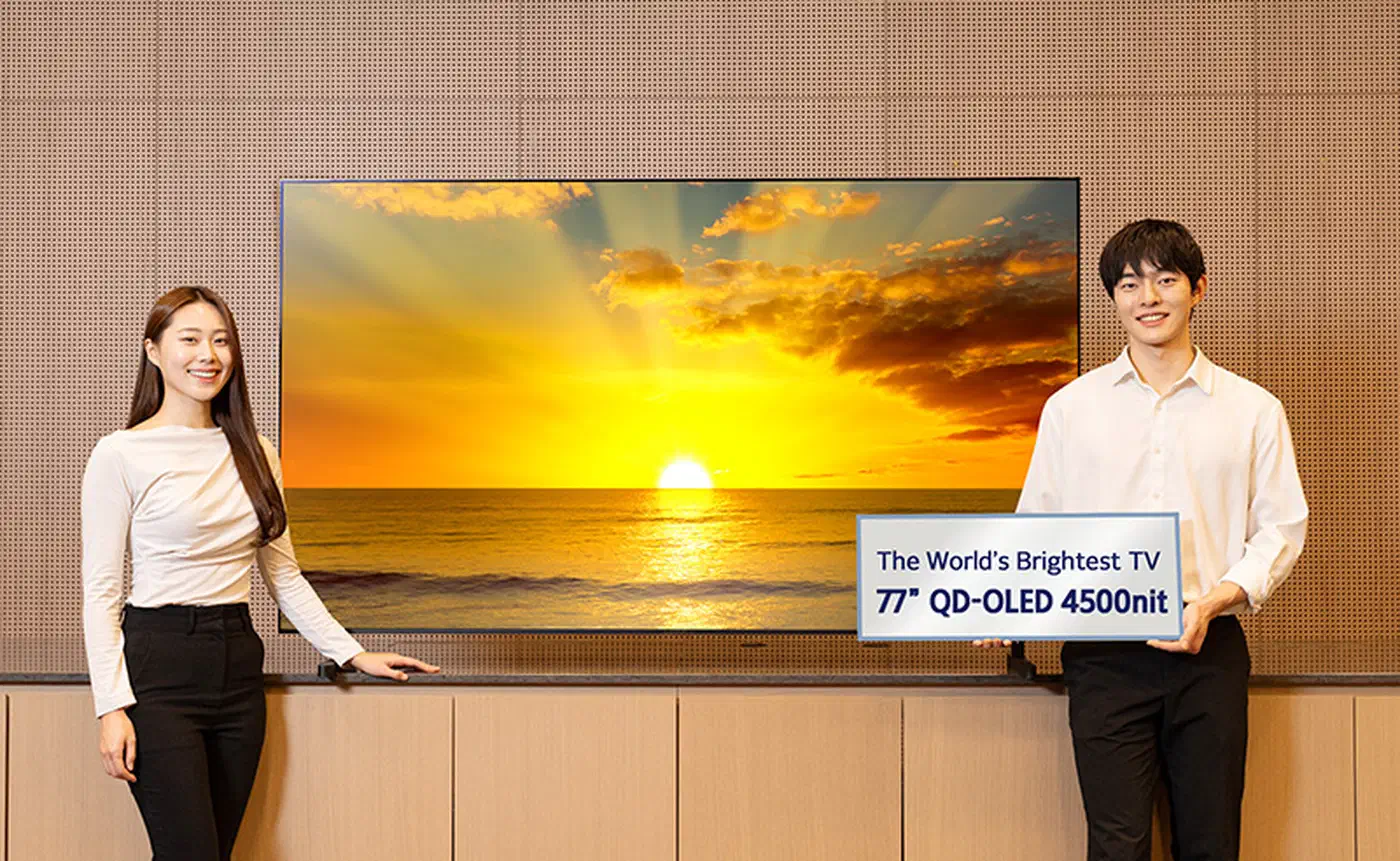
LG Display gets to the same figure with Primary RGB Tandem 2.0. That stack puts red, green and blue in independent layers. A refined pixel structure and new driving algorithms squeeze more light out of the same power. LG also claims a 0.3 percent reflection rate, which it calls the lowest of any existing display.

Neither figure is a step change: both sit one notch above the 4,000-nit spec the same panels carried the year before. FlatpanelsHD reported the Samsung Display announcement with the same 4,500-nit number, and neither company said which panel sizes get the new rating.
Measured results from shipping TVs land well short of the rating. TechRadar tested an LG G5 that is rated at 4,000 nits. It measured nearer 2,250 nits, and it expects TVs built on the new panels to settle around 3,000 nits.
The short answer is no, and the slightly longer answer is nooooooo. That’s because the claimed peak brightness is what’s technically possible, not what you’ll actually get.
What OLED monitor panels are rated for in 2026
Desktop panels sit at roughly a third of the TV figure, and most of the gain lands in ordinary SDR brightness instead of headline peaks. Samsung Display’s new QD-OLED monitor panels use its EL3.0 emitter material to reach 300 nits of SDR luminance, up from 250. They also carry VESA DisplayHDR 500 True Black certification. The 34-inch ultrawide 5th Gen panel also hits 1,300 nits peak, a first for any QD-OLED monitor panel.

LG Display is taking the TV stack downmarket:
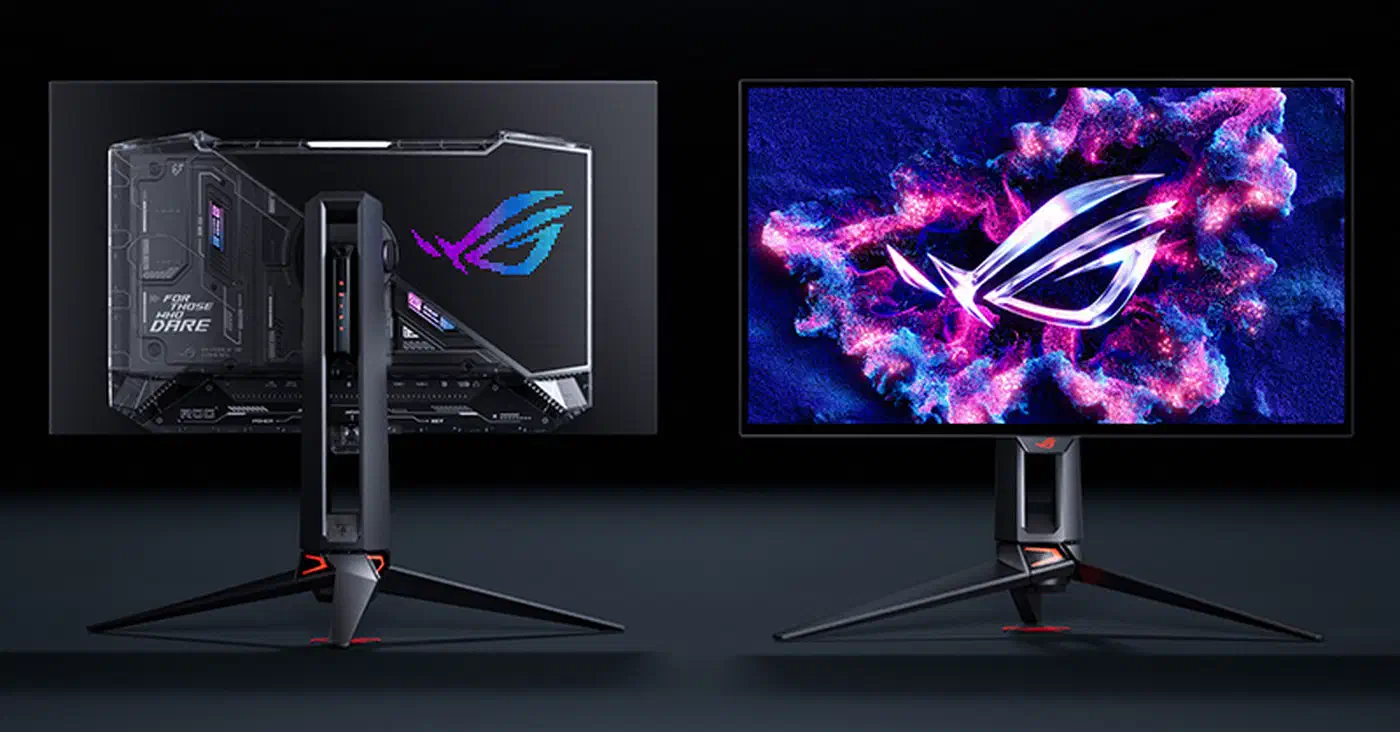
starting this year, the company will expand the application of Primary RGB Tandem 2.0 beyond OLED TV panels to its full line-up of Gaming OLED panels, enabling monitor displays that achieve a peak brightness of up to 1,500 nits.
Shipping 4th Gen Tandem WOLED monitors already reach about 380 nits in SDR and 1,500 nits HDR peak, up from the earlier 1,300-nit panels. The QD-OLED side has two new 2026 panels announced so far: a 32-inch 4K 240Hz Gen 4 and a 34-inch ultrawide 360Hz Gen 5.
| Spec | 2025 | 2026 |
|---|---|---|
| TV panel peak, both suppliers | 4,000 nits | 4,500 nits |
| Best monitor panel peak | 1,300 nits | 1,500 nits |
| QD-OLED monitor SDR luminance | 250 nits | 300 nits |
| WOLED monitor SDR luminance | about 380 nits | about 380 nits |
The year-over-year desktop gain is real but small, and it is smallest in the column a desk user stares at all day.
Why the TV number does not travel to a desk
The gap comes down to how each screen gets used. A TV is watched from three metres away in a dim living room, so a highlight has room to feel like a highlight. A monitor sits 60 centimetres from your face, where the same output would hurt to look at.
Size decides how much of that output a panel can sustain. A 65-inch TV chassis has surface area to spread heat across, while a 27-inch monitor has a fraction of that thermal room, so the smaller panel hits its power limit sooner.
Desktop content works against these panels too. Documents, IDEs and browser windows are mostly large bright areas, the worst case for a self-emissive display, while a film mostly shows dark frames with small specular highlights, the easiest case of all.
The 4,500-nit panels are also TV-first by design. Monitor-sized versions only appear at borderline 42-inch sizes, so nobody shopping for a 27-inch or 34-inch screen should expect them.

Judge an OLED monitor by its SDR luminance figure and its full-field behaviour. The HDR peak on the box only describes how a highlight will punch, while the SDR figure covers the other nine hours of your day.