

220 PPI puts LG's 5K Tandem WOLED into retina territory


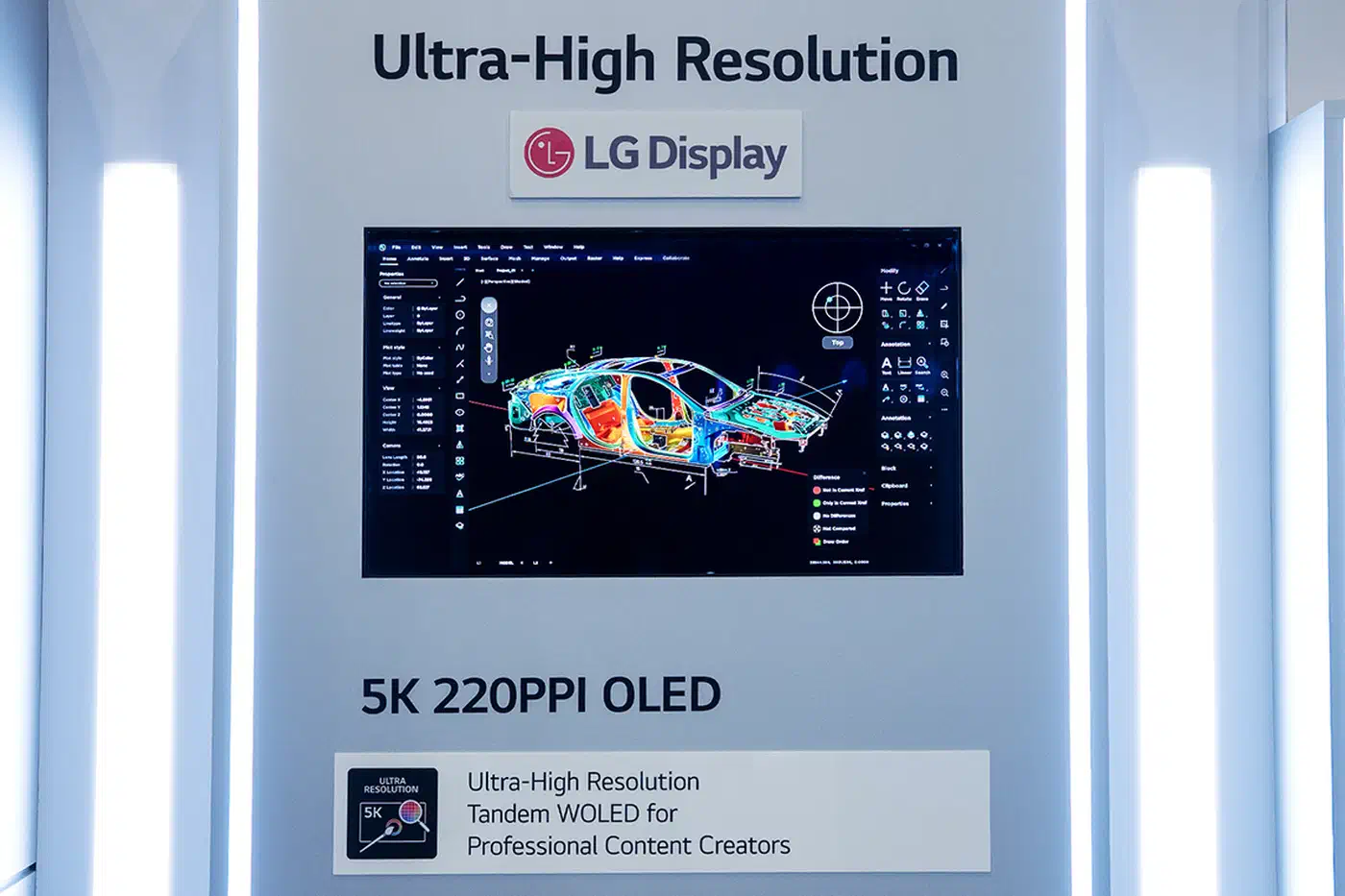
LG Display’s 27-inch 5K Tandem WOLED panel reaches about 220 pixels per inch, dense enough for Apple to count it as retina class. Getting there meant dropping the white sub-pixel, so a full white screen falls from 335 nits to 250 nits. Mass production is not expected until after 2028.
Key Takeaways
- LG’s 27-inch 5K OLED panel packs roughly 220 pixels per inch.
- Fitting a fourth sub-pixel got too tight, so white was cut.
- That sharper image costs brightness, dropping from 335 nits to 250 nits.
- The panel runs at 120Hz and aims at design and video work.
- You will not see it in a monitor until after 2028.
Every number here comes from a development panel shown at a trade event, not from a monitor you can buy. LG Display has the technology working, but a shipping product is still years out.
What LG showed in the 27-inch 5K Tandem WOLED panel
LG Display unveiled the panel as a development sample, first at SID Display Week 2026 and again at a K-Display 2026 seminar, per TFTCentral’s report . The press release ran thin on detail, so most of these numbers came from follow-up questions to LG.
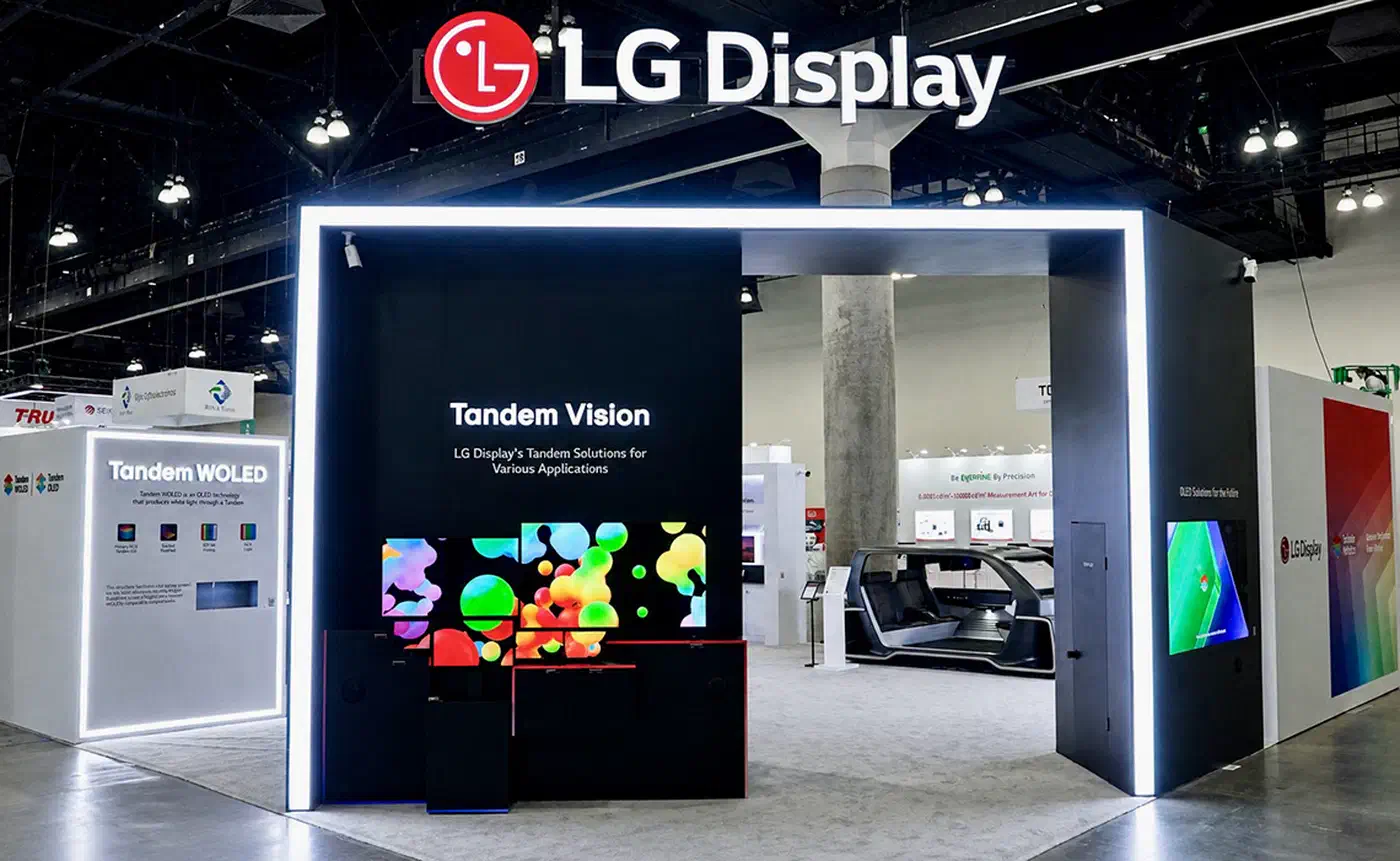
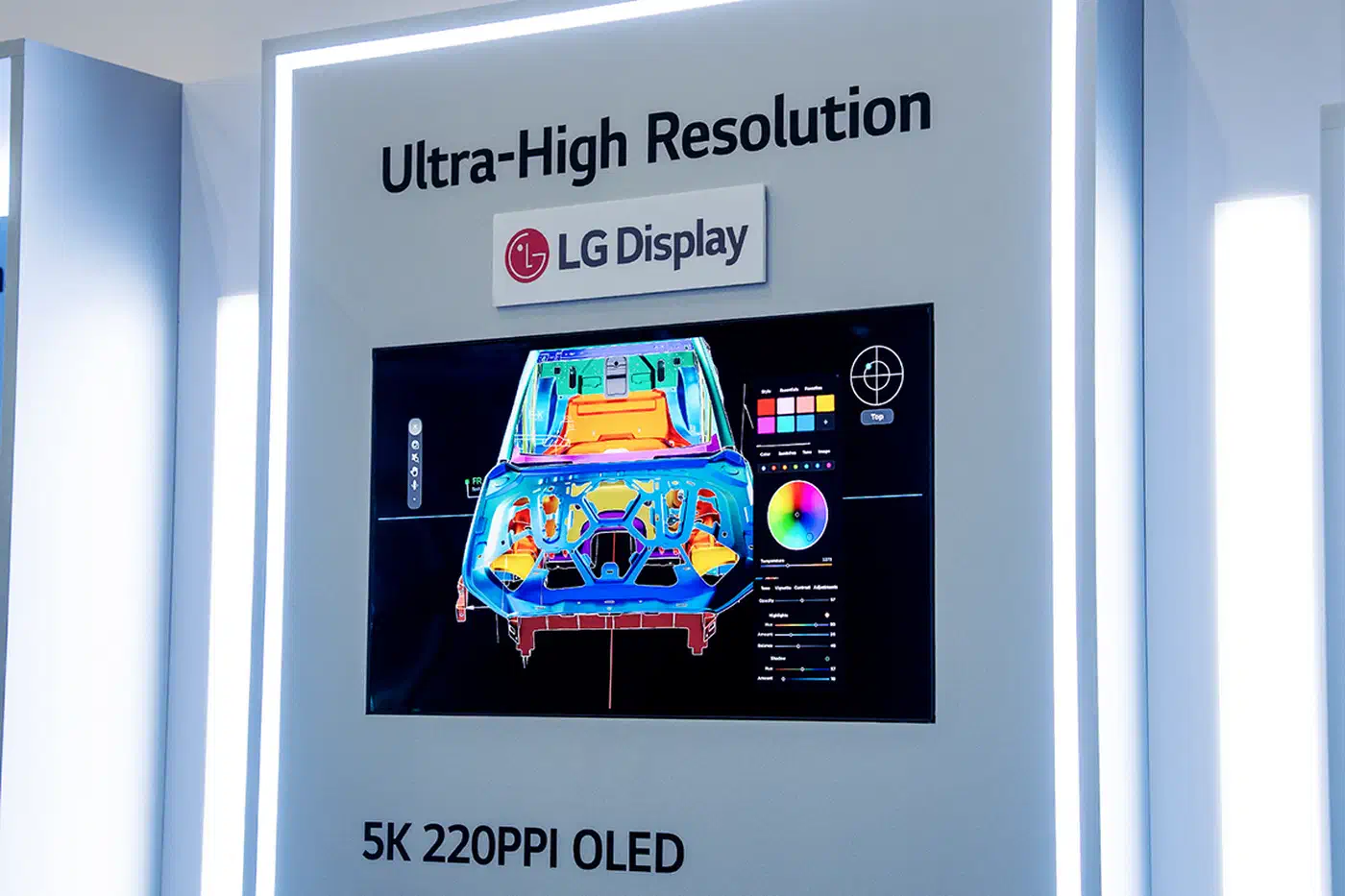
The resolution is 5,120 by 2,880, which is where the “5K” label comes from. On a screen that measures about 26.5 inches, that works out to roughly 221.68 pixels per inch, promoted at the event as 220 PPI. It still sits in the 27-inch class, next to LG’s existing 1440p and 4K panels.
The rest of the spec sheet favors accuracy over speed. Refresh tops out at 120Hz. Brightness reaches 250 nits on a full white screen, the panel meets DisplayHDR True Black 400, and it covers 99% of DCI-P3. It belongs to the 4th-generation Primary RGB Tandem range, now marketed simply as Tandem WOLED, which stacks four emission layers: two blue, one red, and one green.
| Panel | Resolution | PPI | Refresh | Brightness at 100% APL | HDR tier |
|---|---|---|---|---|---|
| 27-inch 5K Tandem WOLED | 5,120 x 2,880 | ~220 | 120Hz | 250 nits | True Black 400 |
| 27-inch 4K Tandem WOLED | 3,840 x 2,160 | ~160 | 240Hz (480Hz at 1080p) | Not published | Not published |
| 27-inch QHD (comparison panel) | 2,560 x 1,440 | 110 | - | 300 nits | True Black 500 |
What does 220 PPI mean for text?
Density is the whole point of this panel, and text is where you feel it. A 27-inch QHD screen sits at 110 PPI. The 5K panel doubles the pixel count on both axes, so it packs four times as many pixels into the same space, per UBI Research . Straight lines and letter edges get much finer.
The sub-pixel layout helps too. LG scored its own RGB stripe structure in a whiteness test, and the numbers favor it. The stripe layout hit 97.9% for line rendering and 97.1% for text, against 93.1% and 94.9% for a square pixel structure. Less color fringing at the edges means white reads closer to pure white.
macOS is why 5K and retina keep showing up together. A 5K panel scales at exactly 2x under macOS, so every interface pixel maps to a clean block of four.
Still, this is a modest refinement. LG’s 32-inch 4K and 39-inch 5K2K panels already render text well, thanks to high density and their RGWB layout. The 5K panel sharpens a picture that already looked good.
Why the white sub-pixel had to go
For years, LG’s WOLED panels added a white sub-pixel to boost brightness. That extra sub-pixel is exactly what got dropped here, and the reason comes down to space.
Packing four sub-pixels into the room normally used for three gets harder as density climbs. The most LG has managed with its RGWB layout is 143 PPI, on its 39-inch ultrawide panel. Pushing to about 160 PPI at 27-inch 4K, then 220 PPI at 27-inch 5K, goes well past what that four-sub-pixel layout allows.
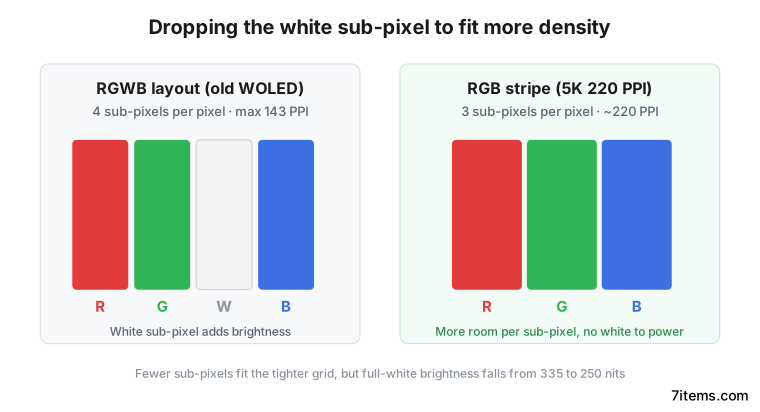
TFTCentral reads the change as a space problem dressed up as a clarity upgrade. Its writers point out that RGB stripe would help far more on lower-density screens, like a 27-inch 1440p panel, if text clarity were really the goal.
If it was, why not shift to RGB-stripe for the panels and pixel densities where it really would make a difference, like 27" 1440p, 34" 3440 x 1440 and so on? That’s where there’s more benefit in the change from a text clarity point of view, not on these super-high density panels.
LG’s own wording backs this up. The press release credits the new stripe structure with an “enhanced aperture ratio”, which is the one lever left for pulling back light once the bright white sub-pixel is gone.
What the density costs in brightness
Sharper text costs brightness. SDR brightness steps back from 335 nits on the latest 4th-generation Tandem WOLED panels that kept the white sub-pixel, down to 250 nits on this one. That is a 25% drop in full-screen brightness in exchange for the higher density.
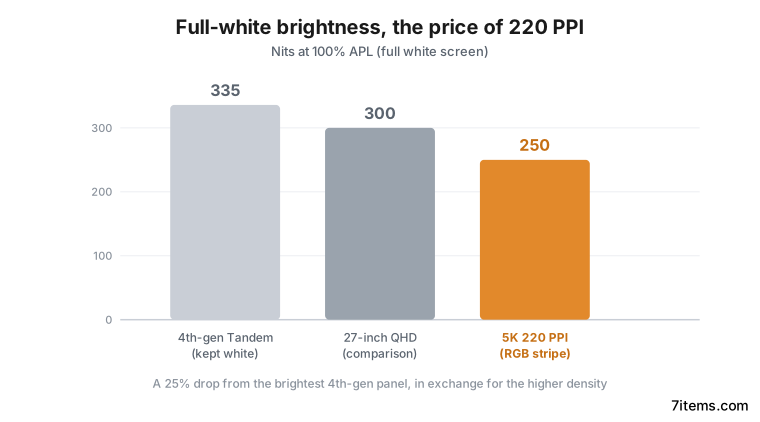
The HDR badge slides too, from DisplayHDR True Black 500 to True Black 400. The 27-inch QHD panel LG showed for comparison manages 300 nits and True Black 500, so this 5K screen is dimmer than a lower-resolution sibling as well.
The bigger concern is not the nit figure on its own. Squeezing sub-pixels this tight also strains the aperture ratio, the manufacturing yield, and the cost, which weighs on price more than the brightness number does.
The tradeoff hurts bright rooms and HDR highlight work, while color-accurate desk work in controlled light still looks like a fine fit.
Who this panel is for, and when it ships
The mix of 120Hz refresh and very high density points straight at professionals. Graphic design and video editing want resolution and color accuracy over the fast refresh a gamer chases, so this panel leans that way.
A future Apple monitor is the obvious guess. The 5K resolution and retina-class density suit macOS scaling, and Apple has used LG 5K panels before. For gamers, LG’s RGB-stripe 4K panel is the better bet, running 240Hz native with a dual-mode 480Hz at 1080p.
The timeline is the sobering part. LG Display says it has secured the technology but still needs process stabilization and yield improvement, so full-scale mass production is expected after 2028, per UBI Research. No monitor brand and no Apple product has been tied to this panel yet.
One thing to watch is the five-stack WOLED structure LG is developing alongside this one, adding a third blue emitting layer. That is the likely route back to the brightness this RGB stripe panel gives up. Notebookcheck framed the earlier 27-inch 4K stripe panel as a fix for OLED’s long-standing text problem, and this 5K panel pushes that same idea further.