

A true RGB stripe sharpens text on LG's 27-inch 4K OLED

LG’s 27-inch 4K OLED now uses a true RGB stripe to sharpen text, dropping the white sub-pixel that WOLED panels leaned on for years. The change cuts color fringing on font edges and makes it the world’s first RGB-stripe OLED to reach 240Hz. The trade is peak brightness, which falls to about 1000 nits.
Key Takeaways
- LG’s new 27-inch 4K OLED lines red, green and blue in a straight stripe.
- Dropping the white sub-pixel makes text sharper and cuts color fringing.
- It’s the first RGB-stripe OLED fast enough to game on at 240Hz.
- Peak brightness drops to about 1000 nits without the white sub-pixel.
- The first monitor with it, Asus’s ROG Swift PG27UCWM, lands later in 2026.
What is an RGB stripe sub-pixel layout?
An RGB stripe puts the three primary sub-pixels, red, green and blue, in a straight vertical line. It is the same clean pattern that LCD screens have used for decades. Your eye reads text edges as sharp because each color sits in a predictable place.
LG’s older WOLED panels did something different. They added a fourth white sub-pixel to boost brightness, arranged first as RWBG and later improved to RGWB. That extra sub-pixel helped the panel get bright, but the uneven layout smeared color along the edges of letters.
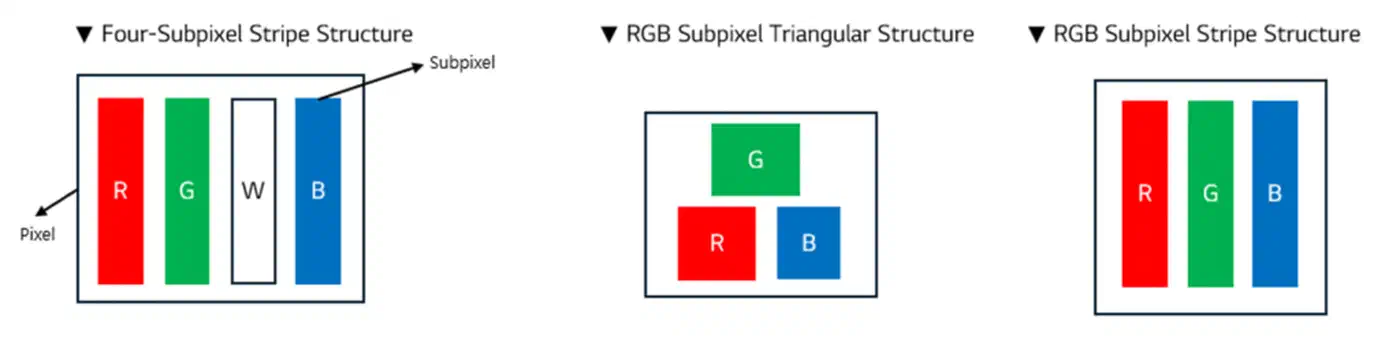
Removing the white sub-pixel and going to a true stripe cuts that color bleeding and fringing, even at the close distance you sit from a desktop monitor. LG Display says the pattern is tuned for systems like Windows and for font-rendering engines. That is a direct nod to how ClearType paints text using sub-pixels. You can read the full breakdown in the LG Display panel announcement covered by TFTCentral .
Although the increased pixel density alone would likely have solved most lingering issues anyway, it’s great to see LG Display just shift to a true RGB-stripe layout with the new panel.
Why the white sub-pixel had to go, and what it cost
The white sub-pixel was a cheap way to raise brightness, and older Tandem WOLED panels that used it reached roughly 1500 nits peak. Take that sub-pixel away and the panel loses its easiest brightness lever.
So the confirmed numbers come in lower. LG lists these brightness figures:
- 250 nits in SDR
- 1000 nits peak in HDR at a small 1.5% window
- 500 nits at a 10% window
- 250 nits at a full-screen 100% window
The panel also targets VESA DisplayHDR 400 True Black, pending each monitor’s own certification.
LG did not simply accept a dimmer screen, though. It raised the aperture ratio, the share of each pixel that emits light. That is how the stripe layout stays bright enough for real desktop use without the white helper.
The gain reaches beyond text. With only red, green and blue emitting, the panel adds color instead of diluting it, so color brightness holds up at high levels. Asus claims up to 27% larger color volume on the first monitor built around it. You get crisper text and richer HDR color in exchange for lower peak brightness.
Being first to hit 240Hz on a stripe
RGB stripe OLED has existed for years. The new part is making one fast enough to game on. Earlier stripe panels, like the professional monitors built on JOLED glass, topped out near 60Hz and were useless for fast gaming.
LG Display’s panel is the first in the world to hold a true RGB stripe at a 240Hz refresh rate. A dual-mode feature, which LG calls Dynamic Frequency & Resolution, also lets you drop to 1080p and push 480Hz when you want raw speed over sharpness.
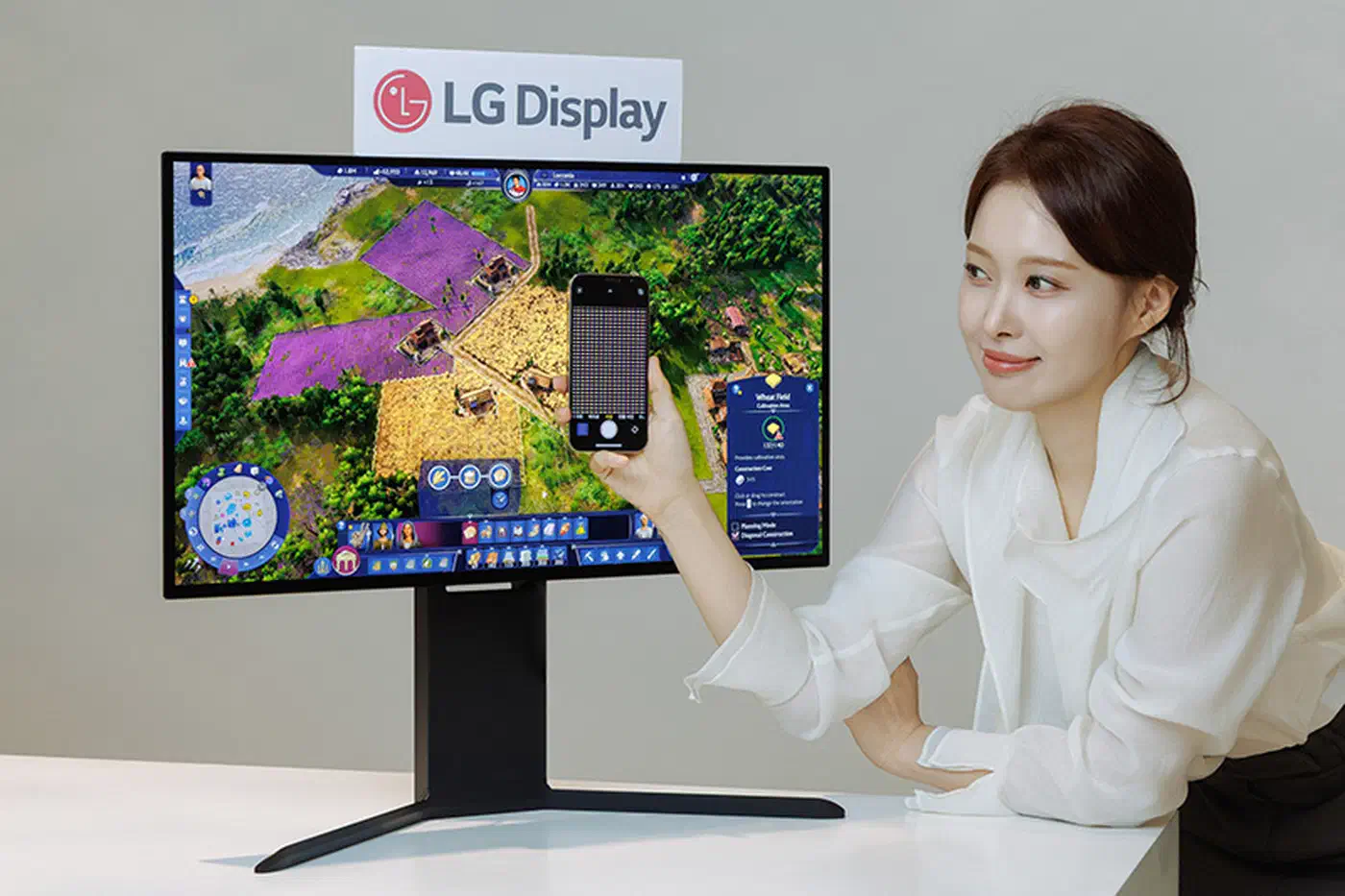
Raising the aperture ratio was the move that made both things possible at once. LG’s own explanation, reported by FlatpanelsHD , credits that change for the result. It let the stripe layout and a high refresh rate work together for the first time. Tom’s Hardware frames the same panel as the first 4K 240Hz OLED with a true RGB-striped layout.
For context, Samsung Display reached this size and resolution first with its QD-OLED in 2025. That panel uses a triangular RGB layout, which still shows some fringing on text. TCL CSOT is planning its own RGB OLED later.
| Panel | Sub-pixel layout | Peak brightness (reported) | Max refresh |
|---|---|---|---|
| LG RGB-stripe Tandem WOLED | True vertical RGB stripe | ~1000 nits | 240Hz (480Hz at 1080p) |
| Older RGWB Tandem WOLED | Adds a white sub-pixel | up to ~1500 nits | varies by panel |
| Samsung QD-OLED | Triangular RGB | Higher, but with fringing | 240Hz |
The stripe panel gives up peak nits to win the sharpest, cleanest text of the three.
Why it is still called Tandem WOLED
The name confuses people, because “WOLED” sounds like it must mean a white sub-pixel. It does not. The “W” refers to the white light that the stacked blue layers produce, which then passes through red, green and blue color filters.
So a Tandem WOLED panel can ship in the old RGWB layout or in this new RGB stripe layout. Both keep the same name. The sub-pixel arrangement does not change what the light-producing stack is called.
LG now splits the branding by product size. Tandem WOLED covers large TV and monitor panels, while Tandem OLED covers small and medium panels in laptops, tablets and cars. Tandem OLED is a different structure, where red, green and blue each emit directly with no color filter needed. The TFTCentral naming clarification has the full detail confirmed with LG.
One number needs a correction while we are here. LG’s press release cites 160 PPI, but the active area is 26.5 inches, so the real figure is about 166 PPI. That extra density also helps text look clean.
When can you buy a monitor with this panel?
You don’t buy the panel itself. It goes inside monitors that arrive on their own schedule. LG Display started mass production in mid-2026, and panel production usually leads shipping monitors by about three months.
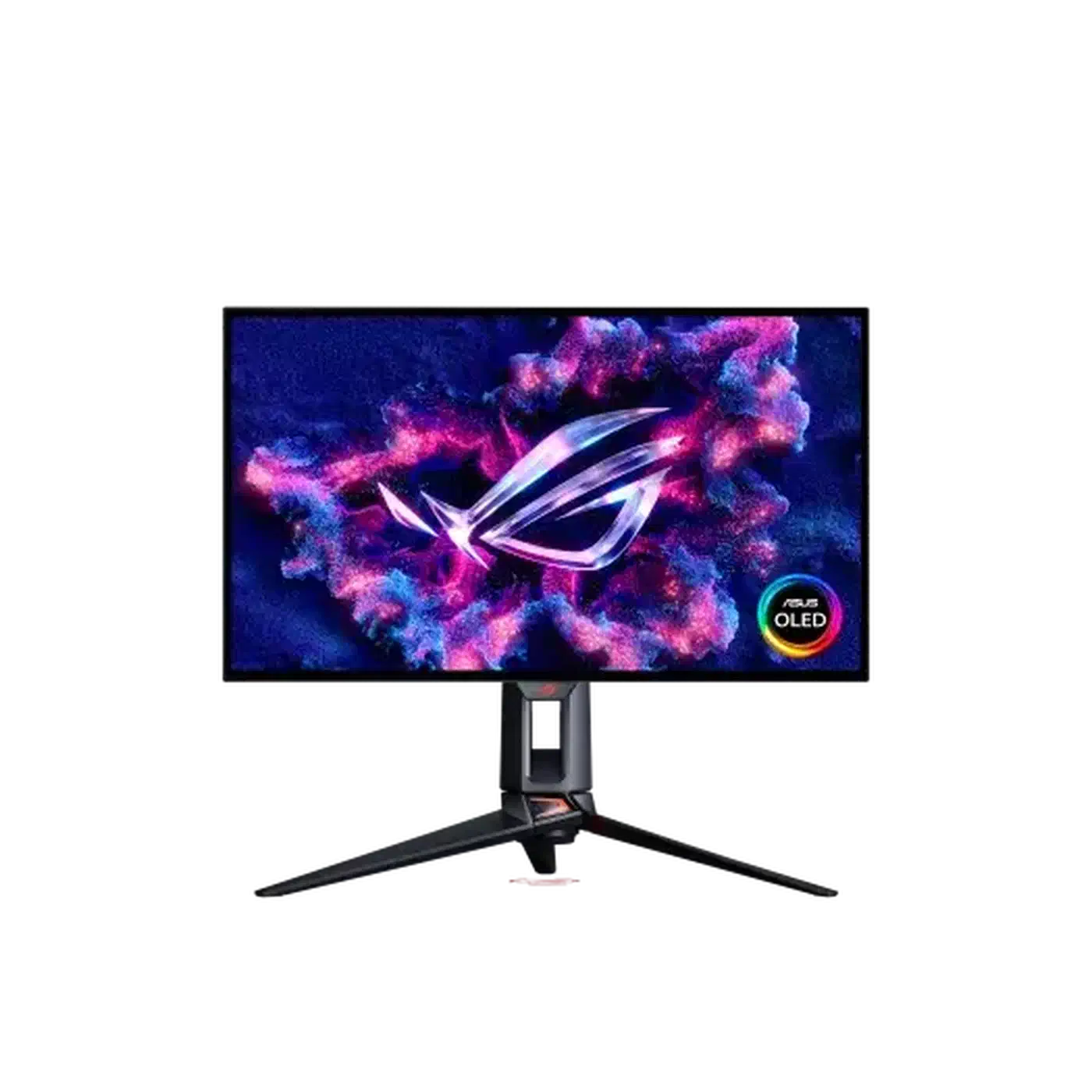
That points to real monitors landing later in 2026. The first announced model is the Asus ROG Swift PG27UCWM , with a 32-inch sibling, the PG32UCWM, using the larger RGB-stripe panel. Expect more from LG, Asus and others as the panel spreads, aimed at gaming, media, text editing and professional work alike.
One thing to keep in mind for buyers: the text gain leans on Windows ClearType, which paints letters using sub-pixels. macOS dropped sub-pixel anti-aliasing years ago. So a Mac leans on the higher pixel density for clean text, not on the stripe layout. On Windows, the stripe does real work every time you read a line of text.