

Your keycaps fit Gateron KS-20 magnetic switches just fine
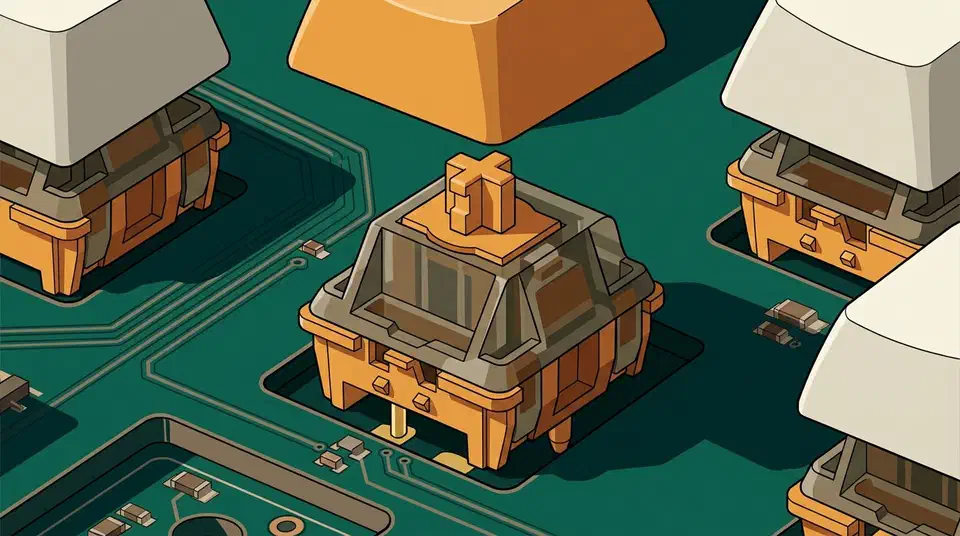
Magnetic switch hot-swap compatibility splits into three answers. Your keycaps fit, because Gateron, Kailh and TTC all build magnetic switches on a standard MX stem. Switches are stricter, since the circuit board does the sensing. Cross-brand magnetic swaps hang on one hidden variable: which magnet pole faces the board.
Key Takeaways
- Magnetic switches use standard MX stems, so your normal keycap sets fit.
- The sensing happens on the circuit board, under the socket.
- A magnetic board can’t read a mechanical switch, and the reverse holds too.
- Magnet polarity differs between brands, even in identical-looking switch bodies.
- Hot-swap here is a repair feature more than a customisation one.
Keycaps fit, and that is the easy half
Gateron, Kailh and TTC all use the same cross-shaped MX stem a Cherry MX clone uses. Gamakay’s TMR comparison says so plainly. Your PBT set, your artisans and your novelty keys all still fit.
Gateron’s own KS-20 magnetic switch set listing calls the housing MX-keycap-compatible, with 4.1 mm of travel and a 30 gf linear feel. The same page warns that it needs a special board and won’t work in a regular mechanical keyboard.
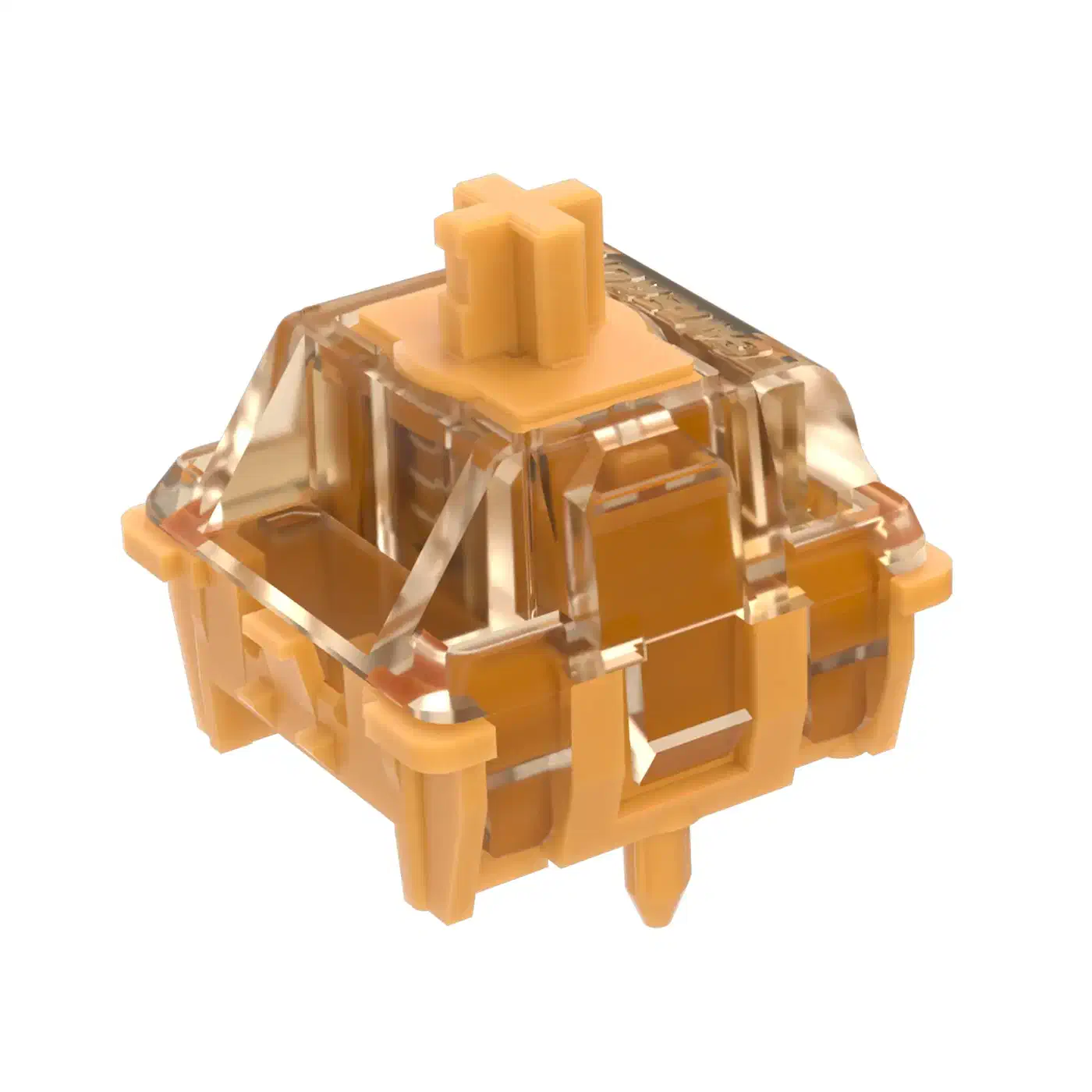
Stabilisers follow the standard too, so the long keys are fine. Very tall or heavy keycaps change how fast the magnet moves. That shifts where a shallow actuation point lands in practice. Set actuation to 0.2 mm and a chunky SA cap can feel twitchier than a flat one on the same board. A tall cap also magnifies whatever stem-to-housing clearance the switch shipped with.
Can you put mechanical switches in a magnetic keyboard?
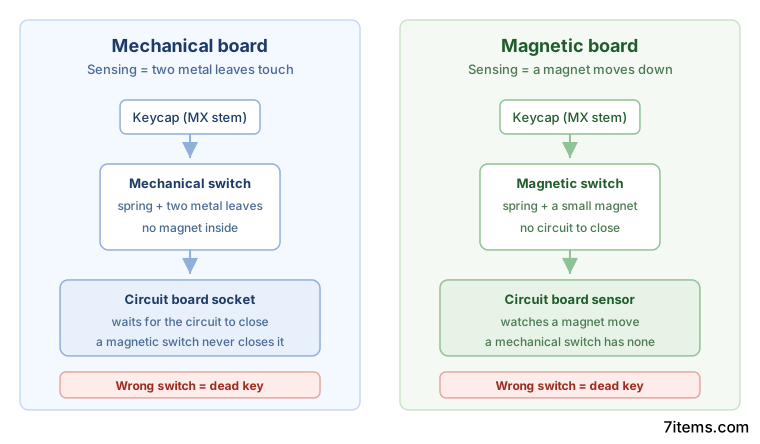
No, because of where the sensing sits. On a Hall effect or TMR board, each socket has a sensor underneath it watching a magnet move down through the switch. A mechanical switch has no magnet, so the sensor sees nothing and the key does nothing. That magnet-reading step is also why a magnetic board trails optical switches on latency .
Going the other way fails too. A plain mechanical board is watching for two metal leaves touching. A magnetic switch never closes that circuit, so it sits dead in an ordinary hot-swap socket. MonsGeek’s compatibility guide puts it the same way. Standard mechanical boards have no magnetic sensors to read the signal.
People usually ask this question because they are worried about damage. None of the sources here confirm that a mismatched switch harms anything, and none rule it out either. Every report describes a dead key and a board that carries on working. Still, no vendor documentation promises safety, so treat that as unconfirmed.
Some TMR boards are built as hybrids that accept both kinds of switch in the same socket. Gamakay claims that for its TK75 TMR, MonsGeek describes the same trend, and Logitech built 39 dual-purpose beds into the G512 X. Hybrid support is a per-model choice, so check the specific board rather than assuming any TMR keyboard takes both types.
Why cross-brand magnetic switches are a maybe
Two magnetic switches can look identical and still behave differently. The magnet inside them is not standardised, and every switch magnet has a direction. Some face north pole down toward the board, some face south pole down. A board tuned for one reads the other badly.
Kinetic Labs is blunt about the gap between that reality and the marketing:
Despite what quite a few vendors will claim, there are cross-brand and cross-switch incompatibilities that do show up when swapping these kinds of switches across boards.
Magnet strength is the second variable. A board tuned for a weak magnet can be overwhelmed by a strong one, and a strong-magnet board may barely register a weak one. Neither number appears on a spec sheet.
A bad pairing shows up in the typing feel. Actuation can land deeper or shallower than the software says, a dead zone can appear at one end of travel, and rapid trigger can fire twice and refuse to reset. MonsGeek publishes one pairing that fails outright. Its M1W HE and M1W V3 HE ship south-pole-down switches, so north-pole-down Akko Astrolink switches won’t work in them.
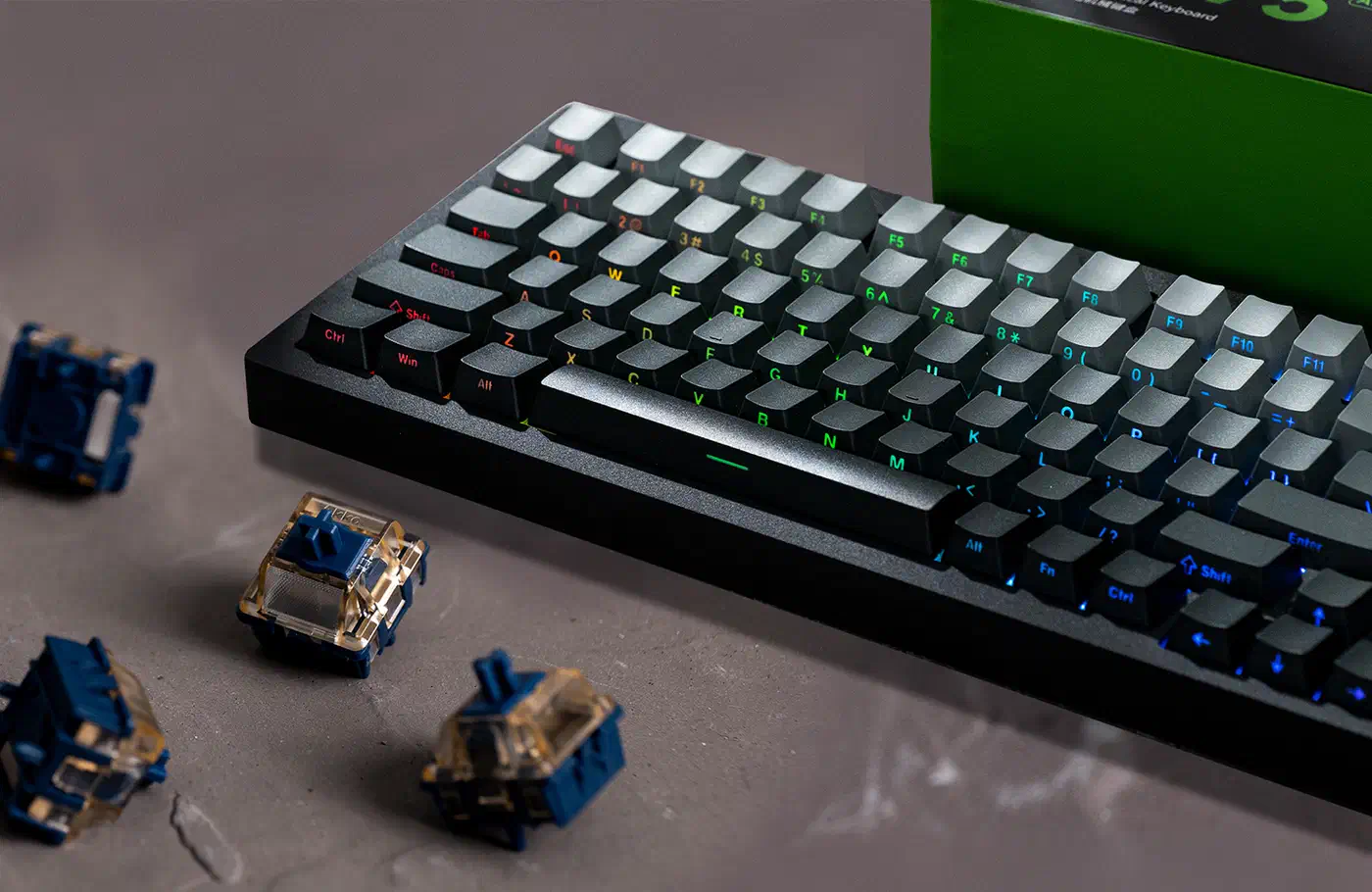
Documented cases like that are rare. Vendors almost never publish magnet polarity or pole spacing, so any compatibility table has gaps in it.
Magnetic switch hot-swap compatibility at a glance
| Swap | Works? | Reason |
|---|---|---|
| MX keycaps onto magnetic switches | Yes | Magnetic switches keep the standard MX stem |
| Mechanical switch into a Hall effect board | No | The sensor waits for a magnet that never arrives |
| Magnetic switch into a plain mechanical board | No | No magnetic sensors sit under the sockets |
| Hall effect switch into a TMR board | Usually | TMR reads the same magnets and is backward compatible |
| Cross-brand magnetic switch, same pole direction | Maybe | Magnet strength and board tuning still have to agree |
| Cross-brand magnetic switch, opposite pole direction | No | MonsGeek M1W HE rejects Akko Astrolink for this reason |
| Mechanical switch into a hybrid TMR board | Model-specific | Only some TMR boards are wired for both types |
Moving Hall effect switches onto a TMR board is the one cross-technology swap the sources actively endorse, per mechanicalkeyboard.net’s TMR versus Hall effect breakdown .
What hot-swap buys you on a magnetic board
Mostly it buys you an easy repair, because a single failed switch becomes a two-minute fix instead of a soldering job or a warranty claim. Logitech went the opposite way on the mouse side, and a mouse built without switches leaves you nothing to swap. Spring weight changes inside the same family are on the table too, so a 30 gf set can become a 50 gf set.
What you don’t get is the mechanical hobby’s swap-everything culture, nor its bench work, where opening a switch to brush Krytox 205g0 onto the stem rails is a normal evening. The pool of switches a given magnetic board will read is small, sometimes a single vendor’s own catalogue. Gateron hedges even inside the magnetic world. Its KS-20 page warns that manufacturing differences may leave the switch unsuited to some Hall effect keyboards, then names the brands it has been matched with.
Before buying switches, look for the board maker’s own compatibility statement naming the exact switch family. Trust that over a forum guess. When you’re shopping for the board itself, check whether replacement switches are sold separately at all, and what a full set costs. A board with no spares on sale has a hot-swap socket that will never earn its keep. Read the connection line too, since plenty of boards quote 8,000Hz for the cable and then drop to 1,000Hz wireless .
A magnetic hot-swap socket gets you a serviceable part, which is a smaller promise than the packaging tends to make.