

Double-shot and dye-sub legends both outlast your keyboard
Double-shot and dye-sub legends both last for years on a quality keycap set, so durability is a weak reason to pay extra for double-shot. Neither kind fades in normal use. What should decide your purchase is whether your keys need to glow under RGB lighting and which legend colors you want.
Key Takeaways
- Double-shot and dye-sub legends both last for years and rarely fade.
- Double-shot edges ahead on paper because its legend is separate plastic.
- Dye-sub legends must be darker than the key, which rules out most dark sets.
- Only double-shot lets RGB light shine through the letters.
- Dye-sub costs less and suits non-backlit PBT sets well.
What is the difference between double-shot and dye-sub legends?
A legend is the letter or symbol on a key. Both methods build it into the keycap itself, which puts them well above cheaper printed legends.
Dye-sublimation uses heat, dye and a laser to push the legend into the surface of the cap. The dye bonds with the plastic, so there’s no layer on top that could peel. Double-shot keycaps come out of an injection mold in two layers of plastic. One layer forms the cap body and the other forms the legend, so the letter is a separate piece of plastic running through the cap.
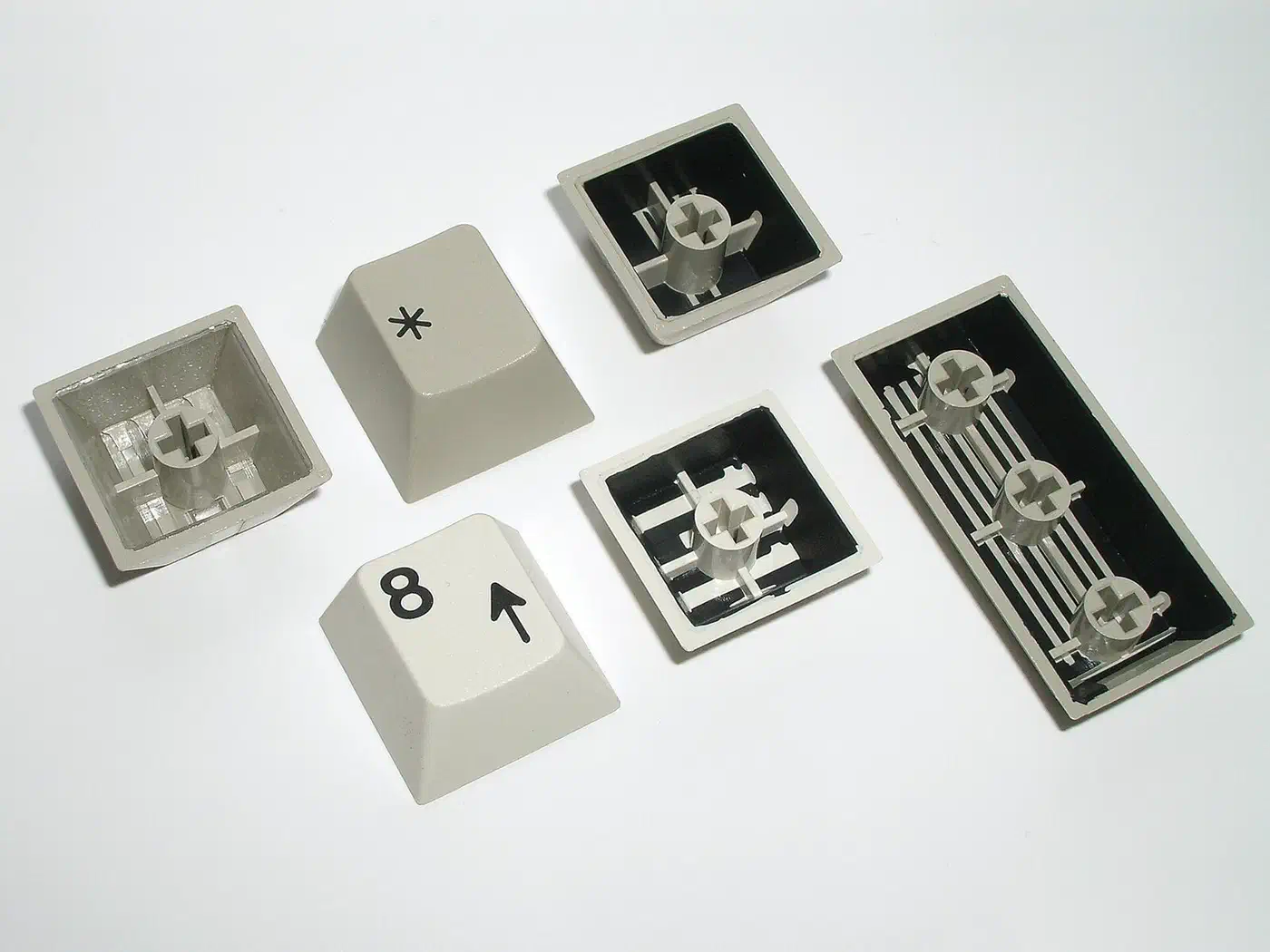
Switch and Click’s double-shot vs dye-sub explainer adds that you can’t feel either kind of legend while typing. You can still tell them apart by flipping a key over. A dye-sub cap looks like a plain cap underneath, while a double-shot cap shows the extra plastic from the legend shot on the inside.
Forum advice usually boils this down to “double-shot never fades, so always buy it.”
Does double-shot outlast dye-sub?
On paper, yes, by a thin margin. A double-shot legend can’t rub off, and Switch and Click calls it the most durable legend method on any keycap.
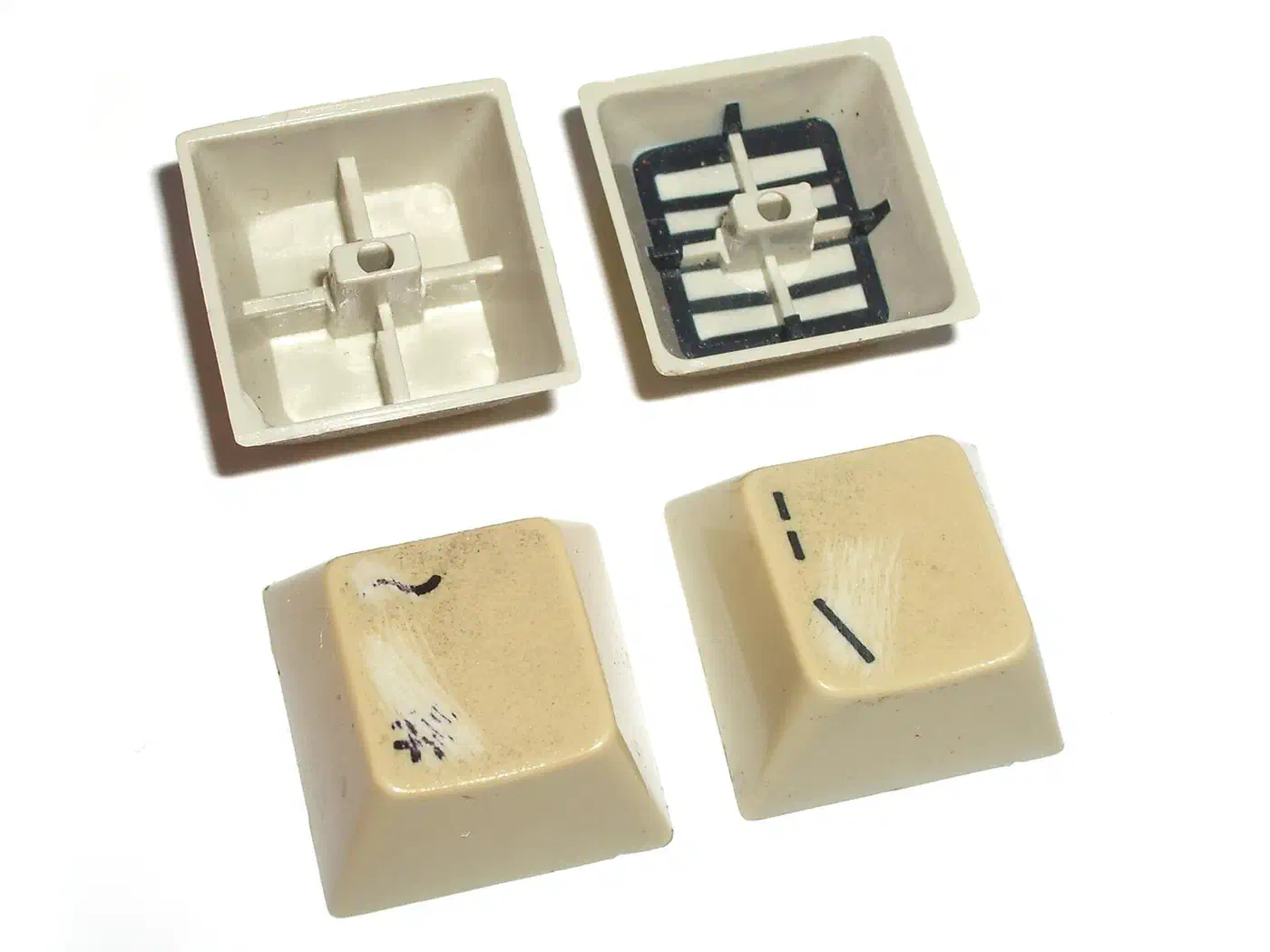
Dye-sub legends are permanent too. They only wear away once the whole top surface of the key has worn down, which takes years of heavy daily typing.
Kinetic Labs, a keyboard parts shop that sells both kinds, agrees that double-shot is tougher. Still, it says high-quality dye-sub caps…
will last just as long if you buy from a reputable brand.
The shop points to keyboards from the 1980s whose dye-sub legends never faded. It names PolyCaps, Omnitype, CannonKeys and NovelKeys as brands whose dye-sub it trusts. Kinetic Labs sells PolyCaps itself, so read that list with the shop’s interest in mind.
Cheap dye-sub sets can come out with softer, less sharp legends. The heat process also leaves small differences from one batch to the next. Strong cleaners such as acid can lift dye-sub legends, while double-shot legends survive harsh chemicals.
Nobody has published a lab wear test that pits the two methods against each other. For normal typing and normal cleaning, the durability gap is too small to decide a purchase.
Backlight and legend color decide it
A dye-sub legend has to be darker than the cap it sits on, since dye can only add color to plastic. White letters on a black key are out. Switch and Click counts this among dye-sub’s biggest drawbacks, and it explains why so many dye-sub sets come in pale colorways.
The only workaround is reverse dye-sub, which prints the dark color around the legend and leaves the letter in the plastic’s own shade. However, Kinetic Labs warns that it costs far more than normal dye-sub and invites quality control problems, so few sets use it.
A dye-sub legend also can’t be made transparent, so RGB light has nothing to pass through. Dye-sub can go on see-through caps, but the legends still come out dark. Double-shot is the standard for shine-through keys on backlit boards, because the legend layer can be molded from translucent plastic.
Any legend color can go on any cap color with double-shot, so dark and high-contrast sets are both on the menu. Dye-sub can print many colors and detailed artwork on one key, while Kinetic Labs says double-shot usually tops out at two or three colors.
Because every key needs its own mold, double-shot usually costs more. Any change to the layout or legends means a mold update, which Kinetic Labs puts at thousands of dollars. Novelty keys with one-off legends push the cost higher. Even so, Switch and Click notes that a high-end dye-sub set can cost as much as a cheap double-shot one.
Which materials and sets use each method?
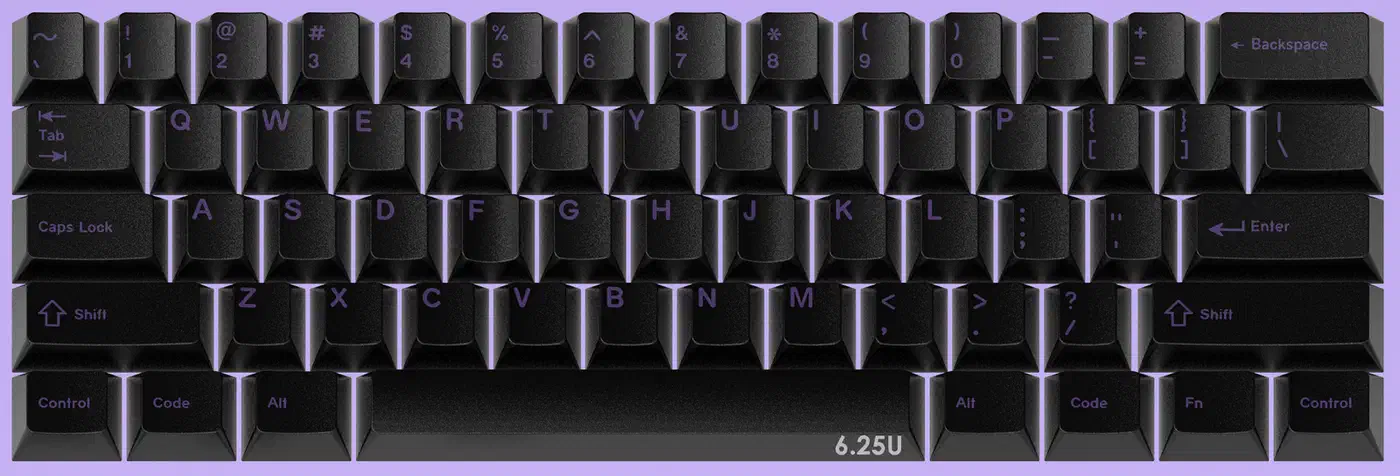
Double-shot works with ABS, PBT and POM plastic. It’s the method behind GMK’s high-end ABS sets, such as Glarses x GMK CYL PoB (Purple on Black) . Those are 1.5 mm thick ABS caps with purple legends on black. Backlit prebuilt boards use double-shot too, including the Drop ALT and Drop CTRL with their shine-through PBT caps.
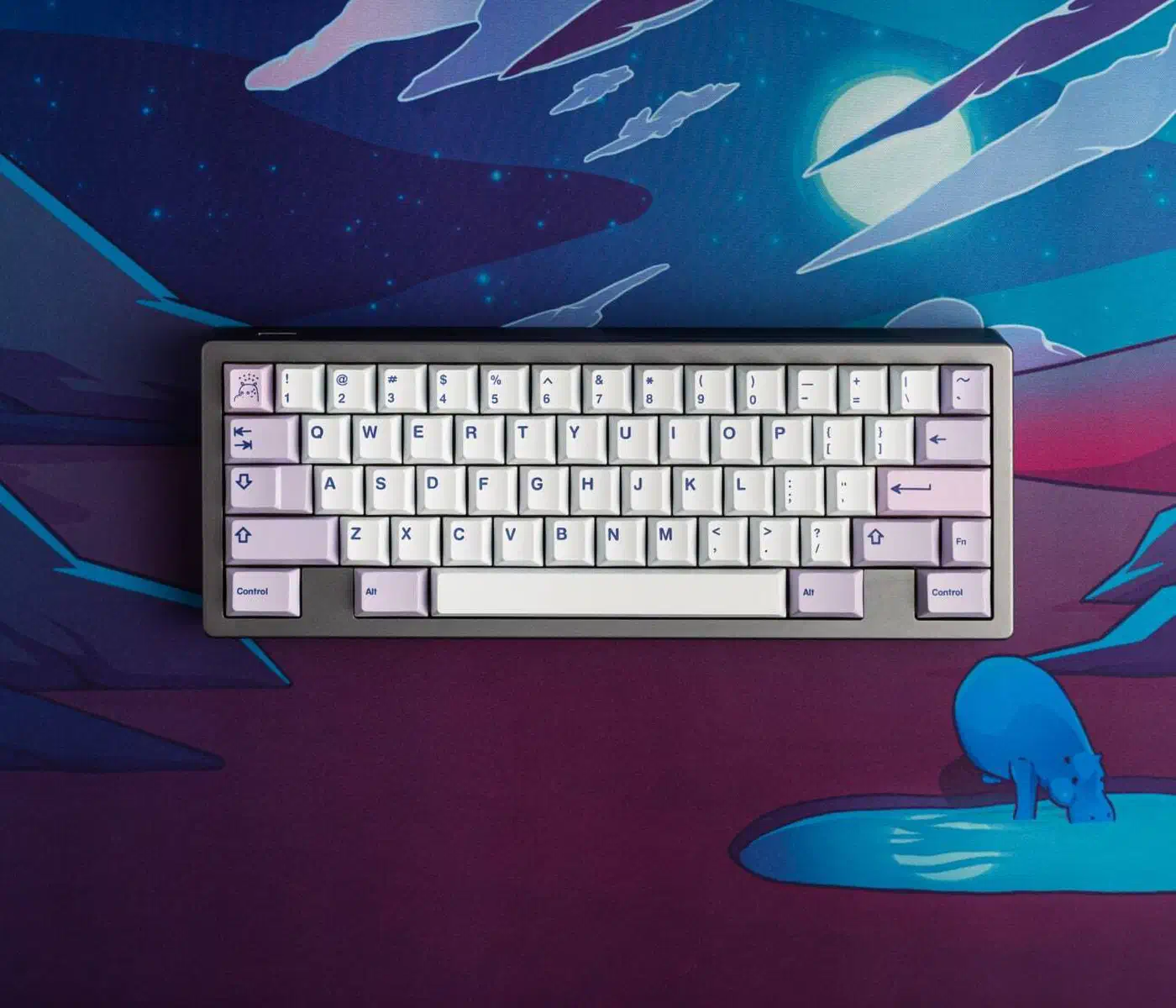
Dye-sub shows up only on non-backlit PBT. That makes it the usual pick for good PBT sets and for cheaper alternatives to GMK. The PolyCaps Hippo V2 PBT set is a typical example, with 175 thick PBT keys for under $80.
Dye-sub is also common on boards with Topre switches, such as Realforce models, where it gives a clean look without pushing the price up. The IBM Model M used dye-sub legends, one reason vintage boards have a name for lasting. Switch and Click notes that makers of that era chose dye-sub because it was cheaper, even though double-shot already existed.
Which should you buy?
| Double-shot | Dye-sub | |
|---|---|---|
| How the legend is made | Second layer of plastic molded into the cap | Dye pushed into the surface with heat |
| Legend life | Can’t be removed, survives harsh cleaners | Permanent from a good brand, acid can lift it |
| RGB shine-through | Yes | No, non-backlit caps only |
| Legend color | Any color, light on dark included | Must be darker than the cap |
| Artwork per key | Two or three colors at most | Many colors and fine detail |
| Materials | ABS, PBT, POM | PBT |
| Underside | Visible legend plastic | Looks like a plain cap |
| Cost | Usually higher, one mold per key | Usually lower |
Pick double-shot if you want any of these:
- RGB light shining through the legends
- a dark or high-contrast colorway, such as light letters on black keys
- ABS or POM caps instead of PBT
Pick dye-sub if you want a non-backlit PBT set with rich, multi-color art for less money.
Either way, the brand is the part to check. A well-made set of either kind should still read clearly long after the keyboard under it has been retired.