

PBT keycaps dodge the greasy shine that creeps across ABS
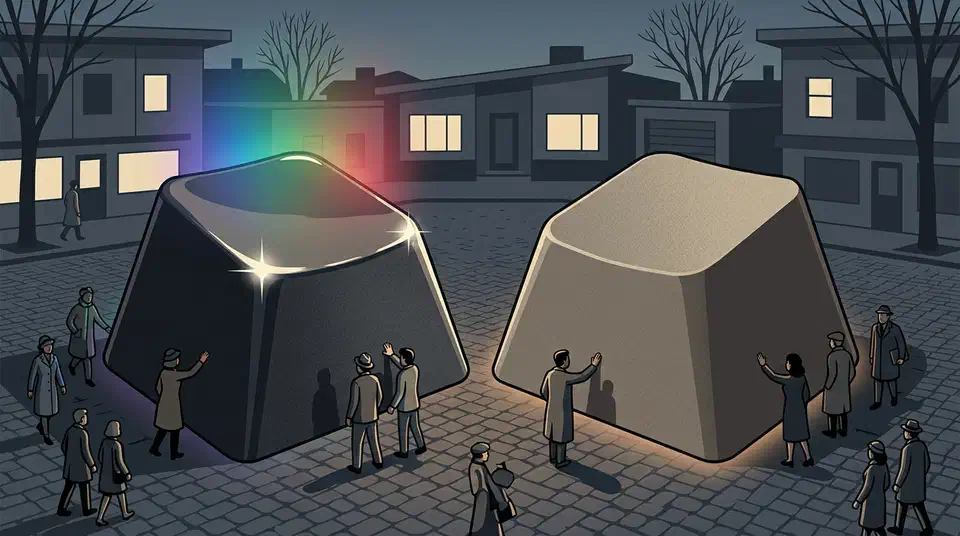
PBT keycaps stay matte for years, while ABS keycaps turn greasy and shiny wherever your fingers land most. Typing slowly polishes the softer ABS surface smooth, and finger oils make it gleam. PBT resists that wear, but it can’t match ABS and clear plastics on legends that let RGB glow through.
Key Takeaways
- ABS keycaps go shiny where you type most, and PBT stays matte for years.
- The shine is worn, polished plastic, so cleaning won’t bring the texture back.
- ABS feels slick and smooth next to textured, grippy PBT.
- PBT can’t do glowing legends well, so RGB builds still pick ABS or clear plastic.
- Thick premium ABS only delays the shine.
Why do ABS keycaps get shiny?
ABS (acrylonitrile butadiene styrene) is the cheap, easy-to-mold plastic that most keyboards ship with. It’s also softer than PBT. Every keystroke rubs the top of the cap, and over time that friction sands away its fine texture. Hirosart’s guide to keycap shine names friction as the main cause. The worn surface ends up thinner and smoother, so it shines.
Finger oils add a second layer of gloss on top of the wear. Hirosart notes that the oily look is short-lived, but the polished plastic underneath is permanent.
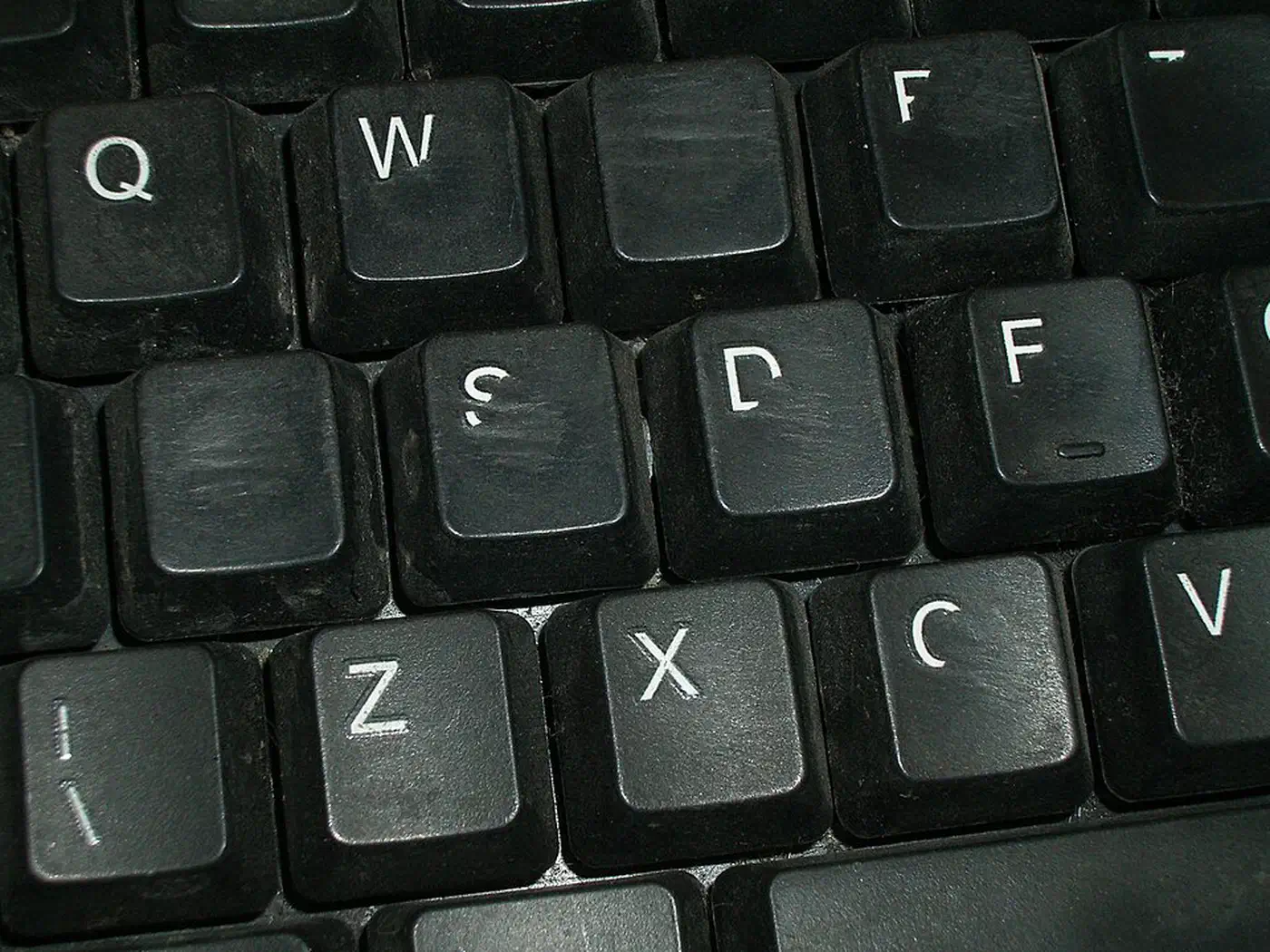
The spacebar, WASD, the arrow keys and the busiest modifiers take the most contact, so they shine first. Dark caps show it most, and beige or light grey hide it better. On cheap ABS, the printed legends can fade and the caps can thin out as well.
What cleaning can and can’t fix
Mild soap and warm water take off the oil layer and keep the gloss down for a while. Hirosart warns against acetone, which eats into an ABS surface fast, and bleach, which fades plastic. No cleaner puts back a texture that friction has already worn away.
Why a PBT set can have a shiny spacebar
Owners of PBT sets sometimes find one shiny key on a board that should stay matte. Dygma’s ABS vs PBT explainer says large PBT keycaps can warp as they cool in the mold. As a result, some makers mold the spacebar in ABS, and that one key wears like ABS.
ABS vs PBT keycaps compared
Jake Harrington, who reviews keyboards for Switch and Click, grants that some ABS sets are very nice, then gives his own pick:
if you want my opinion, it’s PBT all the way.
His case for PBT (polybutylene terephthalate) rests on durability and the lack of shine. Dygma’s notes fill in the UV and light rows:
| Trait | ABS | PBT |
|---|---|---|
| Price | Usually cheaper, easy to mold | Pricier, needs higher mold heat |
| Surface over time | Turns shiny and greasy | Stays matte |
| Texture | Smooth and slick | Textured, sometimes sandy |
| Thickness | Usually thinner, thick sets exist | Usually thicker |
| UV resistance | Lower | High |
| Long-term wear | Legends fade, caps thin | Wears far less |
| Glowing legends | Easy, ABS can be made clear | Hard, PBT can’t go fully clear |
Switch and Click hears PBT as slightly louder but crisper, because the stiffer, thicker plastic vibrates less. Dygma hears cheap ABS as the louder, higher-pitched one, and says high-end ABS sounds fine thanks to its thickness. In both accounts, thickness shapes the sound more than the plastic does.
The backlight trade PBT cannot win
Glowing legends need a see-through layer for the light to pass. Keycap legends are made in two main ways, and Kinetic Labs’ guide to dye-sub and double-shot legends lays out the limit of each.
Dye-sublimation uses heat to sink dye into the cap’s surface. Because the legend is printed into the plastic, it can’t be made transparent. Kinetic Labs describes dye-sub as a method for PBT and unlit caps only. It’s also the usual legend on the matte PBT sets people buy to avoid shine.
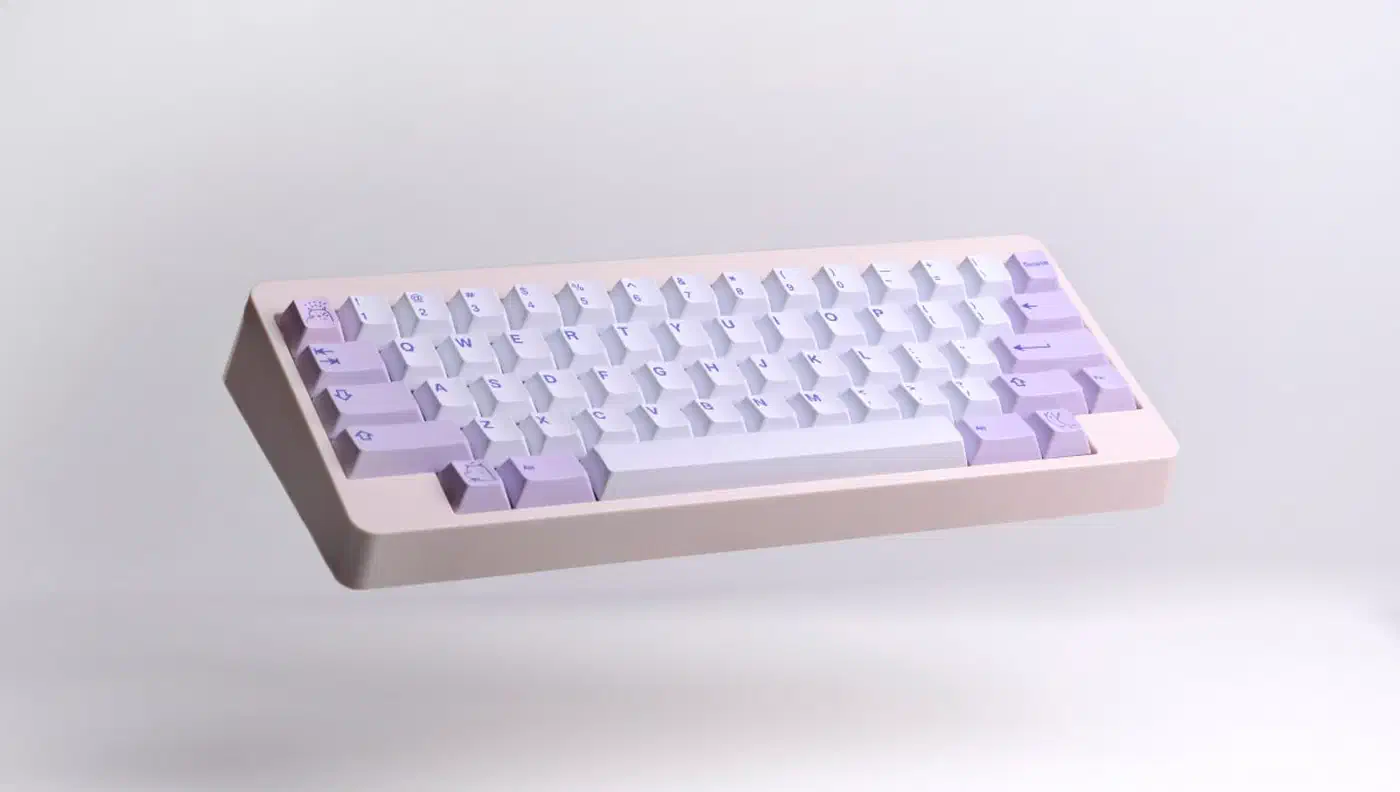
Double-shot molding forms the legend as a separate piece of plastic, so light passes through when that inner piece is translucent. Dygma notes that PBT can’t be made fully transparent and that ABS turns clear with an additive called methyl methacrylate. Shine-through legends and pudding caps, which leak light through their sides, therefore lean on ABS or a clear plastic such as PC.
Kinetic Labs says dye-sub legends from a reputable maker won’t fade, and it points to 1980s keyboards whose dye-sub legends never did. The only thing PBT gives up is the glow.
For buyers, that means:
- Per-key RGB that shines through the legends: pick double-shot ABS or a clear PC set.
- A set that stays matte for years: pick dye-sub PBT and accept unlit legends, or light that only spills around the caps.
One board, two plastics: the Keychron K2 HE
Keychron sells both sides of this trade in the K2 HE Special Edition. Both versions launched at $199.99, according to TechPowerUp’s launch report .
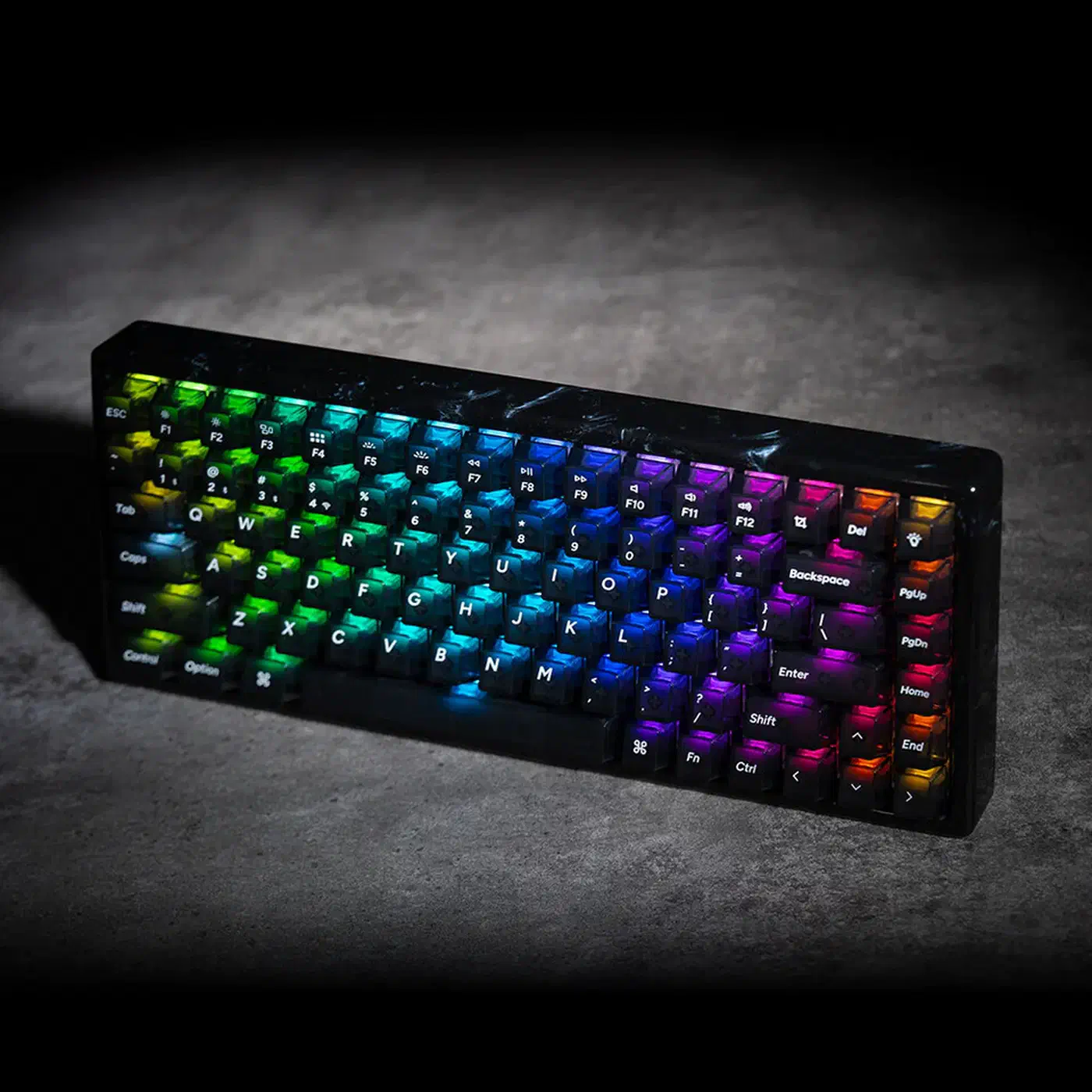
The K2 HE Concrete Edition keeps the original K2 HE’s PBT keycaps in OSA profile, color-matched to its grey concrete body. The K2 HE Resin Edition swaps them for smoky transparent PC in Cherry profile, so its north-facing per-key RGB shows through the keys.
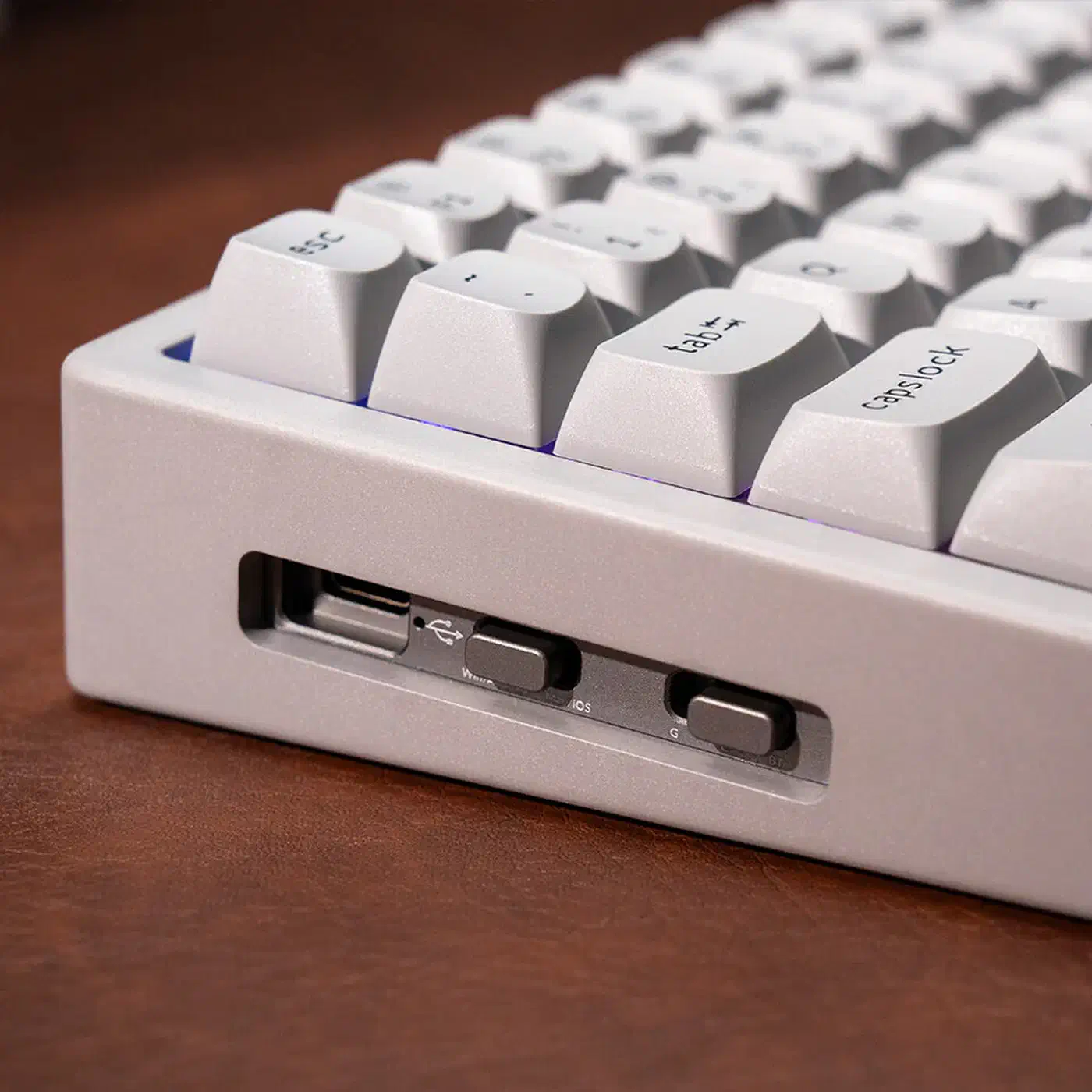
Under the caps, TechPowerUp lists the same MCU, TMR sensor, Gateron magnetic switches, aluminium plate and 75% layout on both boards. With everything else held equal, the keycap plastic is the deliberate variable.
Is premium thick ABS worth it?
Thick, well-made ABS shines far slower than the thin stock caps most boards ship with. Switch and Click says some higher-quality ABS sets hold off the shiny look, and it suggests trying a set before you buy. Friction wears every plastic, though, and Kinetic Labs notes that ABS shines faster than PBT in general. A premium ABS set only delays the gloss.
Dygma notes that PBT costs more on average, yet high-end ABS sets can reach about $200. Buyers of those sets are paying for feel and looks.
Some typists dislike PBT’s sandy grain and matte finish, and Switch and Click calls a preference for smooth, glossy ABS totally normal. ABS also takes bright colors easily and can be made clear. Dygma adds that ABS comes in far more profiles and designs, because costly double-shot PBT molds push makers toward safe shapes like Cherry and OEM.
For most buyers, PBT is the better long-term pick, because it keeps its texture for years and its dye-sub legends hold up just as long. Thick premium ABS still earns a place for a slick feel, bold color or glowing legends.