

Carbon and portals turn the Ascent-18 Apex into a comp rig

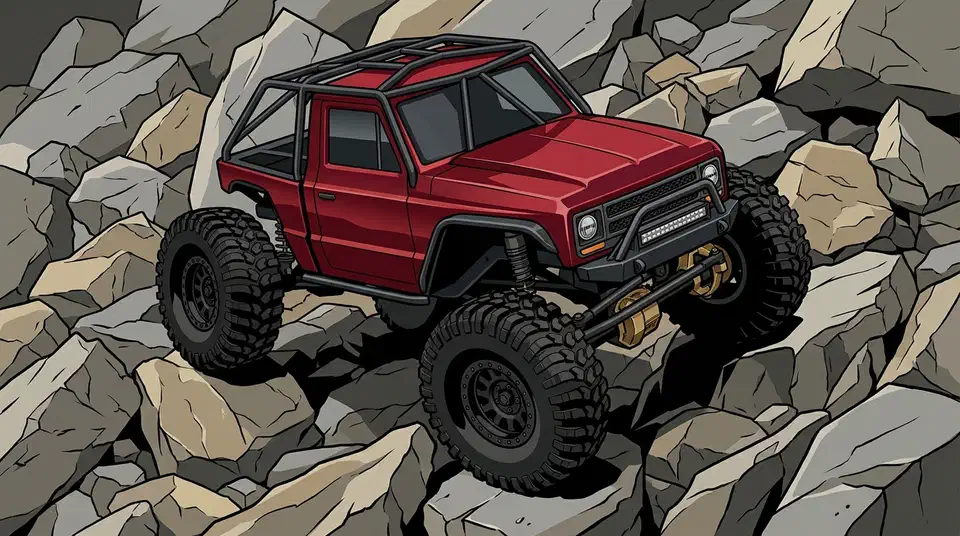
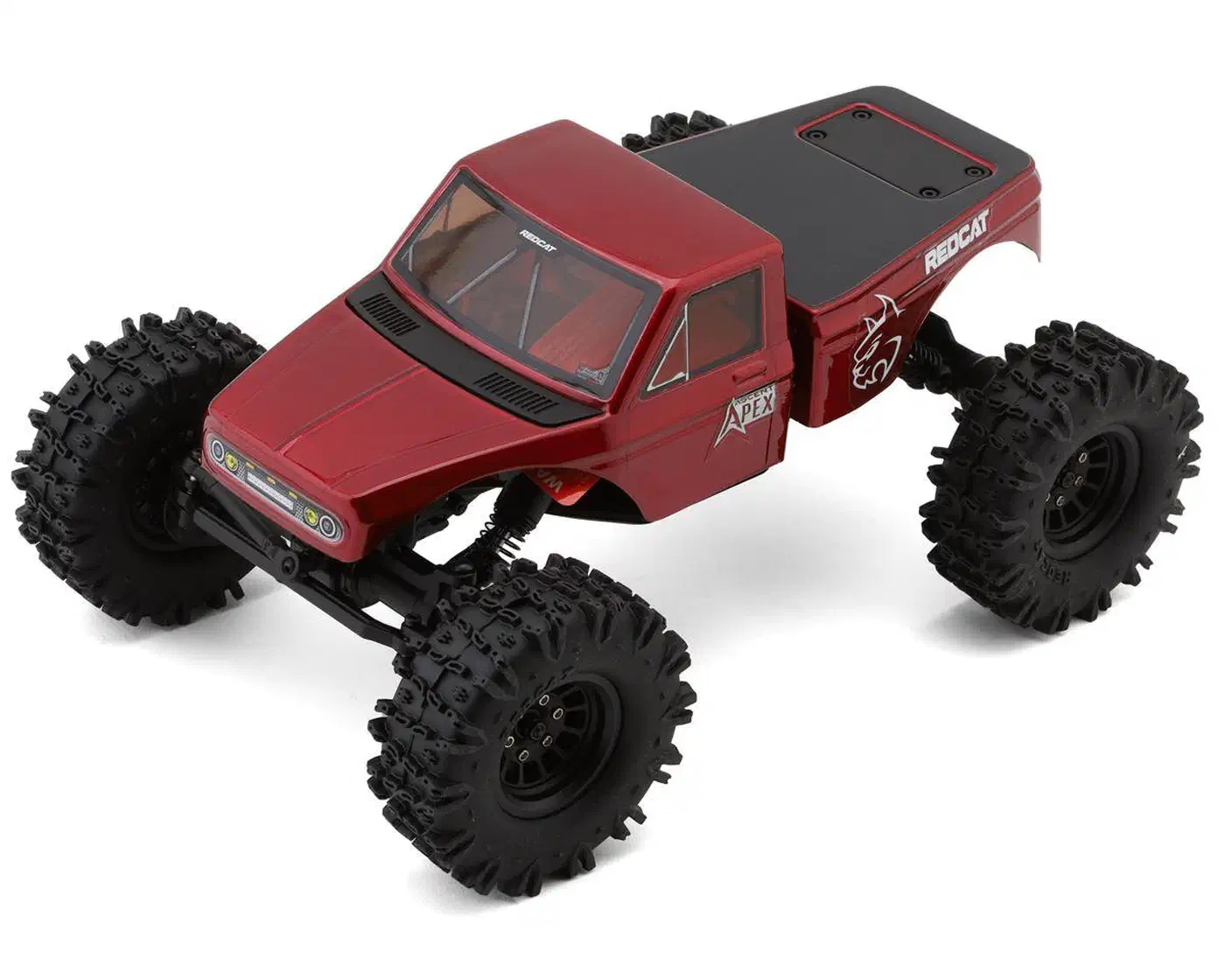
The Redcat Ascent-18 Apex is a 1/18 rock crawler built to compete. Redcat redesigned more than 80% of the base Ascent-18 to make it, adding a carbon low-slung chassis, brass-reinforced portal axles, overdrive gearing and 3S Hobbywing brushless power. Early owners say it out-climbs a stock Traxxas TRX-4M right out of the box.
Key Takeaways
- The Apex is a 1/18 crawler that fits your hand but chases real competition.
- Redcat rebuilt over 80% of the original Ascent-18 to make it.
- A carbon low chassis and portal axles give grip and clearance on tight lines.
- Owners say it out-crawls a stock TRX-4M straight from the box.
- Its Hobbywing electronics tune with standard programmers, so no locked-in app.
What is the Redcat Ascent-18 Apex?
The Ascent-18 Apex (part RER42219) is the top build in Redcat’s 1/18 Ascent-18 family. Redcat sells it as an “Advanced Micro Crawler with High-Performance Features,” and it ships fully ready to run. Open the box and you get the truck, a 4-channel radio, a 3S battery, a USB charger and a metal-gear servo. Add four AA cells for the transmitter and you drive.
The small scale is the whole point. A 1/18 crawler fits in one hand, so your living room turns into a course. Redcat’s launch coverage on LiveRC frames a pile of driveway gravel, a stack of books, or couch cushions as a scale obstacle run you can drive indoors on a rainy day. The idea carries Redcat’s 1/10 competition thinking down to a truck the size of a paperback.
It reached the AMain catalog in late 2025 at about 250 dollars. That puts it in the same micro class as the Traxxas TRX-4M, the FMS FCX18 and the Axial SCX24. The Apex aims higher than a shelf-queen RTR, though.
How the Apex differs from the base Ascent-18
Redcat states that over 80% of the platform was redesigned from the original Ascent-18. So a buyer wants to know what the extra money buys over the standard Ascent-18 Brushless . The base truck is already a capable little crawler, with portal axles and machined aluminum spools. The Apex hardens almost every system on top of that.
| Feature | Base Ascent-18 Brushless | Ascent-18 Apex |
|---|---|---|
| Chassis | 2mm flat aluminum rails | Carbon fiber low-CG chassis, aluminum bracing |
| Motor and ESC | 3450kv motor, 3-channel ESC | Hobbywing brushless motor and ESC |
| Battery | 2S 750mAh LiPo | 3S LiPo (11.1V) |
| Radio | 3-channel 2.4GHz | RTX-4C 4-channel, adjustable trims and endpoints |
| Portal boxes | plastic, brass optional | brass outer boxes standard |
| Gearing | standard, overdrive optional | overdrive plus enhanced ring and pinion |
| Body | single body | two-piece cab with optional bed |
| Servo | HX-M4K 4kg metal gear | HX-M4K 4kg metal gear (same part) |
The Apex bakes in the brass, carbon and gearing that the base truck treats as optional hop-ups. The one part that carries over is the HX-M4K 4kg metal-gear servo, so the steering is identical.
Why portal axles and a carbon chassis help on rocks
Portal axles are the headline feature. A portal axle drops the axle centerline below the wheel hub. That lifts the diff and gearbox up and away from rocks, so the truck gains ground clearance and twists less under torque. On a tight line, the extra clearance keeps the underside off the obstacle.
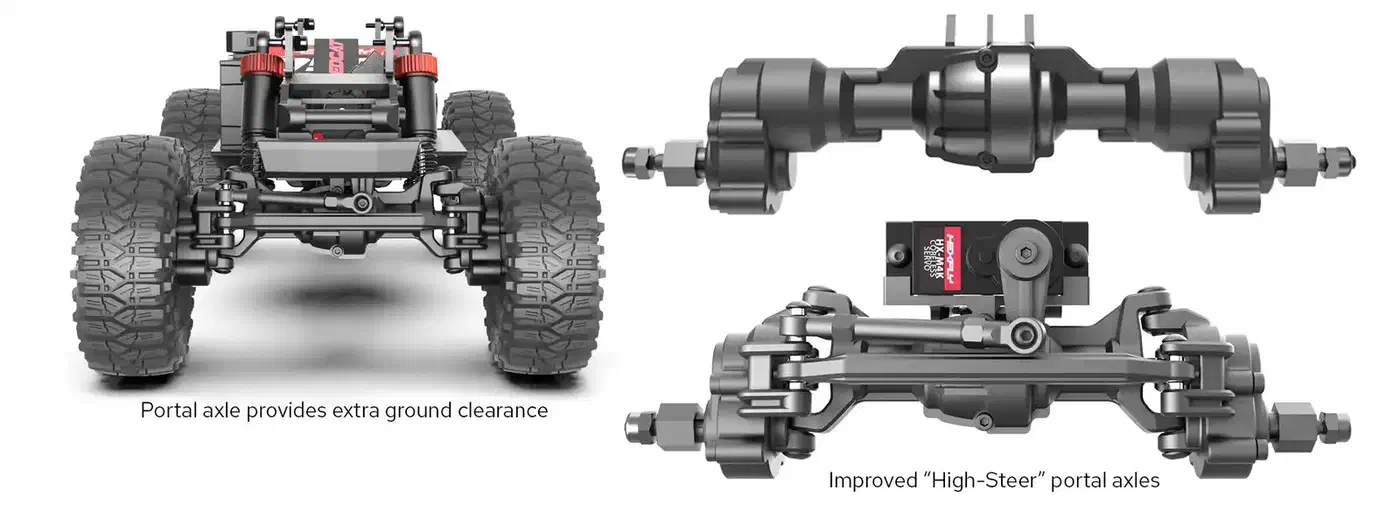
High-steer geometry does the other half of the work. It raises the steering angle and clearance at the C-hub, so the front wheels swing further and pull the truck around gnarly corners. The Apex then adds brass outer portal boxes, which drop weight down low. That low weight helps a crawler stay planted and keeps the front end tracking on off-camber rock.
The carbon chassis lowers the center of gravity and trims weight at the same time. A lower center of gravity means the truck flexes over an obstacle instead of tipping onto its side. Machined aluminum spools lock all four wheels together, so when one tire lifts, the other three still pull the truck through. Ball bearings throughout, rather than bushings, cut drivetrain friction for smoother control at crawl speed.
Electronics, tuning and the Hobbywing advantage
The Apex runs a Hobbywing brushless motor and ESC sized for a 3S LiPo. For a hobbyist who likes to tune, the brand choice is a big plus. Because the electronics are Hobbywing, they program with standard Hobbywing programmers. One owner on the AMain listing praised exactly this. Other brands, he noted, force you to buy their own locked-in programmer.
The included RTX-4C 4-channel radio adds adjustable trims and endpoints. A driver can dial in steering throw and throttle limits, which helps a lot at the slow, precise speeds crawling needs. The HX-M4K servo is a 4kg coreless metal-gear micro unit, the kind you normally buy as an upgrade, included here from the factory.
The wheels open up the aftermarket too. The Apex uses 7mm wheel hexes on 1.3-inch beadlock wheels, a common size, so a wide range of scale wheels and tires will bolt on. The truck has one weak spot: it ships with a plastic pinion, and at least one owner stripped it on the second battery. A steel pinion is the usual fix, so budget for that upgrade if you plan to push it hard.
What owners say after launch
Owner reviews on the AMain listing lean strongly positive, and the TRX-4M comparison comes up again and again. Several verified owners say the Apex out-crawls a stock or lightly built Traxxas TRX-4M straight from the box. One owner, whose TRX-4M has almost no stock parts left, wrote that the Apex walks all over everything his built truck struggles with. Another said it drives over TRX-4M-grade obstacles like they aren’t even there.
The praise centers on capability at crawl speed: sticky tires, heavy flex and smooth, controllable brushless power. Even owners who normally run 1/10 rigs came away impressed. Multiple reviewers land on the same verdict, that it is the best out-of-box 1/18 RTR they have run.
The optional bed install is fiddly: it changes how the body mounts, needs double-sided tape, and asks you to ream new holes that don’t line up cleanly. Add the plastic-pinion risk from the electronics section. At about 250 dollars, though, owners still call it a bargain for the out-of-box performance.