

$50 of wheels and tires beat a $106 FCX18 upgrade build

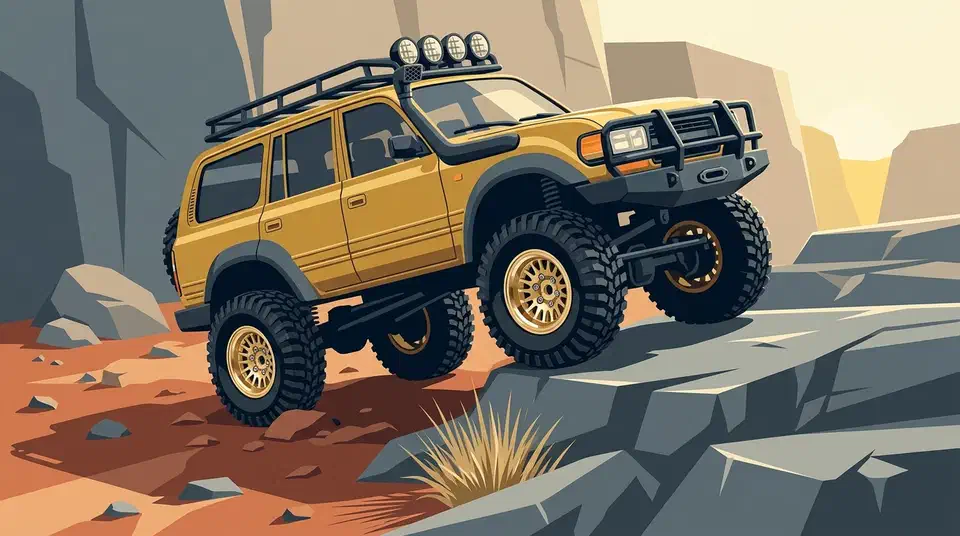
FCX18 budget upgrades pay off in an uneven order. A full $106 parts list took one FMS FCX18 from 548g to 775g and moved its weight bias from 43/57 to a level 50/50. Yet a second truck running only the same $50 wheels and tires cleared nearly the same rock course.
Key Takeaways
- Wheels and tires come first and deliver about half the total gain.
- The full $106 build took the FCX18 from 548g to 775g.
- Brass shifted the balance from 43/57 rear-heavy to a level 50/50.
- The $11.46 bargain steering servo steered worse than the stock one.
- Deep brass portals need hex extenders, which widens the stance.
FCX18 budget upgrades at a glance
| Upgrade | Price | What it fixes | Difficulty |
|---|---|---|---|
| Wheels and tires | $50.28 | Grip and low-down weight | Easy |
| Brass steering knuckles | $15.59 | Front-end weight bias | Medium |
| Brass outer portal covers | $14.39 | Front-end weight bias | Medium |
| Steel drive shafts | $15.24 | Breakage and central weight | Medium |
| Steering servo | $11.46 | Steering power under load | Hard |
| Total | $106.97 |
Buy from the top down and stop whenever the money runs out.
What is wrong with a stock FCX18
The stock FMS FCX18 LC80 is a likeable little rig, and it holds up well in the sub-$200 buying bracket . Straight from the box it out-crawls the TRX-4M , which says more about the Traxxas than it does about the FMS. FMS also sells the LC80 with a factory-fitted 3200KV outrunner , for owners who want brushless power without a build.
- Tire grip. The stock beadlocks and tires are usable, but they spin on rock and loose dirt.
- Steering power. The stock servo drives through a servo saver that gives up under load.
- Top-heavy weight bias. The hard body and rear weight leave the truck at 43% front and 57% rear, and it tips.
On corner scales the stock truck weighed 548g, split 43/57 front to rear and 52/48 left to right. On the baseline rock course it tipped over repeatedly, failed the gatekeeper section, failed the up-and-over, and got stuck on the merry-go-round.
Wheels and tires
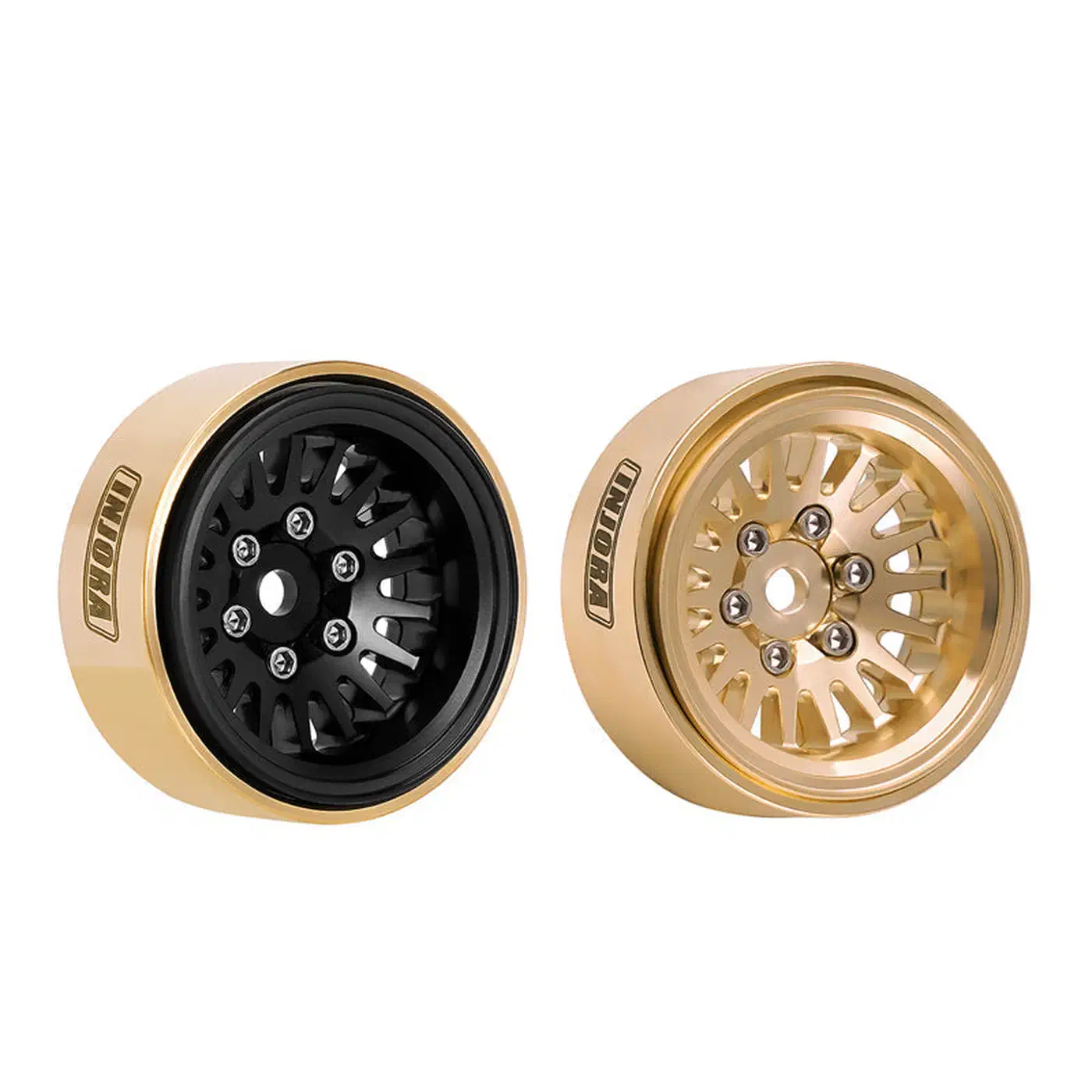
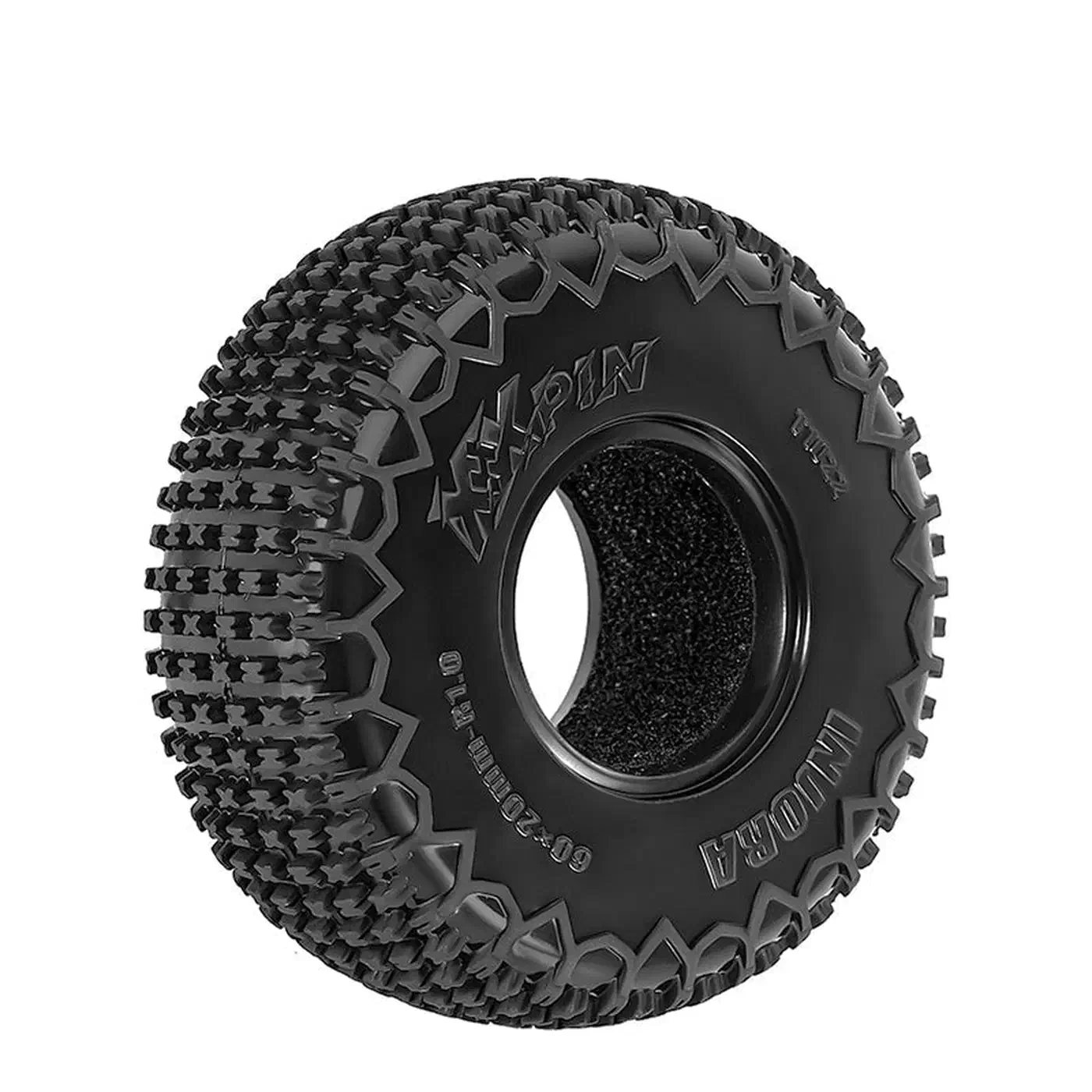
The best value upgrade on the list is a set of 1.0 Plus brass beadlock wheels paired with soft-compound pin tires. The wheels cost $31.09 for four. The 60mm XHX pin tires cost $19.19. The pair lands at $50.28 and buys roughly half the total improvement.
Each brass wheel weighs 39g, so the set alone adds 156g. That is the most useful weight you can add to a small crawler. It sits below the axle centerline and presses the tires into the rock.
The tires themselves are excellent on rock and merely fine on loose off-road ground. The 60mm diameter runs slightly large for an FCX18, so check body clearance at full lock before you commit. If a soft tire folds on side-hills, a firmer dual-stage foam insert props the sidewall up.
After the swap alone, the truck cleared the gatekeeper section it had failed in stock form. Difficulty is easy: unbolt four wheels, bolt on four wheels.
Brass steering knuckles
Brass inner portal housing steering knuckles cost $15.59 and weigh 10g each. That puts 20g on the front axle, which is exactly where the FCX18 is short.
Machining quality is good, though check bearing tolerances as you fit them. The set ships with its own screws, so you don’t have to reuse the stock hardware.
The knuckles and the portal covers together are what actually move the front-to-rear split. Difficulty is medium, because the front axle has to come apart.
Brass outer portal covers
Brass outer portal housing covers are the heaviest single parts in the build at 23g each. They cost $14.39 and add 46g to the front axle.
These portals sit deep enough that the wheels foul the housings. You therefore need 7mm brass hex extenders , about $5 on top of the part price. Most FCX18 parts lists forget to mention them.
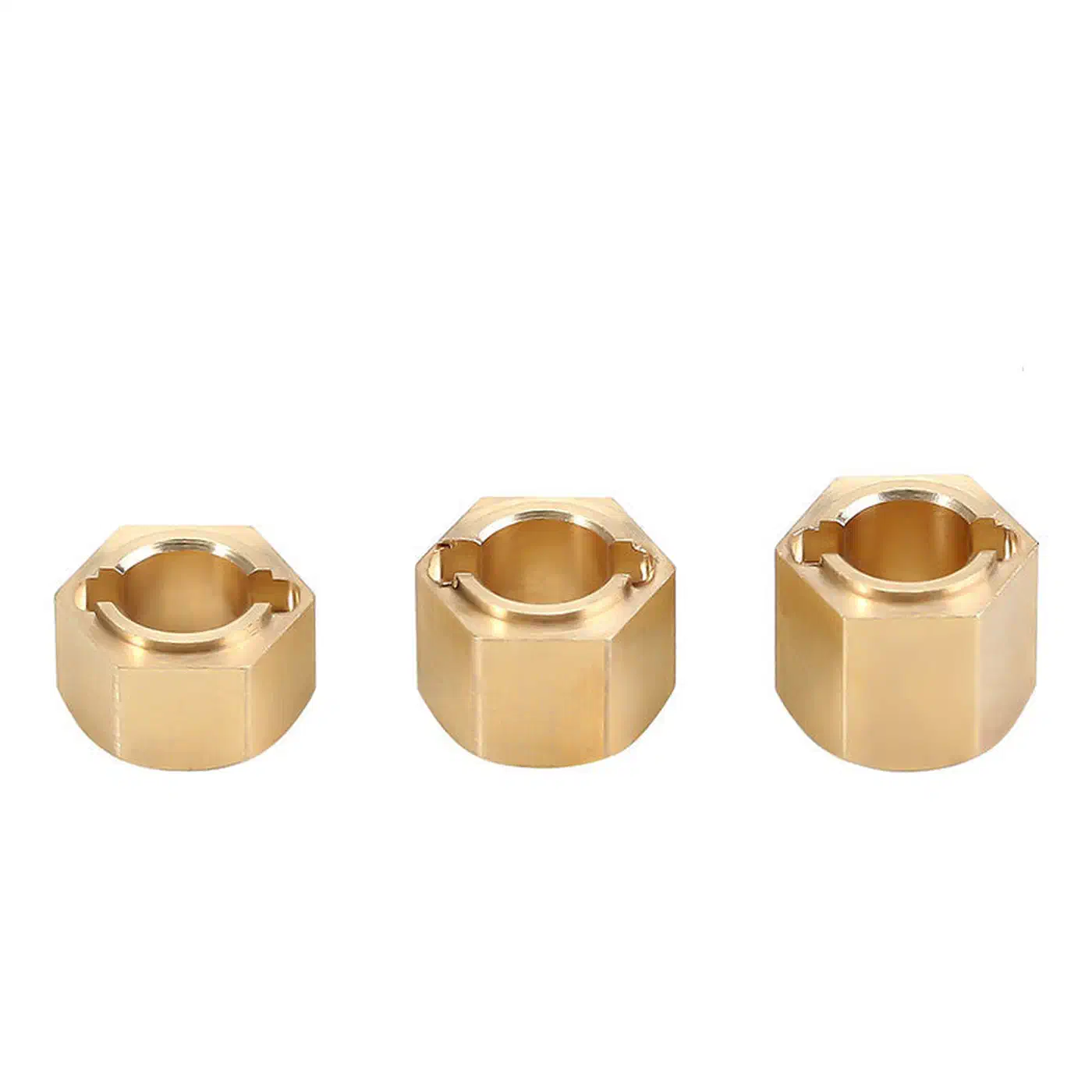
The extenders widen the stance, which can cause body rubbing at full lock. Still, a wider track also adds stability, so the trade-off isn’t all bad. Difficulty is medium, plus one extra order.
Steel drive shafts
The stainless steel drive shafts for the FCX18 cost $15.24 and add 19g for the set. The weight sits low and centrally, but the real reason to fit them is durability. They replace the plastic shafts, which are the usual first thing to break on this class of rig. A few rivals skip this job at the factory, since WPL’s C94 crawler already runs metal joints out of the box. They use D-shaped ends and come with their own grub screws.
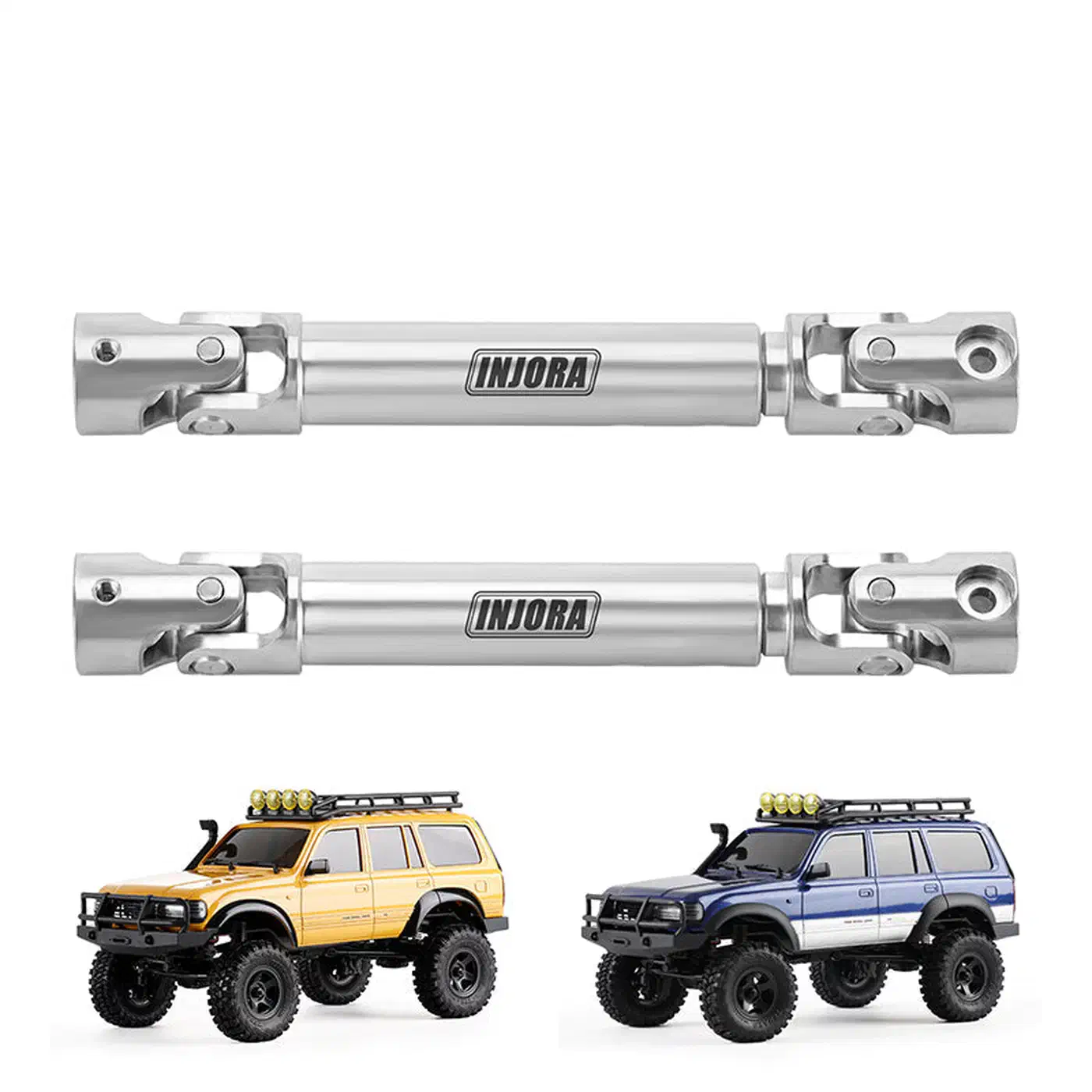
If the budget is tight, this is the part to drop in favor of a better steering servo. Difficulty is medium.
Steering servo
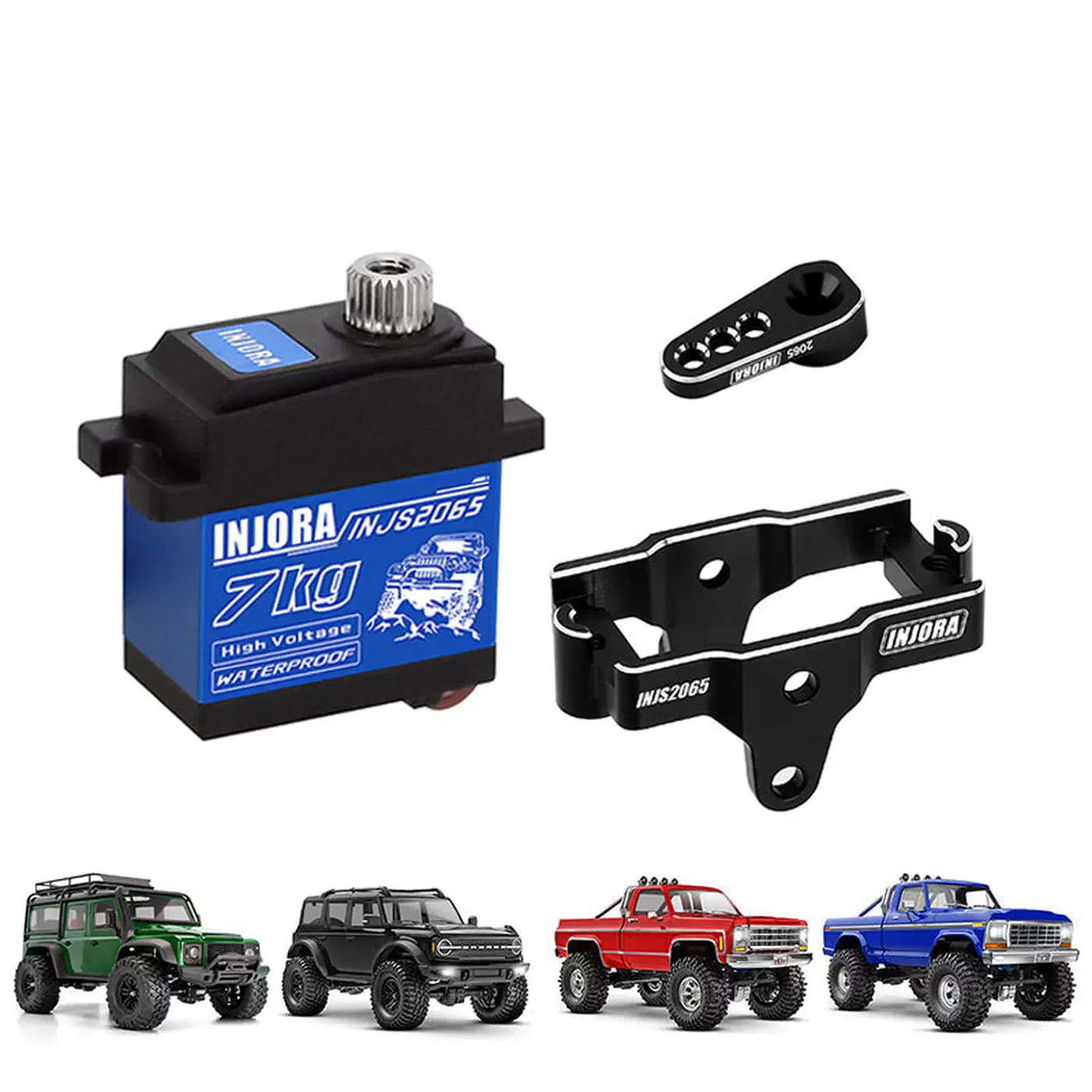
The generic 7kg AliExpress servo in this build cost $11.46, and it was the one upgrade that went backwards. It ships with a metal servo horn, which in theory lets you delete the weak stock servo saver.
In practice the horn didn’t fit. The steering link thread was too narrow, so the horn had to be cut down and the servo shimmed with washers. The servo also needs a connector adapter of about $1 that most listings leave out.
On the rock course the $11.46 servo had less usable steering movement under load than the stock unit. A known-good alternative such as the INJORA INJS2065 7KG digital servo sells for about $20, and that is the money to spend. Difficulty is hard, mostly because of fitment.
What $106 actually bought
The finished truck weighed 775g against 548g stock, a gain of 227g. The front-to-rear split moved from 43/57 to 49/51, and taking 15g of roof accessories off brought it to a level 50/50. Left to right stayed at 52/48 in both states.
If your FCX18 still tips after the brass goes on, look at the roof before you buy more parts.
On the same rock course the truck now cleared the gatekeeper, the up-and-over and the merry-go-round. All three had stopped it in stock form. The rig still hangs up on the axle ladder, and it’s still short of low-down weight for the hardest lines. The tipping is fixed and the crawling is better, but this is no competition rig.
The $50 rig that nearly matched it
A second FCX18 ran the same course carrying the wheels, tires and roof accessories from the first build and nothing else. It kept its plastic knuckles and portal covers, its plastic shafts and its stock servo.
That $50 truck cleared the gatekeeper, the up-and-over, the stairway and the merry-go-round. The front end lifted sooner on the hill climb, it struggled more on the up-and-over, and it needed more attempts overall. Less front weight means less tire contact, so the same rubber finds less grip. On the merry-go-round the stock servo still out-steered the $11.46 upgrade servo.
About $50 buys most of the improvement. The other $56 mainly adds stability, durability and better looks.
How to upgrade an FMS FCX18 on a $100 budget
Fit sticky wheels and tires first
Swap the stock beadlocks for brass 1.0 Plus wheels and a soft-compound pin tire. This single change does the most for grip and low-down weight, and it eats about half the budget.
Add brass steering knuckles
Replace the plastic front knuckles with brass ones. That adds 10g per corner right on the front axle, where the truck needs it most.
Add brass outer portal covers
Swap the front outer portal covers for brass at 23g each. Check wheel-to-portal clearance as you fit them, because deep portals need hex extenders.
Fit steel drive shafts
Replace the plastic shafts with steel. The set adds 19g of low, central weight and removes the most common breakage point on the truck.
Upgrade the steering servo last, and do not buy cheap
The stock servo saver is weak, but a bargain 7kg servo can be worse. Budget for a known-good unit, then confirm the servo horn fits the steering link thread before you order.
Reweigh and check the balance
Put the rig back on corner scales and aim for a 50/50 front-to-rear split. If the rear is still heavy, add brass on the front axle rather than stripping weight off the back. Element takes a different route on its forward-motor Enduro24 trail truck , mounting the motor over the front tires to push weight forward.
Where to stop, by budget
- $50. Wheels and tires. Do this first, always.
- $70. Add brass steering knuckles for front-end weight.
- $85. Add brass outer portal covers, and budget for hex extenders.
- $100. Add a proper 7kg steering servo and confirm the horn fits the steering link.
- $120 and up. Add steel drive shafts and more front brass. A brass skid or diff cover keeps pushing weight low and forward.
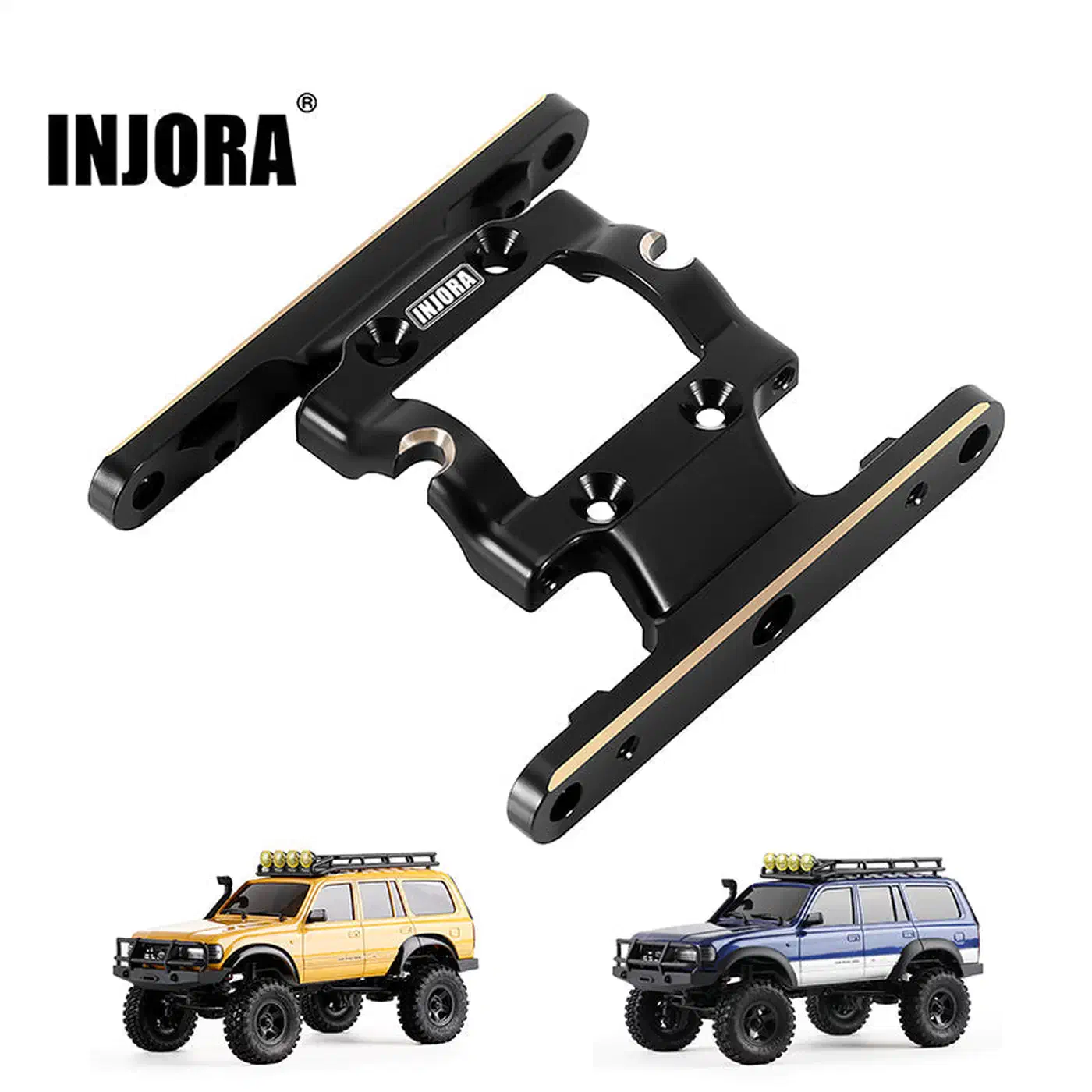
Every part above links to the exact listing used for this build. Injora and AliExpress both sell the same brass and tire sets that fit the FCX18 platform , so shop on price and shipping time.