

The best OLED gaming monitors that shipped on time in 2026

Picking the best OLED gaming monitors of 2026 gets easier once you count panels. Seven new panels carried 33 branded monitors into the 2026 announcement pile. Only 10 of those badges reached US retail listings, so this ranking covers the ones you can order.
Key Takeaways
- One panel can appear under ten brand names, so announcement counts mislead.
- Seven big panels produced 33 monitors, and only 10 reached US shops.
- A 32-inch 4K 240Hz OLED was badged four times and shipped zero times.
- Burn-in cover now stretches to four years on one Gigabyte screen.
- Buy on the panel and the warranty; the brand badge tells you little.
How this list was put together
Counting happens at the panel level. Only two companies make OLED monitor panels at scale, LG Display and Samsung Display, as the FlatpanelsHD 2026 launch list points out. When ten monitors share one panel, they share its brightness and its refresh ceiling. So each panel gets exactly one recommendation here: the best version of it you can buy.
Every model is marked shipped or still waiting. Status comes from live retail listings, cross-checked against the running market log at DisplayNinja . A model with a review and a launch quarter but no buy button is still only a promise, and it is labelled that way here.
Availability uses one named market: US retail, checked in August 2026. LG’s 32GX870B had shipments starting in June by VideoCardz’s account , yet it still had no US listing, so a European or Japanese buyer would read that row differently.
Availability also moves week to week, so the tables below reflect that check date and nothing later.
The best OLED gaming monitors for each job at the desk
Every pick below was orderable at the check date.
Best all-round: MSI MPG 322UR QD-OLED X24
The MSI MPG 322UR QD-OLED X24 is a 32-inch 4K 240Hz QD-OLED, and it is the easiest screen here to live with all day. It runs Samsung’s newest 4K panel generation with the improved anti-reflective coating and DisplayHDR True Black 500, which lifts peak brightness to 1000 nits at 3% APL. A semi-glossy finish, a KVM, 98W USB-C and DisplayPort 2.1 at full UHBR20 speed cover the desk-work half of the job. MSI backs its OLED monitors with a three-year burn-in warranty.
Best for competitive shooters: LG 27GX790B
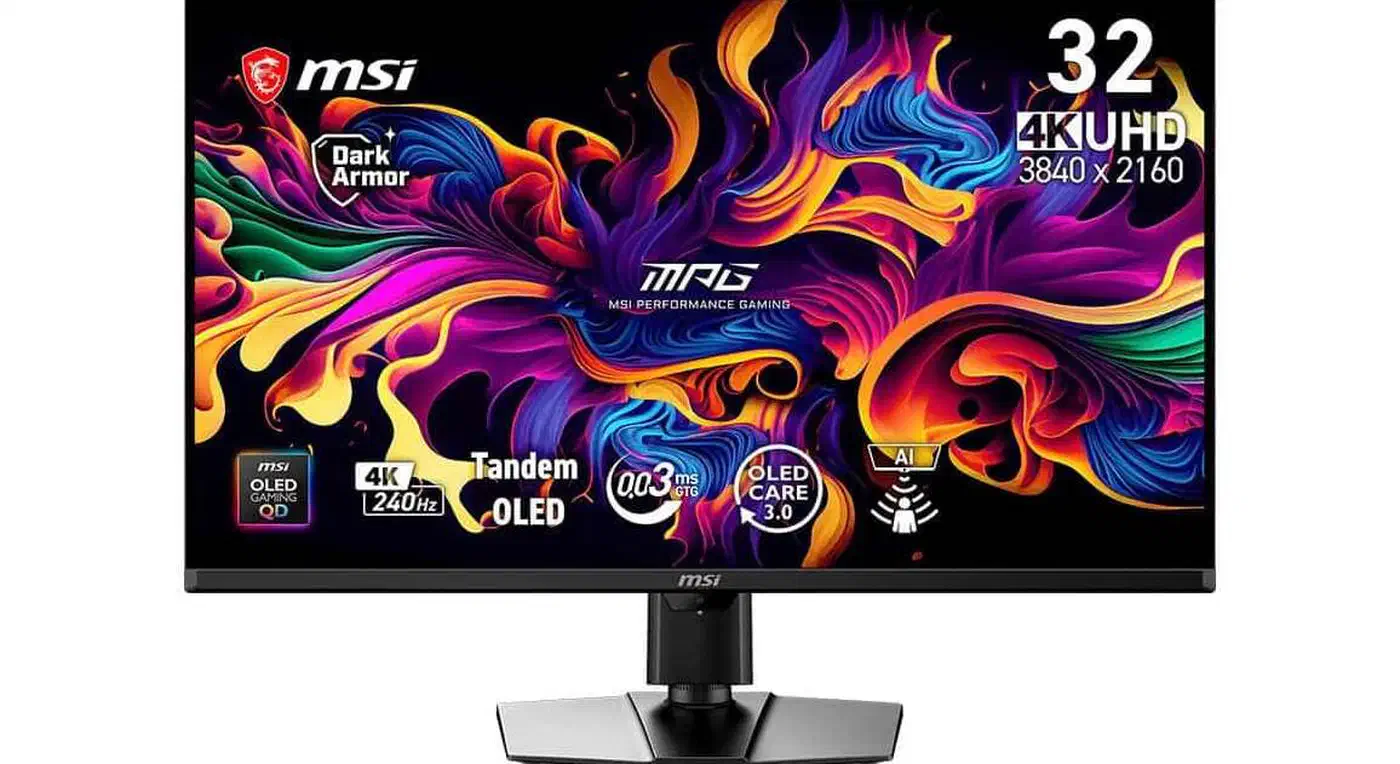
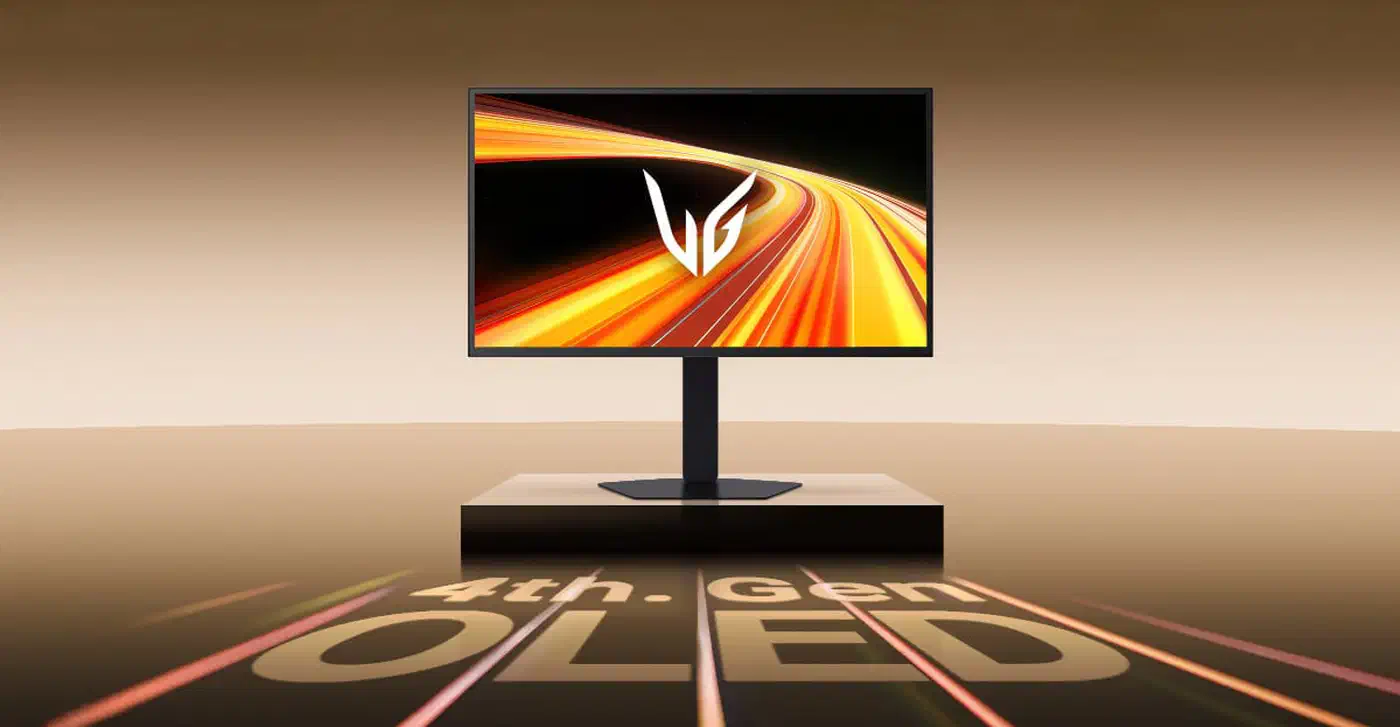
The LG 27GX790B hits 540Hz at 1440p and 720Hz in its 720p Dual Mode, which is the fastest thing you can put on a desk without dropping to a TN panel. It uses LG Display’s Tandem WOLED panel with an RGWB subpixel layout, True Black 500 and 1500 nits peak. This is also the single most rebadged panel of the year, with ten monitors announced on it and two of them on sale.
LG’s US burn-in cover runs two years, shorter than the three years Asus and MSI offer. A panel this fast only pays off if the rest of the chain keeps up, which is where keyboard sensing latency starts to matter.
Best for text and code: MSI Pro Max 271UPX12G
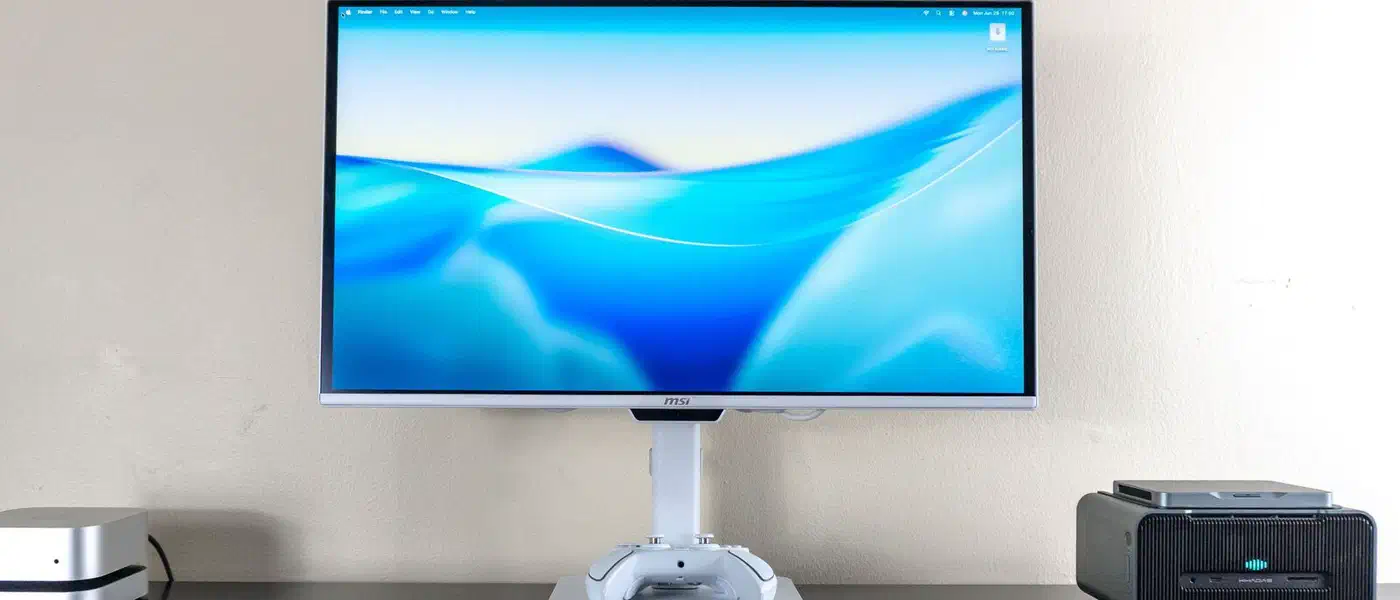
The MSI Pro Max 271UPX12G puts 4K on a 27-inch QD-OLED, which works out to about 163 pixels per inch. Pixel density settles the OLED text argument: at that pitch the colour fringing around small glyphs stops being the first thing you notice. Refresh tops out at 120Hz, so treat it as a work screen that also games, and it listed at $650.
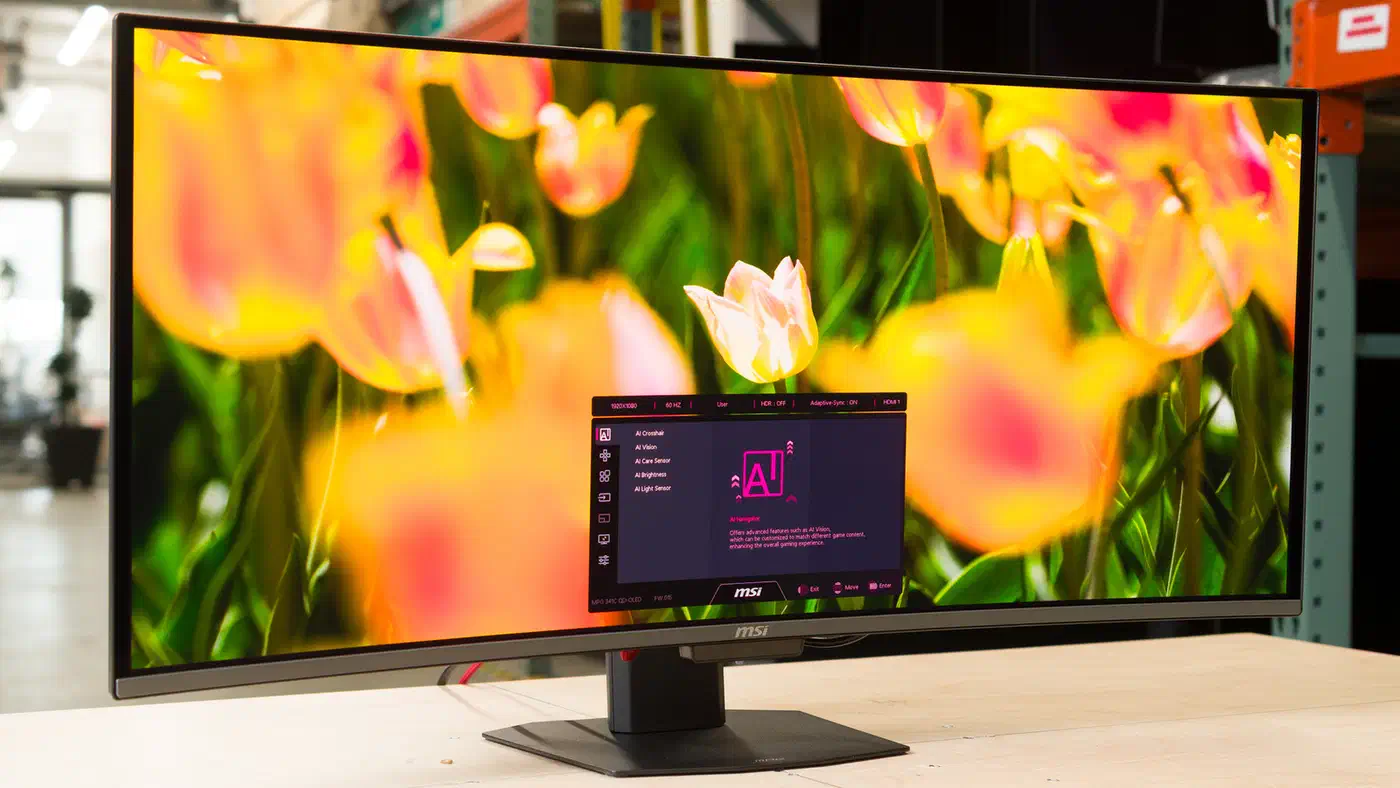
Best ultrawide: MSI MPG 341CQR QD-OLED X36
The MSI MPG 341CQR QD-OLED X36 is a 34-inch 3440x1440 360Hz QD-OLED, and it was the first shipping monitor with Samsung’s true RGB stripe layout at this size. That layout, plus True Black 500 and 1300 nits at 3% APL, is why its text holds up where older ultrawides smeared. It also carries a KVM, 98W USB-C, a presence sensor and black frame insertion.
Check your desk depth first. A 1800R curve at 34 inches wants roughly 70cm of viewing distance to stop the edges looking bent. The AOC AGP346UCSD uses the same panel for around $830 if you can live without the KVM.
Best value: Gigabyte GO27Q24G
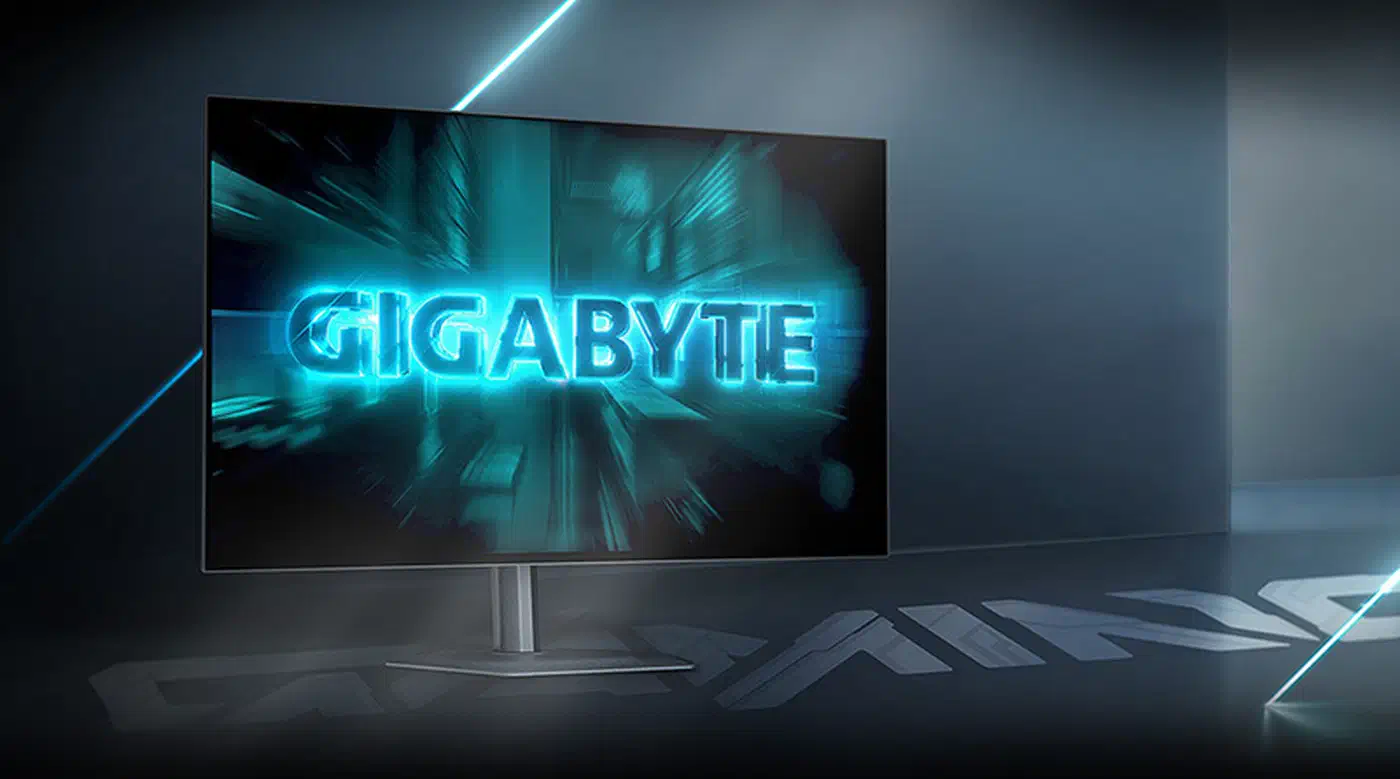
The Gigabyte GO27Q24G landed at $400, which is the lowest a glossy 1440p 240Hz W-OLED has gone. It rides an older panel generation, so peak brightness and refresh both sit below the picks above. Neither shortfall shows up in a normal week of gaming. Gigabyte’s standard OLED burn-in term is three years. None of this helps if the screen has to travel, where a 16-inch travel screen costs half as much and runs off the laptop cable.
Which 2026 OLED monitors actually shipped?
Grouped by the panel underneath them, the year’s announcements thin out fast.
| Panel | Badges announced | Shipped | Still waiting |
|---|---|---|---|
| 27" 1440p 540Hz Tandem WOLED | 10 | 2 | Acer X27U F8, Gigabyte FO27Q54G, ANTGAMER ANT275ZQE, ViewSonic XG273F-2K-OLED, AOC AGP277QKDC and three more |
| 34" 3440x1440 360Hz QD-OLED RGB | 8 | 3 | MSI MEG X, Acer X34 F3, Acer X34 F1, Gigabyte MO34WQC36, HP HyperX Omen OLED 34 |
| 27" 1440p 280Hz Tandem WOLED | 5 | 4 | Gigabyte Aorus FO27Q28G |
| 32" 4K 240Hz Tandem WOLED RGWB | 4 | 0 | LG 32GX870B, Gigabyte FO32U24G, Gigabyte FO32U24GP, Asus XG32UQWMS |
| 27" and 32" 4K 240Hz Tandem WOLED RGB | 2 | 0 | Asus PG27UCWM, Asus PG32UCWM |
| 32" 4K 360Hz QD-OLED RGB | 2 | 0 | MSI MPG 322URDX36, Asus PG32UCDN |
| 39" 5K2K 165Hz Tandem WOLED | 2 | 1 | Dell Alienware AW3926QW |
The MSI MPG 322URDX36 was the headline 4K 360Hz launch of the year, and it is no longer expected before Q1 2027. The Gigabyte Aorus FO27Q28G is the model that introduced the four-year burn-in warranty, and it was still unlisted while its siblings on the same panel, the MO27Q28G and the glossy MO27Q28GR, sold normally.
Gigabyte’s MO34WQC36, HP’s HyperX Omen OLED 34 and Asus’ PG27AQWP-G now sit with no release window at all, though none of them was formally cancelled.
What changed across the OLED field in 2026
Tandem WOLED moved down from the halo models. The stacked-emitter panels that used to sit only in flagship ultrawides now drive mainstream 27-inch 1440p screens at 280Hz and 540Hz, with 1500 nits peak. That is where most of the rebadging happened, because the panel is good enough that nine brands wanted it.
QD-OLED finally got a true RGB stripe. Samsung’s latest generation drops the square-shaped subpixel arrangement for it at 34 inches and 32 inches, alongside True Black 500 or 600 and 1300 to 1500 nits. Fringing on small text was the most-repeated complaint about OLED desktop use, and a subpixel change is the only thing that removes it.
The same generation also offers an optional factory coat. MSI sells it as DarkArmor , Asus as BlackShield, Gigabyte as ObsidianShield. That layer cuts the purple wash QD-OLED blacks pick up in room light.
Burn-in warranties stretched past three years. Asus started at two years in 2024, MSI moved to three, and Asus and Gigabyte matched it. At Computex 2026, Gigabyte went to four : three years standard plus a dedicated extra year of panel burn-in coverage. LG still sits at two years in the US, and Sony committed to three back in 2025. Warranty length is now a real spec, and brands vary it across their own ranges, so check it per model.
Every brand now offers some form of Dual Mode. Swapping resolution for refresh in firmware, 1440p 540Hz down to 720p 720Hz, or 4K 240Hz down to 1080p 480Hz, went from an LG feature to a default. It costs the maker nothing to include and it removes the old argument between a fast screen and a sharp one.
Sustained full-screen brightness did not move. The 1000 to 1500 nit figures quoted above apply to a small bright window of the screen, and a full white document page holds roughly 300 to 350 nits. In a sunlit room that is still the limit, and no 2026 panel changed it. That ceiling is exactly where a 1,400-nit mini LED pulls ahead.