

A real gasket mount lands on NuPhy's 13.2mm Air75 V3


The NuPhy Air75 V3 gasket mount is the first true gasket build in the Air line, replacing the tray-mounted Air V2. It sits at a 13.2mm front height, about 1mm taller than the rival Magi65 Pro, and trades that height for 3.5mm of key travel. A softer sound is still a vendor claim.
Key Takeaways
- The Air75 V3 is the first Air keyboard with a real gasket mount, replacing the old tray mount.
- Gaskets need vertical room, so the board grows to a 13.2mm front height.
- Three materials stack inside: a PC plate, an aluminum top, and an ABS bottom.
- NuPhy tuned the sound softer and calmer, not louder, for shared offices.
- The gasket runs across all three sizes: the 65, 75, and 100.
What changed on the NuPhy Air75 V3
The Air75 V3 drops the tray-mounted build of the Air V2 and uses a proper gasket mount, as Notebookcheck reported at launch.
In a gasket mount, the switch plate sits between soft gaskets instead of being screwed hard to the case. So the typing surface can flex a little, and the sound softens. It’s the build most premium custom keyboards use.
The idea comes from full-size keyboards, where there is plenty of vertical room. Putting it in a low-profile board is the hard part, because a thin case has almost none.
NuPhy also pairs the new mount with redesigned Gateron Low-Profile 3.0 switches. These are the same long-travel switches used on the Kick75 Low.
Notebookcheck’s reviewers had flagged the older Air boards as falling behind, which explains why NuPhy reworked the build.
competitors like the Iqunix Magi65 Pro and Lofree Flow Lite showed up and handily outperformed the Air series, thanks to their gasket mounts and the buttery-smooth Kailh low-profile mechanical switches that we experienced in our respective reviews
What a gasket mount costs on a 13.2mm board
NuPhy lists a front height of 13.2mm for the Air75 V3, per both Notebookcheck and the Forbes tech-specs list .
Notebookcheck measured the competing Iqunix Magi65 Pro almost 1mm lower. So at 13.2mm, the Air75 V3 is a touch taller than at least one direct rival.
A gasket needs vertical room for the plate to move, and a low-profile board has almost none. Height is what you pay for the feature.
The payoff NuPhy points to is travel. The Gateron Low-Profile 3.0 switches give 3.5mm of total key travel, which is long for a low-profile board.
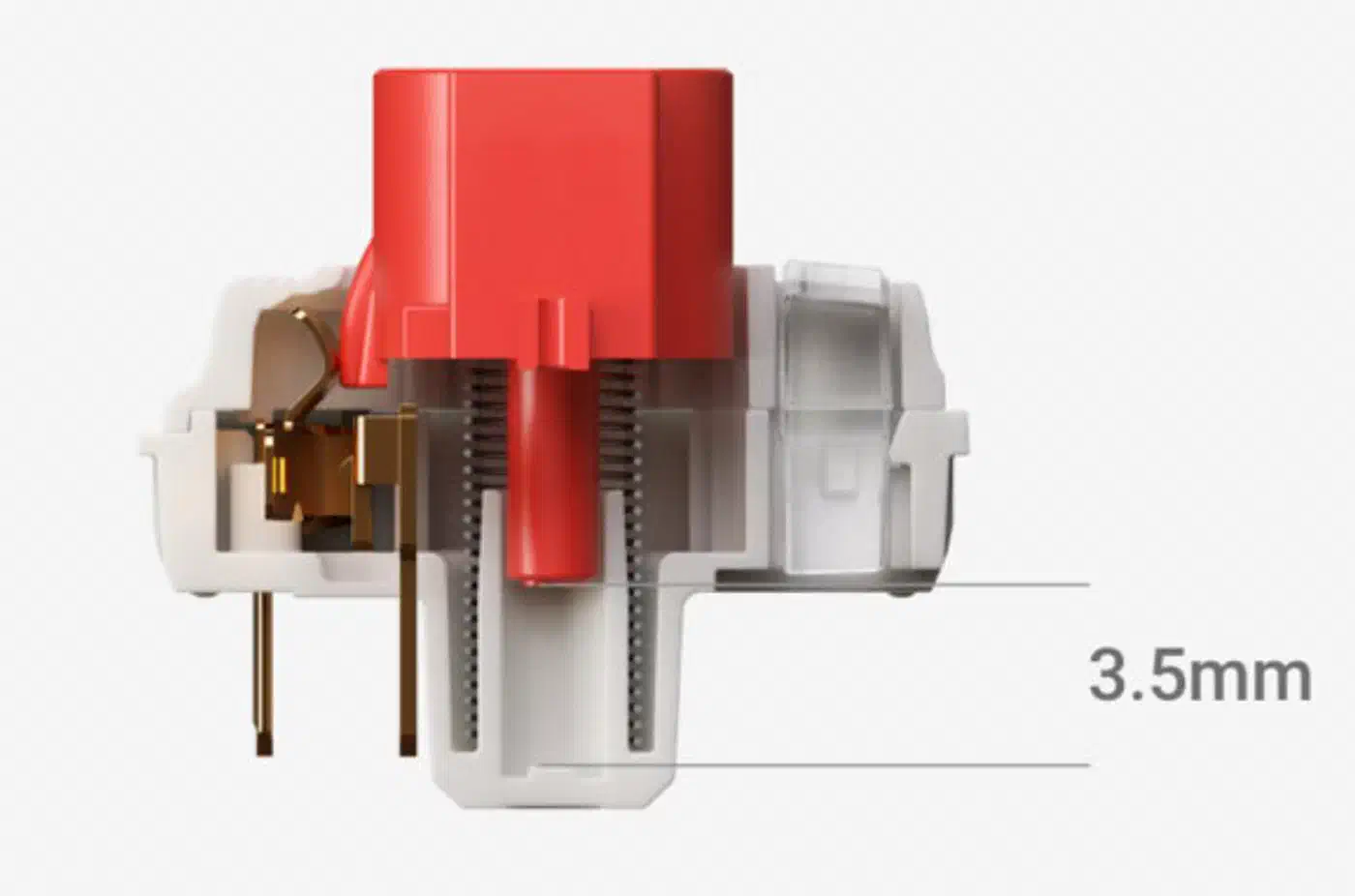
No one has published a teardown showing how far the plate flexes at 13.2mm, so treat the flex as a design target until a review measures it. Whether 1mm of extra height buys a keystroke you prefer is a personal call, and it is the whole decision here.
The mixed-material stack of plate, top, and bottom
The Air75 V3 uses three materials in one sandwich, each doing a different acoustic job. Notebookcheck lists a PC (polycarbonate) switch plate, a CNC aluminum top case, and an ABS bottom case.
A polycarbonate plate is softer and more forgiving than metal, which rounds off the sound. The aluminum top adds rigidity and a premium feel. The ABS bottom is light and damps resonance cheaply.
The shell wears a 220-grit zirconium sand anodizing finish, per Forbes. Weight lands at 724g for the 75, heavier than a plastic slab. That heft is part of how the board stays planted while you type.
Keycaps are low-profile NuPhy nSA double-shot PBT. That is a harder-wearing plastic, so the legends resist wearing off over time.
NuPhy frames the acoustic result as softer and more balanced rather than louder, aimed at shared offices. No independent recording has confirmed that yet, so it remains a vendor goal.
Switches, battery, and the swappable knob
Switch options are Gateron Low-Profile 3.0 in Red Nano, Blush Nano (silent), and Brown Nano. All three are hot-swappable, so you can change feel without soldering.
The 75 carries a 4,000mAh cell, and NuPhy claims up to 1,200 hours with the backlight off, dropping to 60 to 100 hours with full RGB. Backlighting is north-facing per-key RGB, and the board lists Windows, macOS, and Linux support.
Connectivity covers 2.4GHz, Bluetooth 5.1, and USB-C wired. Polling reaches 1,000Hz on 2.4GHz and USB-C, but only 125Hz over Bluetooth. So gamers should use the dongle for the faster polling.
A swappable knob module sits in the top-right corner and can be pulled for a switch instead. It ships with a short top for travel and a tall top for desk use.
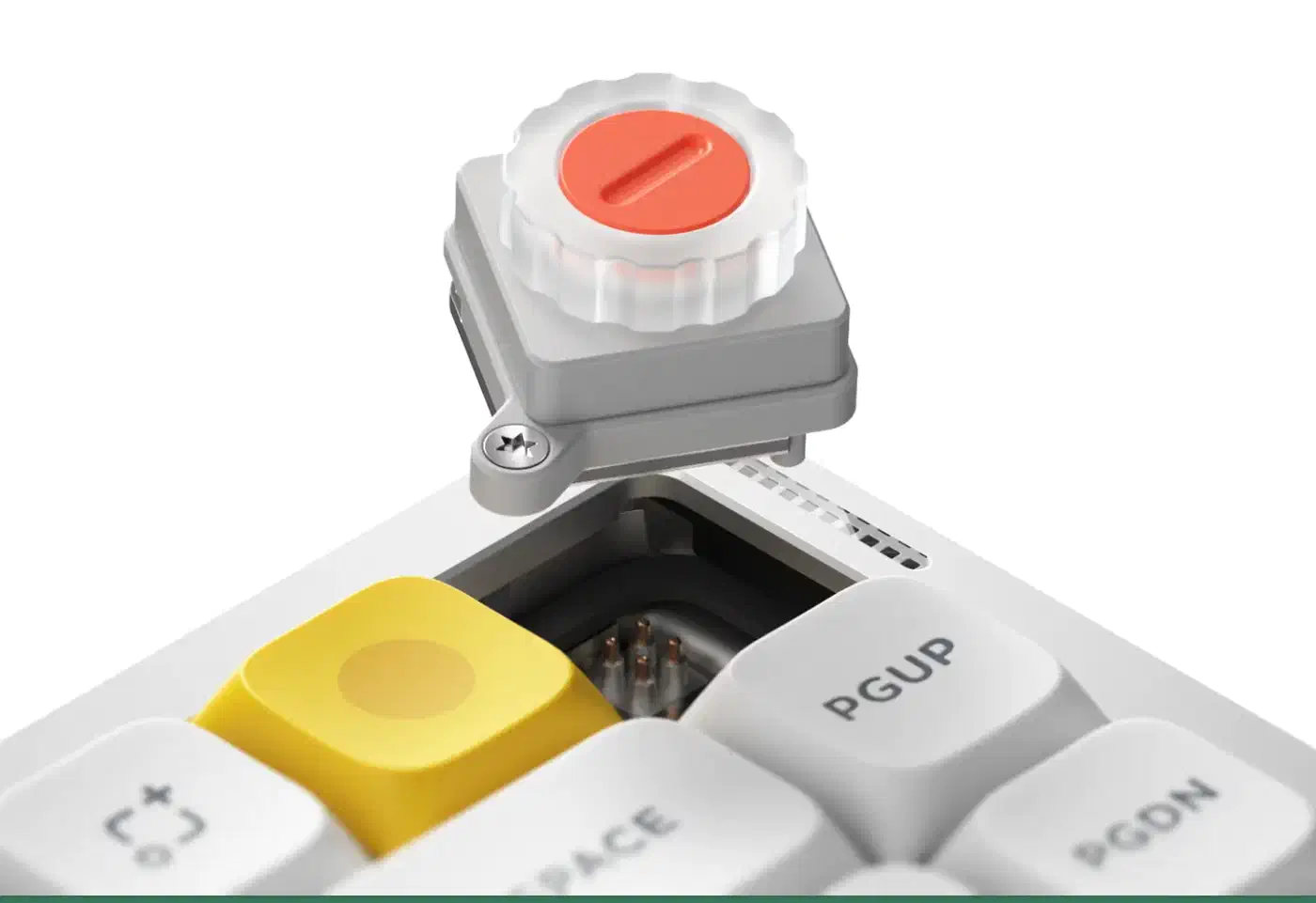
Customization runs through the browser-based NuPhy IO 2.0, with no download needed. It handles key mapping, backlight tweaks, and macros, though it is less powerful than VIA or QMK. Firmware updates also happen in the browser, which is simpler than flashing tools.
Where the gasket lands across the Air V3 65, 75, and 100
The gasket carries across the whole line. The Air V3 series ships in three layouts, and all three share the gasket structure, per Forbes. Every model also gets flip-out feet with three typing angles of 4, 8, and 10 degrees.
Batteries differ by size. The 75 and 100 use a 4,000mAh cell, but the 65 drops to 2,500mAh, so the compact board needs charging more often. The series arrived in 2026, starting at $139 for the Air V3 65, with the Air75 V3 listed at $139.95.
| Model | Layout | Battery | Best for | Price |
|---|---|---|---|---|
| Air V3 65 | 65% | 2,500mAh | Café and travel | from $139 |
| Air75 V3 | 75% | 4,000mAh | Office middle pick | $139.95 |
| Air V3 100 | 100% with numpad | 4,000mAh | Spreadsheets and data | from $139 |
The three sizes cover different desks, so pick by workflow. The gasket and the switches carry across the line, as does NuPhy’s low-profile Nano switch platform. That platform is the shared foundation across the Air, Kick75, WH80, and Halo families, per TechPowerUp’s CES 2026 report .