

Multi-stage springs give the Gateron Pro 2.0 a rising force

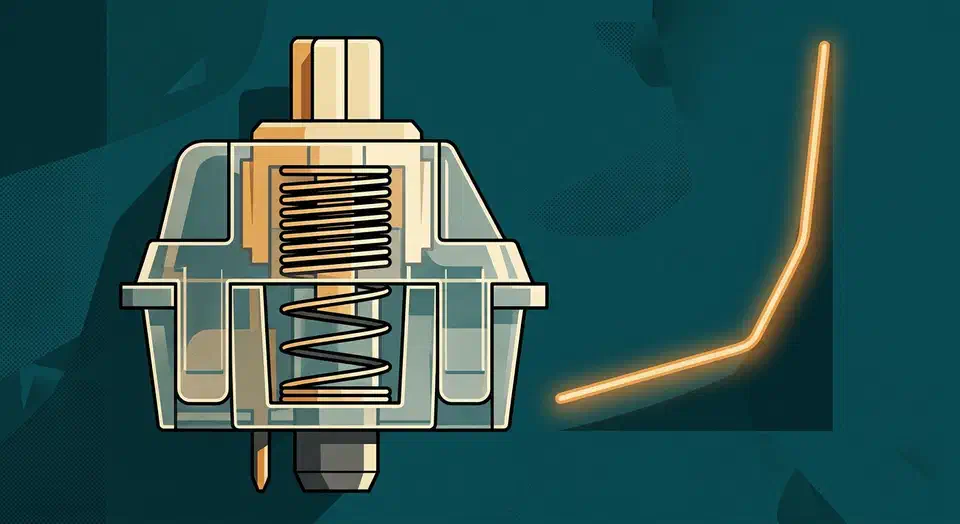
A multi-stage spring gives a switch a force curve that ramps up instead of climbing at a steady rate. The Gateron Pro 2.0 Silver ships one. Read the curve to know how a switch presses; the gram number alone won’t tell you. And check whether a quoted weight is actuation or bottom-out.
Key Takeaways
- A force curve shows how hard a switch pushes back at every point of travel.
- Multi-stage springs wind tight in some spots and loose in others.
- That uneven winding makes the force climb steeply near the bottom.
- The Gateron Pro 2.0 Silver, Neapolitan Ice Cream and Husky Linear all use them.
- Always ask if a quoted gram number is actuation or bottom-out.
What is a keyboard switch force curve?
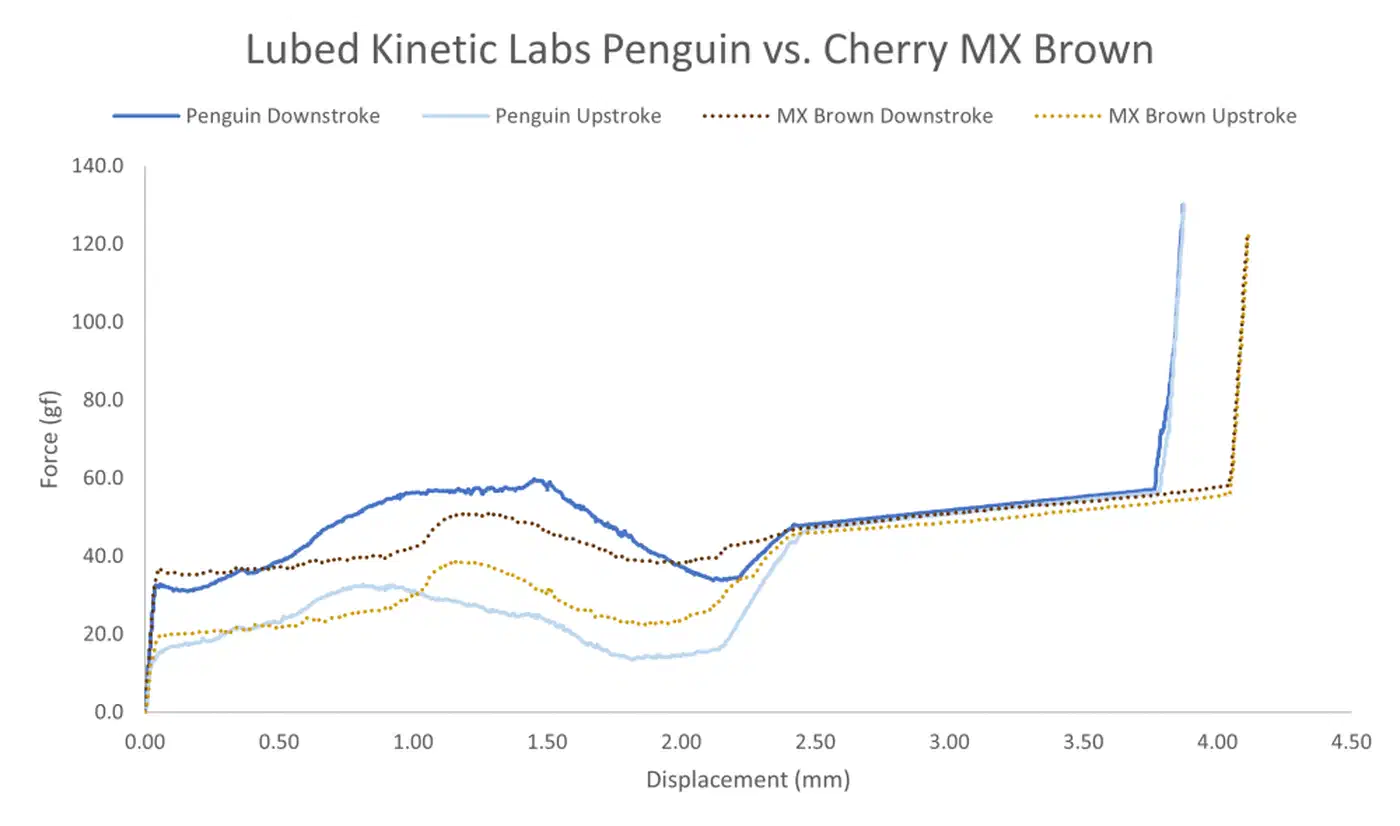
A force curve is a graph of force against travel. Force sits on the vertical axis, and the distance you press sits on the horizontal one. The line starts at the switch resting at 0 grams and 0 mm, then runs out to full travel and bottom-out force. The Dangkeebs guide to force curves lays out these axes clearly.
A traditional plot draws two lines. One is the downstroke, when you press the switch in. The other is the upstroke, when you release it. When a chart has no labels, the upstroke is always the lower of the two lines.
Some charts use a “butterfly style” instead. This mirrors the upstroke across the vertical axis, so you can lay two switches on top of each other without the lines crowding.
Look at the far right of the graph and you will see a sharp spike. That is the tester pushing against a switch that has run out of travel. So the graph hands you two facts at a glance: total travel in mm, and bottom-out weight in grams.
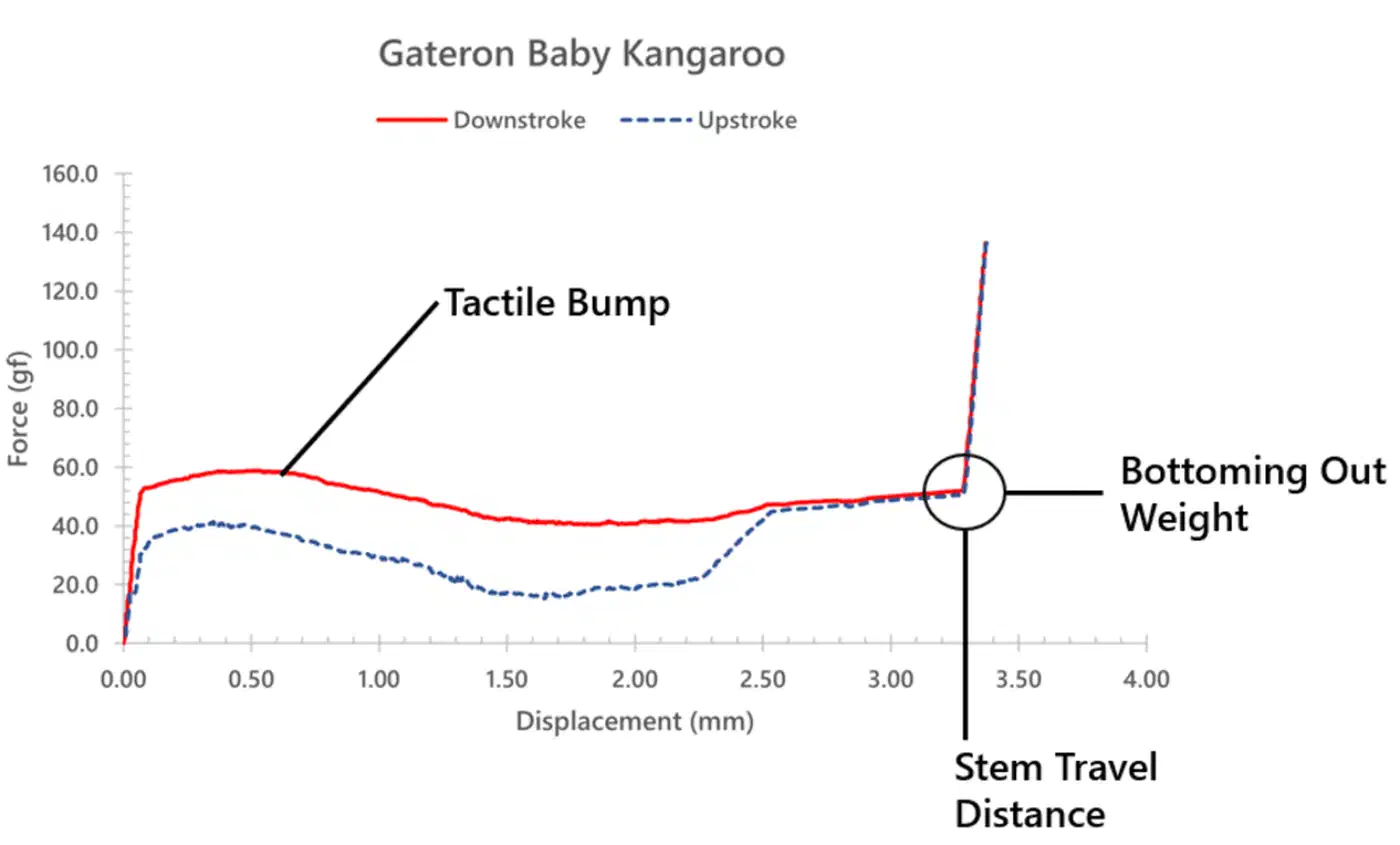
A force curve has one limit, though. It cannot show smoothness or sound. As the Kinetic Labs force curve guide points out, the graph says nothing about scratch or acoustics. Community testers like ThereminGoat, Pylon and HaaTa publish open collections of these curves, and vendor spec sheets carry the rest.
How a multi-stage spring bends the curve
A basic spring is a simple helical coil. It obeys Hooke’s Law, so the force it pushes back with is directly proportional to how far you compress it. That is what draws the straight diagonal line on a linear switch’s curve. The Kinetic Labs guide to switch springs walks through this basic case first.
A multi-stage spring is the same cylinder shape, but the threading changes along its length. Some regions are wound tight and others are wound loose. Those regions compress at different rates inside one spring.
A two- or three-stage spring is reported to give a progressive press, where force climbs steeply as the key goes deeper. It does not rise at the constant rate a basic spring gives you.
Kinetic Labs hedges here, and so will this post: it writes that the progressive effect “is believed” to happen, and it notes there is no hard science on the point yet. So treat this as a felt judgement, not a lab measurement. Progressive springs also tend to be noticeably longer than basic ones, and that extra length is part of how the steeper end-of-travel force is built.
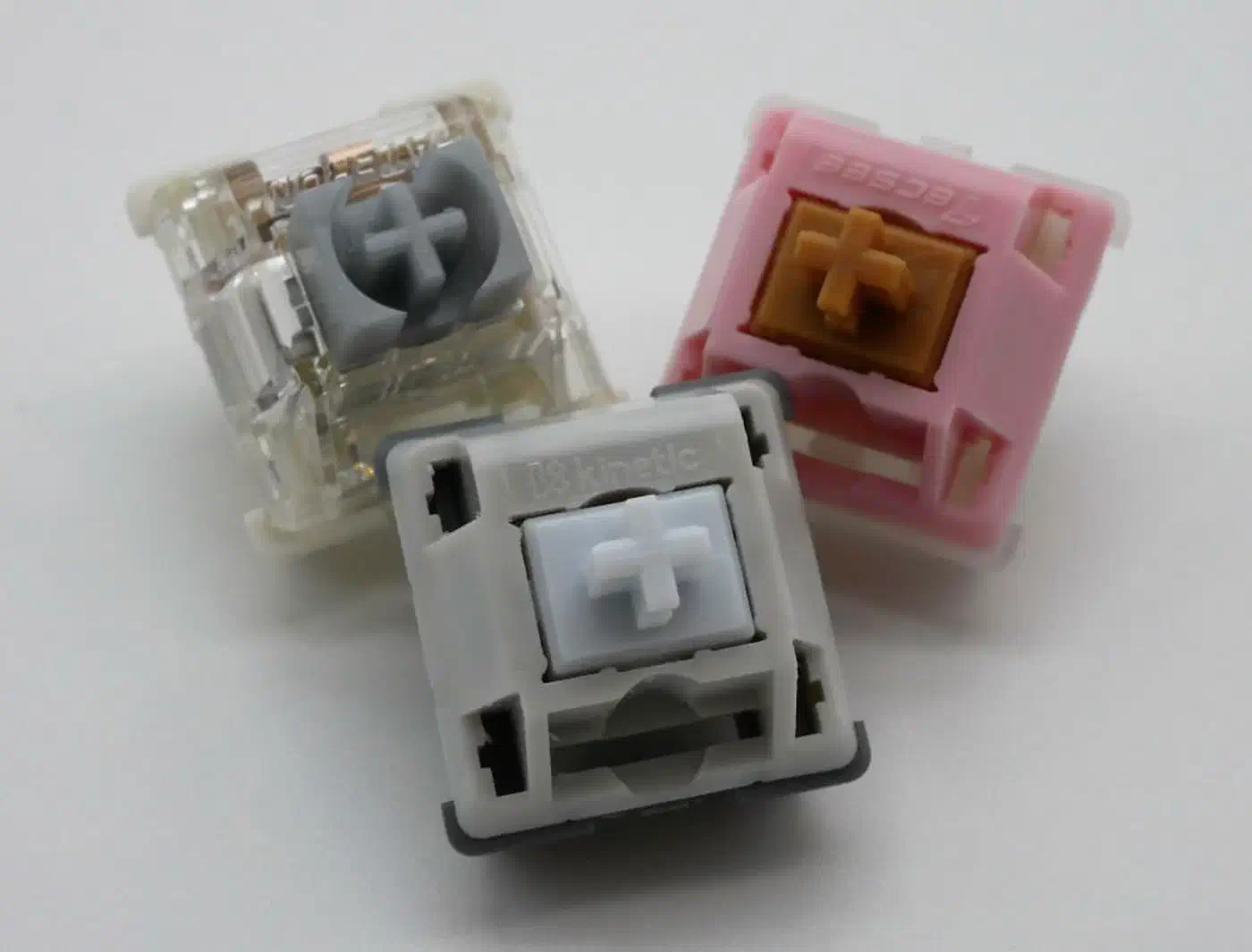
Three named switches ship these springs today: the Gateron Pro 2.0 Silver, the Neapolitan Ice Cream and the Husky Linear. There is also a step up called a conical spring. It varies both the threading and the coil diameter, flaring out from top to bottom for an even stronger progressive feel, and so far it shows up only in a handful of Tecsee- and Kailh-made switches.
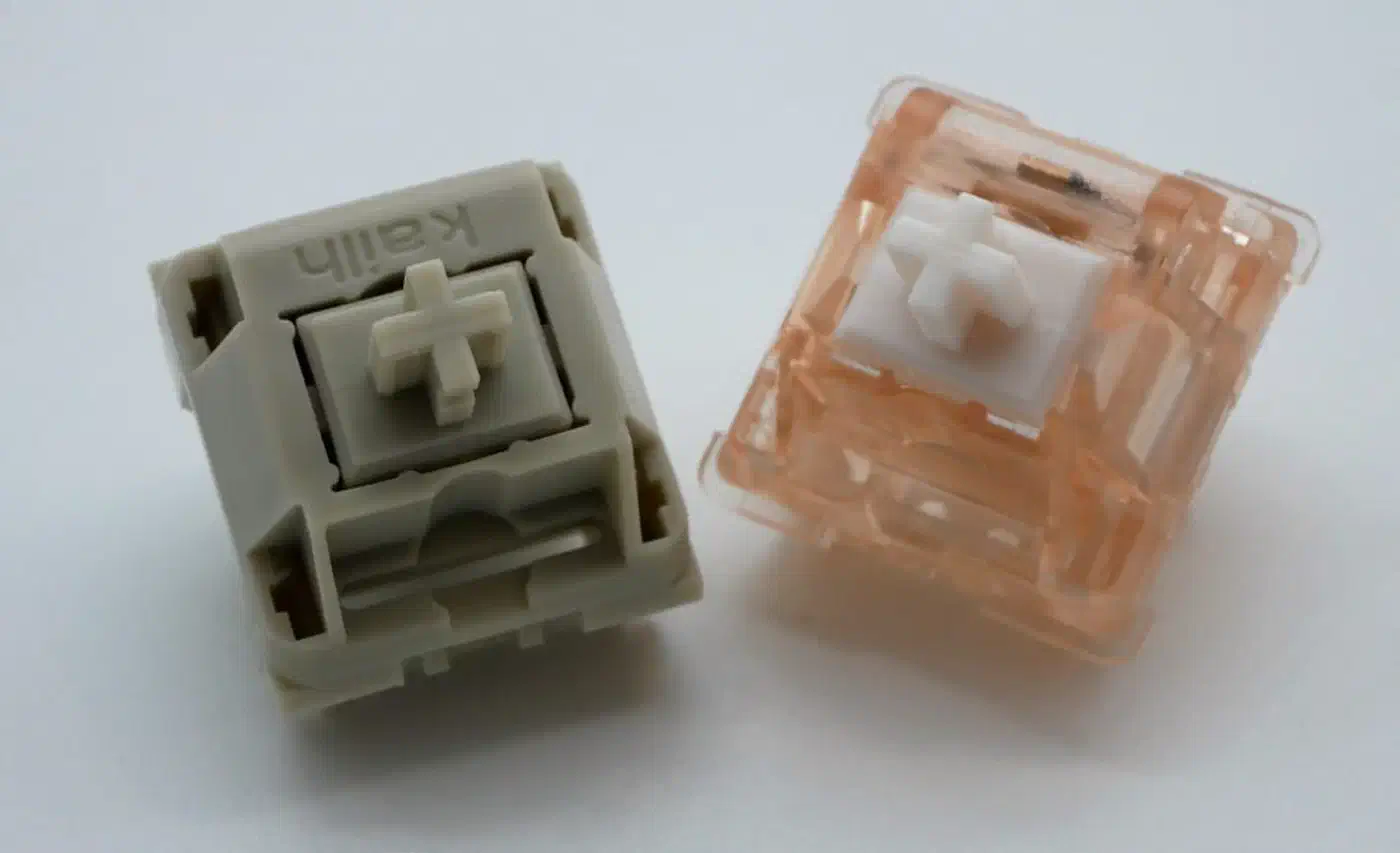
If you plan to swap springs yourself, remember that Box, CAP, Alps and traditional MX-style springs are not interchangeable with each other. A longer progressive spring is not a drop-in for every housing.
Why do two 60g switches feel nothing alike?
Springs get sold by a single weight, quoted at one point on the curve. That point is either actuation force or bottom-out force, and the two are not the same measurement. Two switches labelled 60g can therefore press very differently.
Actuation force is the weaker number to shop on. Actuation distance depends on the leaf, the stem and the housing as much as the spring. So an actuation figure does not compare cleanly across brands.
Bottom-out weight is the number that holds steady whatever the rest of the switch does. That is why testers point you to it:
its highly encouraged that you consider just the bottoming out weight when making your purchasing choices as this is consistent regardless of those other factors
Tactile switches hide a third weight that almost nobody advertises: the peak force needed to push past the bump. It differs from both actuation and bottom-out. Spring material and length also change the shape of the curve on their own, so the same bottom-out force can arrive along a flat ramp or a steep one.
The practical fix is to ask the vendor: is this 60g figure actuation or bottom-out, and is there a curve I can look at?
Reading a flat curve against a progressive one
Lay a plain linear switch next to a multi-stage one and compare the downstroke slopes. The basic spring draws a near-straight diagonal. The multi-stage one curves upward as it nears bottom-out. Both can end at the same bottom-out number while feeling different the whole way down.
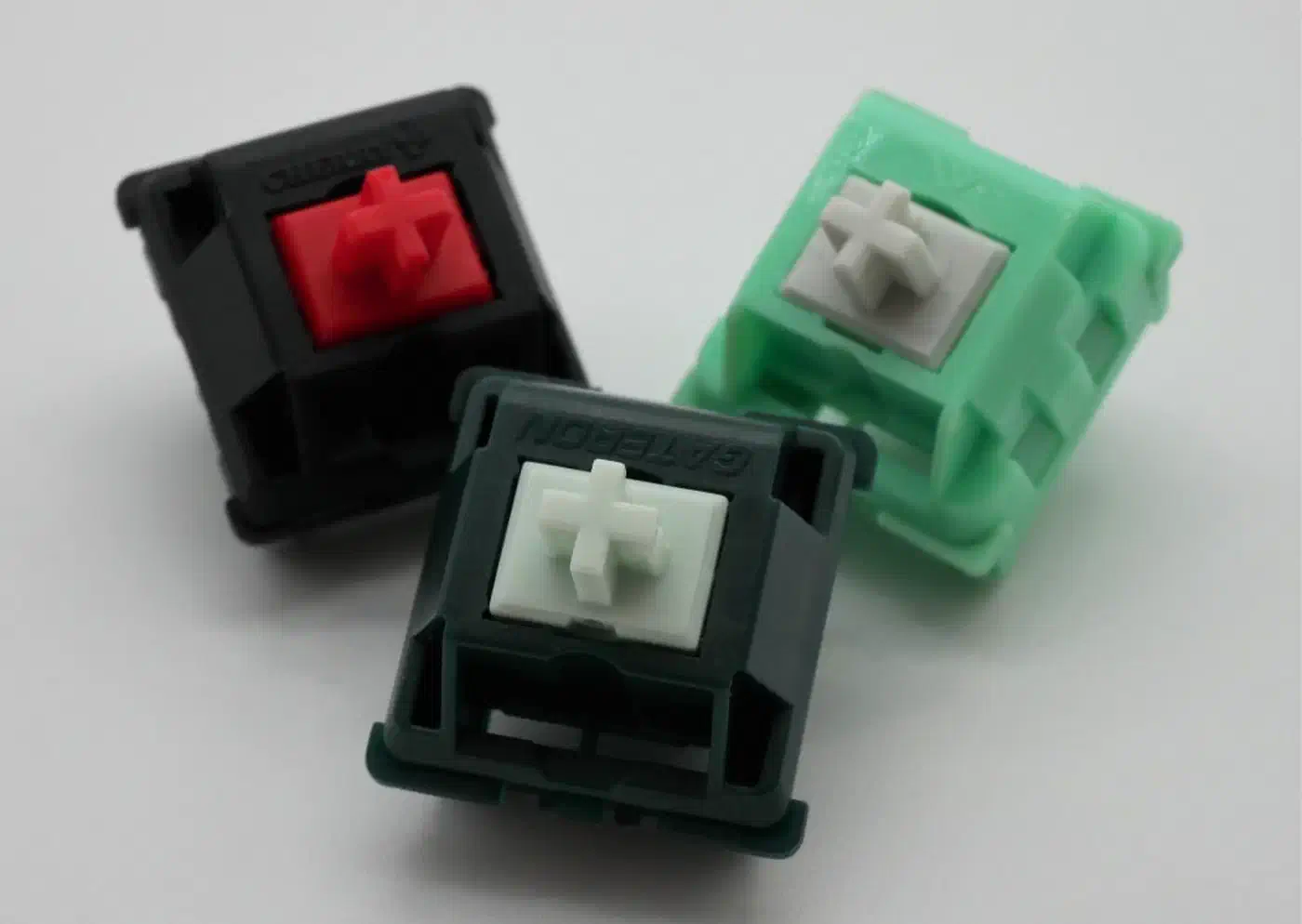
That gap is the payoff of learning to read the shape. A rising curve buys you a lighter start for fast key presses and a firmer wall at the end. That is why people call progressive springs springy.
| Spring type | Curve shape | Feel | Example switches |
|---|---|---|---|
| Basic single-stage | near-straight diagonal | steady force all the way down | Cherry MX Red, KTT Mint |
| Multi-stage | curves up near bottom-out | light start, firm wall | Gateron Pro 2.0 Silver, Neapolitan Ice Cream, Husky Linear |
| Conical | strongest upward curve | firmest ramp of the three | a few Tecsee and Kailh switches |
While you have the graph open, you can also spot a tactile bump on the same axes. Bump length is read along the horizontal axis: long bumps cover well over 60% of total travel, short ones under 40%. Bump strength is how far the peak rises above where it starts, sometimes over 10 to 20g, per Kinetic Labs. The Dangkeebs guide suggests exactly this habit of laying two bottoming-out sections side by side, or overlapping them in a butterfly plot.
Still, keep that limit in view. Two switches with identical curves can sound and feel different, because a curve says nothing about scratch, wobble or acoustics. The shape tells you how the press builds. Your ears and fingers tell you the rest.