

Brush Krytox 205g0 on the stems and 105 oil on springs

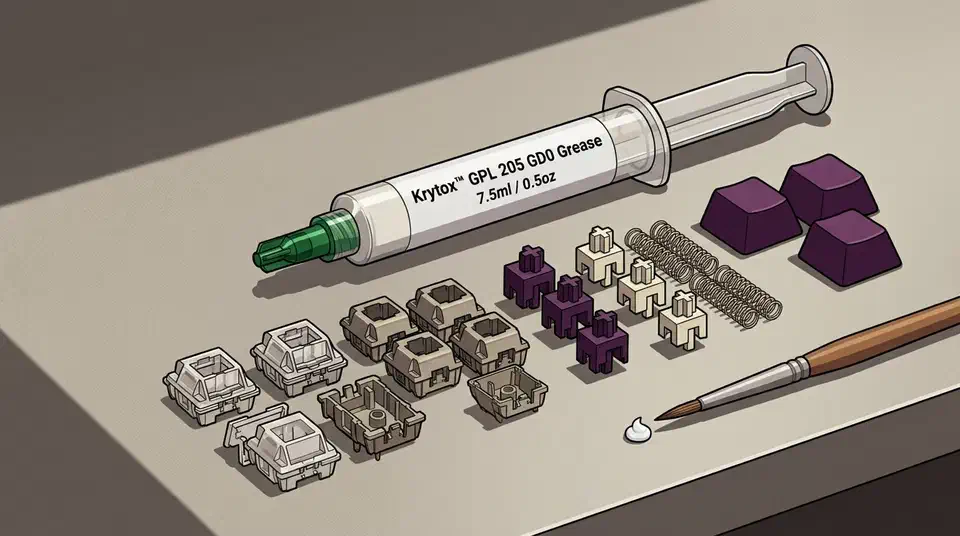
Krytox 205g0 is the grease for switch stems and housings, while thinner Krytox 105 oil belongs on the springs at roughly one drop per ten. Hand lubing lays a more even coat than a factory robot, though the gain on an already good switch is small.
Key Takeaways
- Thick 205g0 grease goes on stems and housings.
- Springs get thin 105 oil, about one drop per ten.
- Too much lube makes a switch feel slow and mushy.
- Go light on tactile switches or the bump rounds off.
- Hand lubing refines a good switch but cannot rescue a bad one.
Which lube goes on which switch part?
Grease goes on surfaces that slide against each other, and thin oil goes on a spring that needs to stay springy.
Krytox 205g0 is a thick PTFE grease, and Kinetic Labs describes grade 0 as roughly the consistency of mustard: heavy enough to smooth the travel, light enough that the stem does not drag. Springs want none of that weight.
| Part | Product | How much | If you overdo it |
|---|---|---|---|
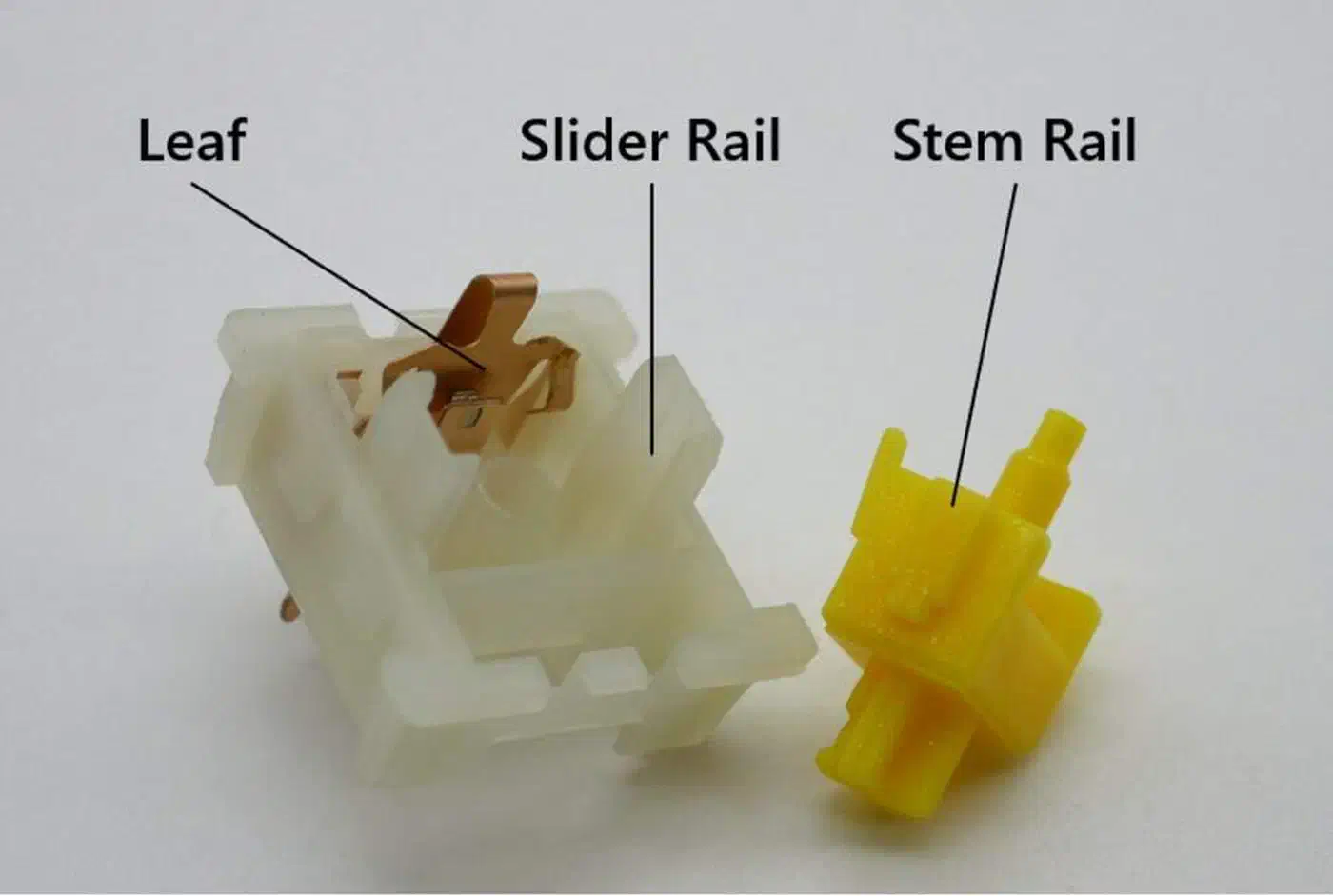
| Stem rails and legs | Krytox 205g0 grease | Thin, even coat with a brush | Travel feels sluggish |
| Bottom housing rails | Krytox 205g0 grease | Equal dab on each rail | Mushy bottom-out |
| Spring | Krytox 105 oil | About one drop per ten springs | Gummed-up return |
| Tactile leaf and stem legs | Almost nothing | Keep the brush off it | The bump rounds off |
| Top housing | Usually nothing | Skip unless the switch is scratchy | Wasted lube |
The Angry Miao comparison of factory and hand lube names 205g0 as the standard pick for linear stems and housings, because its texture gives a smooth, controlled feel.
For springs, Monsgeek’s guide to factory and hand lubing recommends the bag method. Drop all the springs in a small bag with a drop of oil per ten springs, then shake gently for a couple of minutes. The coat comes out even, spring ping drops away, and travel stays free.
On a tactile switch, grease on the leaf or the stem front legs blunts the bump you bought the switch for, so the safe move is a very light layer everywhere and nothing at all on those two surfaces.
Factory lube versus hand lube
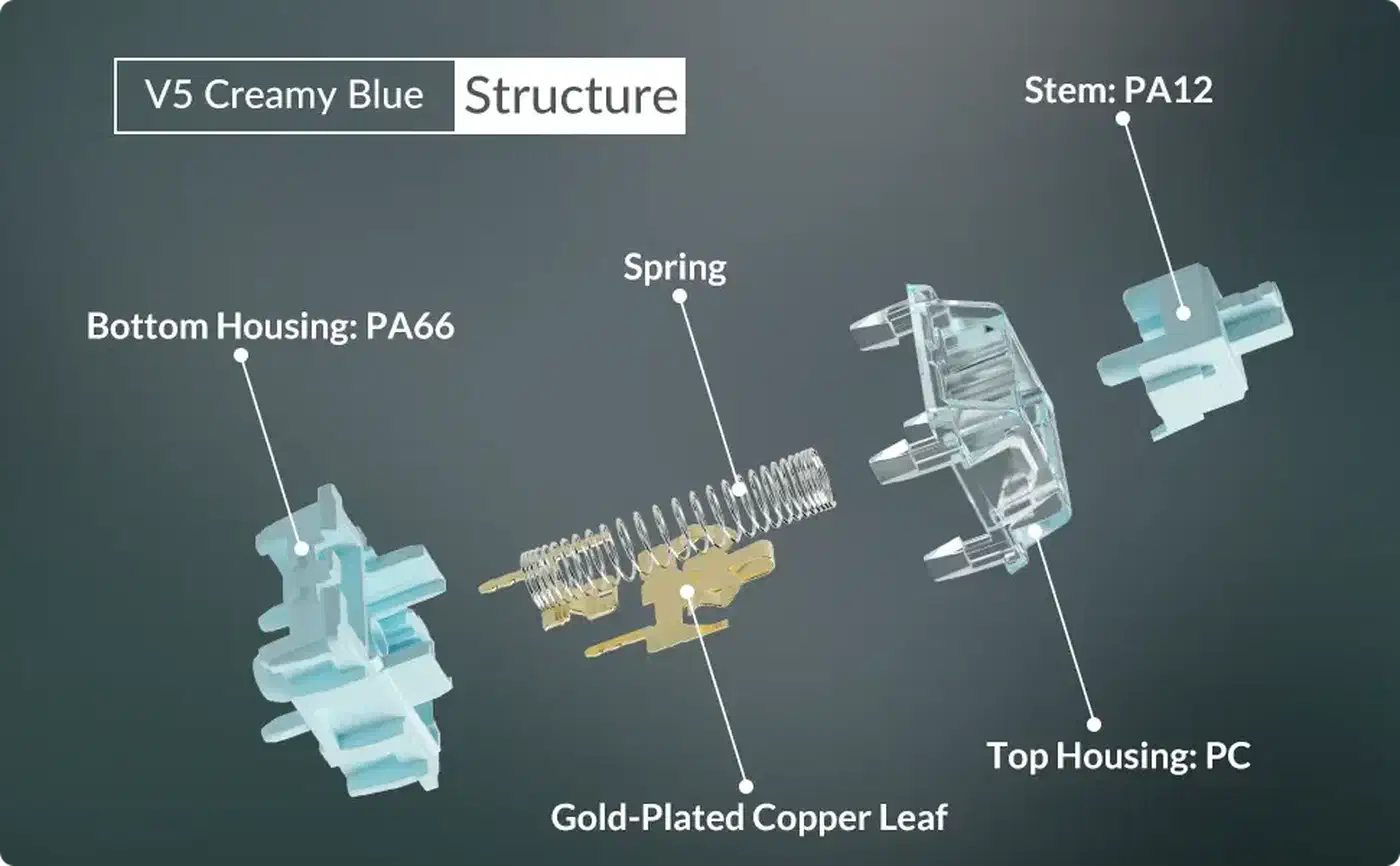
Factory lube is applied by machine before the switch is packed. Angry Miao notes that the robot pass can land unevenly across a batch, with some keys sounding different from their neighbours, yet even an uneven factory coat beats a dry switch.
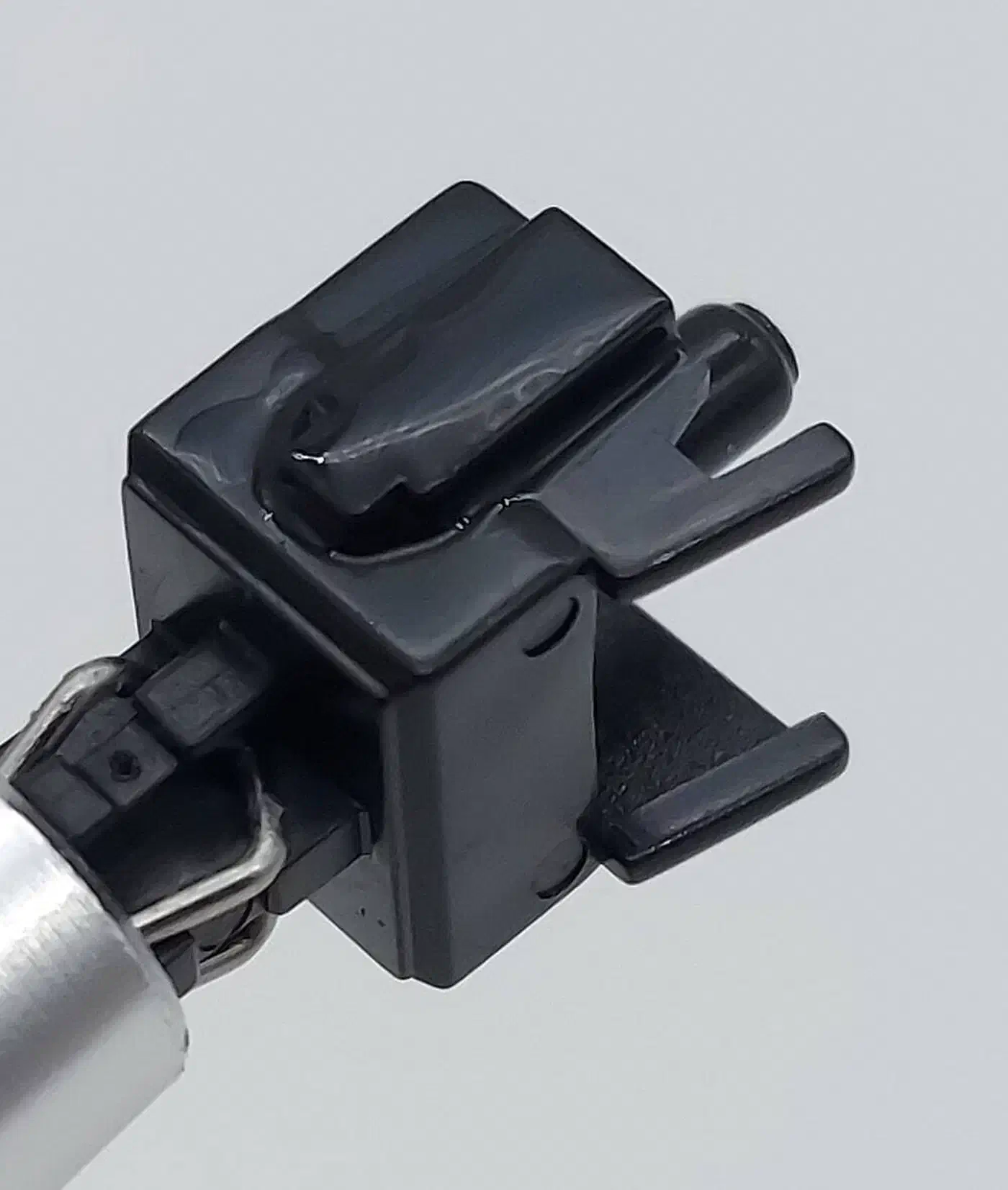
Hand lubing wins on evenness and control. You choose the product, the amount, and the exact surface.
| Factory lubed | Hand lubed | |
|---|---|---|
| Effort | None, type straight away | Hours per board |
| Consistency | Varies switch to switch | Even, if your technique holds |
| Sound control | Fixed by the maker | Yours to tune |
| Best for | Most buyers | People tuning feel and sound |
None of these sources measures the smoothness or sound gain, so “better” here is a felt judgement rather than a number. All three are switch retailers writing about lube they also sell, so their advice points toward a purchase.
What does over-lubing a switch do?
Angry Miao says an over-lubed switch feels heavy, slow, or mushy, so the quantity you apply counts for as much as the product you picked. Too much lube is worse than none at all.
A well-lubed part carries an even shiny film with no white blobs or clumps anywhere, so a visible clump means you have gone too far.

Kinetic Labs’ look at whether switch lubing is necessary points out that the stem and leaf are where factories sometimes lube too, and a heavy hand there flattens the tactile feedback. Linears have no bump to protect, so they tolerate a fuller coat.
Under-lube a switch and you brush on a little more; over-lube it and you are back to disassembly and cleaning. Start light, test a handful of switches in the board, then commit to the batch.
How far one syringe of Krytox 205g0 goes
A 5ml syringe covers 500 or more switches at a thin coat, according to Kinetic Labs. Even a full-size board runs about 104 switches, so one syringe handles four or five builds.
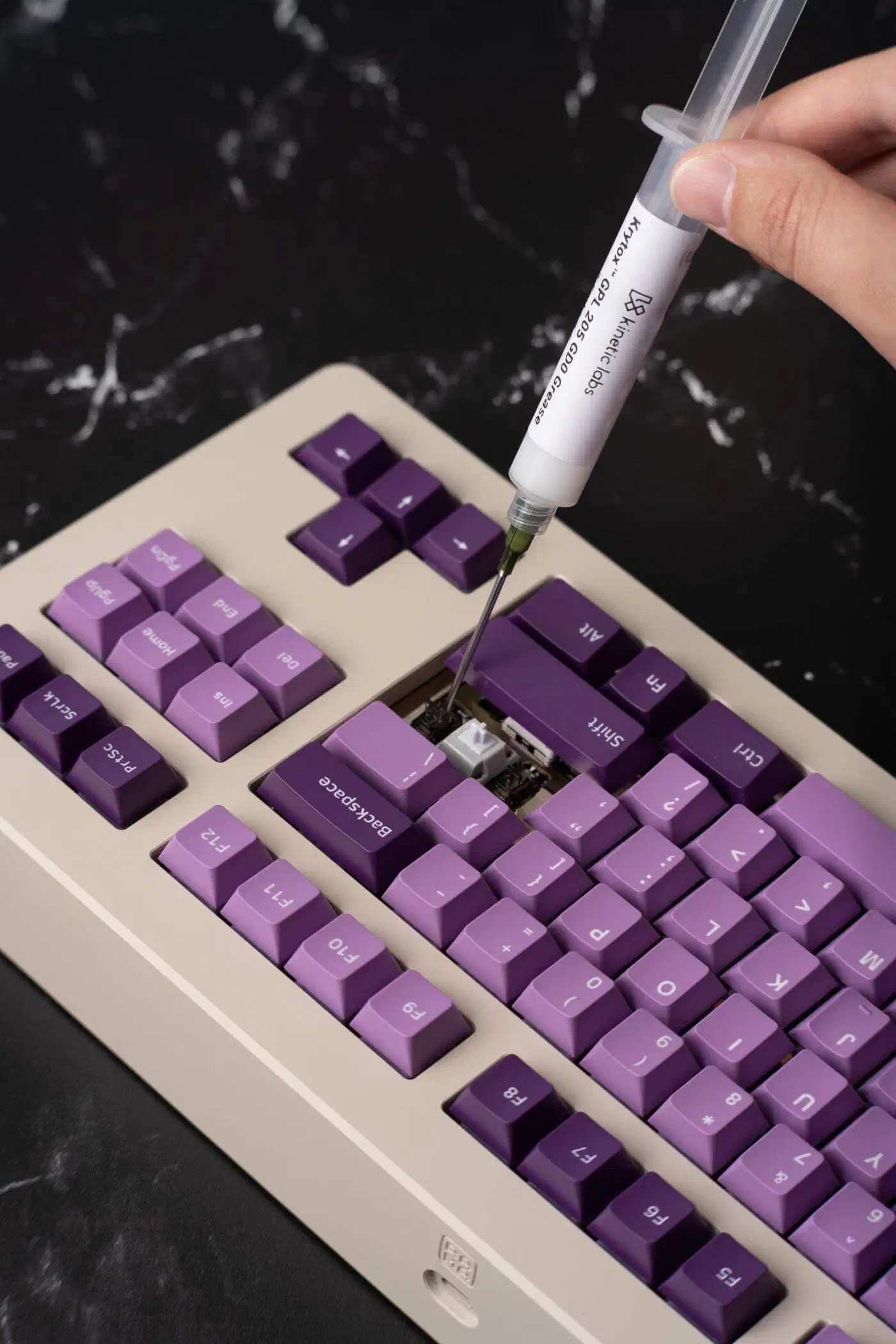
That changes the cost picture, because your evening costs far more than the grease does. A switch opener, a small brush, tweezers, and a stem holder round out the kit, and all of them last for years.
Is hand lubing worth an evening of your time?
Lubing 70 to 100 switches takes several hours, and the result depends on your technique. A careful hand lube gives a good factory-lubed linear a modest polish.
Kinetic Labs notes that a well-made factory-lubed switch may need nothing at all. Gateron’s Oil Kings get named as switches that arrive smooth enough to require no extra effort. If your board already feels good, leave it alone.
Some people go the other way, and they are upfront about why:
Other users like myself may sink so deep into switches that they want that infinite scope of customizability that is afforded in unlubed switches.
Do it if you are chasing one specific sound, want the smoothest travel you can get, or simply enjoy the bench work. Skip it if you bought a quality factory-lubed linear and mainly want to type on it.
Whether the difference between a good factory lube and a careful hand lube would survive a blind test is still an open question, and nobody publishes a measurement. Until someone does, treat the gain as real but small, and budget your evening accordingly.