

Concrete and resin recast the Keychron K2 HE housing
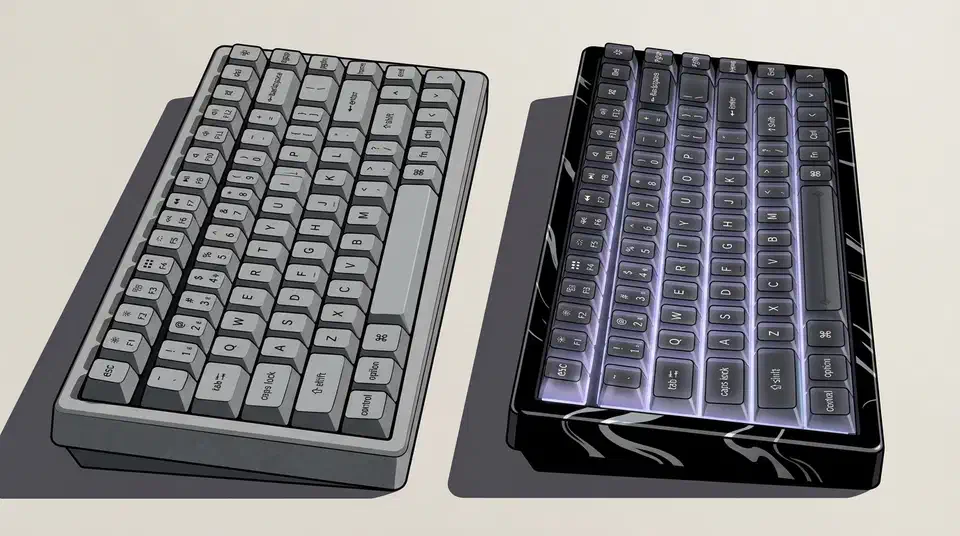
The Keychron K2 HE concrete and resin case editions run the same board inside two very different shells. Keychron kept the PCB, sensor, switches, and aluminium plate identical, so the housing is the only variable. That makes the pair a rare controlled test, and the 1.74 kg concrete weight shows what the material buys.
Key Takeaways
- Keychron put the same K2 HE inside two very different cases, concrete and resin.
- Nothing electrical changed, so the case is the only thing being tested.
- The concrete shell runs slightly bigger and taller than the resin one.
- Both cases sit on the same aluminium plate, so the shell gets only part of the credit.
- A month-long review found the concrete barely changes the sound.
What does a keyboard’s case material change?
Case material drives three things enthusiasts argue about. Mass is how planted the board feels. Damping is how much the housing soaks up vibration instead of ringing. Cavity resonance is the pitch and length of the sound the empty shell makes.
Normally you cannot isolate any of these. Two keyboards differ in switches, plate, and layout all at once. The K2 HE Special Edition is unusual. Both editions are electrically the same. So any change in feel or sound traces to the shell alone.
For Keychron the material is the headline. Co-founder Paul Tan told Cult of Mac the company approached the shell as engineering work.
Mechanical keyboards have advanced significantly in switch engineering, but enclosure materials have remained largely unchanged. With K2 HE Special Edition, we applied magnetic switch performance to a material-driven redesign, expanding how a keyboard can look and feel.
Still, one limit belongs up front. Both editions keep an aluminium switch plate and a tray-mount design, so the shell is not the whole acoustic story.
Concrete and resin case options on the K2 HE Special Edition
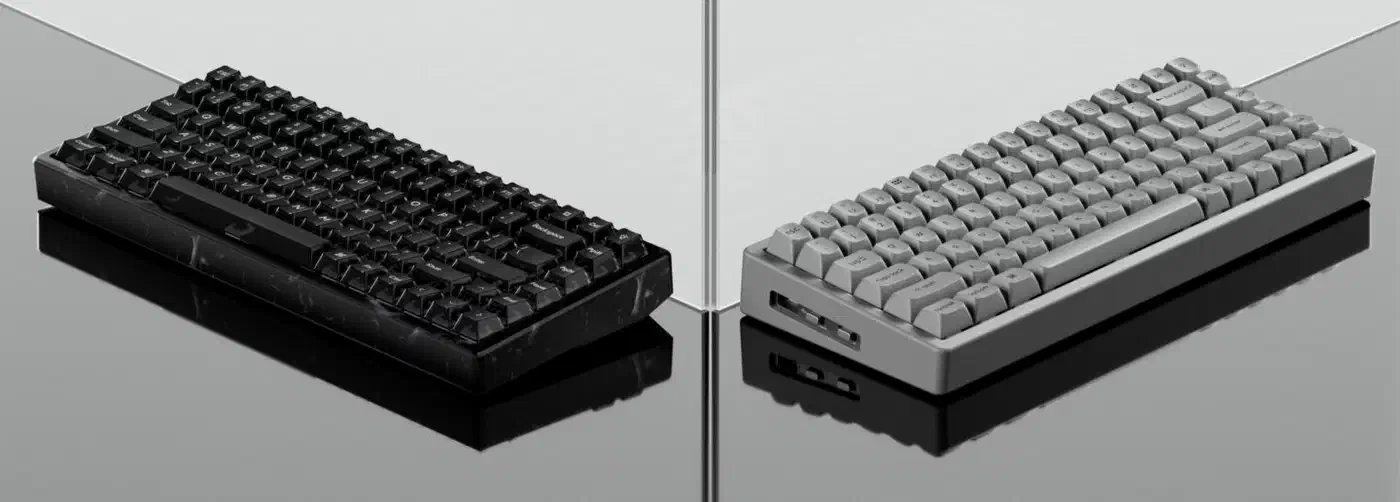
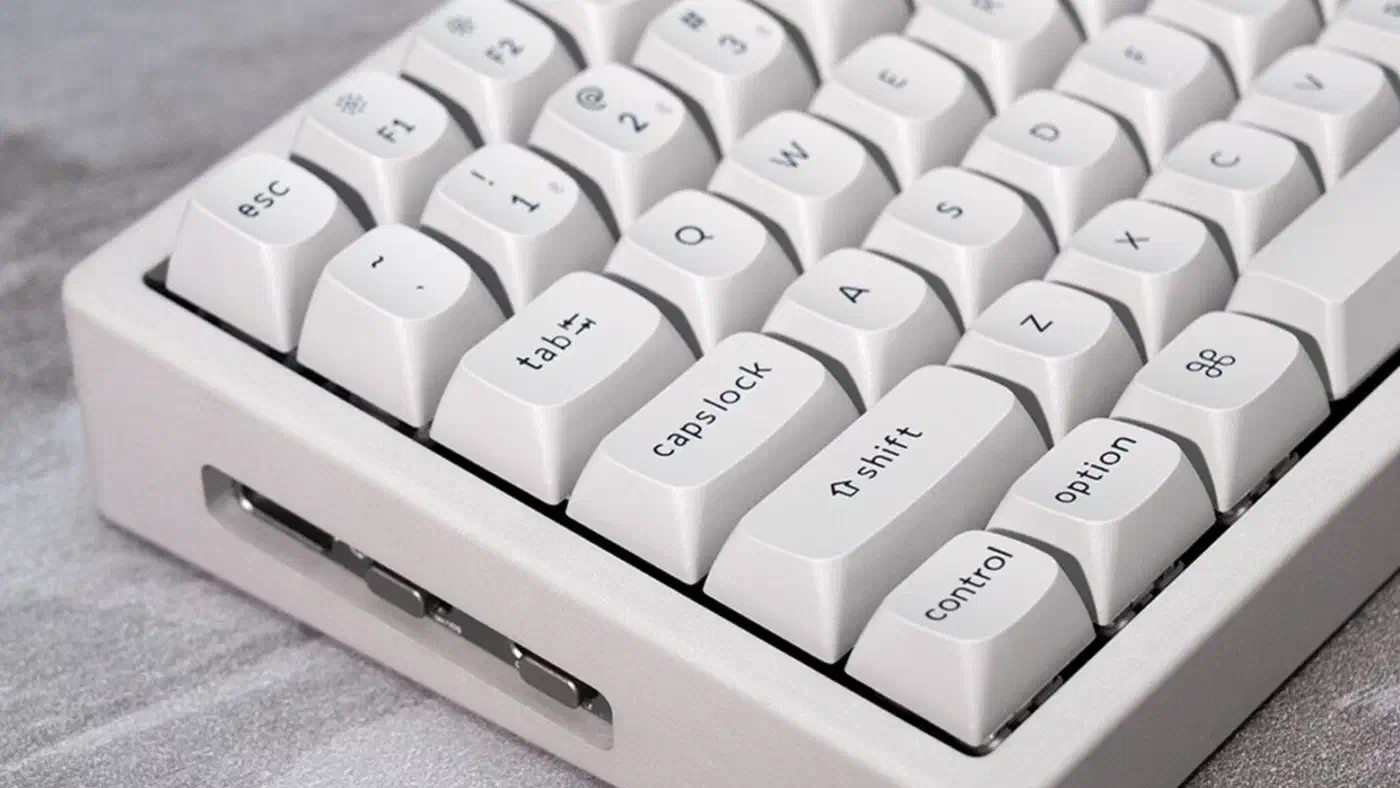
The concrete edition is a full concrete body over a metal-reinforced internal frame. Despite being cement, the exterior is finished marble-smooth, so it is not rough or unpleasant to touch. Its keycaps are cement-gray double-shot PBT in OSA profile, chosen to match the muted industrial look.
The resin edition takes the opposite path. Each unit is cast in black resin, and because of how resin cures, no two boards look exactly alike. The silver-grey flow patterns inside come from the process itself, giving it a handmade quality. Its keycaps swap to smoky transparent PC in Cherry profile, so the north-facing per-key RGB glows through.
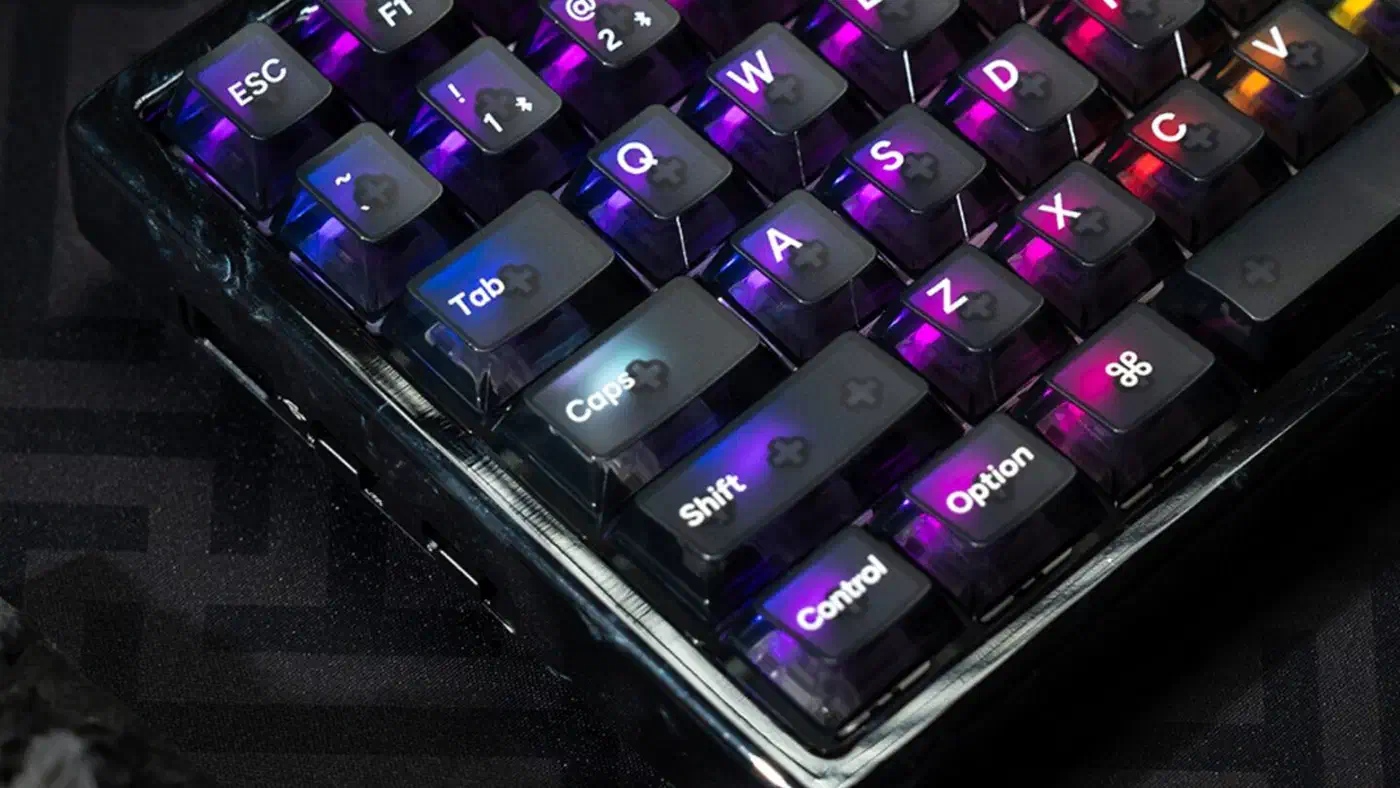
The two are not quite the same size, per TechPowerUp’s launch coverage . The cast concrete shell is the larger and taller of the two, though the gap is a millimeter or two.
| Spec | Concrete edition | Resin edition |
|---|---|---|
| Body material | Full concrete, metal-reinforced frame | Cast black resin |
| Width x depth | 322.13 x 132.13 mm | 321.13 x 131.3 mm |
| Front height | 27.39 mm | 27.06 mm |
| Typing angle | 4 degrees | 4 degrees |
| Keycaps | Cement-gray double-shot PBT, OSA | Smoky transparent PC, Cherry |
| Finish | Marble-smooth, solid grey | Silver-grey flow patterns, unique per unit |
| Price | $199.99 | $199.99 |
That $199.99 launch price is up from the $139.99 wood-and-aluminium original. The material carries through to touch, too. Handling the concrete board, Tom’s Hardware’s Matt Safford noted its keycaps did not feel like normal plastic, per Tom’s Hardware .
What stays identical inside both editions?
Underneath the new shell, the Special Edition is the same board. The brains and sensing carry over untouched. Both editions use the same MCU and the same TMR (tunnel magnetoresistance) sensor as the standard K2 HE. So the way the keys register does not change. Both also run the same Gateron Double-Rail Magnetic Nebula switches, with 4 mm of physical travel. You can tune the trigger point down toward 3.8 mm through Keychron Launcher.
Connectivity is shared as well. Both keep 1 kHz polling, Bluetooth 5.3, and 2.4 GHz wireless, in the same 75% layout as prior K2 HE boards. Most important for the sound discussion below, both sit on an aluminium switch plate with a tray-mount design.
The Special Editions do add a few real upgrades beyond the shell:
- Internal metal reinforcements for structural rigidity.
- Metal toggle switches for the power and OS selectors.
- Upgraded stabilisers with reinforced side-walls for less rattle.
These are genuine changes, but they apply to both editions equally. So they do not muddy the concrete-versus-resin comparison.
How much of the sound can the shell claim?
The shared aluminium plate and tray-mount design mean the housing is only one part of the sound. The plate and its mounting points carry much of each keystroke’s energy, whatever the outer body is made of.
The shell does earn some credit. A dense concrete body adds mass and stiffness. That tends to lower the pitch and shorten the ring. Resin’s lower density damps in its own way. The direction is predictable, but a plate-limited design caps how large the effect can be.
Keychron’s own claim stays measured. Tan says the team tested several mixes before picking concrete and resin. The goal was to hit structural, sound, and durability targets alongside the switches. The shell alone was never meant to transform the sound.
PC Gamer’s Andy Edser spent a month with the concrete edition and weighed the sound question directly.
Does it sound much different to a regular keeb? No, not really. But the switch feel is so good, and the keyboard so stable, I don’t really mind.
Where the mass does pay off is stability. That same review clocked the concrete edition at 1.74 kg. Edser said it wants to stay anchored to the desk, even under panicked gaming. So the material buys heft and a planted feel more than a new sound. Treat any “it sounds deeper” claim as directional until more measurements arrive.
Durability is the other half of the trade. A cement shell raises fair questions about chipping or cracking. Over a month of daily use, that review reported no cracks and only one complaint: the grey colour. That is reassuring but not conclusive.
Where the concrete K2 HE fits in Keychron’s material push
The K2 HE editions first appeared at CES 2026 before launching that year, which reads as a deliberate line.
Keychron is clearly continuing the theme. A Q1 HE 8K Marble Version was announced for a spring release, again per Tom’s Hardware. It carries an 8K polling rate, Hall effect magnetic switches, and a 75% layout, in a body made of marble. Keychron is testing non-plastic, non-aluminium cases across its Hall effect line. Switch performance has largely converged, so the material is now the thing that sets a board apart.
For a buyer, the choice comes down to what you want from the object:
- For a sculptural, one-of-a-kind piece, the resin edition shows visible variance no two units share.
- For heft and a brutalist look, concrete delivers, and the extra mass keeps it planted.
- For the internals without the exotic shell, the standard wood-and-aluminium K2 HE is the cheaper route to the same board.