

At 11.9mm the Cherry MX Low Profile saves a third of height
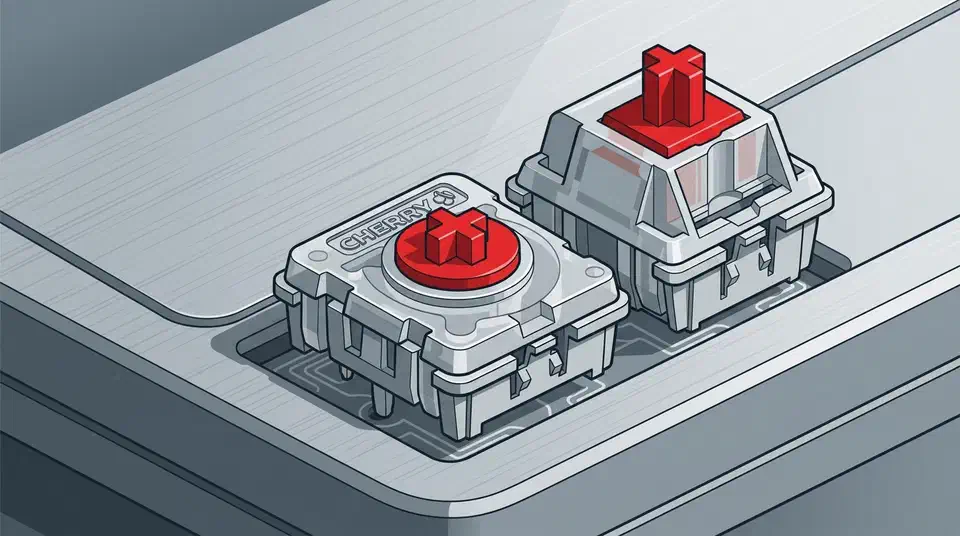
The Cherry MX Low Profile switch stands 11.9mm tall, about 35% shorter than a standard MX switch. That one cut in height is what lets a keyboard sit almost as flat as a laptop deck. It keeps the MX cross-mount stem, so it stays a real MX switch. Cherry sells a second, thinner rung too.
Key Takeaways
- The Cherry MX Low Profile switch stands 11.9mm tall, about a third shorter than standard.
- It keeps the familiar MX cross-mount stem, so it is still an MX switch.
- Cherry sells the height cut as slimmer boards, with the feel unchanged.
- A thinner rung, the MX Ultra Low Profile, sits just 3.5mm above the board.
- A shorter switch means a shorter keystroke, so travel is what you trade.
What is the Cherry MX Low Profile switch?
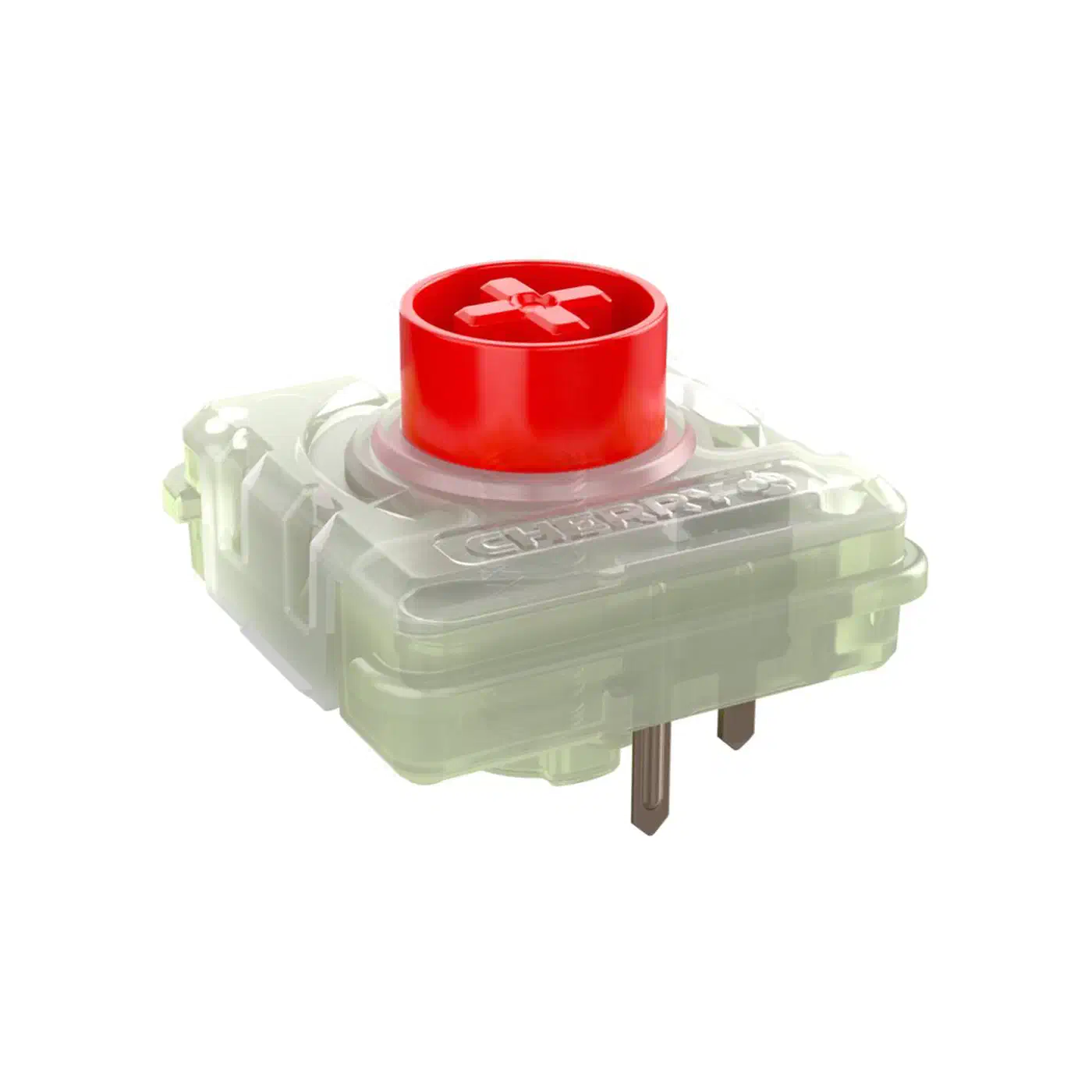
The Cherry MX Low Profile is a mechanical switch that stands just 11.9mm tall, about 35% lower than a standard MX switch. Cherry lists that figure on its MX Low Profile switch page , so no independent lab confirmed it.
The point of the switch is a flatter keyboard. Cherry pitches the reduced height as enabling sleek, compact designs for notebooks and slim high-end boards. The typing feel is meant to stay the same.
Under the shorter housing, the mechanism stays familiar. The switch keeps the MX cross-mount stem, so it belongs to the MX family rather than a separate low-profile system. Cherry also rates it for the same lifespan as its taller siblings, over 100 million keystrokes per switch.
The lineup is small and linear. Cherry lists the MX Low Profile 2.0 Red, a smooth linear, and the 2.0 Speed, a faster linear, each offered with RGB or no lighting. These are Cherry’s own low-profile switches, separate from the many third-party low-profile stems on the market.
How much thinner is 11.9mm, really?
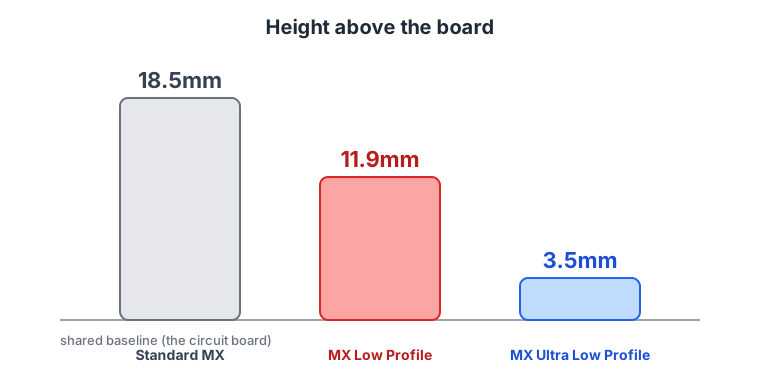
A standard MX switch stands roughly 18.5mm tall from the top of its housing. That reference height is common switch geometry, and Cherry does not publish it, so treat it as an approximation. Removing about 35% of it lands near 11.9mm, which is where Cherry’s “35% lower” figure comes from.
The height that disappears sits above the board. A full keyboard built on these switches looks visibly flatter, closer to a laptop deck than to a chunky full-height mechanical board.
There is a real cost, though. A shorter switch body leaves less room for the stem to move. A lower housing almost always means a shorter keystroke than a full-height MX. Cherry’s copy talks about height and design and stays quiet on travel, so confirm any specific travel figure on the product data sheet before you trust it.
Two groups benefit: writers and gamers who want a mechanical feel on a slim desk, and laptop makers who cannot fit a full-height switch at all.
Cherry’s low-profile ladder, from 11.9mm to 3.5mm
Cherry sells two rungs. The MX Low Profile at 11.9mm is the taller one, a slim board that keeps a familiar mechanical keystroke.
The thinner rung, the MX Ultra Low Profile, sits just 3.5mm above the board. Cherry calls it the flattest and the first mechanical SMD switch in the MX portfolio on its MX Ultra Low Profile switch page . It reaches that height by being a surface-mount part soldered flat to the board, which is something a socketed switch cannot do. It ships as ULP Click and ULP Tactile variants, both made in Germany.
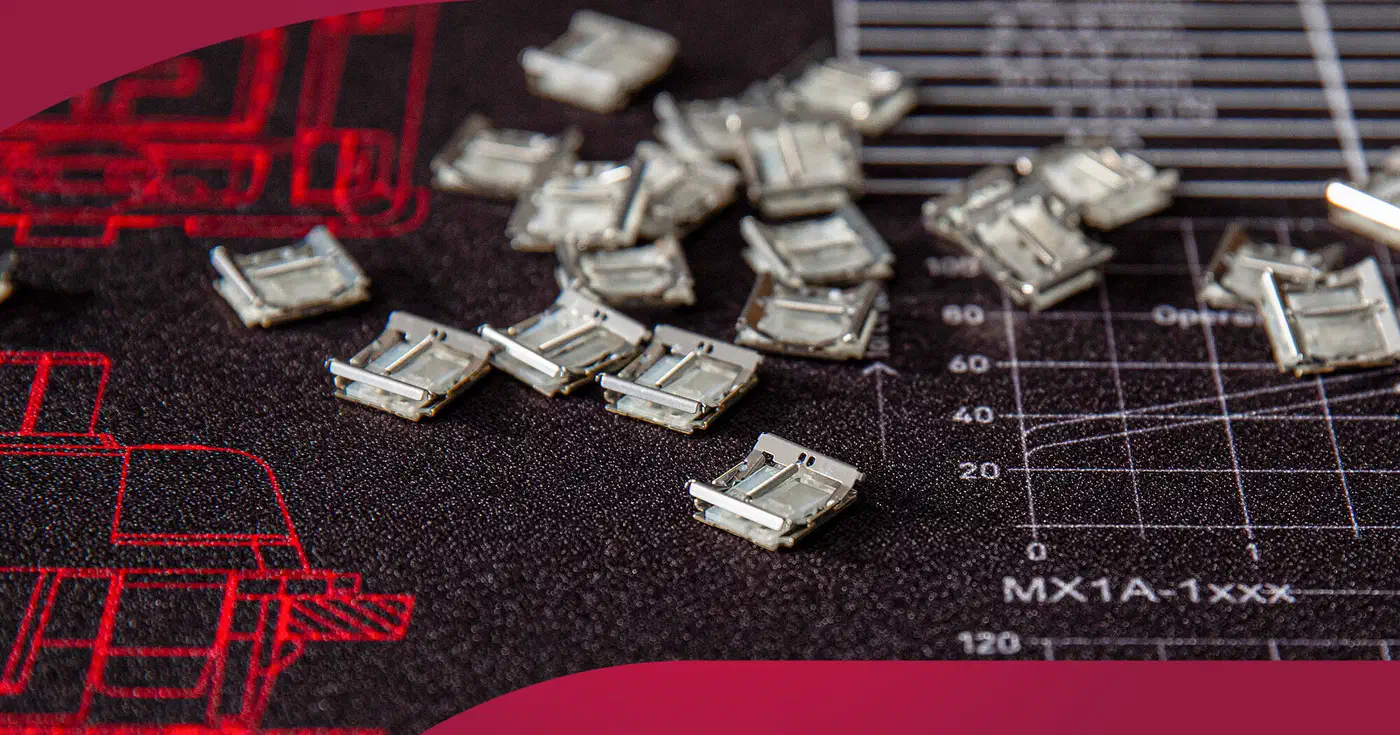
Here is how the family stacks up against a standard switch:
| Switch | Height above board | Mount and type | Best for |
|---|---|---|---|
| Standard MX | about 18.5mm | cross-mount, socketed | full-height mechanical boards |
| MX Low Profile | 11.9mm | cross-mount, socketed | slim boards and laptops |
| MX Ultra Low Profile | 3.5mm | SMD, soldered flat | ultra-thin notebooks |
The trade at the bottom rung is steep. Dropping from 11.9mm to 3.5mm buys extreme thinness but leaves almost no room for the stem to travel. The Ultra tier ends up feeling closer to a very good laptop key than to a full mechanical press.
Do standard MX keycaps fit the Low Profile switch?
In principle, yes. The MX Low Profile keeps the MX cross-mount stem, so a keycap made for that mount will physically clip onto it. On the mount alone, the MX keycap ecosystem is open to you.
Height is the limit. Tall sculpted keycaps built for full-height boards undo the whole point of a low-profile switch, and they can foul on each other. That is why low-profile boards ship with dedicated low-profile caps. Borrow from the MX range if you like, but pick low-profile profiles to keep the build thin.
The Ultra Low Profile is a different story. As a surface-mount switch with its own shape, it is not a drop-in for standard MX caps. Cherry designs it into a finished keyboard, so an Ultra board is bought whole.
Cherry’s pages do not publish a keycap-compatibility table, so confirm profile and mount against the specific keyboard before you buy replacement caps.
Where the height ladder stops paying off
The 11.9mm rung is the sweet spot for most people. It keeps a mechanical keystroke, keeps the MX stem, and still saves about a third of the height. The 3.5mm Ultra rung buys thinness that only a laptop or a minimalist board really needs, and it gives up most of the travel to get there.
So the choice comes down to how much keystroke you want to keep. For a slim mechanical board that still feels like one, the MX Low Profile is the rung to stop on.