

360-degree cooling sharpens overhangs on the Prusa XL+

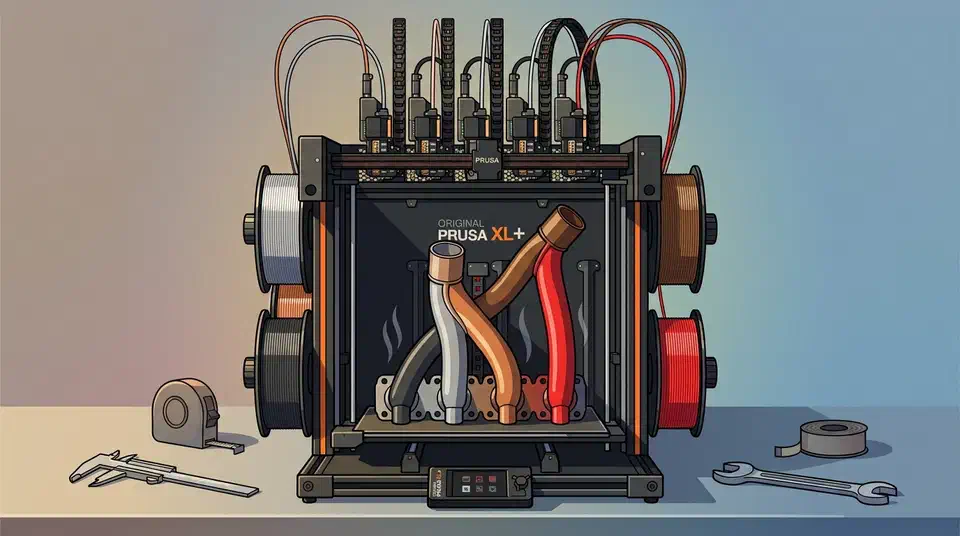
The Prusa XL+ 360-degree cooling upgrade wraps airflow around the nozzle from every side, so overhangs, bridges and fine details set cleaner than the old single-duct XL managed. The refreshed toolhead also gains GT1.5 belts, standard high-flow nozzles, and an eddy-current tool sensor Prusa says aligns each toolhead about 20 times faster.
Key Takeaways
- The XL+ toolhead now cools from all sides, like the MK4S and CORE One.
- Even airflow means cleaner overhangs, bridges and small details on tough models.
- New GT1.5 belts hide the faint ripple lines on big flat walls.
- A borrowed INDX sensor aligns each toolhead about 20 times faster.
- Prices held, and a 249 EUR kit upgrades an existing XL.
What does 360-degree cooling change on the Prusa XL+?
The headline change on the Prusa XL+ is a new 360-degree part-cooling system. It matches the cooling already on the MK4S and CORE One series. Prusa frames the refresh as “bringing the Prusa XL up to our latest generation” in its product announcement .
The physical change is where the air goes. The old duct pushed most of its airflow from one side of the nozzle. The new shroud feeds air from all sides at once. So freshly laid plastic sets evenly no matter which way the head is moving.
Prusa claims better overhangs, cleaner bridges, and crisper small details, “particularly on demanding models.” Uneven cooling leaves droops and rough edges, so spreading the air is the direct fix.
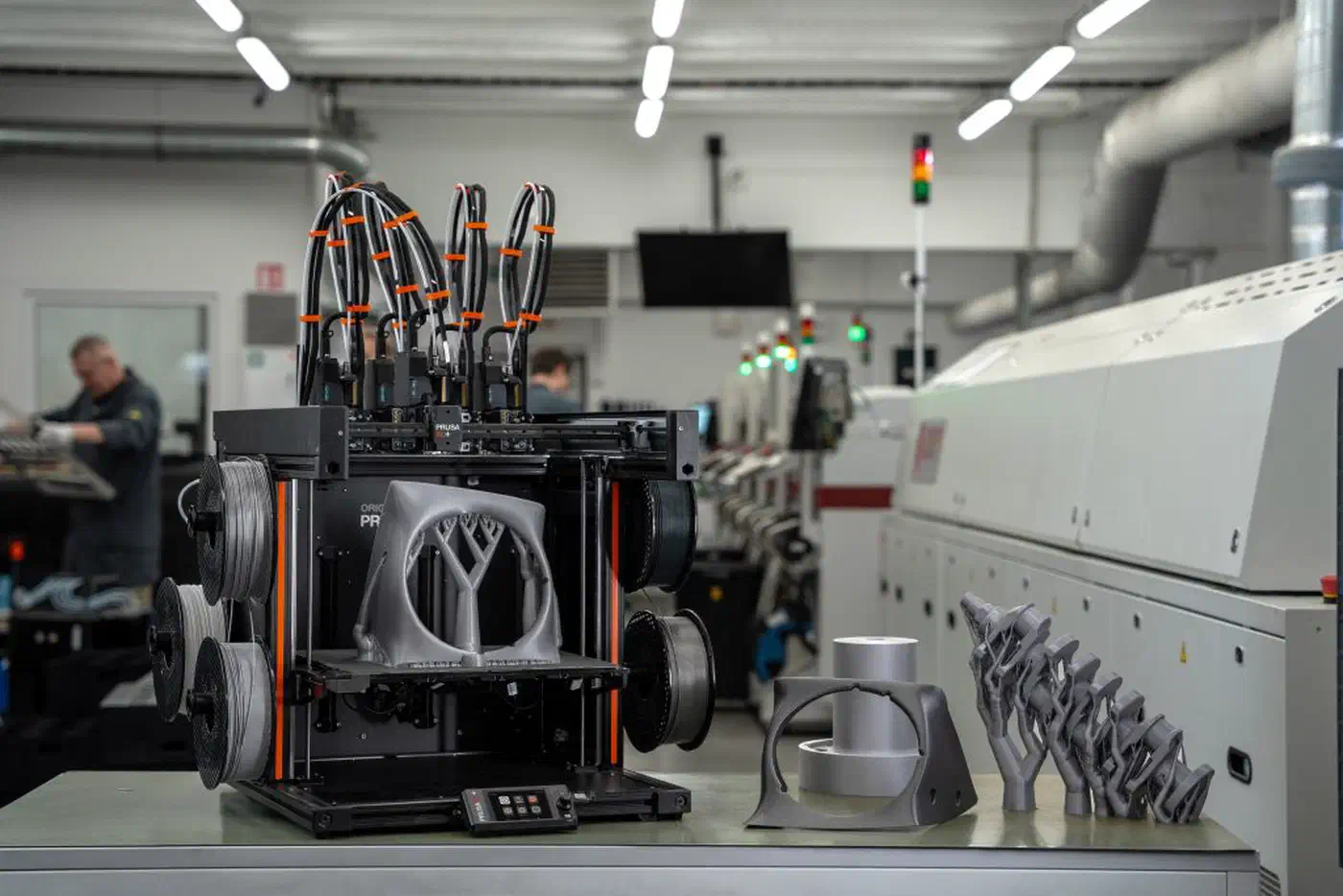
Standard high-flow nozzles now ship on the XL+ too. They give more headroom when a print calls for a higher material flow. More melt paired with more cooling is the point: you can push the flow up and still set each layer cleanly.
These are Prusa’s own claims and illustrations. No independent before-and-after cooling test has been published yet, so treat the overhang and bridge gains as the maker’s numbers, not measured ones. The gain still applies across a very large area, because the XL keeps its 360x360x360 mm build volume and stays the largest toolchanger of its kind.
How do GT1.5 belts smooth large flat walls?
All three refreshed machines get new GT1.5 belts. On the XL, they target one specific cosmetic defect: faint, regularly repeating ripple lines. Those lines show up on the large smooth walls the XL is often used to print.
The belts make the pattern “less noticeable.” That helps most on big flat surfaces, where the eye catches any repeating texture. Prusa shows this with a side-by-side of the same two-color wall, ripples on one side and a smooth finish on the other, as reported by 3DPCC .
A belt’s pitch and stiffness shape how motion turns into surface texture. The finer GT1.5 pitch cuts the visible signature of that motion.
This upgrade changes how surfaces look, and nothing else. Your walls look smoother; your dimensions and print times stay the same.
What is the faster tool offset sensor borrowed from the INDX?
The XL+ inherits a permanently mounted eddy-current Tool Offset Sensor from the INDX toolchanger. It checks and aligns every toolhead during initial setup.
The old automatic calibration used a removable pin and took long minutes. Prusa says the new permanent sensor is “about 20 times faster.” Because it stays mounted instead of being a pin you insert, alignment becomes a routine setup step.
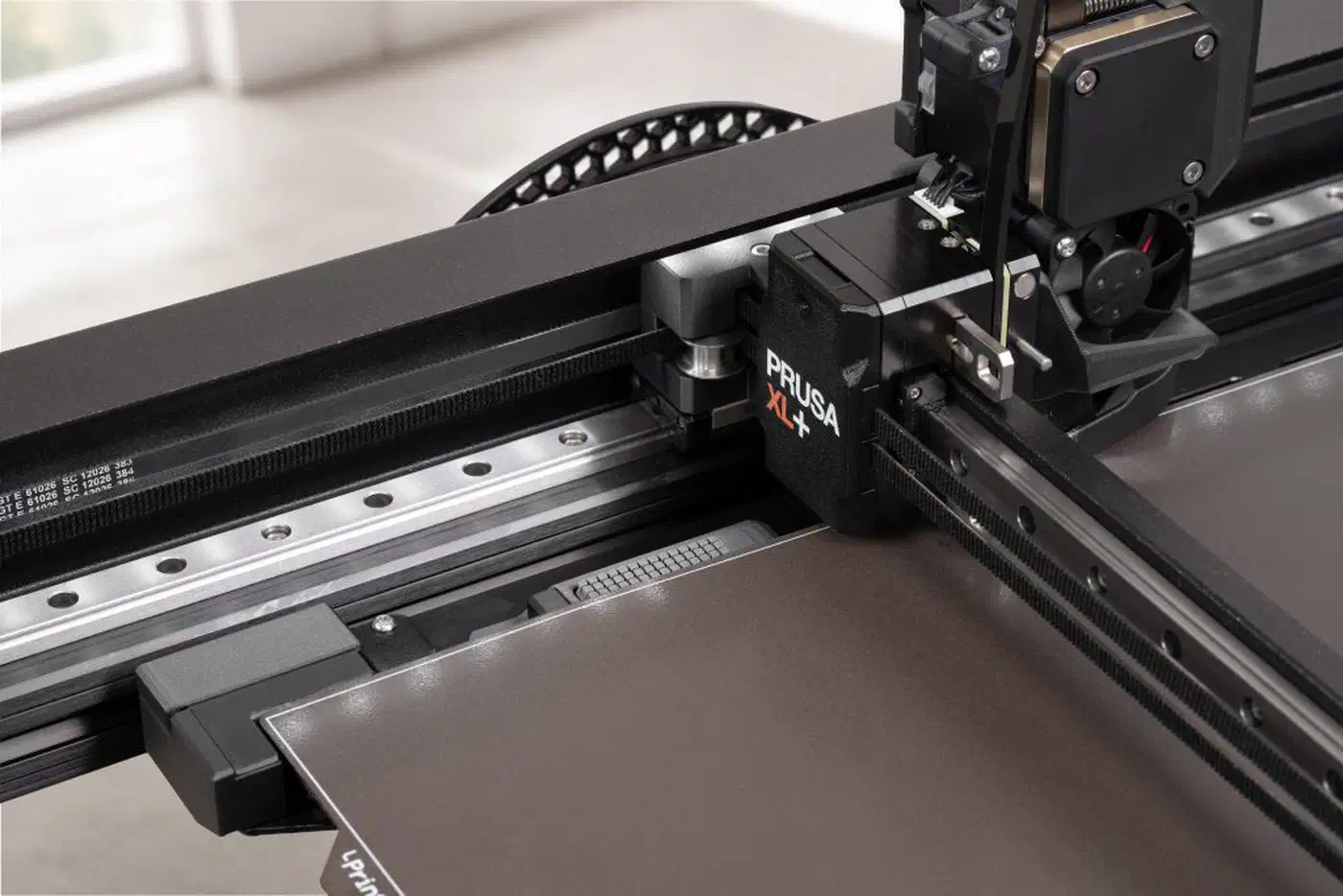
On a toolchanger, precise per-toolhead offset keeps colors registered. Get it wrong and multi-color prints show seams and color bleed where one head hands off to the next. Faster, tighter alignment keeps layer-based color mixing lined up.
Prusa notes the sensor works with the upcoming Silicone toolhead, which is scheduled for release in Fall 2026. One more shared upgrade lands here too: an integrated nozzle wiper. It is a standard, replaceable consumable that clears strands and blobs before a print starts, so loose material is not dragged onto the first layer.
A 60°C-ready enclosure for warp-prone materials
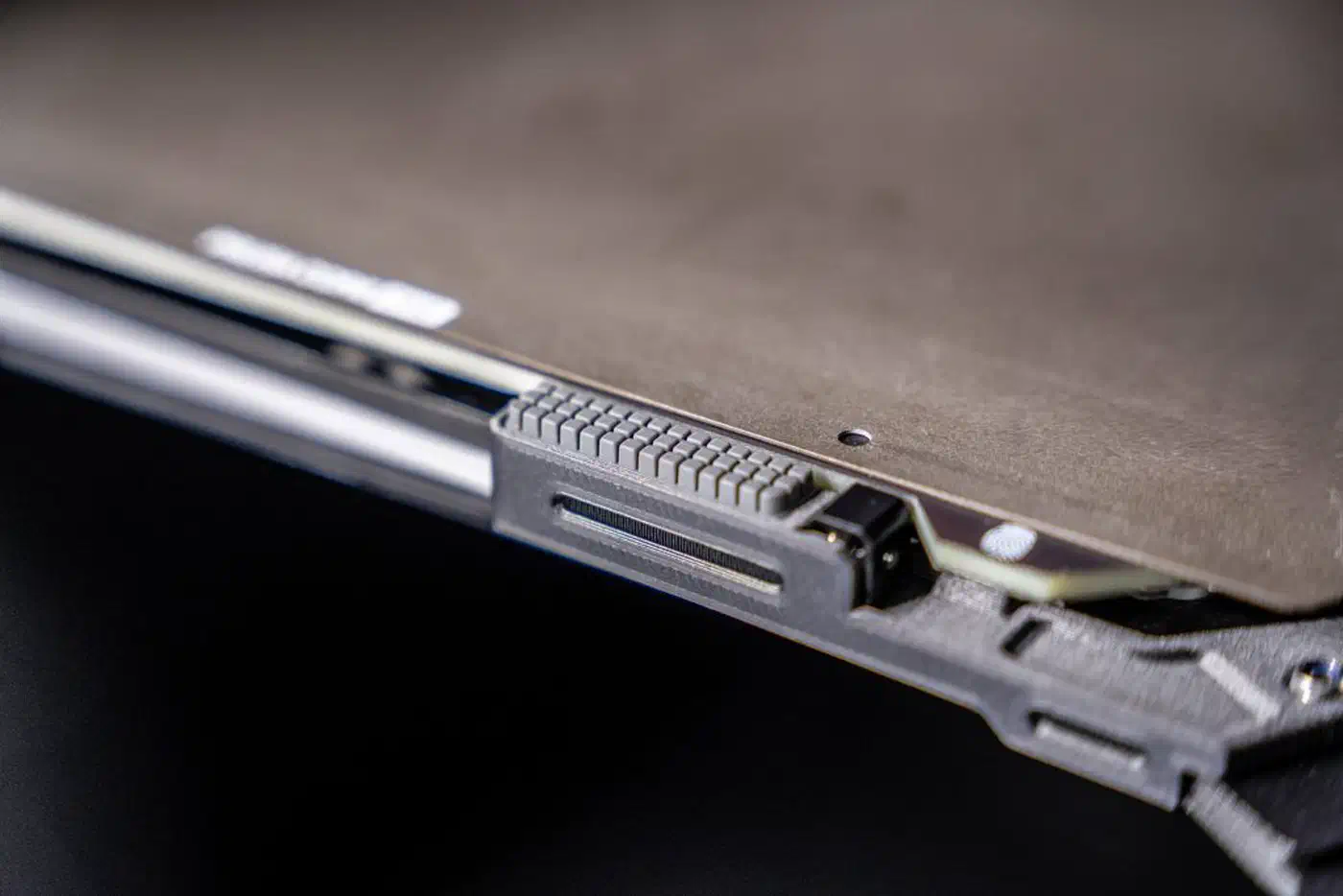
The XL+ ships ready for chamber temperatures up to 60°C. Today, though, the better-sealed new enclosure reaches only around 50°C, using nothing but the printer’s own waste heat.
The 60°C figure depends on a chamber heater Prusa has shown but not scheduled. So do not expect 60°C at launch. The enclosure is a passive waste-heat design today, and the active heater is a coming-later upgrade with no ship date.
A warmer, steadier chamber helps large technical parts hold their shape. Big PC Blend and PCCF prints, and even boxy PETG, warp and shrink less when the air around them stays hot. The larger the part, the more internal stress builds as it cools unevenly.
A heated chamber slows that cooling and reduces the warp. On a 360mm-tall build volume, that control is worth real money in saved failed prints.
Every XL+ change and the problem it fixes
Each hardware change targets a different print problem.
| Change | Print problem it targets |
|---|---|
| 360-degree part cooling | Rough overhangs, sagging bridges, soft fine detail |
| GT1.5 belts | Faint repeating ripple on large flat walls |
| High-flow nozzles | Too little melt at higher flow rates |
| Eddy-current tool sensor | Slow alignment and color misregistration |
| Better-sealed enclosure | Warping and shrinkage on big technical parts |
| Integrated nozzle wiper | Strands and blobs dragged onto the first layer |
Together they aim at cleaner starts and cleaner surfaces rather than raw speed.
Can I upgrade my Prusa XL to the XL+?
Yes. Prusa is shipping complete upgrade kits and the individual parts for existing owners. The XL to XL+ upgrade kit is listed at 249 EUR, shipping from September 4, 2026, per 3DPCC’s price roundup.
Prusa held prices across the board. Despite the added hardware, every refreshed machine costs what the model it replaces did. An assembled single-tool XL+ is 2,299 EUR. Prusa’s US shop still lists the older CORE One+ at $1,499, and firm dollar prices for the refreshed XL+ had not landed under the new name yet.
The rollout ran in order: assembled machines and CORE One+ upgrades came first, then CORE One L+ and XL+ kits around the end of August into early September. Assembled XL+ printers began shipping August 28. Any unshipped order for an older XL is upgraded automatically, so those buyers have nothing to do.
Prusa support has told a commenter the XL+ works with the original Prusa Enclosure, so existing owners are not forced into an enclosure swap. Treat that as reported rather than official spec until Prusa confirms it on the product page.
For an XL owner who prints large, multi-color parts, the value is direct: the cooling and belts clean up the surfaces you already make, and the sensor cuts the setup time you already spend. At 249 EUR to keep a machine current, the refresh reads as a tune-up for the printer they already own.