

A 330mm print bed now lands on Bambu's budget A2L printer

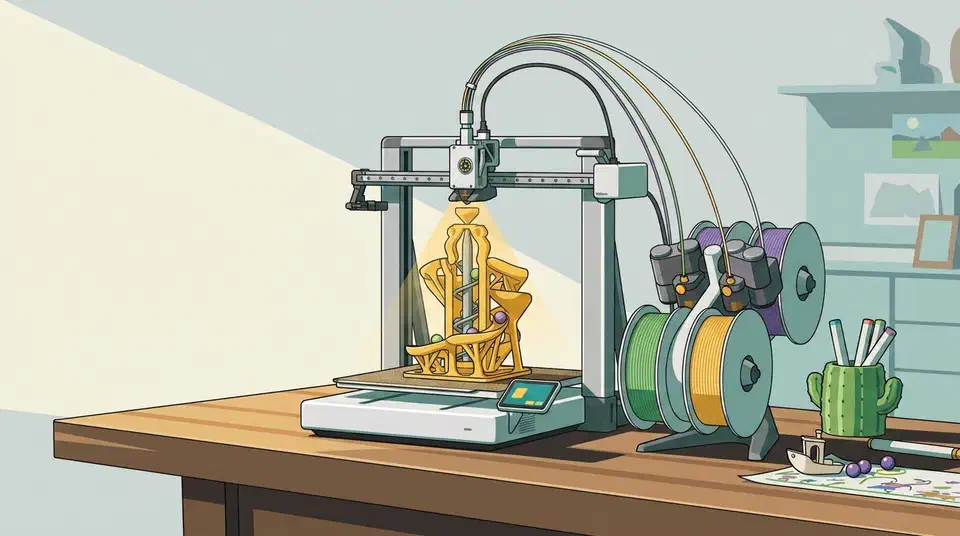
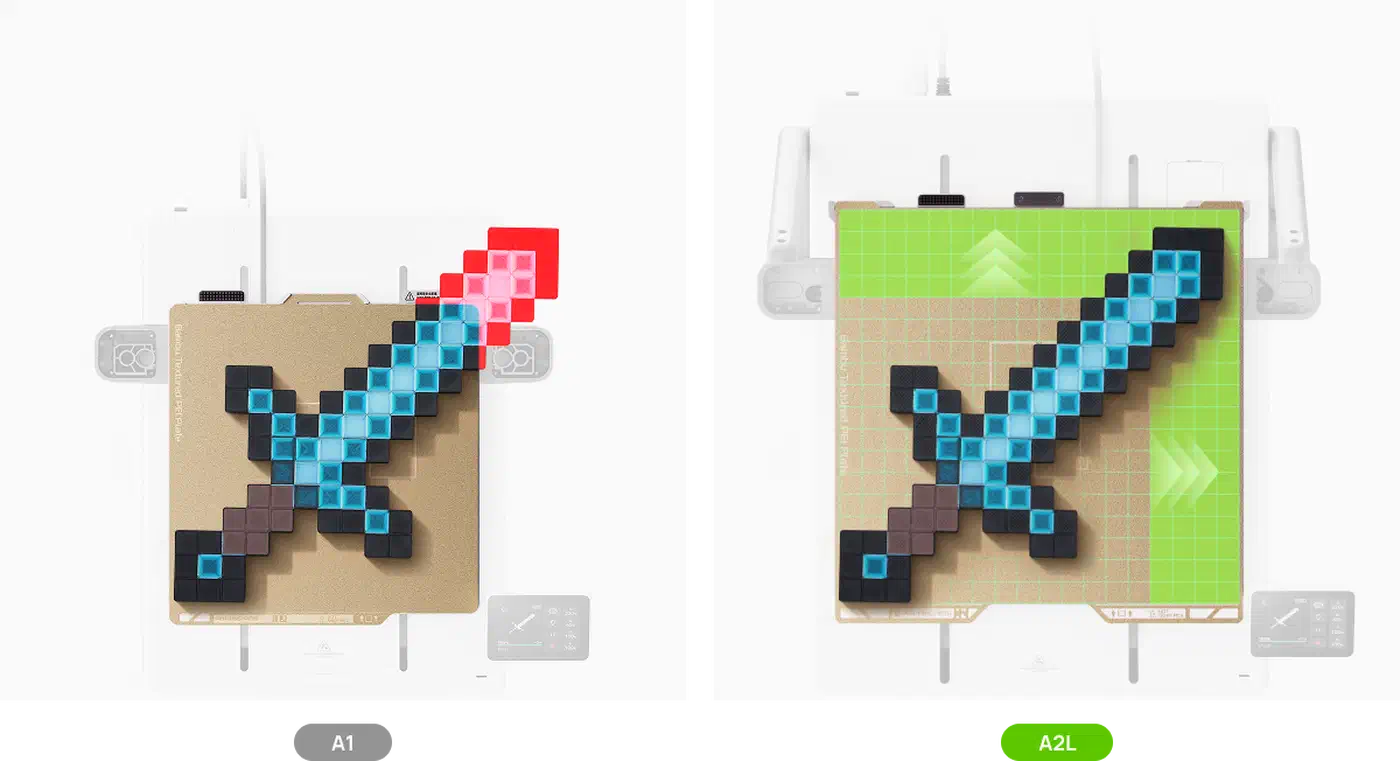
The Bambu A2L 330mm bed measures 330 x 320 x 325mm and sells for $469, about 105 percent more volume than a 256mm machine. Only part of that space prints reliably, though. The frame is open and the heatbed stops at 80°C, so PLA and PETG get the run of the bed while engineering filaments never reach it.
Key Takeaways
- The A2L bed is 330 x 320 x 325mm, roughly double an A1’s space.
- An open frame and an 80°C bed rule out ABS, ASA and nylon.
- Wide flat parts warp worst, so the extra room suits tall prints.
- Four AMS units plus an AMS lite reach 19 colours.
- At $469 it is the cheapest way to buy this much PLA space.
What the Bambu A2L 330mm bed adds over an A1
Bambu Lab sells the A2L at $469, or $569 for the Combo that adds an AMS lite. 3Dnatives reported the launch with the headline number attached: 105 percent more build volume than the 256mm class that the A1 and P1S sit in.
The machine itself is an open-frame bed slinger. The bed carries the part back and forth on the Y axis, and there is no heated chamber around it. That keeps the price low and the noise down, at 49dB in silent mode.
3D Printing Industry’s spec sheet puts the nozzle ceiling at 300°C and the heatbed ceiling at 80°C, which is lower than the A1’s. Bambu says it made that call because a much larger bed at a higher temperature would pull too much power from a home circuit.
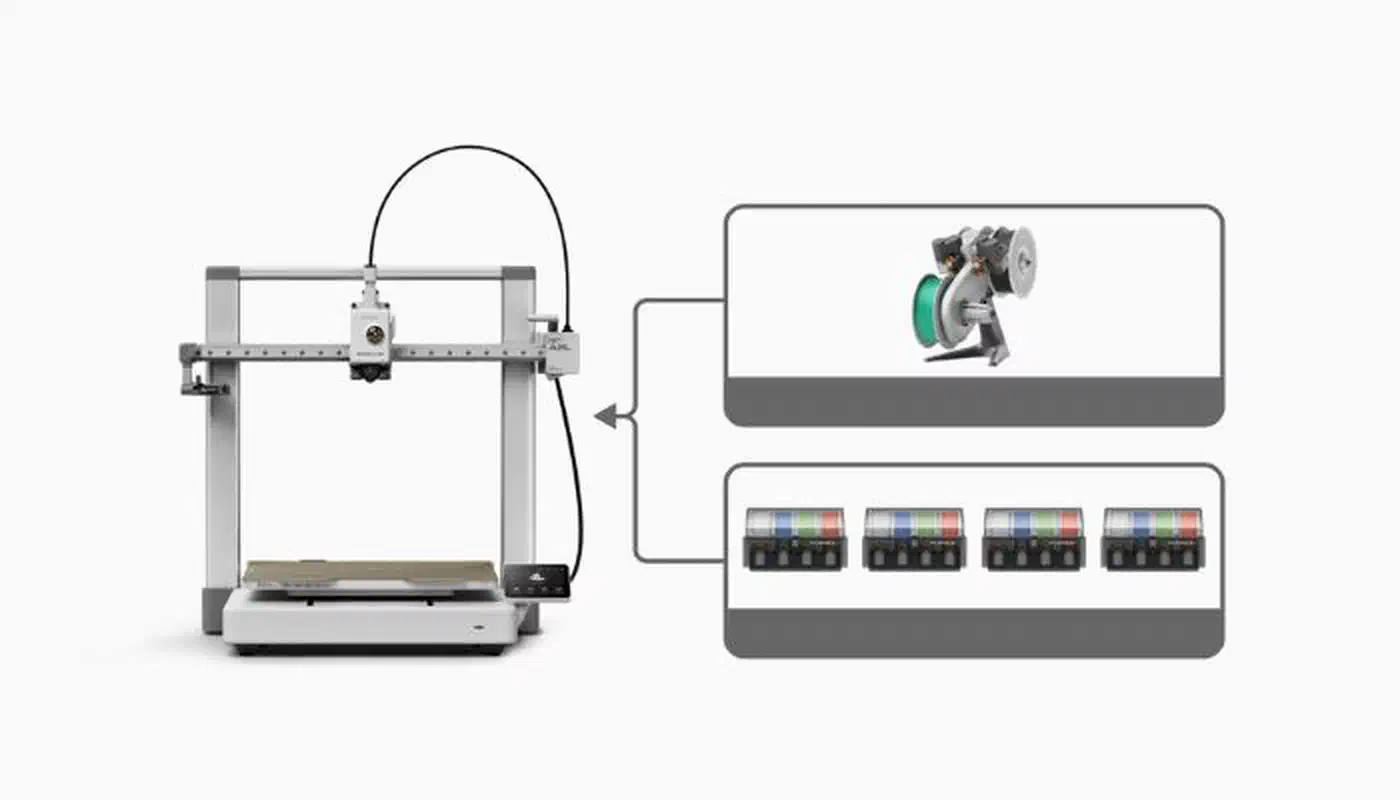
The extras are aimed at makers. A blade-cutting and pen-drawing module bolts onto the toolhead, and up to four AMS units plus one AMS lite chain together for 19 colours. Laser modules are not supported, and Bambu points at the open frame as the safety reason.
How much of a 330mm bed can you actually use?
A printed part cools from the outside in, and cooling plastic shrinks. The corners of a wide flat part pull inward and upward while the middle is still warm, and the bond to the plate has to hold that force.
The force grows with the edge. PLA shrinks by roughly 0.3 percent as it cools, so a 300mm edge tries to pull in by about 0.9mm. ABS shrinks nearer 0.8 percent, which is 2.4mm over the same edge. A bed slinger with no chamber therefore gets harder to use as it gets bigger.
A bed keeps the first layers soft enough to relax that stress instead of peeling. PLA and PETG are happy well under 80°C. ABS and ASA want 90°C to 110°C, so the A2L cannot hold them down at any footprint.
The footprint column below is an estimate drawn from typical open-frame behaviour.
| Material | Bed temp it wants | Reliable footprint on the A2L | Full 330mm realistic? |
|---|---|---|---|
| PLA | 55-65°C | close to the whole bed | yes |
| PETG | 70-80°C | about 220 x 220mm | rarely |
| TPU | 40-60°C | most of the bed, printed slowly | yes |
| ABS, ASA | 90-110°C | not usable | no |
| PC, nylon | 100°C and up | not usable | no |
A draught is the failure no bed temperature can fix. An open frame lets moving air cool one side of a tall part faster than the other, which splits layers apart partway up. A door left open or a vent overhead is enough to do it, and only an enclosure stops it.
So the rule is to design tall rather than wide once you approach the limits. The Z axis is 325mm and vertical height adds no corner-lift force at all, while every extra centimetre of footprint adds some.
Bigger bed against bigger printer, priced per usable centimetre
Divide price by volume and the A2L looks strong, as long as PLA is what you print. The figures below use each machine’s advertised volume and list price.
| Printer | Build volume | Price | Cost per cm³ | Engineering filaments |
|---|---|---|---|---|
| Bambu Lab A2L | 34,320 cm³ | $469 | $0.014 | no |
| Bambu Lab A1 | 16,777 cm³ | $399 | $0.024 | no |
| Bambu Lab P1S | 16,777 cm³ | $699 | $0.042 | yes |
The ranking flips the moment your material list changes. An enclosed 256mm machine beats an open 330mm one outright on ABS, ASA, PC and nylon, because the open machine scores zero on all four.
Where the A2L wins is large and simple. Full-size helmets, cosplay props, RC bodies and drawer organiser panels are exactly the parts people used to slice into three pieces and glue. Bambu’s own example is a run of 40 fidget toys in one go.
Prints that fill the bed run long, often past 20 hours, so a failure at hour 18 burns a whole spool and a whole day, a cost no spec sheet lists.
The open questions a buyer should hold
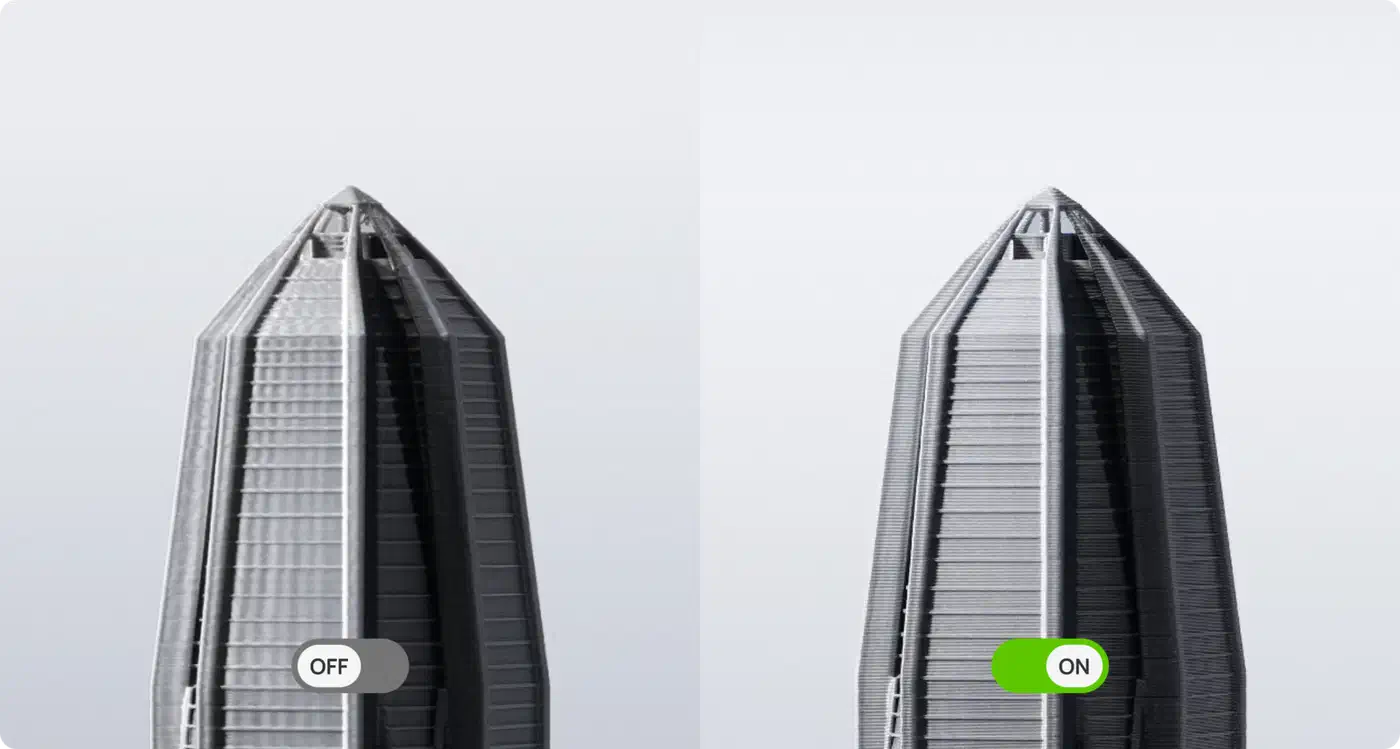
The larger bed is also a heavier moving mass, and nobody has published what that does to real print speed. Bambu fitted adaptive vibration compensation and two particle dampers in the frame to fight ringing on tall parts, which suggests the engineers expected the problem.
Warp reports at the full 330mm footprint are also thin so far. The material table above is reasoning from shrinkage rates and the 80°C cap, and real prints have a way of landing better or worse than the arithmetic.
Every filament swap purges material, and 19 colours means a lot of swaps. Nobody has published purge waste figures for a four-AMS chain, so the running cost of that headline number is unknown.
When reviews land, look for first-layer consistency at the far corners of the bed. It tells you more about this machine than any headline speed figure, because the corners are where a 330mm open frame gives up first.