

The AMS HT dries nylon at the 75°C the AMS 2 Pro misses

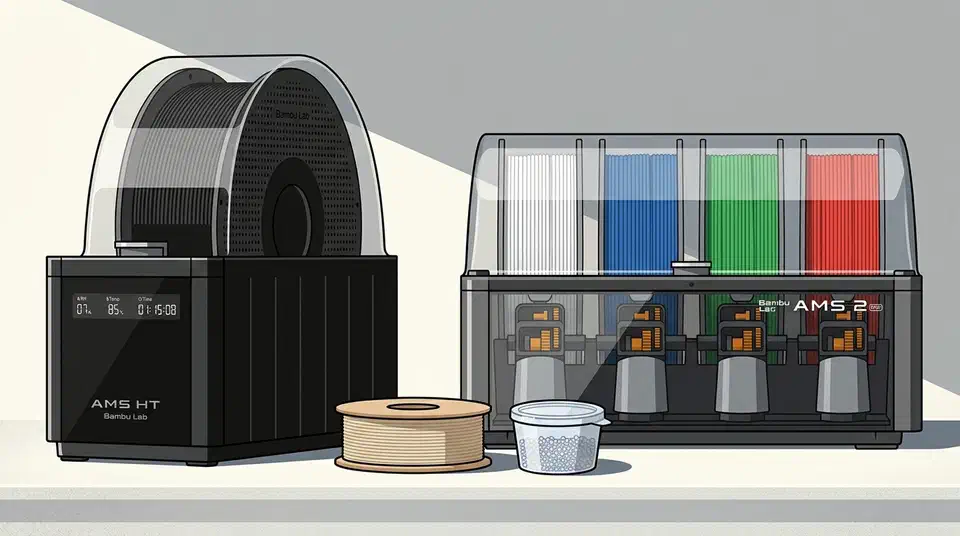
Nylon drying needs 75°C to pull water out of the spool, and the AMS HT hits 85°C while Bambu’s popular AMS 2 Pro stops at 65°C. That 10-degree gap means the AMS 2 Pro physically can’t dry nylon or carbon-fiber nylon, and no setting change fixes it.
Key Takeaways
- Nylon and carbon-fiber nylon need at least 75°C before drying works.
- The AMS 2 Pro tops out at 65°C, so it can’t dry nylon.
- A cool room pushes the AMS 2 Pro even further below 65°C.
- The AMS HT hits 85°C and holds it, clearing the nylon bar.
- Move dried nylon straight into a sealed box with silica gel.
Why nylon drying needs 75°C, not 65°C
Nylon holds water like few other filaments do. Its minimum effective drying temperature is 75°C, and below that line the heat warms the plastic but the moisture stays put.
Nylon and carbon-fiber nylon (PA6-CF) both list an ideal drying temperature of 85°C, with 75°C as the hard floor. The FilamentDryingTool AMS 2 Pro guide works this figure out from Prusa and Bambu documentation. Treat it as the practical floor, and always follow a spool’s own printed instructions when the maker gives them.
Wet nylon shows up in the print itself: stringing, popping and hissing at the nozzle, weak layer bonding, and a rough, foamy surface.
Easy filaments sit far below nylon. PLA dries effectively at 45°C and PETG at 50°C, both well inside any built-in dryer’s range. That is why the same box that handles PLA fine will fail on nylon.
Why the AMS 2 Pro can’t dry nylon
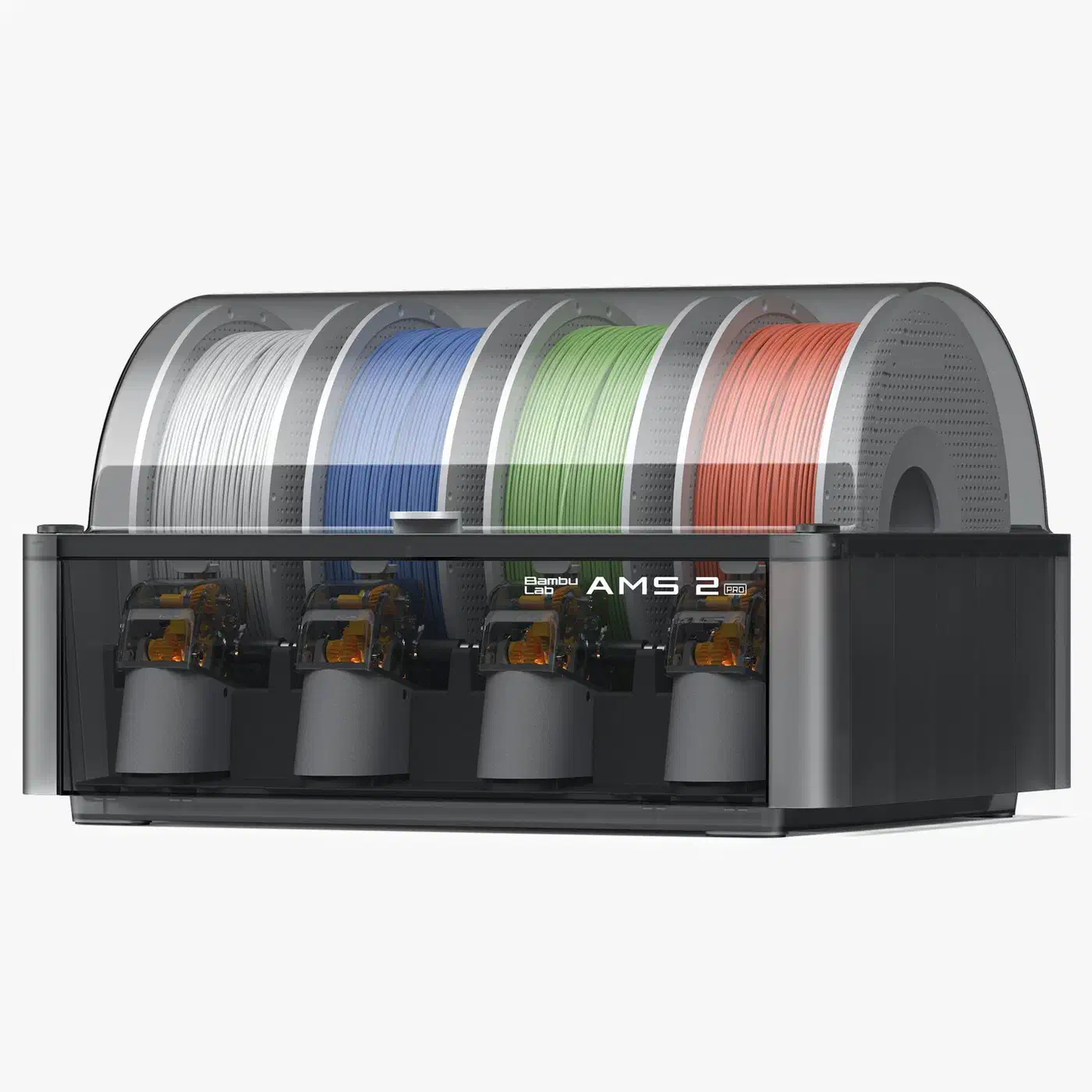
The AMS 2 Pro has a built-in heated drying module, and its maximum temperature is 65°C. That is ten degrees under nylon’s floor, so the math never works out. Bambu’s own AMS drying guide lists that 65°C cap plainly.
Still, 65°C is a best case. Bambu notes the maximum only holds when the room sits at 25°C or warmer. In a cooler room, natural heat loss keeps the real chamber temperature lower, so the gap to 75°C grows even wider.
The practical effect shows up in the compatibility table. FilamentDryingTool marks Nylon, PA6-CF, ABS, ASA and PC all as “Not Recommended” on the AMS 2 Pro, because none of them reach their minimum effective temperature at a 65°C cap. Trying to force the unit past 65°C damages its internals, so there is no safe workaround.
The AMS 2 Pro is an excellent PLA and PETG dryer, but for nylon it is the wrong tool. No slider, preset, or firmware setting closes a physical heat gap.
What clears the 75°C bar
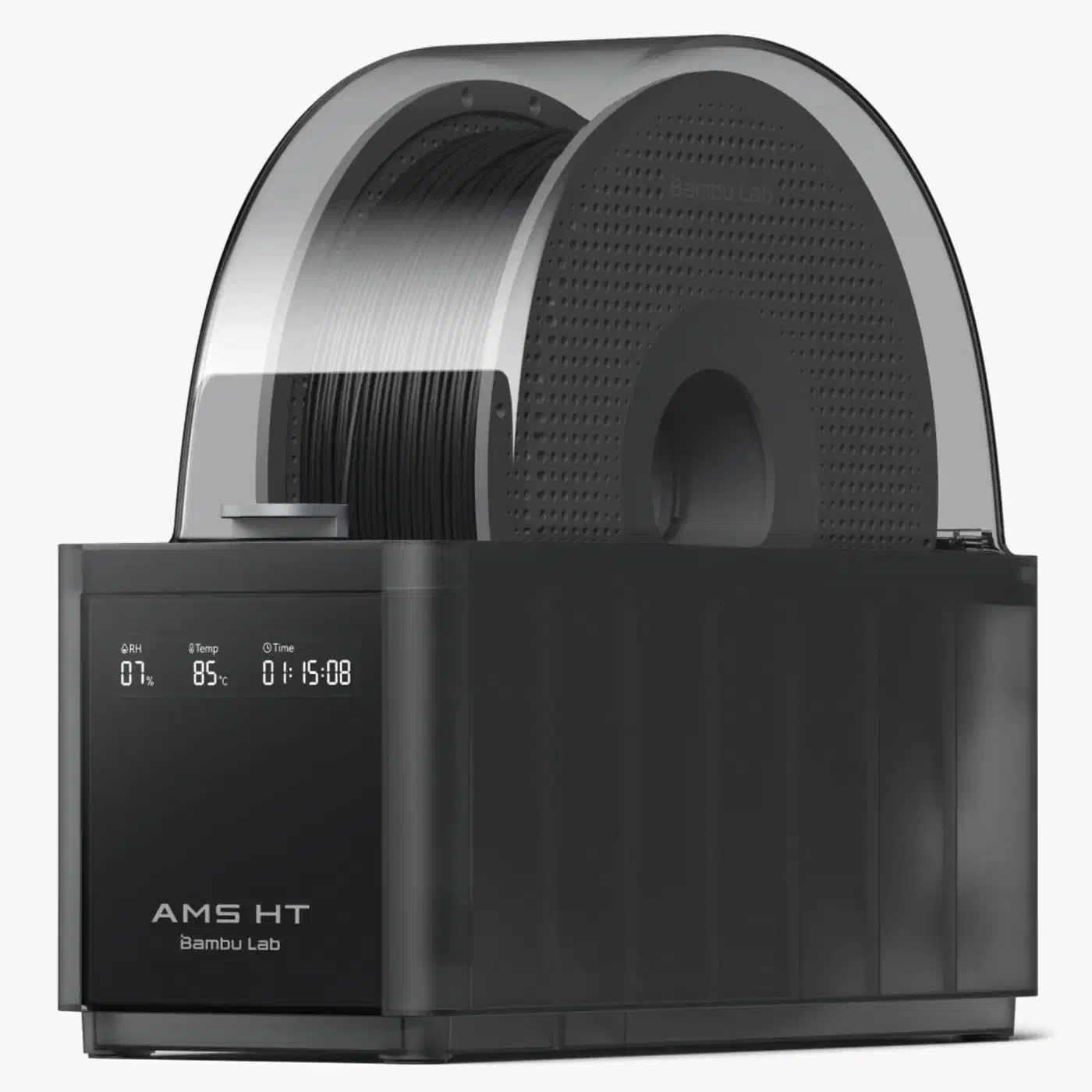
The AMS HT is the built-in answer. It reaches 85°C, and its 170 W heater holds that maximum even in a 10 to 25°C room. So it clears the nylon floor with room to spare. Bambu says engineering materials that need drying above 65°C should use the AMS HT rather than the AMS 2 Pro.
If you own the wrong dryer, several other methods also clear the bar for anything that needs 75°C or more.
| Method | Max temp | Clears the 75°C floor? |
|---|---|---|
| Forced-air blast oven | 120°C | Yes |
| Printer heated bed | 100°C | Yes, with a spool flip |
| Dedicated filament dryer | 90°C | Yes |
| AMS HT | 85°C | Yes |
| Food dehydrator | 75°C | Just barely |
| AMS 2 Pro | 65°C | No |
Everything at or above 75°C works for nylon, and the AMS 2 Pro is the one built-in option that sits below the line.
Whichever method you use, the last step is the same and it counts. Move the dried spool into an airtight container with fresh silica gel right away. Leave it in open air and nylon starts pulling moisture back out of the room within hours.
How the AMS decides when to open its vents
The AMS uses actively controlled intake and exhaust dampers, not passive vents, and it moves them based on chamber temperature.
When drying is off, both ports stay shut to keep humid room air out. Below the target temperature, the ports close again for concentrated heating, so the chamber climbs fast toward the setpoint. At or above the target, the ports open and an external airflow loop carries off the moisture that the heat has driven out of the filament.
The module also guards against jams: if the chamber is hotter than the filament’s softening point before feeding, the fan cools it first. For a thick, moisture-heavy nylon spool, Bambu also recommends rotating-spool drying, where the spool turns 30 degrees every 5 minutes for even heating.
Drying nylon while you print, and the power it needs
The AMS can dry and print at the same time, with one big limit. Once a print starts, the system automatically lowers the drying temperature. This keeps the filament in the chamber from softening and getting crushed by the feed gears.
That step-down tracks whatever else is loaded. Drying PETG while printing PLA drops to 45°C, and drying ABS while printing PETG drops to 55°C. So simultaneous drying only tops a spool up; it will not dry a wet one from scratch. If a spool is genuinely wet, dry it fully before the print starts.
The AMS HT needs its own power cord and cannot draw drying power from the printer’s 6-pin cable at all. On the H2 series, drying power auto-reduces to 86 percent of normal when no adapter is connected, so a nylon cycle runs best with the adapter plugged in.
Check the filament type before you hit start. Filament without RFID data defaults to PLA settings during drying, which caps the temperature far below what nylon needs. Confirm or edit the filament type first, or the dryer aims for the wrong number.
Neither Bambu nor FilamentDryingTool publishes a single recommended run time for nylon in the AMS HT, because the right duration depends on spool size and how wet the filament is. Start at the 85°C target, give a saturated 1 kg spool many hours rather than one or two, and store it in desiccant the moment it comes out.